Displaced Lebanese residents have begun returning to their war-torn villages.
Israel’s military advance into southern Lebanon in March turned some villages in the country’s south into front-line communities in a destructive war. Local residents are trying to carry on with their lives despite the continued Israeli military presence.
When news broke that the United States and Iran had reached a tentative agreement to halt the fighting, Zibqin resident Nada Barakat woke her entire family and told them: “It’s time to go home.”
Now, back in their village, her siblings, daughters and grandchildren are gathered in the shade of a tree, reviving a family tradition that months of displacement had interrupted.
"When I arrived in my town, I was deeply angry at the destruction. I was sad because it no longer looked like Zibqin, my town. But when I come here, every time the breeze blows, I think about how beautiful the breeze is. I pray to Allah that the support of the people of this town and the sacrifices of our martyrs will allow us to stay here under this tree,” said Barakat.
Zibqin was among the first villages to become a front-line border community after Israel seized the Blat military checkpoint in 2024. The area is considered a Hezbollah stronghold. Nada lost her only son during the war, and she believes his sacrifice helped make her family’s return home possible.
"We sit here and over there is the Blat military checkpoint, the Israeli checkpoint right in front of us. Yet we sit here, spend the night, and call our neighbors who remained here so we can all enjoy some coffee and tea. We can enjoy that because our martyrs made it possible," she said.
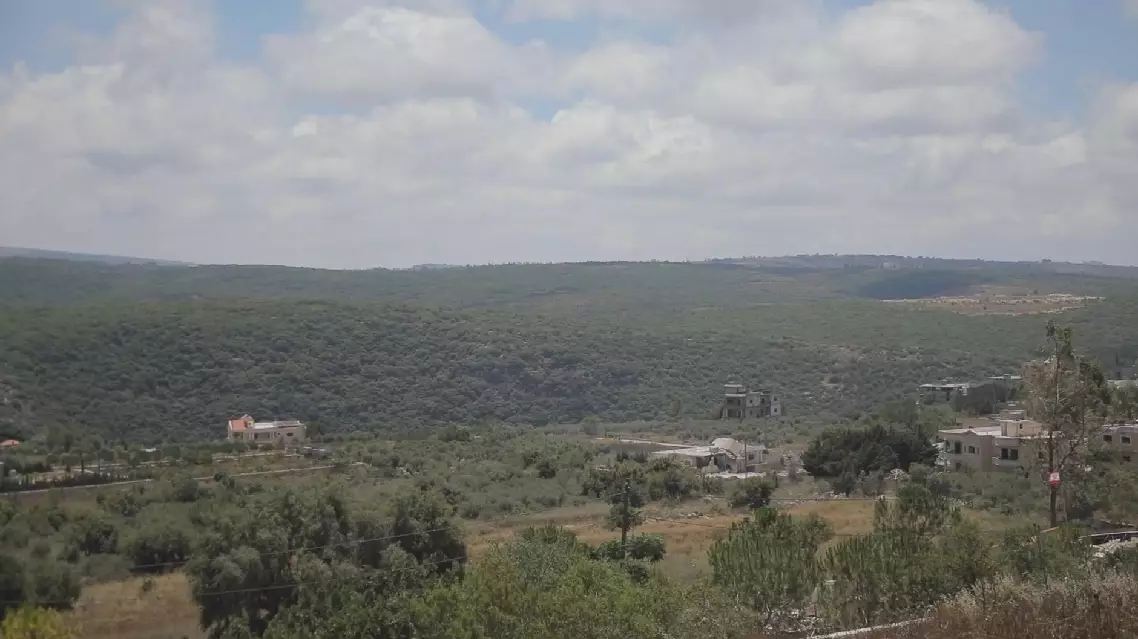
Hennieh, however, only recently found itself on the front line with Israel. Local resident Ahmed Ammar has just returned to check on his home. Fortunately, it is still standing.
"My family happily hosted us while we were there, but one never feels as comfortable as at home. That's why I was in a rush to come back. As soon as I fix the house, sort the electricity and water, we will move back," said Ammar.
His house has a breathtaking view of the Lebanese mountains and the Mediterranean. But the view is deceptive: it also takes in a landscape full of danger.
Although the ceasefire still appears fragile, Ammar remains defiant.
"They won’t stay here for long. We didn’t come back because of politics or because someone helped us. We came back because of our own strength. They no longer scare us. They will leave -- now, later, tomorrow. Eventually, they will leave. If not peacefully, then by force,” said Ammar.
Many others, however, have yet to return, choosing instead to wait and see how the U.S.-Iran talks unfold and what that may mean for their future.
Displaced Lebanese begin returning to war-torn villages