Global business leaders at the Summer Davos forum welcomed Chinese Premier Li Qiang’s vision of “China Opportunity 2.0,” saying it emphasizes collaboration, reciprocity and mutual growth rather than rivalry as Beijing seeks to attract more foreign investment.
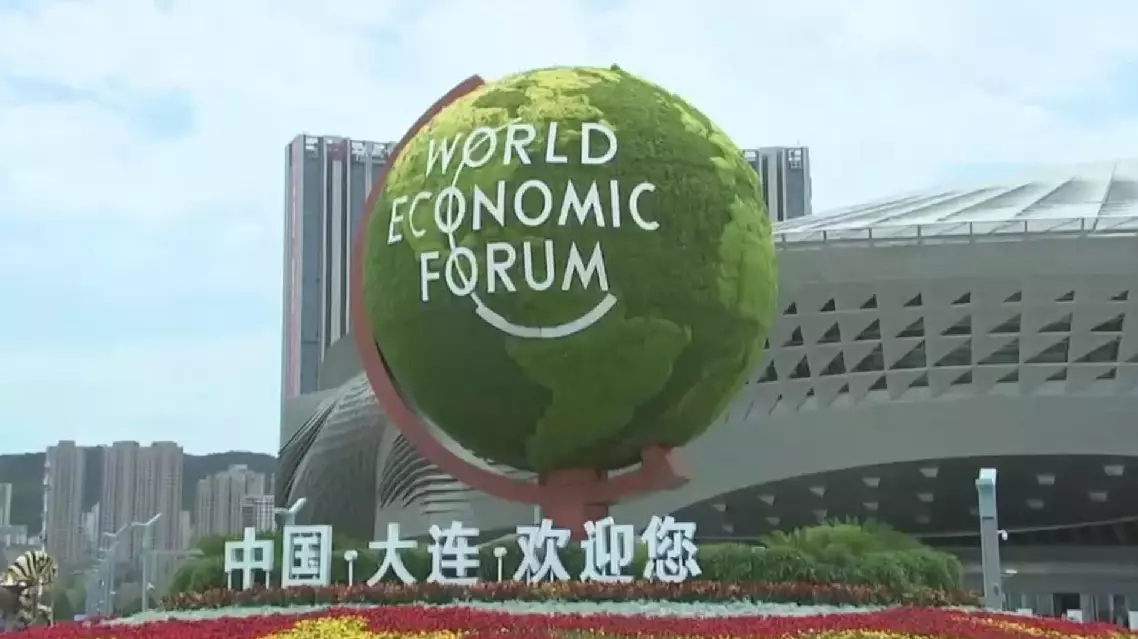
Li offered this renewed vision of China as a land of opportunity for global investors while addressing the opening plenary of the 17th Annual Meeting of the New Champions, also known as the Summer Davos, in northeast China's coastal city of Dalian, on Thursday.
Attending business leaders said he painted a picture of comprehensive innovation-driven empowerment and high-return investment prospects, as well as access to advanced technologies.
"This opportunity 2.0 is not a one-way street. It's not as a competition, but more as an opportunity to collaborate and find the places of reinforcing strength," said Jean-Charles Van Den Branden, head of global sustainability practice at Bain and Company, a global management and consulting firm.
"If companies don't move to electric vehicles, they will have a risk, and that risk is what we might call, you know, zombification: that they are last in a market that doesn't exist anymore. So this competition is maybe also triggering a change and a kind of an industrial revolution that we will see in many of these markets," Branden went on.
Jack Chan, China chairman of the multinational consulting firm EY, said that China’s continued high-quality opening-up will be crucial as global businesses strive to jointly build a global ecosystem.
"The central government has been promoting what we call high-quality opening-up. So that's very important for foreign investors, or whoever are interested to invest in China, to understand the policy and all, I would say, the rules and regulations around it. We are talking about how to build a local market capabilities. That means it's actually a change from going out to going in. Building a true global ecosystem means going beyond supply chains to connect markets, capital, talent, as well as compliance," said Chan.
Svein Tore Holsether, president and CEO of Norwegian-based chemicals firm Yara International, said that collaboration is key to combining China's scale with European technologies.
"It's about creating synergies here -- how do we get benefits from scale given the size of the market here in China, but combining that with technologies that we have developed in Europe. This is about collaboration. We have to be prepared that the geopolitical tension will continue. So it's about strengthening the value chains for producing, but also about shortening the supply chains. Of course, trade is important. Trade is key in order to sustain societies. But it's also about creating stronger local supply chains, both here in China, but also in Europe and worldwide," the executive said.
Global executives welcome Li’s ‘China Opportunity 2.0’ as call for collaboration, not rivalry