
LOS ANGELES (AP) — A sprawling legislative package aimed at lowering the cost of housing and spurring more home construction won bipartisan approval from Congress this week, but it's hit a major roadblock in becoming law: President Donald Trump.
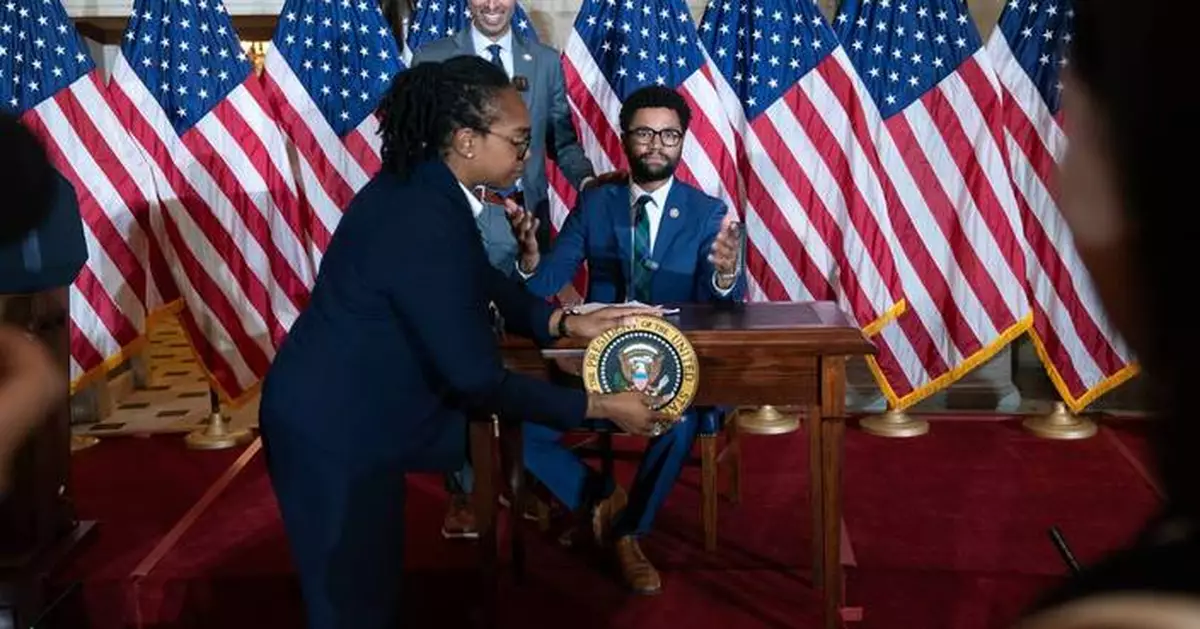
The White House supported the 21st Century ROAD to Housing Act, but on Wednesday Trump canceled the signing ceremony for the bill, saying he would not sign the measure until Congress passes legislation that would require proof of citizenship for all voters.
Here’s what to know.
The measure is the culmination of months of negotiations by lawmakers who combined dozens of bills meant to address how housing affordability for both renters and aspiring homeowners in the U.S. has grown increasingly out of reach for many Americans.
The bill would reduce federal regulations, streamline environmental reviews, speed up the construction process and curb the influence of corporate landlords by limiting their ability to purchase single-family homes.
Still, it's not a silver bullet for all the factors that contribute to reduced housing affordability, including lack of construction labor, rising insurance costs and years of subdued wage growth relative to sharply rising rents and home prices.
Even so, the bill has drawn broad support from the real estate industry, including organizations representing homebuilders and apartment complex owners, as well as housing advocates.
“We need more homes built, and legislation that removes construction barriers is exactly what the market needs right now,” said Daryl Fairweather, chief economist at Redfin. "Homebuyers who were hoping for relief may have to wait even longer, and in a market already starved for inventory, that’s a tough pill to swallow.”
Housing has grown into a hot-button issue among voters in recent years as homeownership and rents in many areas have become less affordable for many Americans.
The U.S. housing market has been in a slump since 2022, when mortgage rates began to climb from pandemic-era lows. Sales of previously occupied U.S. homes were essentially flat last year, stuck at a 30-year low. While sales accelerated in May to their fastest pace since December, they continue to hover close to a 4 million annual pace, far short of the historic norm that is closer to 5.2 million, limited partly by elevated mortgage rates.
Years of soaring home prices, especially in the early part of this decade when rock-bottom mortgage rates fueled a buying frenzy, have left many would-be homebuyers frozen out of the market. And a chronic shortage of homes for sale nationally, due partly to years of below-average new home construction, has helped prop up home prices even in a multiyear sales slump.
Home prices have increased 54% nationwide since 2020, and last year the median existing single-family sales price was nearly five times the median household income, according to researchers at Harvard's Joint Center for Housing Studies.
Renters, meanwhile, have seen little improvement in affordability. While the median U.S. monthly rent has been declining for nearly three years, it was still 17.2% higher in May than before the pandemic, according to data from Realtor.com.
One of the biggest hurdles to homeownership has been an imbalance between supply and demand in many parts of the country.
When there are fewer homes on the market, that helps prop up home prices even during a slowdown. Conversely, during times when mortgage rates are low, buyers end up competing for fewer homes, which drives up prices.
The housing bill would help increase the supply of housing, particularly when it comes to smaller, more affordable starter homes.
It amends existing regulations to boost construction of manufactured homes, which tend to be more affordable than other types of newly built homes, and expand access to government-backed loans to include construction of standalone dwellings a homeowner can rent out.
The bill also provides new dollars for communities to turn abandoned infrastructure into housing, and provides guidelines for communities that want to reform outdated zoning regulations, which often limit larger housing developments.
“It won’t make housing more affordable overnight, but in the coming years we will see more construction of town homes, multifamily housing, and ADUs,” notes Fairweather, saying the additional supply "will relieve the pressure on home prices, and make it easier for homebuyers to break into the market.”
The legislation includes a broad set of provisions, including an expansion of government rental assistance and affordable housing construction programs , and measures aimed at encouraging state and local governments to make it easier to build new homes and apartments, including federal funding to places exceeding the median rate of homebuilding.
In addition, the bill would raise limits on the number of public housing units that can receive financing for renovations and codify a recovery program to help expedite funds to communities rebuilding after disaster.
It also requires new renter protections.
“Families are struggling under the heavy weight of housing costs that have climbed for decades,” said San Diego Mayor Todd Gloria, who is president of the U.S. Conference of Mayors. "There’s no time to waste. Without federal action, America’s housing shortfall will continue to grow, falling another 2 million units behind in the next five years.”
While hailed as a significant step, the federal government's power to dictate things like how many homes are built or rents is limited, given that most of the regulations on construction, such as zoning laws, and other facets of real estate are determined by local and state governments.
So, even if the bill is delayed, it's not like it would have had an immediate impact on local house prices, for example. But it would set back the clock on new construction projects that might not otherwise get the go-ahead.
“The sooner this bill becomes law, the sooner builders and homebuyers will benefit from its downstream effects,” said Danielle Hale, chief economist at Realtor.com. “Even if the president were to sign this bill immediately, many of the provisions will take time to impact builder planning and projects in the pipeline, so there is going to be a delay before consumers feel the impacts of this legislation either way.”
Trump's decision to not sign the legislation into law Wednesday could end up just temporarily delaying the measure from taking effect.
The House passed the bill in a 358-32 vote on Tuesday and the Senate passed it 85-5 on Monday. That level of support is what's colloquially called a veto-proof majority.
Still, if Trump were to veto the measure, the Senate and the House would have to vote again to override the veto.
It may not come to that.
Speaker Mike Johnson said Wednesday that he had spoken with Trump earlier in the day and was confident the president would sign the bill.
“The president, when we go through the details of the bill, he’s going to understand that it’s a good product,” Johnson said.
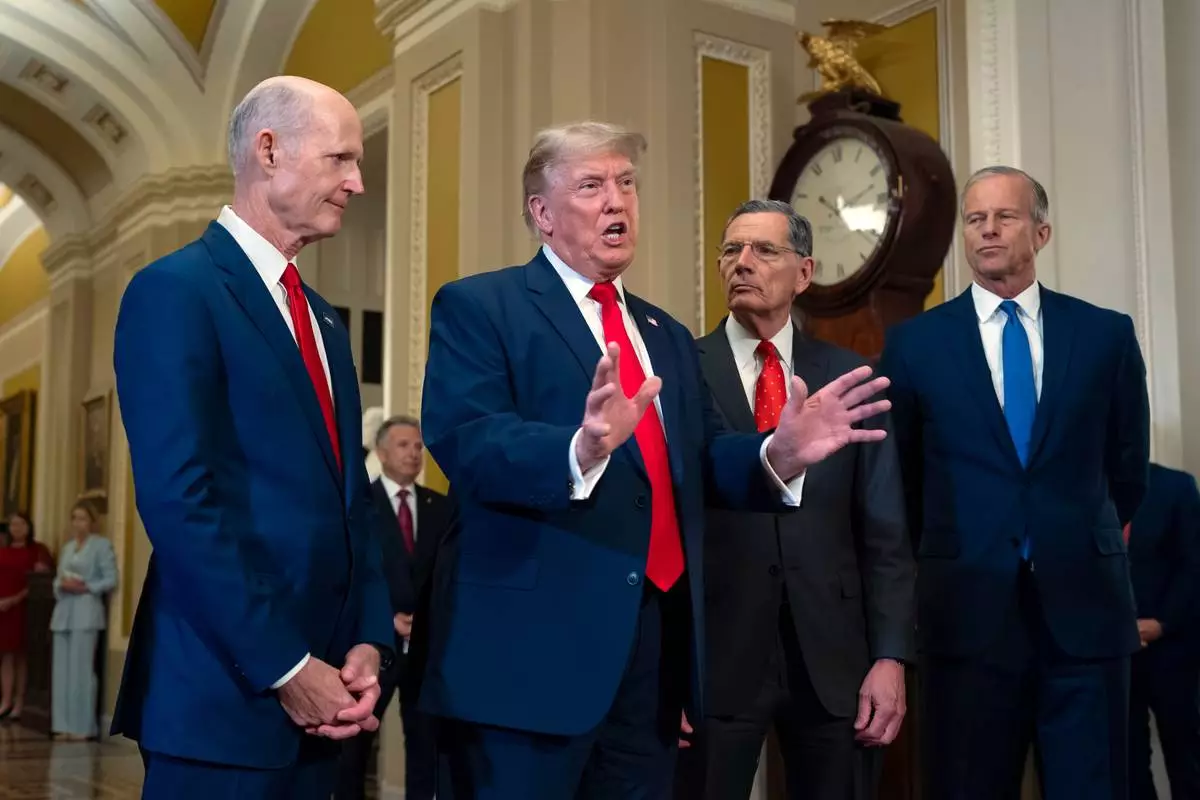
President Donald Trump, joined from left by Sen. Rick Scott, R-Fla., Sen. John Barrasso, R-Wyo., and Senate Majority Leader John Thune, R-S.D., speaks to reporters as he finishes his lunch meeting with Republican senators, at the Capitol in Washington, Wednesday, June 24, 2026. (AP Photo/J. Scott Applewhite)
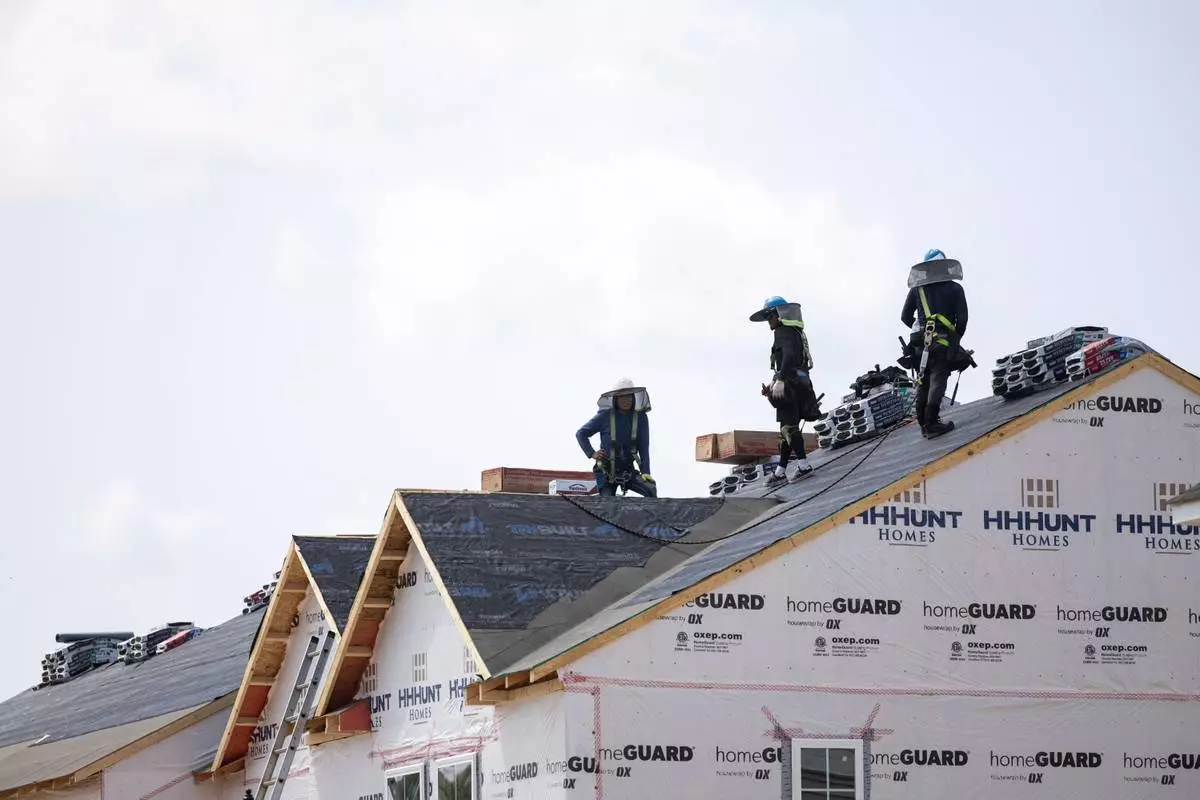
FILE - People work on the roof of a new housing development in Sandston, Va., June 6, 2025. (Mike KRopf/Richmond Times-Dispatch via AP, File)
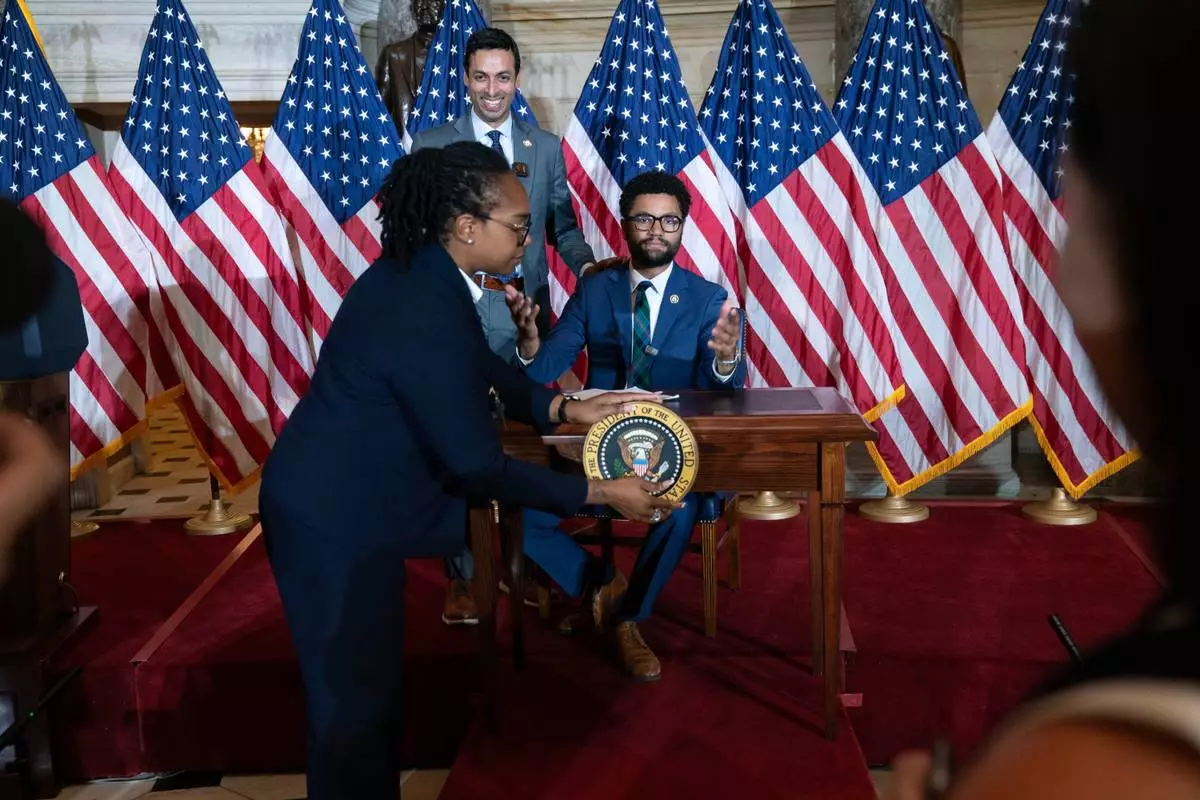
Rep. Suhas Subramanyam, D-Va., left, and Rep. Maxwell Frost D-Fla., speaks at a desk prepared for President Donald Trump as an official removes the presidential seal, after President Trump canceled the signing the bipartisan Housing Bill on the Capitol Wednesday, June 24, 2026, in Washington. (AP Photo/Jose Luis Magana)