Several dozen states could have to fork over millions of dollars to provide food aid to lower-income residents, if they don’t cut down on payment errors in the Supplemental Nutrition Assistance Program.
Nine states, meanwhile, won’t have to pay a penny toward SNAP benefits, because their error rates are so low that they won an exemption from a cost-sharing requirement included in a big tax-and-spending law signed by President Donald Trump.
Data released Wednesday by the U.S. Department of Agriculture provides a first look at the winners — and potential losers — under the new law.
The error rate refers rather the percentage of SNAP benefits paid either above or below what people should have received, primarily because of mistakes. While low-error states are guaranteed to owe nothing when the annual cost-sharing requirement begins in October 2027, others will have another year to try to reduce their errors and decrease the hit to their budgets.
States with high error rates will have to make choices that could impact their residents. To fund SNAP benefits, do they spend less on public schools, law enforcement or mental health care? To save money, do they squeeze people off SNAP by making it harder to stay in the program? Or do they drop out entirely from the federal food aid program that’s been around for decades?
“There are billions of dollars that are at stake that states will have to find the money to be able to pay if they want to continue to operate a SNAP program,” said Chloe Green, assistant director for policy at the American Public Human Services Association.
The Supplemental Nutrition Assistance Program, known informally as food stamps, provides monthly payments to help low-income residents to buy food. More than 37 million people nationwide received SNAP benefits in March, according to preliminary USDA figures. That's down nearly 5 million people — over 11% — from a year earlier.
A law signed by Trump last July expanded requirements for many adult SNAP recipients to work, volunteer or participate in job training. The new work and cost-share requirements are intended to increase accountability for participants and states — and to provide federal savings that offset new tax cuts.
“These payment error rates are further proof that state accountability is severely lacking in SNAP,” said Agriculture Secretary Brooke Rollins.
Administrative costs for SNAP currently are split 50-50 between the federal government and states. But federal law requires states to start paying 75% of SNAP administrative costs this October.
The federal government currently covers the full cost of SNAP benefits provided to people. But beginning in October 2027, states with SNAP error rates of 6% or greater could have to pay a portion of the benefits.
The error rates released Wednesday, which cover the 2025 fiscal year, are the first that matter. Federal law says states can choose to use either their 2025 or 2026 error rates when determining what percentage of SNAP benefits they must pay starting in October 2027.
South Dakota had the lowest error rate last year at about 2.5%. Nebraska had an error rate of 5.9% — just barely below the cutoff to avoid paying part of the SNAP benefits. Other states with error rates below 6% were Idaho, Iowa, Kentucky, Vermont, Utah, Wisconsin and Wyoming.
Federal law sets a sliding scale for how much money states must pay toward SNAP benefits. States with error rates between 6%-8% will have to eventually pay 5% of the benefit costs. Those with error rates between 8%-10% will have to pay 10% of benefit costs. And those with error rates over 10% will have to pay 15% of benefit costs.
Consider Missouri as an example. It had an error rate of 8.7% last year. Unless it improves next year, the state will have pick up 10% of SNAP benefit costs starting in October 2027.
Missouri residents received about $1.5 billion of SNAP benefits in 2024, the latest year for which federal data is available. If that same amount of benefits is paid in the future, Missouri could have to cover $150 million of the costs; that's a sum greater than the total budgeted for several state prisons.
An exception in the federal law gives states with the highest error rates more time to try to reduce them. States with error rates of at least 13.34% last year will receive a delay in their cost-share requirements until at least the 2029 fiscal year.
The delay will benefit Alaska, which had the highest error rate of over 23%. Other jurisdictions receiving a one-year, cost-share delay are Delaware, Georgia, Illinois, New Mexico, Oregon and the District of Columbia.
More states still have a shot at getting an extension. States whose error rates exceed 13.34% in 2026 could have their cost-sharing requirements delayed until the 2030 fiscal year.
A recent survey of state agencies that run SNAP found that most already are analyzing the root causes of their payment errors. The mistakes appear to be evenly attributable to SNAP recipients and program administrators, and many states are planning to increase staff focused on eliminating errors, according to the survey released by American Public Human Services Association.
But states also are planning for cuts, if they are forced to pay a portion of SNAP benefits. More than a quarter of the states responding to the survey said they could consider narrowing eligibility policies, and four states said they could consider withdrawing from SNAP entirely. The report did not list those states.
Some advocates for low-income residents want Congress to postpone the SNAP cost-share requirements for all states. That would require a change in federal law.
The error-rate data “really underscore the urgent need for Congress to delay this massive cost shift to state budgets,” said Katie Bergh, senior policy analyst at the left-leaning Center on Budget and Policy Priorities.
Many people already are struggling with high grocery prices, and “this is coming at a time when millions of people have already lost food assistance,” Bergh said.
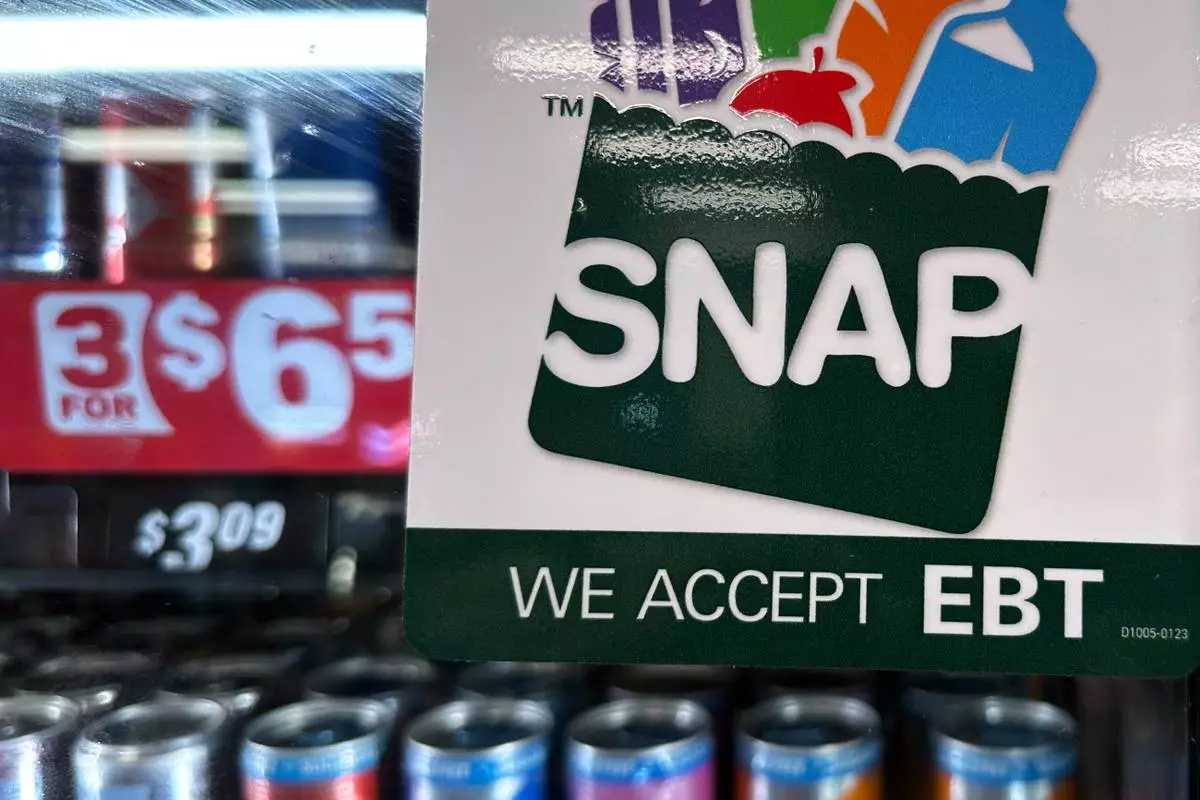
FILE - SNAP EBT information sign is displayed at a gas station in Riverwoods, Ill., Nov. 1, 2025. (AP Photo/Nam Y. Huh, File)