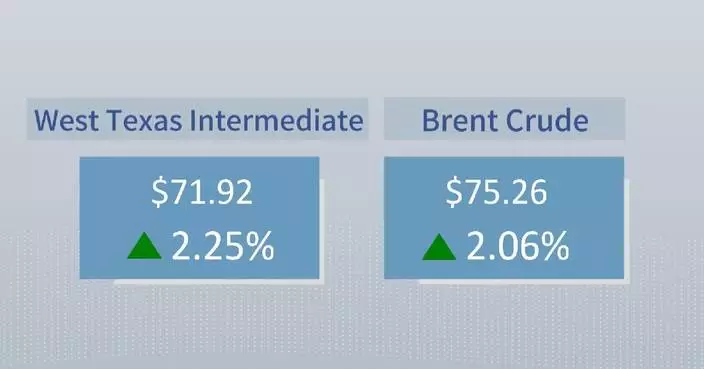
Oil prices fell on Wednesday.
The West Texas Intermediate for August delivery lost 2.87 U.S. dollars, or 3.92 percent, to settle at 70.34 dollars a barrel on the New York Mercantile Exchange. Brent crude for August delivery decreased by 3.34 dollars, or 4.33 percent, to settle at 73.74 dollars a barrel on the London ICE Futures Exchange.
Analysts point out that the core reason for the decline in oil prices is the significant easing of market concerns about the risk of supply disruptions in the Strait of Hormuz.
Despite the remaining differences in the U.S.-Iran negotiations, and the fact that the negotiations are expected to continue for a considerable period of time, the market has begun to factor in the expectation of easing geopolitical risks, and the focus is shifting from supply disruptions to supply recovery, according to analysts.
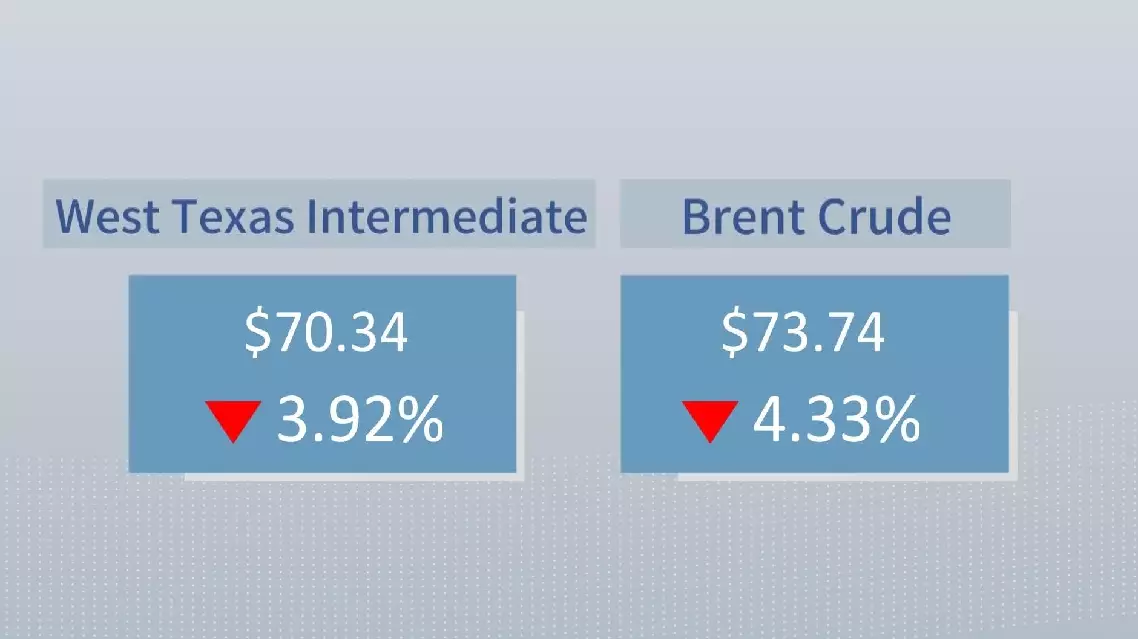
Crude futures settle lower
The Republic of Korea (ROK)'s bourse operator on Friday triggered a circuit breaker, a mechanism that halts trading when indexes plunge beyond set thresholds, amid a sharp sell‑off in big tech shares.
The benchmark KOSPI dropped 730.49 points, or 8.18 percent, to trade at 8,199.81 as of 12:18 local time (0318 GMT), while the smaller KOSDAQ tumbled 45.87 points, or 5.17 percent, to finish at 841.94.
The Korea Exchange activated the circuit breaker on the KOSPI market following a bout of panic selling in big tech shares such as Samsung Electronics and SK hynix.
Foreign investors led the panic selling due to rising fears of lower global demand for memory chips and concerns about overinvestment among the U.S. big tech companies.
The circuit breaker is issued in stages when the KOSPI or KOSDAQ dives by 8 percent, 15 percent and 20 percent.
The first two stages halt trading for 20 minutes, followed by a 10-minute single price auction, while the final stage instantly shuts down the market for the day.

ROK halts trading as circuit breaker hits amid big tech sell-offs