Skip to Content Facebook Feature Image

The NBA draft brings more paint presence to the Southwest Division with a plethora of big men

Sport

The NBA draft brings more paint presence to the Southwest Division with a plethora of big men
Sport

Sport

The NBA draft brings more paint presence to the Southwest Division with a plethora of big men

2026-06-25 11:28 Last Updated At:11:30

The NBA's Southwest Division could become a showcase next season for rookies who do their best work in the paint.

Memphis took Duke forward Cameron Boozer third overall in the NBA draft Tuesday night and added forward Karim Lopez of Mexico later in the first round.

The Dallas Mavericks used their top draft choice to select Morez Johnson Jr. at ninth overall from the reigning NCAA national champion Michigan — just hours after announcing they had hired new coach Dusty May away from the Wolverines.

The defending Western Conference champions added a big man, too. The San Antonio Spurs took Kentucky forward and center Jayden Quaintance at 20th overall — and then traded for another big man — UConn's Tarris Reed Jr. — at No. 26.

Shortly after the 6-foot-9 Boozer found out he'd be heading to Memphis, he predicted that he and Zach Edey would “become one of the best rebounding duos in the league” and cause mismatch problems for opponents.

The 6-9 Johnson joins dynamic second-year big man Cooper Flagg in the Mavericks' potentially formidable front court. Johnson averaged 13.1 points and 7.3 rebounds in helping Michigan win the second NCAA title in program history this past season.

Houston and New Orleans did not have first-round selections this year, and neither succeeded in finding a trade they liked to get back into NBA draft’s opening round.

The Rockets didn't make their first pick until late in the second round Wednesday night, at 53rd overall, and they, too, grabbed a big man. Houston took 6-11 Virginia center Ugonna Onyenso of Nigeria.

The Pelicans, who won just 26 games last season, had only the third to last pick in the second round, or 58th overall. They took SMU wing Jeron Pierre Jr.

What was the team’s need: Pieces for an ongoing rebuild process that Memphis started last summer.

Who did Memphis draft: Cameron Boozer, 6-foot-9 power forward from Duke with the No. 3 pick. Two trades dropped the Grizzlies from No. 16 to No. 17 to 21, picking up five second-round picks in the process. At No. 21 from Detroit in a deal that won’t be official until July 6, Memphis selected Karim Lopez, a 19-year-old forward from Mexico, who played for the New Zealand Breakers in the NBL. BYU guard Richie Saunders was the pick at No. 32 on Wednesday night, though he is recovering from an ACL torn in mid-February.

The picks’ NBA comparison: Boozer compares to Al Horford, Paolo Banchero and Kevin Love. As for Lopez, the comparisons stretch from Kyle Kuzma to Deni Avdija. Saunders is compared to Danny Green and Grayson Allen.

What was the team’s need: The Mavericks might spend a long time looking for their next star point guard after the ill-fated Luka Doncic trade.

Who did Dallas draft: Michigan F/C Morez Johnson Jr. at No. 9 and G Sergio De Larrea of Spain at No. 25 in a trade with the Knicks. In the second round Wednesday night, the Mavs took Virginia Tech forward Tobi Lawal of England.

The picks' NBA comparisons: At 6-9 with a defensive pedigree, Johnson fits the profile of a young Bam Adebayo. Johnson is considered limited offensively with the potential to grow. Adebayo wasn’t a double-figure scorer until his third season. De Larrea, who fits the mold of a point guard, turned down U.S. college offers to follow the same path as Doncic in the EuroLeague. But at the moment, the similarities between those two players end there.

What was the team’s need: Losing 4-1 to the New York Knicks in the NBA Finals exposed the Spurs’ need for another big man to play alongside and spell Victor Wembanyama. The French All-Star averaged 26.0 points, 11.2 rebounds, 3.6 blocks and 2.6 assists while playing a series-high 39.7 minutes.

Who the Spurs drafted: Jayden Quaintance, a 6-9, 253-pound forward from Kentucky and Tarris Reed Jr., a 6-11 center from Connecticut. Quaintance’s career started at Arizona State, but his freshman season ended when he suffered a torn ACL, torn meniscus, and fracture to his right knee on Feb. 23, 2025. He played four games for Kentucky before knee pain and swelling forced him to end his season. Reed, picked 26th overall and acquired from Denver in a draft night trade, spent his first two seasons at Michigan before closing his career at UConn. Reed averaged 9.2 points, 6.8 rebounds and 1.5 blocks during his four-year career. Both Quaintance and Reed are rim protectors and defensive-minded players who rely on their strength. In the second round Wednesday night, San Antonio selected Tennessee guard Ja'Kobi Gillespie 42nd overall, and Duke forward Malik Brown 44th overall.

The pick’s NBA comparison: Quaintance has been compared defensively to Portland’s Robert Williams III and Houston’s Clint Capela and offensively to Detroit’s Jalen Duren for his play around the rim. Reed has been compared to Joakim Noah and Andrew Bogut for his back-to-the-basket approach to offense.

What was the team need: Houston ranked near the bottom of the NBA in 3-point shooting last season, so that was an apparent need. But the Rockets also needed help in the front court, given the recent injury struggles of Capela and Steven Adams. Depth at point guard also would come in handy for a team that seemed to struggle to produce when starter Fred VanVleet wasn’t on the court.

Who Houston drafted: The Rockets weren’t scheduled to pick until 39th and 53rd overall in the second round on Wednesday night, having traded away their 2026 first-rounder back in 2019 and part of a trade that sent Russell Westbrook to Houston that year. But the Rockets traded away their 39th overall pick to the New York Knicks before finally taking Onyenso.

What was the team need: The Pelicans needed more outside shooting, particularly if they intend to continue to build around power forward Zion Williamson. Trey Murphy III is New Orleans’ lone reliable outside shooting threat, and he’s been mentioned in trade talks so often that it’s not entirely clear how long his tenure with the Pelicans will endure.

Who New Orleans drafted: The Pelicans entered the draft without a first-round choice, having traded it away last year to Atlanta so New Orleans could acquire a second 2025 first-rounder that was used to take Derik Queen. Pelicans basketball operations chief Joe Dumars expressed interest in making a trade to get back into the first round this year, but apparently couldn’t find a deal he liked. New Orleans didn't make a pick until late in the second round Wednesday night, at 58th overall, when they added Pierre to their back court.

AP Sports Writers Teresa Walker, Schuyler Dixon, along with AP freelancers Clay Bailey and Raul Dominguez, contributed to this story.

AP NBA: https://apnews.com/nba
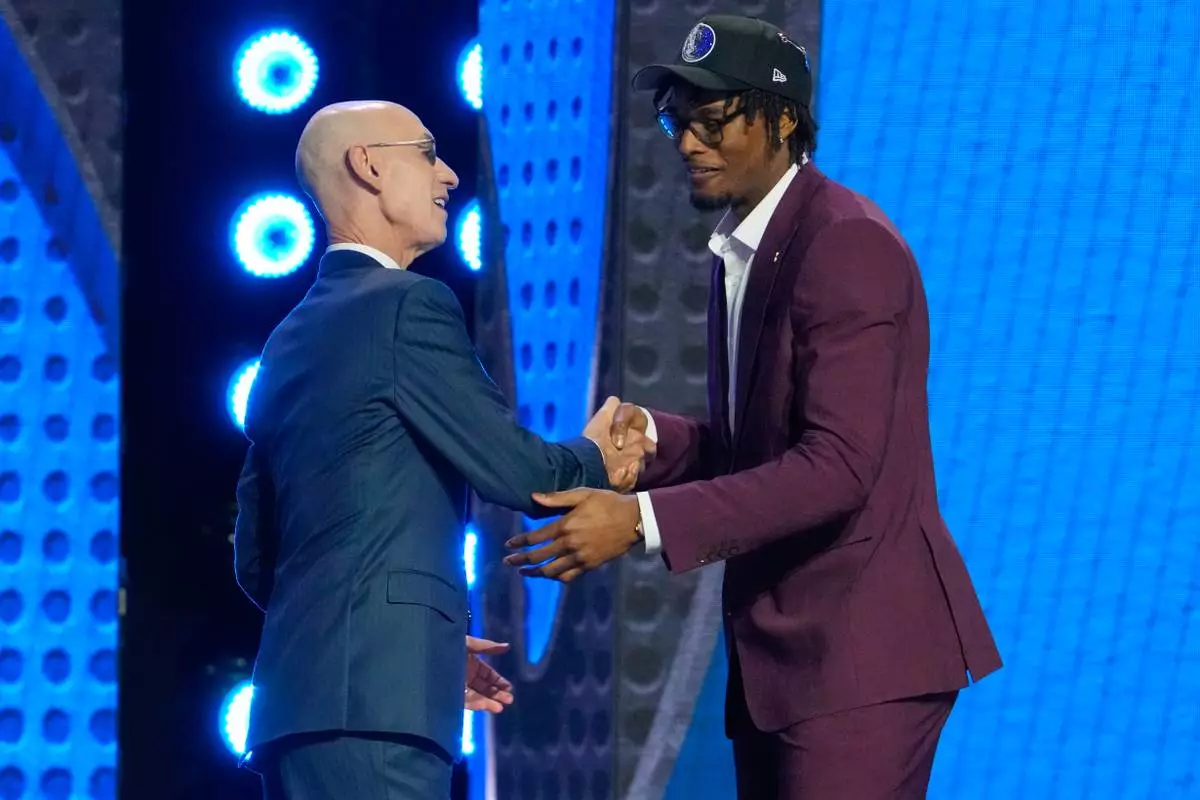
Morez Johnson Jr., right, greets NBA Commissioner Adam Silver, left, after being selected by the Dallas Mavericks as the ninth overall pick in the first round of the NBA basketball draft, Tuesday, June 23, 2026, in New York. (AP Photo/Yuki Iwamura)
Morez Johnson Jr., right, greets NBA Commissioner Adam Silver, left, after being selected by the Dallas Mavericks as the ninth overall pick in the first round of the NBA basketball draft, Tuesday, June 23, 2026, in New York. (AP Photo/Yuki Iwamura)

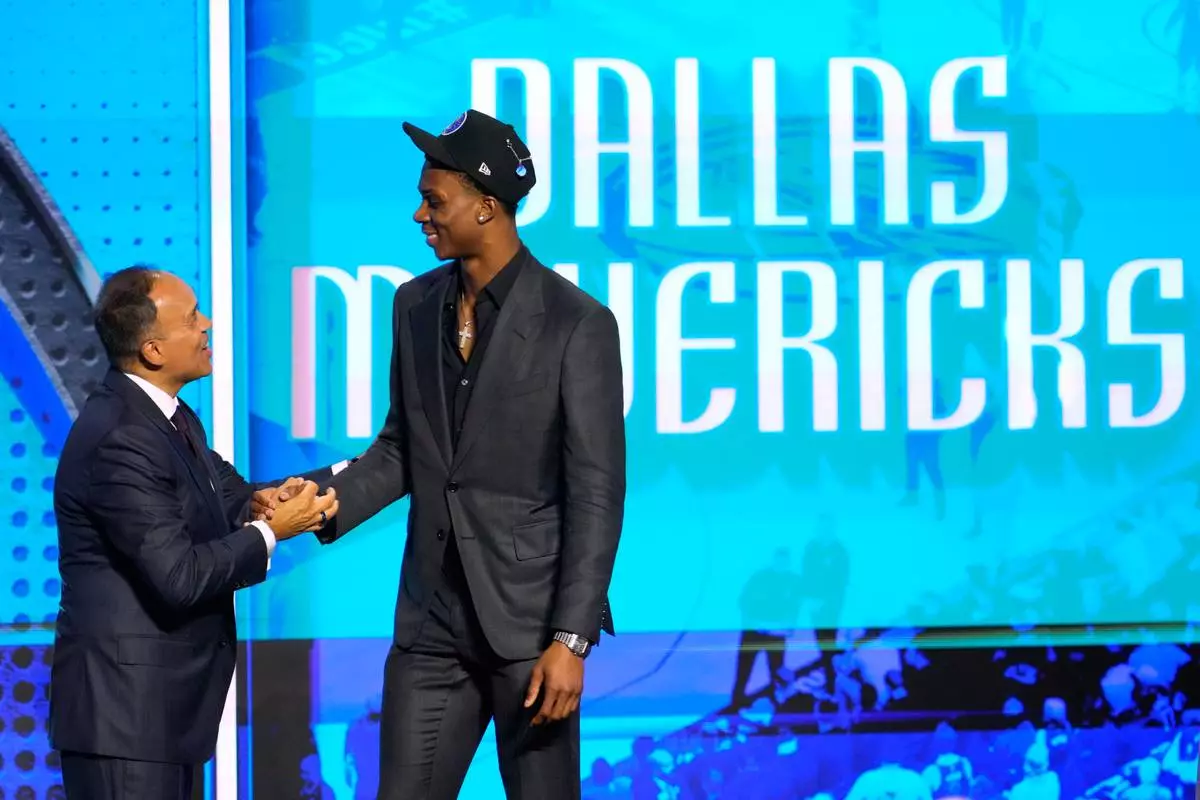
Tobi Lawal, right, greets NBA Deputy Commissioner Mark Tatum after being selected by the Dallas Mavericks in the second round of the NBA basketball draft Wednesday, June 24, 2026, in New York. (AP Photo/Yuki Iwamura)

Tobi Lawal, right, greets NBA Deputy Commissioner Mark Tatum after being selected by the Dallas Mavericks in the second round of the NBA basketball draft Wednesday, June 24, 2026, in New York. (AP Photo/Yuki Iwamura)

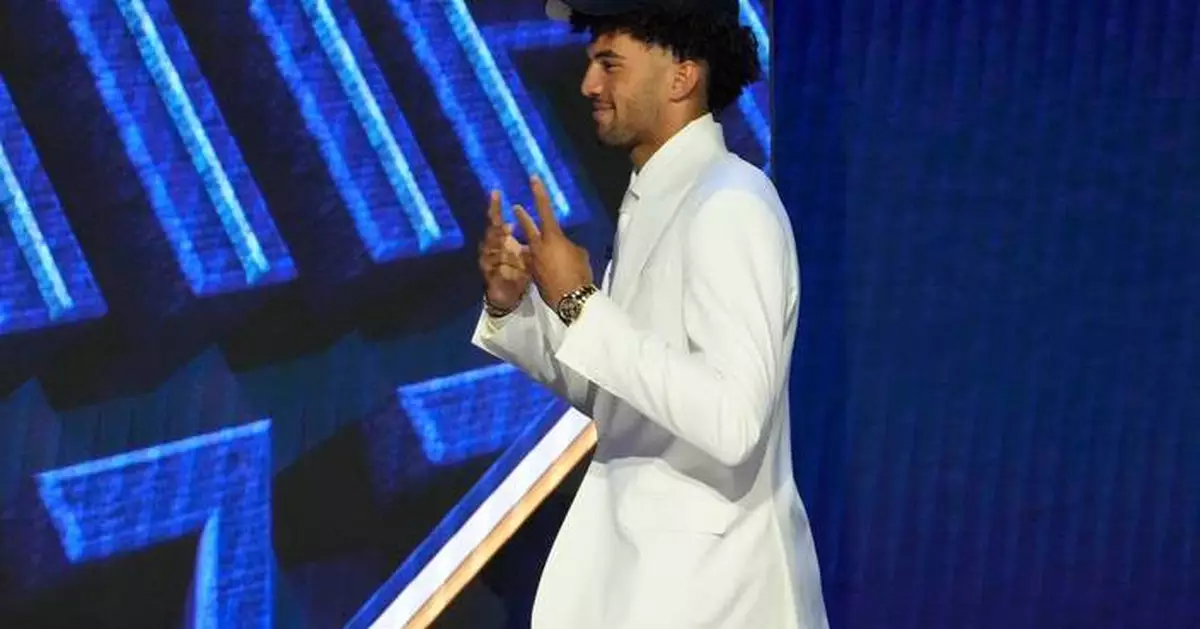
Cameron Boozer gestures as he walks off the stage after being chosen by the Memphis Grizzlies in the first round of the NBA basketball draft, Tuesday, June 23, 2026, in New York. (AP Photo/Yuki Iwamura)

Cameron Boozer gestures as he walks off the stage after being chosen by the Memphis Grizzlies in the first round of the NBA basketball draft, Tuesday, June 23, 2026, in New York. (AP Photo/Yuki Iwamura)
Several dozen states could have to fork over millions of dollars to provide food aid to lower-income residents, if they don’t cut down on payment errors in the Supplemental Nutrition Assistance Program.

Nine states, meanwhile, won’t have to pay a penny toward SNAP benefits, because their error rates are so low that they won an exemption from a cost-sharing requirement included in a big tax-and-spending law signed by President Donald Trump.

Data released Wednesday by the U.S. Department of Agriculture provides a first look at the winners — and potential losers — under the new law.

The error rate refers to the percentage of SNAP benefits paid either above or below what people should have received, primarily because of mistakes. While low-error states are guaranteed to owe nothing when the annual cost-sharing requirement begins in October 2027, others will have another year to try to reduce their errors and decrease the hit to their budgets.

States with high error rates will have to make choices that could impact their residents. To fund SNAP benefits, do they spend less on public schools, law enforcement or mental health care? To save money, do they squeeze people off SNAP by making it harder to stay in the program? Or do they drop out entirely from the federal food aid program that’s been around for decades?

“There are billions of dollars that are at stake that states will have to find the money to be able to pay if they want to continue to operate a SNAP program,” said Chloe Green, assistant director for policy at the American Public Human Services Association.

The Supplemental Nutrition Assistance Program, known informally as food stamps, provides monthly payments to help low-income residents to buy food. More than 37 million people nationwide received SNAP benefits in March, according to preliminary USDA figures. That's down nearly 5 million people — over 11% — from a year earlier.

A law signed by Trump last July expanded requirements for many adult SNAP recipients to work, volunteer or participate in job training. The new work and cost-share requirements are intended to increase accountability for participants and states — and to provide federal savings that offset new tax cuts.

“These payment error rates are further proof that state accountability is severely lacking in SNAP,” said Agriculture Secretary Brooke Rollins.

Administrative costs for SNAP currently are split 50-50 between the federal government and states. But federal law requires states to start paying 75% of SNAP administrative costs this October.

The federal government currently covers the full cost of SNAP benefits provided to people. But beginning in October 2027, states with SNAP error rates of 6% or greater could have to pay a portion of the benefits.

The error rates released Wednesday, which cover the 2025 fiscal year, are the first that matter. Federal law says states can choose to use either their 2025 or 2026 error rates when determining what percentage of SNAP benefits they must pay starting in October 2027.

South Dakota had the lowest error rate last year at about 2.5%. Nebraska had an error rate of 5.9% — just barely below the cutoff to avoid paying part of the SNAP benefits. Other states with error rates below 6% were Idaho, Iowa, Kentucky, Vermont, Utah, Wisconsin and Wyoming.

Federal law sets a sliding scale for how much money states must pay toward SNAP benefits. States with error rates between 6%-8% will have to eventually pay 5% of the benefit costs. Those with error rates between 8%-10% will have to pay 10% of benefit costs. And those with error rates over 10% will have to pay 15% of benefit costs.

Consider Missouri as an example. It had an error rate of 8.7% last year. Unless it improves next year, the state will have pick up 10% of SNAP benefit costs starting in October 2027.

Missouri residents received about $1.5 billion of SNAP benefits in 2024, the latest year for which federal data is available. If that same amount of benefits is paid in the future, Missouri could have to cover $150 million of the costs; that's a sum greater than the total budgeted for several state prisons.

An exception in the federal law gives states with the highest error rates more time to try to reduce them. States with error rates of at least 13.34% last year will receive a delay in their cost-share requirements until at least the 2029 fiscal year.

The delay will benefit Alaska, which had the highest error rate of over 23%. Other jurisdictions receiving a one-year, cost-share delay are Delaware, Georgia, Illinois, New Mexico, Oregon and the District of Columbia.

More states still have a shot at getting an extension. States whose error rates are at least 13.34% in 2026 could have their cost-sharing requirements delayed until the 2030 fiscal year.

A recent survey of state agencies that run SNAP found that most already are analyzing the root causes of their payment errors. The mistakes appear to be evenly attributable to SNAP recipients and program administrators, and many states are planning to increase staff focused on eliminating errors, according to the survey released by American Public Human Services Association.

But states also are planning for cuts, if they are forced to pay a portion of SNAP benefits. More than a quarter of the states responding to the survey said they could consider narrowing eligibility policies, and four states said they could consider withdrawing from SNAP entirely. The report did not list those states.

Some advocates for low-income residents want Congress to postpone the SNAP cost-share requirements for all states. That would require a change in federal law.

The error-rate data “really underscore the urgent need for Congress to delay this massive cost shift to state budgets,” said Katie Bergh, senior policy analyst at the left-leaning Center on Budget and Policy Priorities.

Many people already are struggling with high grocery prices, and “this is coming at a time when millions of people have already lost food assistance,” Bergh said.

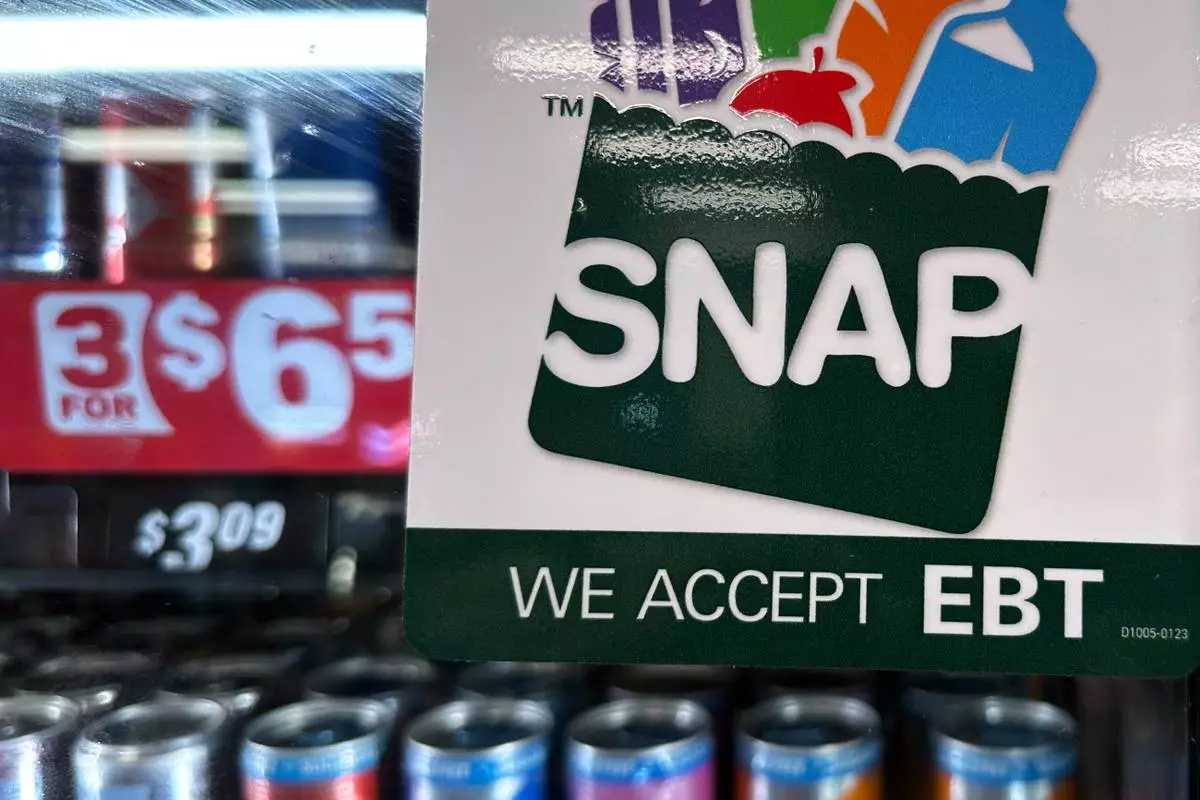
FILE - SNAP EBT information sign is displayed at a gas station in Riverwoods, Ill., Nov. 1, 2025. (AP Photo/Nam Y. Huh, File)

FILE - SNAP EBT information sign is displayed at a gas station in Riverwoods, Ill., Nov. 1, 2025. (AP Photo/Nam Y. Huh, File)

Recommended Articles