NAIROBI, Kenya (AP) — Police in Kenya set up roadblocks on Thursday to prevent access to the capital, Nairobi, ahead of a planned demonstration marking two years since at least 60 people died in anti-government protests that also saw protesters storming the parliament.
Families whose loved ones died in the 2024 protests have said they would protest the delay in justice for the victims. The government has been accused of a lack of transparency in an ongoing process to compensate those who suffered human rights abuses during the protests.
Last week, President William Ruto said people would be allowed to protest, but the government would also protect the rights of children to go to school and workers to work, warning against any attempts by the demonstrators to “shut down the country.”
Interior Minister Kipchumba Murkomen said Wednesday that police would escort the protesters but warned that criminals disguised as protesters would not be allowed to infiltrate and raid businesses.
On Thursday morning, police erected roadblocks on all major highways around Nairobi, blocking motorists from accessing the city. Parliament buildings remained barricaded and businesses were closed.
Opposition leaders have backed the planned protests, calling for transparency in the government's compensation program.
For Edith Wanjiku, whose son Ibrahim Kamau died of two gunshots nto the neck, life has been difficult without her 19-year-old son.
“We’ve really suffered emotionally for the last two years,” she told The Associated Press.
Wanjiku said her family has yet to benefit from the compensation program although they have submitted all the required paperwork to the Kenya Human Rights Commission.
“Only two out of 10 families whose children were shot that day near Parliament have been compensated and we are wondering what criteria the government is using,” she said.
During the June 2024 protests, thousands of young Kenyans stormed the parliament building, urging legislators to vote against a finance bill that had proposed an increase in taxes despite the rising cost of living.
Police opened fire outside the building, killing dozens of protesters.
Ruto last week said the government compensation represents “a state acknowledgment that harm occurred” and was not an “admission” of guilt.
He also said the compensation was not the “price of life, of pain or of loss,” and that it should not be seen as a “reward for violence or criminality” in a country where violent protests are common.
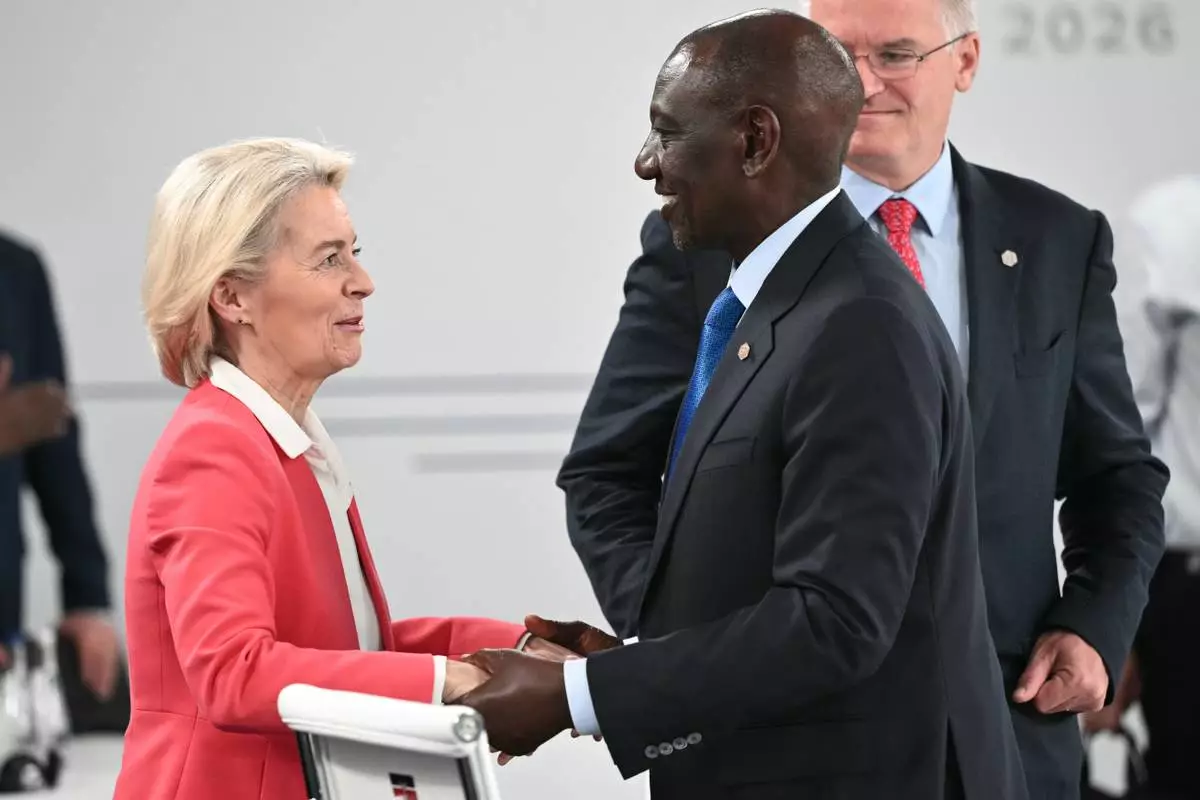
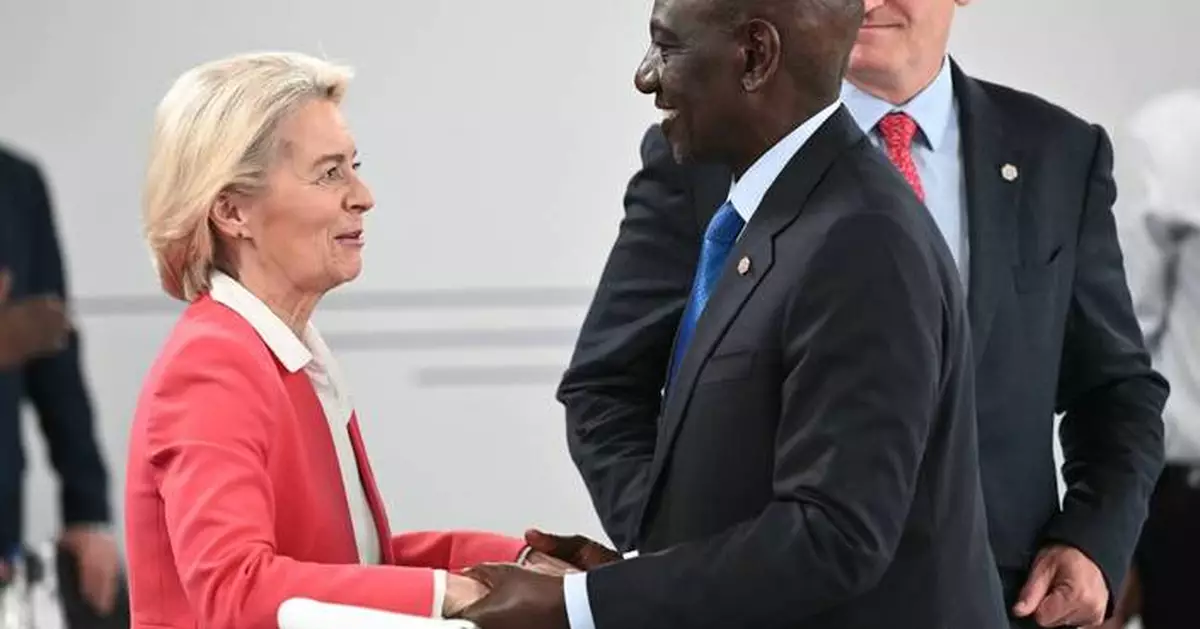
European Commission President Ursula von der Leyen, left, shakes hands with Kenya's President William Ruto ahead of a working session at the G7 summit, in Evian-les-Bains, France, Wednesday, June 17, 2026. (Mandel Ngan/Pool Photo via AP)
KARACHI, Pakistan (AP) — Raju Rathore’s Hindu faith and devotion to Imam Hussein converge in Pakistan’s port city of Karachi during Muharram, one of Islam’s sacred months.
Religious observances during this period are primarily associated with Shiite Muslims. But in Rathore’s hometown some members of the Hindu community also commemorate the martyrdom of the Prophet Muhammad’s grandson, Imam Hussein.
“Muharram is very important to me and I want to keep participating in it for as long as I live,” said Rathore, whose parents migrated from India’s Gujarat state after the Partition of India in 1947. “I go there in devotion to Imam Hussein.”
Hussein was killed alongside family members during the Battle of Karbala in present-day Iraq in the seventh century. The episode became a defining moment in the split between Sunni and Shiite Islam.
The mourning over the deaths of Hussein and his companions reaches its peak on Ashoura, the 10th day of Muharram, which millions observe worldwide.
Rathore’s devotion to Hussein came from his parents. He said they were unable to have children until his mother made a personal vow at the shrine of Masoom Shah Bukhari. She promised that, if she got pregnant, her child would honor Hussein’s martyrdom by making tazias — temporary replicas of his mausoleum carried during Muharram processions.
“This is our passion,” said Rathore, who has crafted these pieces for decades in fulfillment of his mother’s vow. “Our devotion to Imam Hussein is such that even giving our lives would feel insufficient.”
The involvement of non-Shiite communities in Muharram rituals has long been documented across South Asia, including among groups known as Hussaini Brahmins, whose traditions have incorporated elements associated with both Hinduism and Shiite Islam.
“There are many reasons for this, but one is that, historically, many ruling dynasties in South Asia were Shi’a,” said Justin Jones, a professor of religious studies at the University of Oxford.
Jones said Shiite rulers in several South Asian kingdoms sponsored processions and other commemorations of Hussein’s martyrdom, helping turn them into public events that drew wider audiences.
Over time, Muharram observances became woven into civic and cultural life across parts of the region, where some Hindus participated as musicians in processions and others crafted tazias.
Such traditions persist across the region, Jones said. However, they have become less common over the past century as religious communities increasingly observe Muharram separately.
According to Pakistan’s 2023 census, Hindus number nearly 3.9 million people, making them the country’s largest religious minority.
Organizations such as Minority Rights Group point out that some Pakistani Hindus have faced violations of their religious freedom. Yet Rathore said he has been able to practice his faith freely.
“Yes, I am Hindu, but this is not about religion,” Rathore said. “Many of my fellow Hindus also hold Imam Hussein in great respect.”
Rathore said he attends Shiite congregation halls during Muharram with other members of Karachi’s Hindu community. There they offer prayers and take part in rituals associated with the holy month — including chest beating — before joining processions.
“Our religion has never taught us that because we are Hindus we should not participate in or respect others’ traditions,” said Bharat Kumar, another Pakistani Hindu who dearly respects Imam Hussein. “We celebrate our own festivals with great enthusiasm and grandeur and we approach this in the same way.”
Both Kumar and Rathore craft tazias ahead of Ashoura. The latter’s are made from paper, glass, cardboard and other materials at his own expense. He said family members gather materials over time for use in the structures ahead of Ashoura.
The tradition will now pass to his own son, who now also takes part in commemorating the martyrdom of Hussein through the mausoleum replicas.
“I have been doing this not just for a few years but for about 45,” Rathore said. “I am now 52 years old, and as long as I have the strength to continue, I will keep making them.”
Hernández reported from Beijing.
Associated Press religion coverage receives support through the AP’s collaboration with The Conversation US, with funding from Lilly Endowment Inc. The AP is solely responsible for this content.
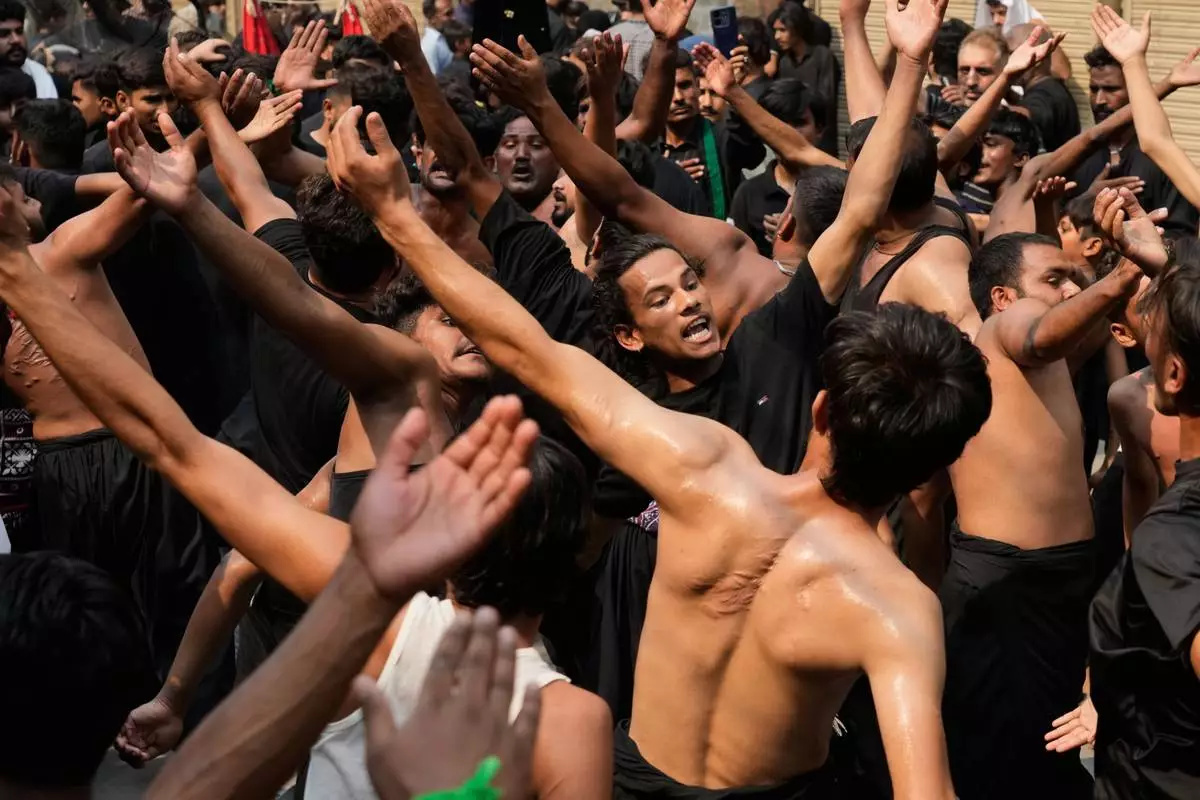
Shiite Muslims beat their chests in a ritual during a gathering in the mourning month of Muharram, in Lahore, Pakistan, Wednesday, Jun 24, 2026. (AP Photo/K.M. Chaudary)
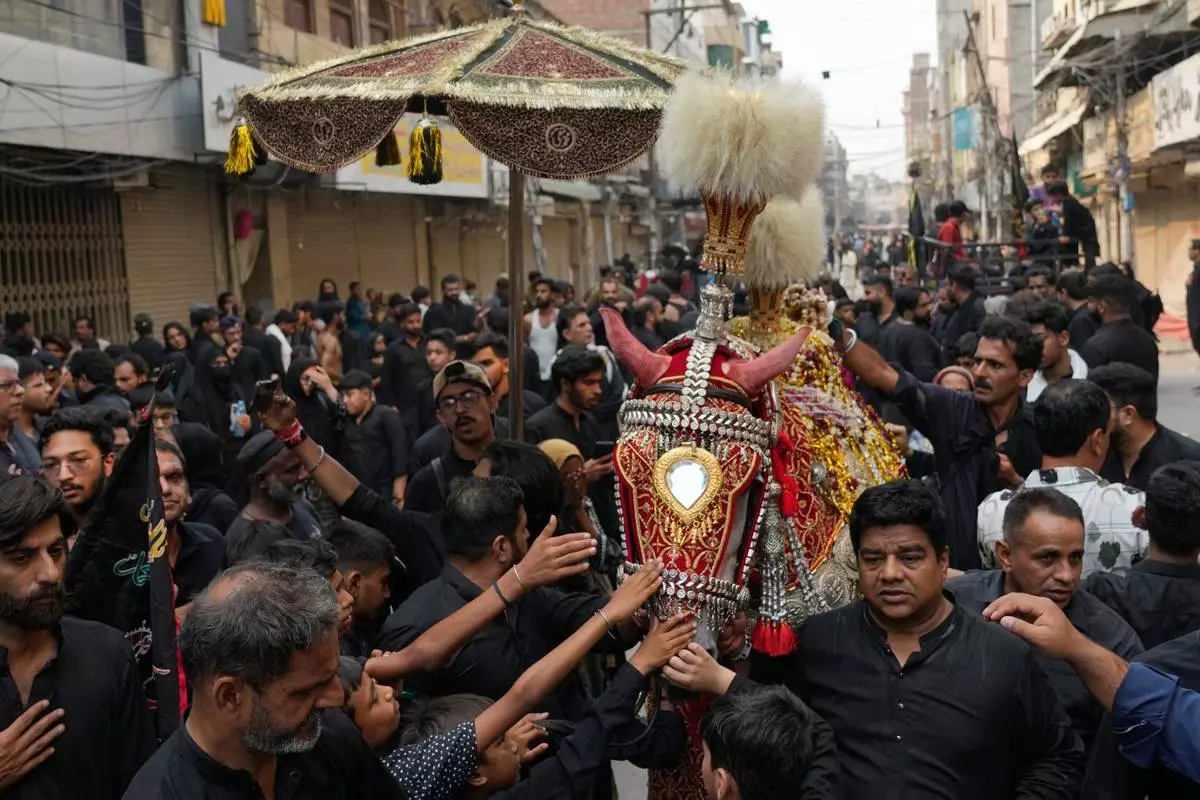
Shiite Muslims touch a horse, that symbolizes the horse that carried Imam Hussein during the battle of Karbala, at a Muharram procession, in Lahore, Pakistan, Wednesday Jun 24, 2026. (AP Photo/K.M. Chaudary)
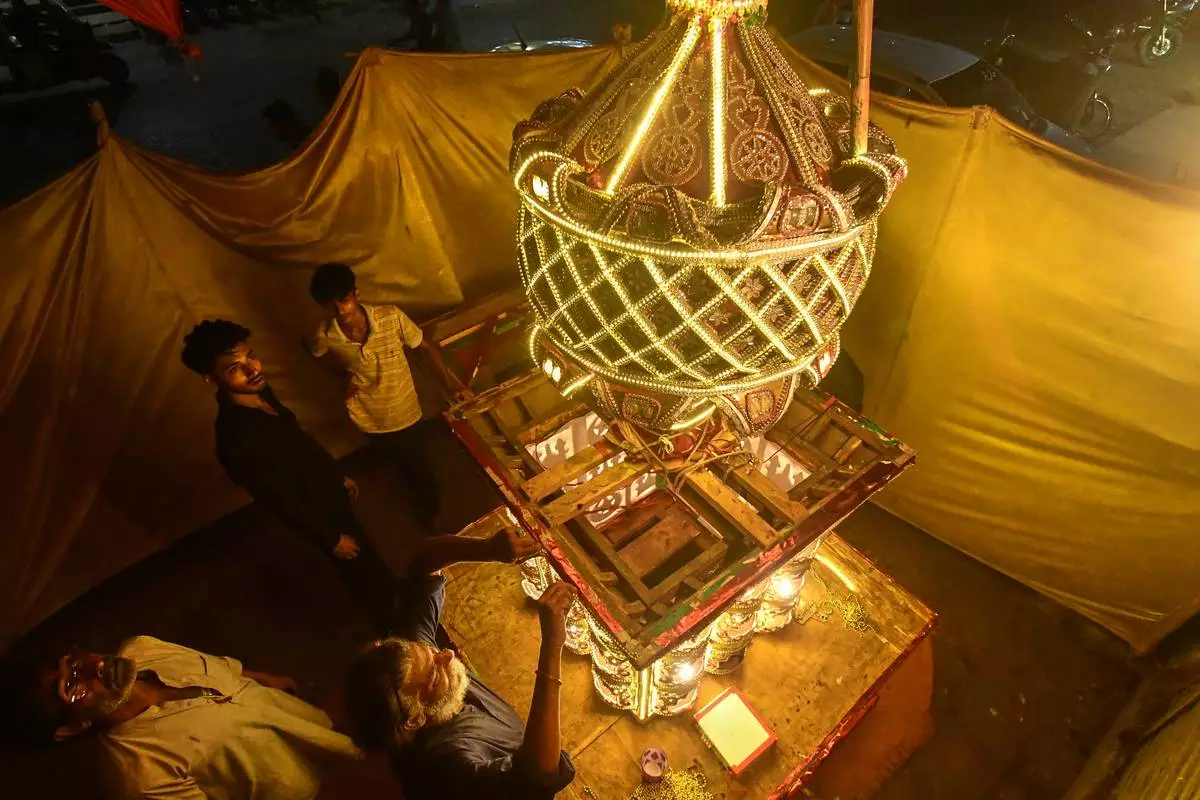
Artisans from Pakistani Hindu community, give final touches to a replica of the mausoleum of Imam Hussain locally called 'Tazia', in preparation for the upcoming Ashoura, when Shiites Muslims mark the death of Hussein, at their home in Karachi, Pakistan, Tuesday, June 23, 2026. (AP Photo/Ali Raza)
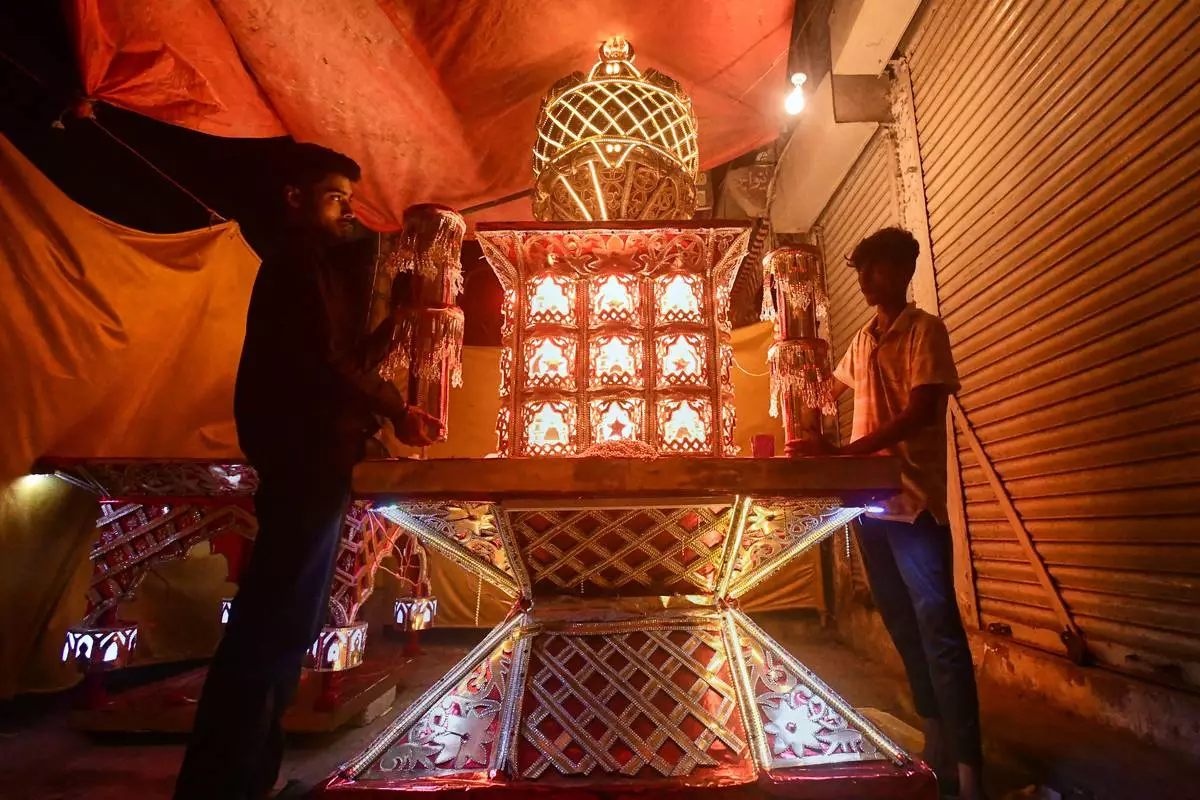
Artisans from Pakistani Hindu community, give final touches to a replica of the mausoleum of Imam Hussain locally called 'Tazia', in preparation for the upcoming Ashoura, when Shiites Muslims mark the death of Hussein, at their home in Karachi, Pakistan, Tuesday, June 23, 2026. (AP Photo/Ali Raza)
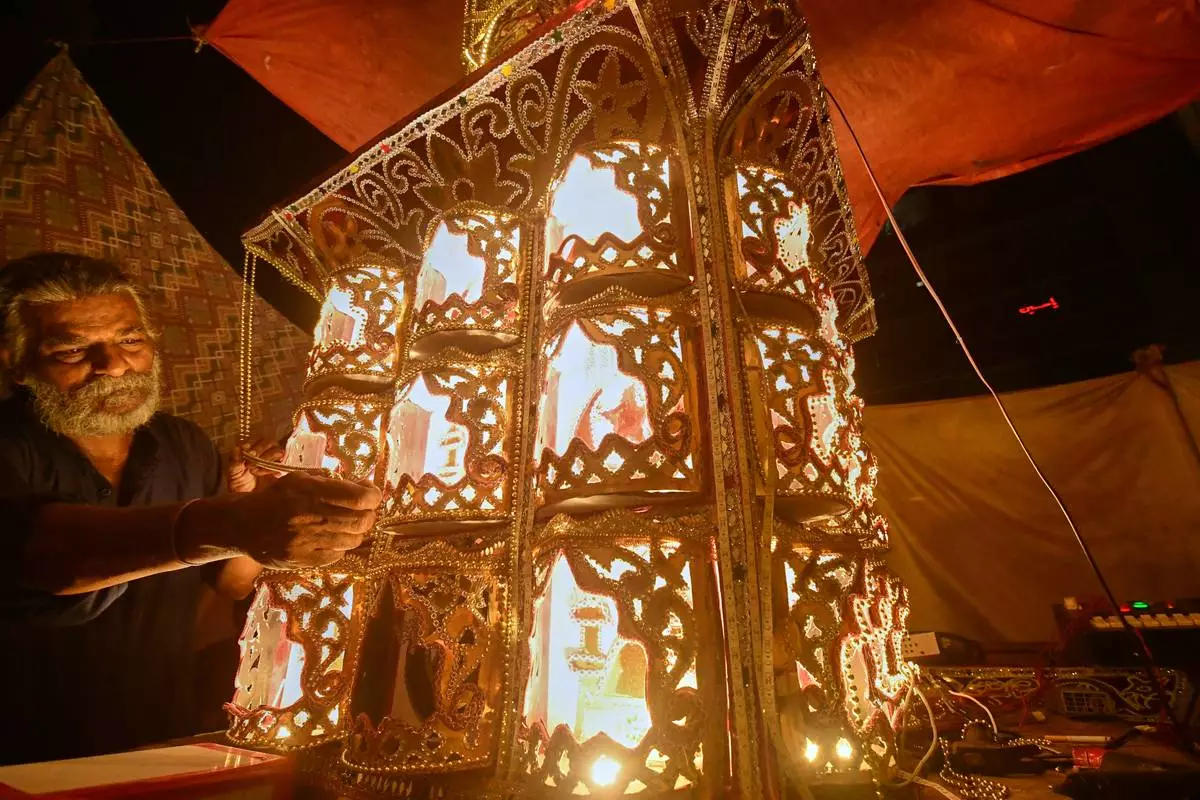
Raju Rathore, an artisan from Pakistani Hindu community, gives final touches to a replica of the mausoleum of Imam Hussain locally called 'Tazia', in preparation for the upcoming Ashoura, when Shiites Muslims mark the death of Hussein, at his home in Karachi, Pakistan, Tuesday, June 23, 2026. (AP Photo/Ali Raza)
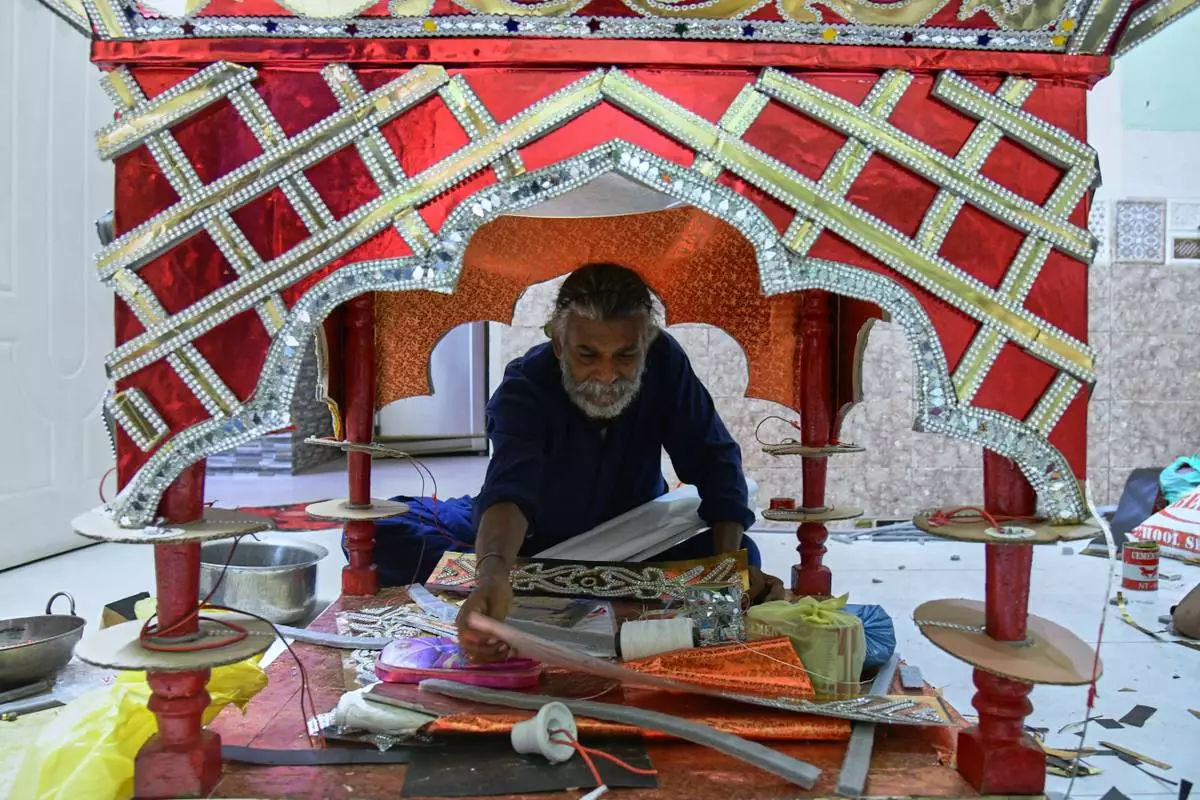
Raju Rathore, an artisan from Pakistani Hindu community, makes a replica of the mausoleum of Imam Hussain locally called 'Tazia', in preparation for the upcoming Ashoura, when Shiites Muslims mark the death of Hussein, at his home in Karachi, Pakistan, Tuesday, June 23, 2026. (AP Photo/Ali Raza)
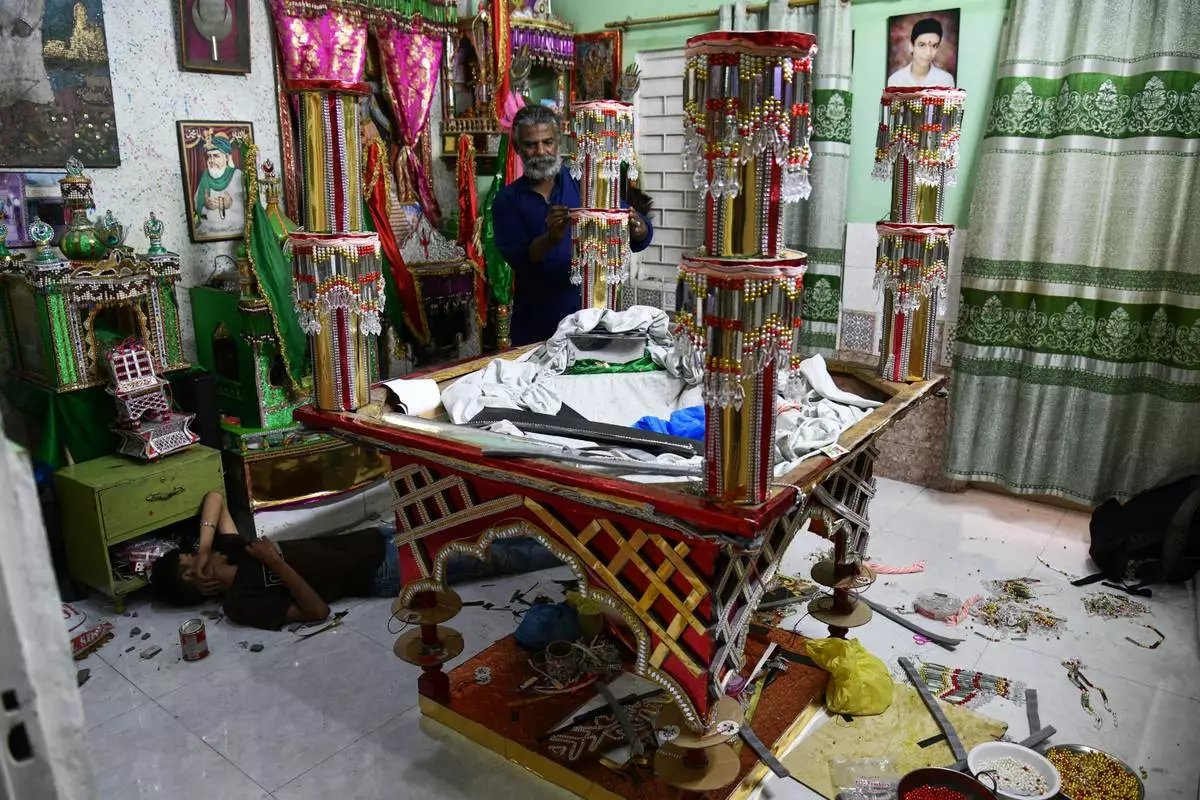
Raju Rathore, an artisan from Pakistani Hindu community, makes a replica of the mausoleum of Imam Hussain locally called 'Tazia', in preparation for the upcoming Ashoura, when Shiites Muslims mark the death of Hussein, at his home in Karachi, Pakistan, Tuesday, June 23, 2026. (AP Photo/Ali Raza)