Senate Republicans who were berated by President Donald Trump over opposition to his war in Iran held a late-night vote Wednesday to try to appease him, rejecting a war powers resolution a day after a similar measure passed.
Trump harangued GOP senators face-to-face earlier in the day for allowing a vote to block his war in Iran on Tuesday, further escalating a feud that has diverted GOP efforts to focus on election-year affordability issues.
Also, congressional Democrats called for investigations Wednesday into renovations at the Lincoln Memorial Reflecting Pool, as the ongoing drama over the president’s problem-plagued, $16 million rehabilitation project continued to roil the capital.
Heres' the latest:
President Trump was attending a private lunch Wednesday with the Senate GOP when he wondered aloud how anyone could have voted for a war powers resolution a day earlier that seeks to block further U.S. military action against Iran.
Cassidy, one of the four Republicans who backed the measure, was ready with an answer.
“I stood and said, ‘You have not told the American people what’s going on,’” Cassidy, a Louisiana Republican, recounted to reporters afterward. “This is supposed to last four weeks. It’s lasted four months. Our original objectives have not been achieved.”
Things deteriorated from there.
When Cassidy told Trump he would continue voting for war powers resolutions until there’s a congressional briefing on developments in Iran, the senator recalled that Trump “did not particularly care for my comments” and “raised his voice.”
Trump repeatedly told Cassidy to sit down, according to a person familiar with the situation who spoke on condition of anonymity to describe a private meeting. At one point, the president called the senator a “lunatic,” the person said.
Cassidy acknowledged losing his temper, which he said was “not appropriate.”
▶ Read more
— Steven Sloan and Lisa Mascaro
Several tankers made their way out of the Strait of Hormuz on Thursday using a new route promoted by a U.N. maritime agency. Iran has threatened vessels using the path, which runs along the coast of Oman.
The opening of an alternative passage through the vital waterway would relieve pressure on the world economy and remove Iran’s main source of leverage in ongoing talks about the interim deal signed last week with the United States.
Traffic through the strait has increased but is still well below prewar levels. Oil on Thursday briefly dipped below its last prewar price of just under $73 a barrel, a sign that the market believes the situation is improving.
The two sides are still debating terms of the deal — from getting ships through the narrow mouth of the Persian Gulf to the future of Iran’s stockpile of highly enriched uranium.
▶ Read more
The Federal Reserve’s preferred inflation gauge rose to a new three-year high in May as gas prices peaked, a sign rising costs could pose political problems for President Trump as midterm elections near.
The Commerce Department said Thursday that consumer prices rose 4.1% in May from a year earlier, the largest annual increase since April 2023. On a monthly basis, inflation was 0.4% last month, matching April’s increase and down from 0.7% in March.
The increase was largely driven by more expensive gas, as well as pricier semiconductors and other computer equipment that are in high demand for the AI buildout. Rising prices have caused the inflation-fighters at the Federal Reserve to keep their key rate unchanged this year, a reversal from January when they had penciled in two cuts. Some economists forecast the central bank could lift rates this year instead.
▶ Read more
Congressional Democrats called for investigations Wednesday into renovations at the Lincoln Memorial Reflecting Pool, as the ongoing drama over the president’s problem-plagued, $16 million rehabilitation project continued to roil the capital.
Lawmakers in the House and Senate demanded answers about the saga that’s been highlighted in the news cycle for weeks, even as the White House has repeatedly blamed — without evidence — unidentified vandals for peeling paint and other problems. Six people have been arrested, President Donald Trump said, without providing details, and a local wildlife nonprofit conducted necropsies on dead ducks found near the Reflecting Pool. The president has said the pool may need to be drained once again for additional repairs.
Connecticut Sen. Richard Blumenthal, the top Democrat on the Senate Permanent Subcommittee on Investigations, challenged the Trump administration over no-bid contracts for work on the Reflecting Pool, saying they were awarded to vendors with previous relationships to Trump.
▶ Read more
Senate Republicans who were berated by President Donald Trump over opposition to his war in Iran held a late-night vote Wednesday to try to appease him, rejecting a war powers resolution a day after a similar measure passed.
Trump harangued GOP senators face-to-face earlier in the day for allowing a vote to block his war in Iran on Tuesday, further escalating a feud that has diverted GOP efforts to focus on election-year affordability issues and brought much of the chamber’s business to a halt. He exchanged particularly harsh words with Louisiana Sen. Bill Cassidy, one of four Republicans who had voted with Democrats on the measure.
Hours later, though, Cassidy was invited to receive a personal briefing on the war at the White House from Vice President JD Vance and envoy Steve Witkoff. Cassidy then returned to the Capitol to vote against a separate but nearly identical war powers resolution.
▶ Read more
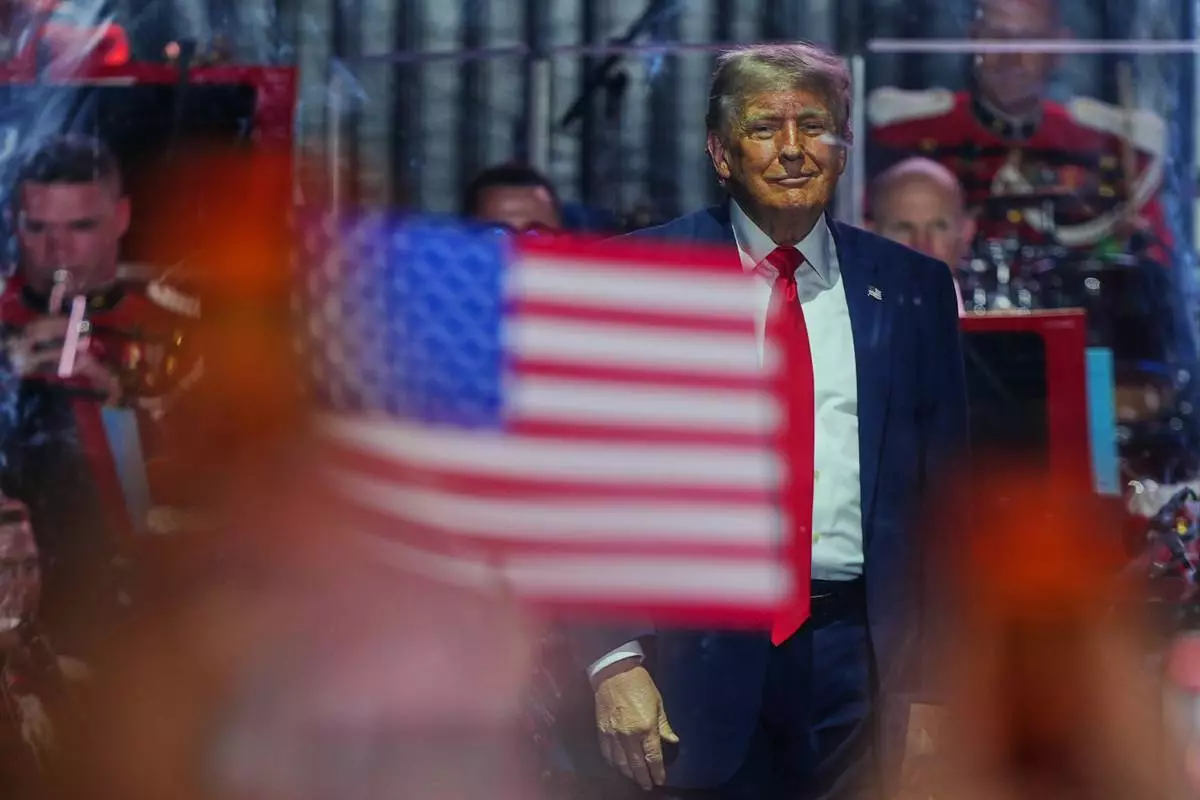
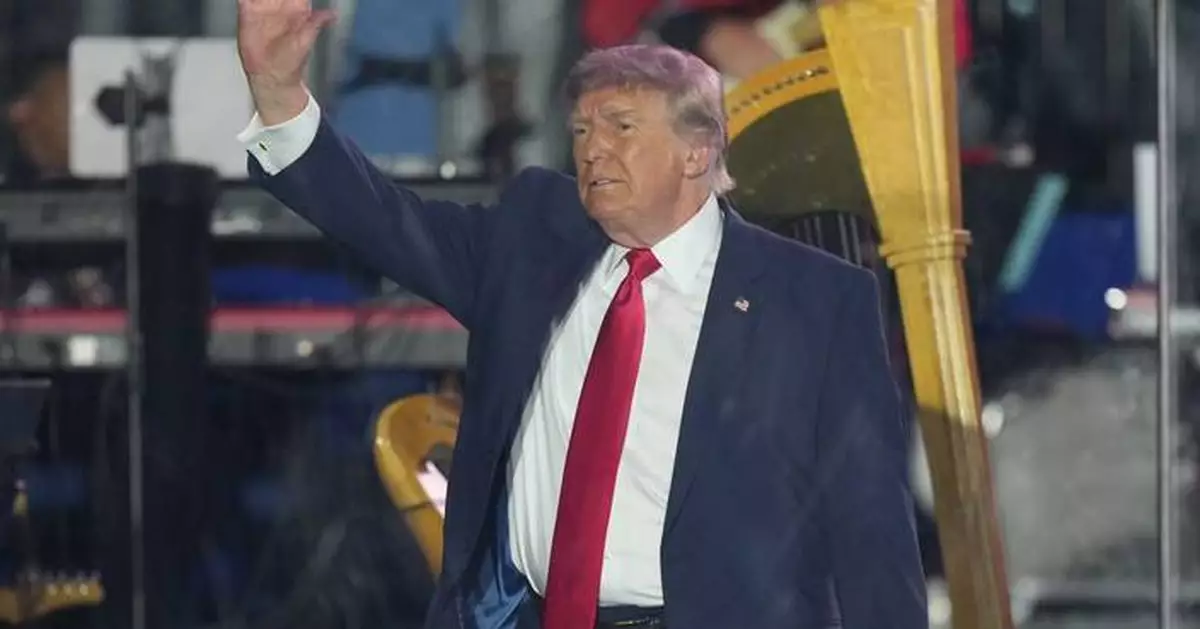
President Donald Trump stands on stage after speaking at the opening of the Great American State Fair on the National Mall, Wednesday, June 24, 2026, in Washington. (AP Photo/Julia Demaree Nikhinson)
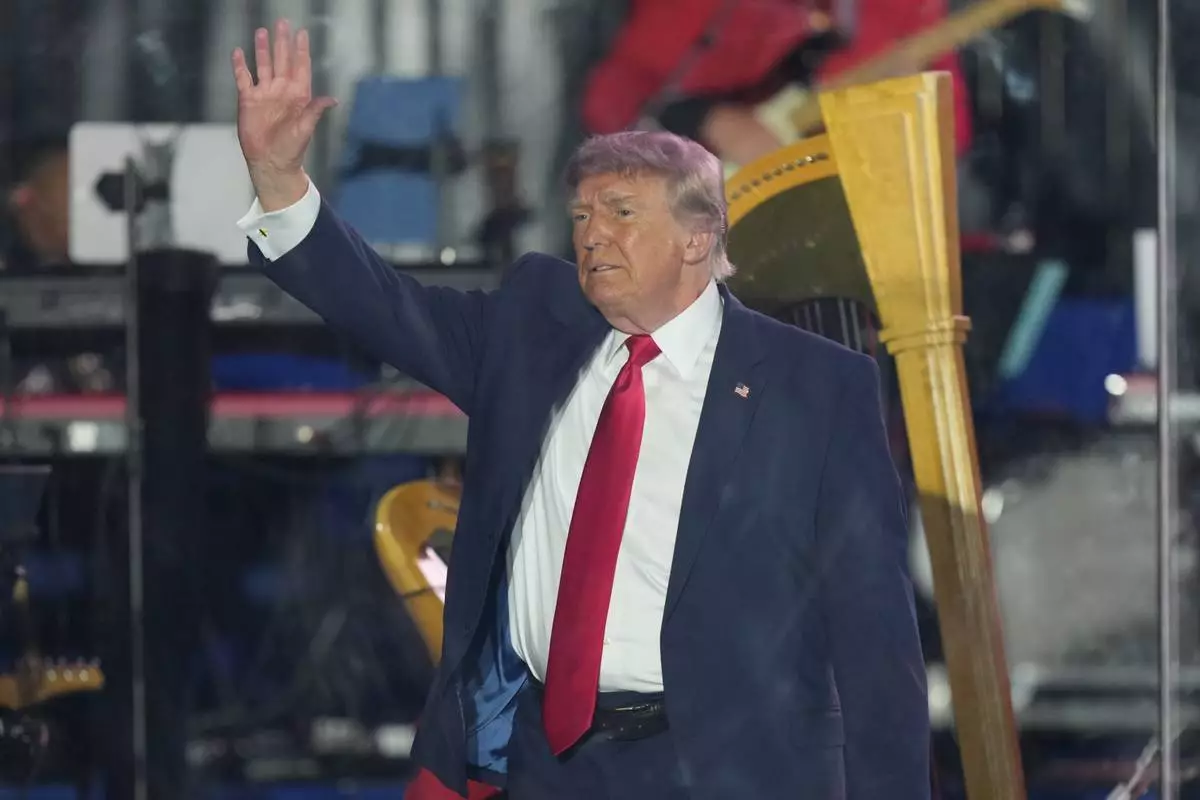
President Donald Trump waves after speaking at the opening of the Great American State Fair on the National Mall, Wednesday, June 24, 2026, in Washington. (AP Photo/Alex Brandon)