CAMBRIDGE, England--(BUSINESS WIRE)--Jun 25, 2026--
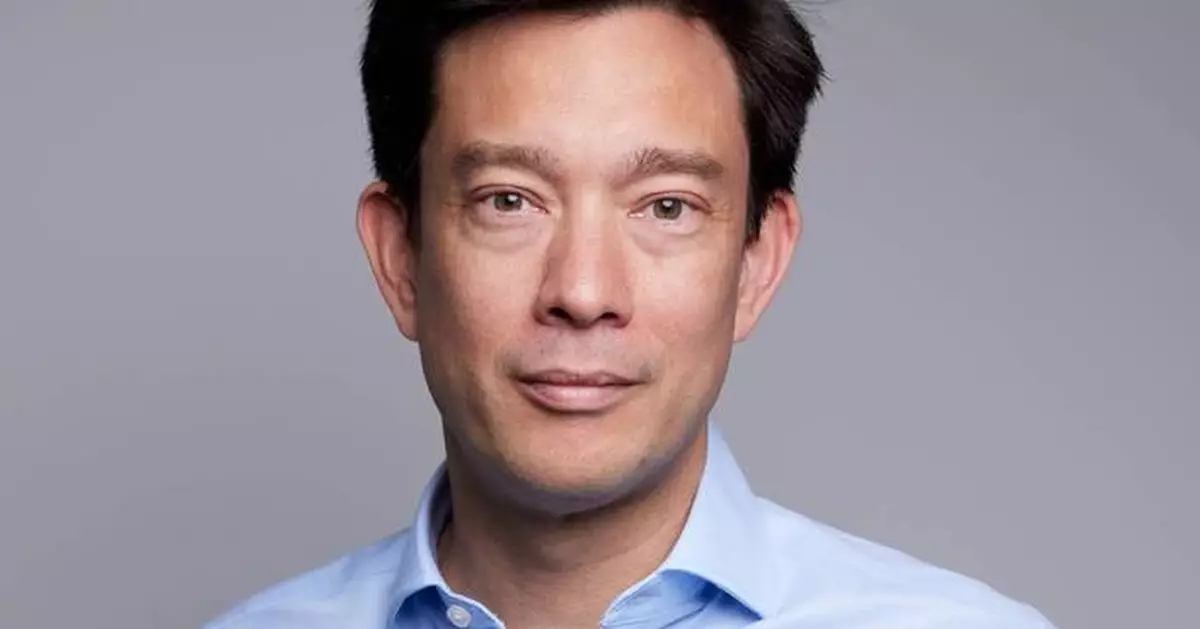
Constructive Bio’s founder and Chief Scientific Officer, Professor Jason Chin, has been named the recipient of the 2026 Heinrich Wieland Prize, one of Europe’s most prestigious honours for fundamental research in the life sciences. The award places Professor Chin among past laureates, including five Nobel Prize winners, and recognises the genetic-code-expansion technology now being applied to next-generation therapeutics, including GLP-1s.
This press release features multimedia. View the full release here: https://www.businesswire.com/news/home/20260625752436/en/
The award, presented by the Boehringer Ingelheim Stiftung, recognises his pioneering contributions to synthetic biology, particularly his engineering of cells to biosynthesise unnatural proteins and polymers with properties absent in nature.
Professor Chin is best known for his scientific breakthrough in genetic code expansion, through the creation of synthetic bacterial genomes with compressed genetic codes. This involves rewriting the fundamental instructions cells use to build molecules, allowing them to create entirely new classes of proteins and polymers that nature alone cannot make. His methodology has become the most widely used approach worldwide for biosynthesising non-natural proteins and polymers.
In 2022, Professor Chin founded Constructive Bio to translate these advances into scalable applications across therapeutics. Today, the company is applying its platform to pharmaceutical discovery and manufacturing, enabling both novel therapeutic candidates and more scalable routes to complex molecules such as GLP-1s. As Chief Scientific Officer, he continues to play a central role in shaping the company’s scientific direction and platform development.
Previous Heinrich Wieland Prize laureates include Michael Brown, Joseph Goldstein, Bengt Samuelsson, James Rothman and Carolyn Bertozzi.
Ola Wlodek, CEO of Constructive Bio, said:
“Jason’s work has fundamentally changed what biology can be asked to do. What began as a profound scientific question about whether the genetic code could be rewritten has become the foundation for entirely new capabilities in drug discovery and manufacturing. This award is a fitting recognition of the originality and significance of that work, and we are proud to be building on its foundations at Constructive Bio.”
Sir Gregory Winter, Member of the Board of Constructive Bio, said:
“Jason has had a long-term strategic vision for much of his scientific career – to unfreeze the genetic code. This has required his development of methods for the synthesis of entire bacterial genomes in which degenerate codons can be reassigned to non-coding amino acids (ncAA), and for the creation of new cellular translation machinery to generate proteins and peptides with novel properties by incorporation of ncAA. Jason’s work is leading to a new era in protein engineering.
Constructive Bio is dedicated to making Jason’s technologies and vision an industrial and commercial success. The company has developed a highly productive Syn61 bacterial strain for fermentation of ncAA products containing up to three different ncAAs at multi-gram-per-litre scale. Peptides with ncAA that previously had to be made by chemical synthesis can now be made by fermentation, avoiding chemical waste and at much lower costs. Already the company has created a set of potent and DPPIV-resistant GLP-1 agonists and is exploring other applications with both peptides and proteins.
These promising developments remind me of how the application of recombinant DNA technology led to the transformation of medicine and the pharmaceutical industry by therapeutic antibodies. At Constructive Bio we congratulate the scientific recognition given to Jason by the Heinrich Wieland Prize, and we look forward to working with Jason and with our industrial partners to spearhead its impact on medicine.“
Jason Chin, Chief Scientific Officer, said:
“It is a great honour to receive the Heinrich Wieland Prize. This recognition reflects the work of many exceptional students, postdocs and collaborators over many years. We were motivated by a simple question: can the rules we thought were fixed in biology be systematically changed? It is exciting to see these ideas now finding broader application in science, and increasingly in the development of useful new therapeutics and materials.”

Professor Jason Chin
Senate Republicans who were berated by President Donald Trump over opposition to his war in Iran held a late-night vote Wednesday to try to appease him, rejecting a war powers resolution a day after a similar measure passed.
Trump harangued GOP senators face-to-face earlier in the day for allowing a vote to block his war in Iran on Tuesday, further escalating a feud that has diverted GOP efforts to focus on election-year affordability issues.
Also, congressional Democrats called for investigations Wednesday into renovations at the Lincoln Memorial Reflecting Pool, as the ongoing drama over the president’s problem-plagued, $16 million rehabilitation project continued to roil the capital.
Heres' the latest:
Several tankers made their way out of the Strait of Hormuz on Thursday using a new route promoted by a U.N. maritime agency. Iran has threatened vessels using the path, which runs along the coast of Oman.
The opening of an alternative passage through the vital waterway would relieve pressure on the world economy and remove Iran’s main source of leverage in ongoing talks about the interim deal signed last week with the United States.
Traffic through the strait has increased but is still well below prewar levels. Oil on Thursday briefly dipped below its last prewar price of just under $73 a barrel, a sign that the market believes the situation is improving.
The two sides are still debating terms of the deal — from getting ships through the narrow mouth of the Persian Gulf to the future of Iran’s stockpile of highly enriched uranium.
▶ Read more
The Federal Reserve’s preferred inflation gauge rose to a new three-year high in May as gas prices peaked, a sign rising costs could pose political problems for President Trump as midterm elections near.
The Commerce Department said Thursday that consumer prices rose 4.1% in May from a year earlier, the largest annual increase since April 2023. On a monthly basis, inflation was 0.4% last month, matching April’s increase and down from 0.7% in March.
The increase was largely driven by more expensive gas, as well as pricier semiconductors and other computer equipment that are in high demand for the AI buildout. Rising prices have caused the inflation-fighters at the Federal Reserve to keep their key rate unchanged this year, a reversal from January when they had penciled in two cuts. Some economists forecast the central bank could lift rates this year instead.
▶ Read more
Congressional Democrats called for investigations Wednesday into renovations at the Lincoln Memorial Reflecting Pool, as the ongoing drama over the president’s problem-plagued, $16 million rehabilitation project continued to roil the capital.
Lawmakers in the House and Senate demanded answers about the saga that’s been highlighted in the news cycle for weeks, even as the White House has repeatedly blamed — without evidence — unidentified vandals for peeling paint and other problems. Six people have been arrested, President Donald Trump said, without providing details, and a local wildlife nonprofit conducted necropsies on dead ducks found near the Reflecting Pool. The president has said the pool may need to be drained once again for additional repairs.
Connecticut Sen. Richard Blumenthal, the top Democrat on the Senate Permanent Subcommittee on Investigations, challenged the Trump administration over no-bid contracts for work on the Reflecting Pool, saying they were awarded to vendors with previous relationships to Trump.
▶ Read more
Senate Republicans who were berated by President Donald Trump over opposition to his war in Iran held a late-night vote Wednesday to try to appease him, rejecting a war powers resolution a day after a similar measure passed.
Trump harangued GOP senators face-to-face earlier in the day for allowing a vote to block his war in Iran on Tuesday, further escalating a feud that has diverted GOP efforts to focus on election-year affordability issues and brought much of the chamber’s business to a halt. He exchanged particularly harsh words with Louisiana Sen. Bill Cassidy, one of four Republicans who had voted with Democrats on the measure.
Hours later, though, Cassidy was invited to receive a personal briefing on the war at the White House from Vice President JD Vance and envoy Steve Witkoff. Cassidy then returned to the Capitol to vote against a separate but nearly identical war powers resolution.
▶ Read more
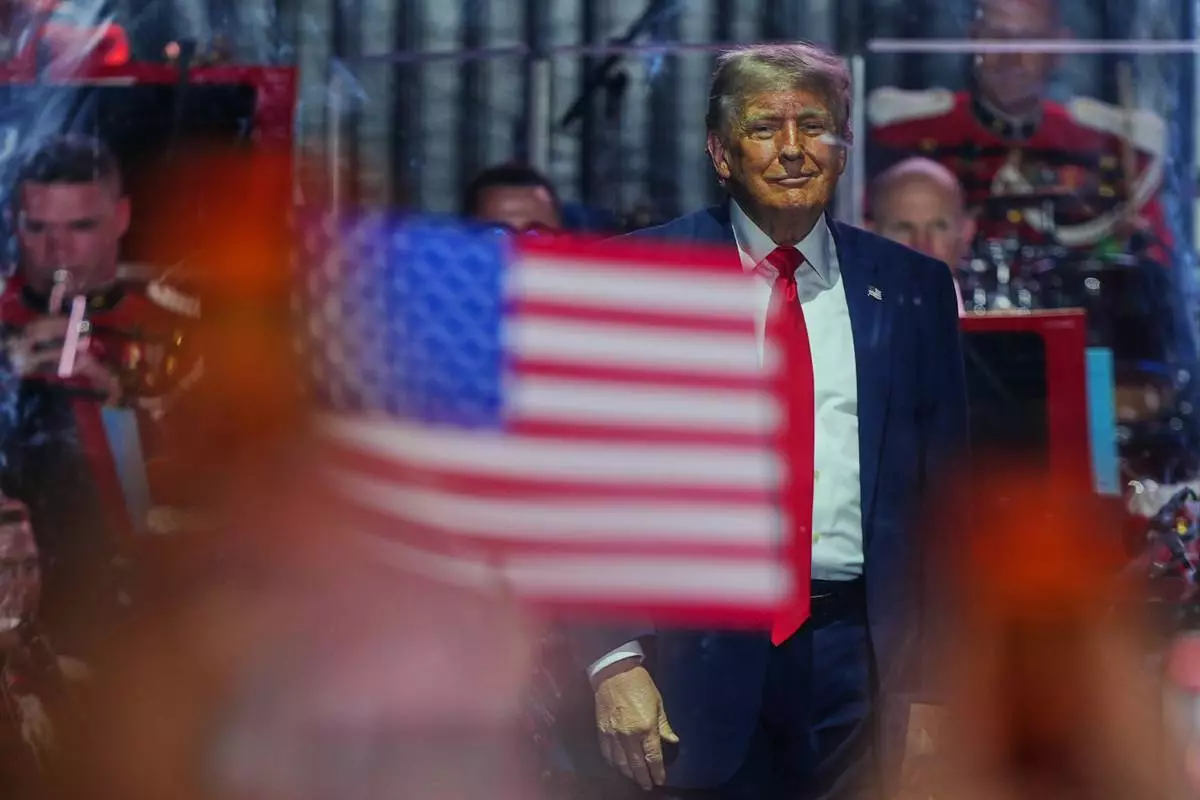
President Donald Trump stands on stage after speaking at the opening of the Great American State Fair on the National Mall, Wednesday, June 24, 2026, in Washington. (AP Photo/Julia Demaree Nikhinson)
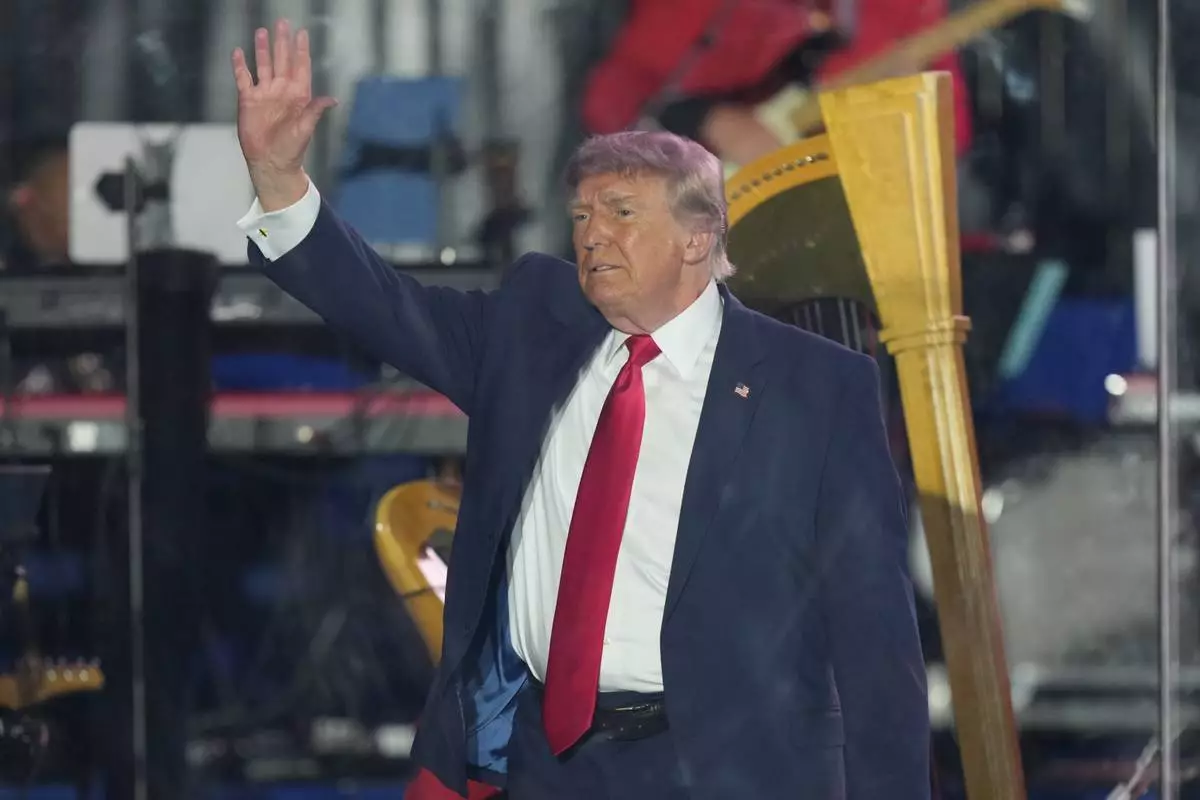
President Donald Trump waves after speaking at the opening of the Great American State Fair on the National Mall, Wednesday, June 24, 2026, in Washington. (AP Photo/Alex Brandon)