Skip to Content Facebook Feature Image

Supreme Court clears way for Trump administration to revive restrictive policy for asylum seekers

News

Supreme Court clears way for Trump administration to revive restrictive policy for asylum seekers
News

News

Supreme Court clears way for Trump administration to revive restrictive policy for asylum seekers

2026-06-26 01:00 Last Updated At:01:10

WASHINGTON (AP) — The Supreme Court cleared the way Thursday for the Trump administration to potentially revive an immigration policy once used to turn back migrants seeking asylum at the U.S.-Mexico border.

The justices, in a 6-3 decision, overturned a lower court order blocking the practice that limited the number of people who could apply for asylum each day, first under the Obama administration and then expanded during President Donald Trump’s first term.

Advocates said the tactic created a humanitarian crisis as thousands of people settled in unsafe makeshift shelters to await their turn. The Trump administration said it was necessary to deal with an increase of asylum seekers at the border.

The policy is not in place now, though authorities have imposed other restrictions on asylum seekers. The Department of Homeland Security did not say if they plan to revive it, but applauded the ruling. “This decision opens up an important tool to continue securing our southern border,” said James Percival, the agency's general counsel.

The administration argued that metering is a critical tool that’s been used by presidents of both parties and should stay available. Federal attorneys say people turned away at the border could come back later, though lines were thousands of people long when the policy was in place before.

The case is one of several immigration suits is considering this term, including Trump’s push to end restrict birthright citizenship. The high court also allowed his administration to end deportation for migrants fleeing instability and armed conflict on Thursday.

Under federal law, migrants who arrive in the U.S. must be able to apply for asylum and be screened for fear of persecution in their home countries.

The Justice Department argued that people stopped by authorities haven’t arrived in the country, so immigration agents don’t have to let them apply.

The court's conservative majority agreed. “A guest does not arrive in a house when he knocks on the front door,” Justice Samuel Alito wrote.

But attorneys for people seeking asylum say the law has long meant anyone arriving at a port of entry should be screened, and blocking arrivals disregards the nation’s ideals.

Justice Sonia Sotomayor dissented from the bench, saying that the majority’s opinion “regrettably and tragically extinguishes the light of the torch of the Statue of Liberty.”

In an unusual exchange, Alito voiced a response after she finished speaking. He expressed surprise that she had read her dissent out loud and defended his opinion by pointing out that the policy had been used during two presidential administrations. “I won’t add anything more to that,” Alito said.

Metering was first used under President Barack Obama when large numbers of Haitians appeared at the main crossing to San Diego from Tijuana, Mexico. It was expanded to all border crossings from Mexico during Trump’s first term in the White House.

It ended in 2020 when the government introduced greater restrictions during the coronavirus pandemic, and President Joe Biden formally rescinded it in 2021.

The same year, a California-based federal judge found that metering violated the asylum seekers rights and the law requiring screening. A divided appeals court panel affirmed the ruling but nearly half of judges on the full San Francisco-based court voted to rehear it, a strong signal that might have caught the attention of the Supreme Court.

Attorneys with the group Democracy Forward first brought the case, and condemned Thursday's ruling. “We are disappointed in the Court’s decision and call on all Americans to demand that our government protect the families the Court today decided to keep in harm’s way,” said President and CEO Skye Perryman.

They represented the group Al Otro Lado, whose executive director said the decision would mean a “hardening of borders to keep out the most vulnerable,” that is "is sure to result in many more lives lost.”

U.S. law allows people seeking refuge to apply for asylum once they are on American soil, regardless of whether they came legally. To qualify for asylum, they must show a fear of persecution in their homeland for specific reasons, like race, religion, nationality, membership in a particular social group or political opinion.

People who are eventually granted asylum can’t be deported. They can legally work, bring in immediate family, apply for legal residency and seek citizenship.

Associated Press writers Fatima Hussein and Rebecca Santana contributed to this report.

FILE - Linda Joseph holds a candle during a vigil at the Little Haiti Cultural Complex after a federal judge blocked the Trump administration from ending temporary immigration status, or TPS, for Haitians, Tuesday, Feb. 3, 2026, in North Miami. (AP Photo/Lynne Sladky, File)
FILE - Linda Joseph holds a candle during a vigil at the Little Haiti Cultural Complex after a federal judge blocked the Trump administration from ending temporary immigration status, or TPS, for Haitians, Tuesday, Feb. 3, 2026, in North Miami. (AP Photo/Lynne Sladky, File)

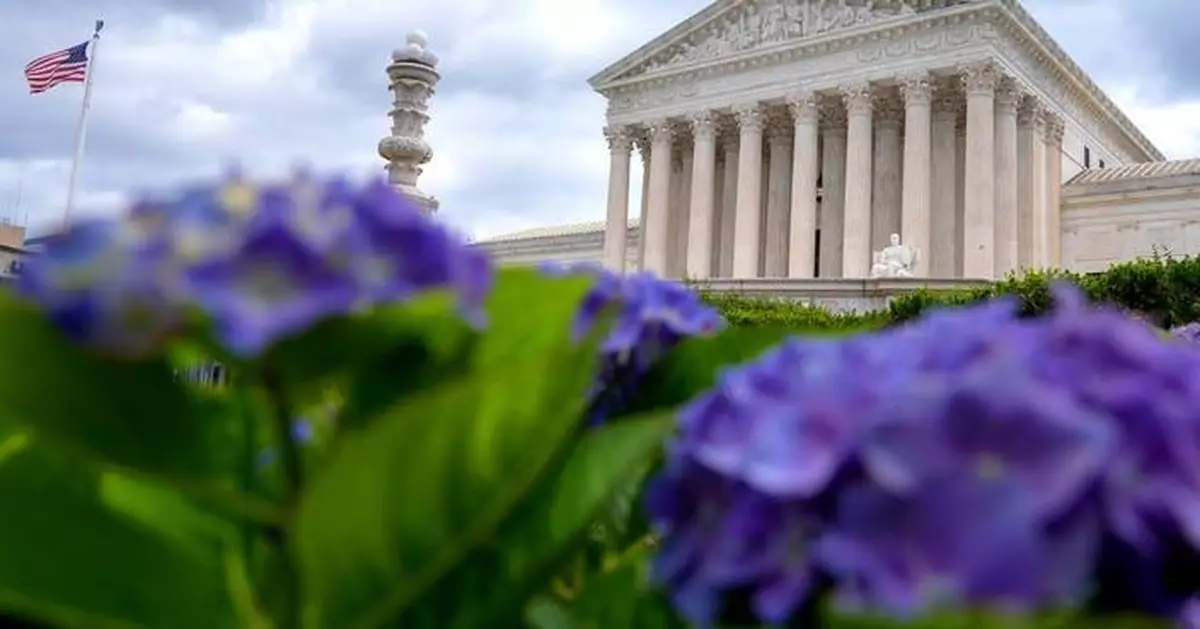
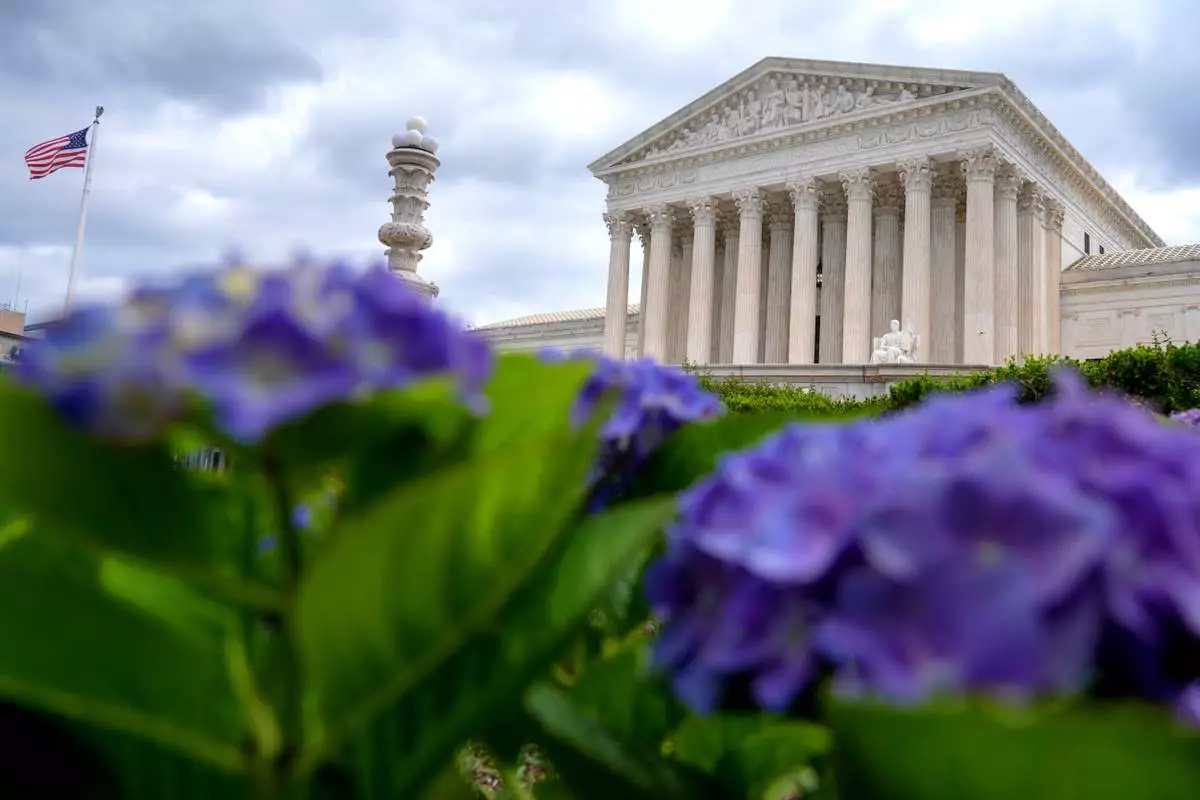
FILE - The U.S. Supreme Court is photographed, June 8, 2026, in Washington. (AP Photo/Mariam Zuhaib, File)

FILE - The U.S. Supreme Court is photographed, June 8, 2026, in Washington. (AP Photo/Mariam Zuhaib, File)
NEW YORK (AP) — The U.S. stock market is drifting in mixed trading Thursday after several artificial-intelligence stocks veered back up their roller-coaster ride, while Apple dropped after hiking prices on many of its products.

The S&P 500 fell 0.1% after swinging between gains and losses in the morning. The Dow Jones Industrial Average was up 221 points, or 0.4%, as of 12:50 p.m. Eastern time, and the Nasdaq composite was 0.6% lower.

Micron Technology jumped 14.2%. The maker of computer memory reported much stronger profit and revenue for the latest quarter than analysts expected, and it gave a stronger growth forecast for the current quarter than Wall Street expected. That helped allay worries a bit that its stock had grown too expensive after coming into the day with a surge of 267% so far this year.

Micron and AI stocks broadly have been under pressure recently because of worries that their profits can’t possibly keep pace with the tremendous rallies for their stock prices. But beyond Micron, Qualcomm said late Wednesday that the acceleration of the AI era is forcing it to upgrade forecasts for its own growth in upcoming years. They're the latest signals of the deluge of dollars heading into AI data centers and other investments.

Qualcomm said it expects its revenue outside of handsets, including data centers, to hit $40 billion in its fiscal year of 2029, roughly double its prior target. Qualcomm’s stock rose 7.4%.

But all the strong demand for computer memory and storage that's driving producers higher likewise means higher prices for customers. Apple on Thursday raised prices for many of its products, including increases of 15% to 20% for Mac computers, according to analysts. Its stock slumped 6.3% and was the single heaviest weight on the S&P 500.

The broad U.S. stock market got a lift from easing Treasury yields in the bond market, which regressed after a report showed inflation is behaving pretty much as economists expected.

The report said that a measure of inflation hitting U.S. consumers accelerated to 4.1% last month from 3.8% in April, but the hope is that it is set to ease because of a drop-off in oil prices.

The price for a barrel of Brent crude oil, the international standard, rose 1.4% to $74.89 Thursday. But it's still well off its highs above $100 caused by the closure of the Strait of Hormuz because of the war, which slowed the global flow of oil. Earlier Thursday, it dropped near its roughly $72 price from before the war.

That helped the yield on the 10-year Treasury slip to 4.38% from 4.41% late Wednesday and from 4.56% earlier this month.

“As long as gasoline prices trend lower, inflation expectations will likely follow suit,” according to Brian Jacobsen, chief economic strategist at Annex Wealth Management.

High yields in bond markets worldwide caused by worries about inflation are threatening to slow economies, and they have already sent rates higher for mortgages and other kinds of loans. High yields also hurt prices for investments, particularly those seen as the most expensive. That raises the pressure on AI winners.

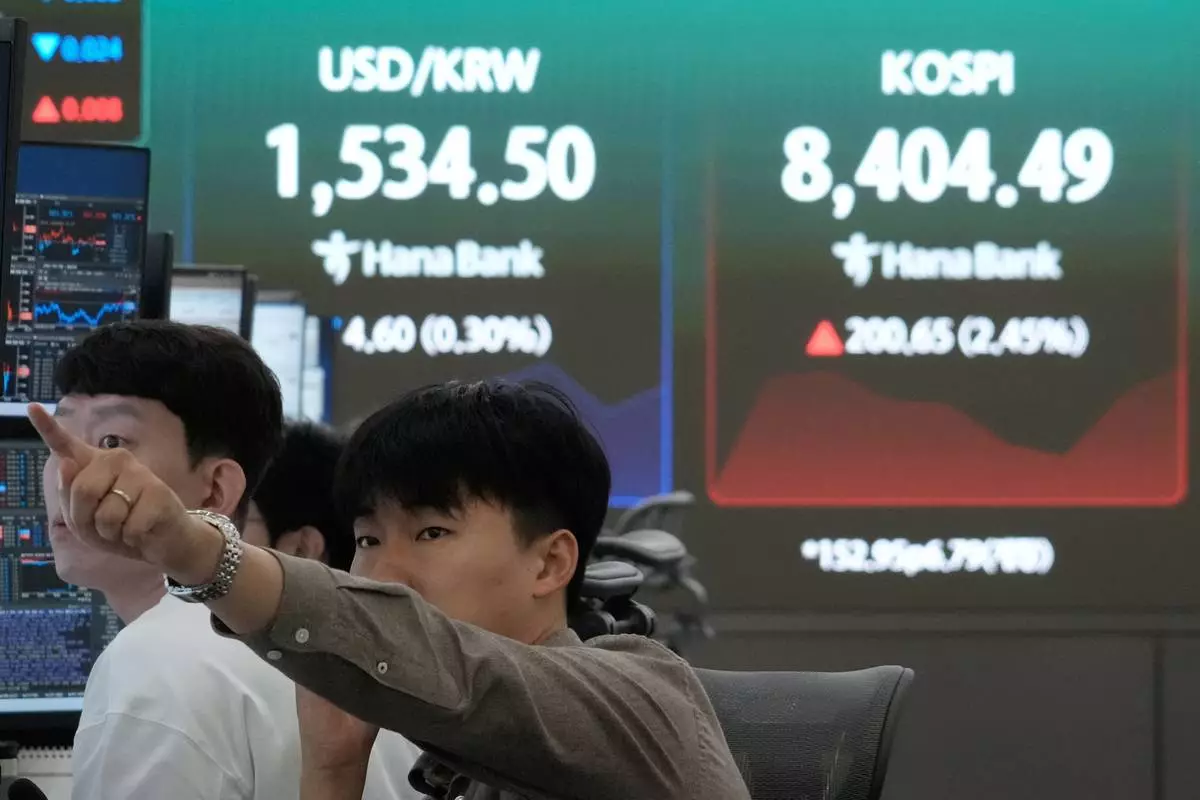
In stock markets abroad, South Korea’s Kospi jumped 5.4% after its own AI winners shot higher, including a 13.1% surge for SK Hynix.

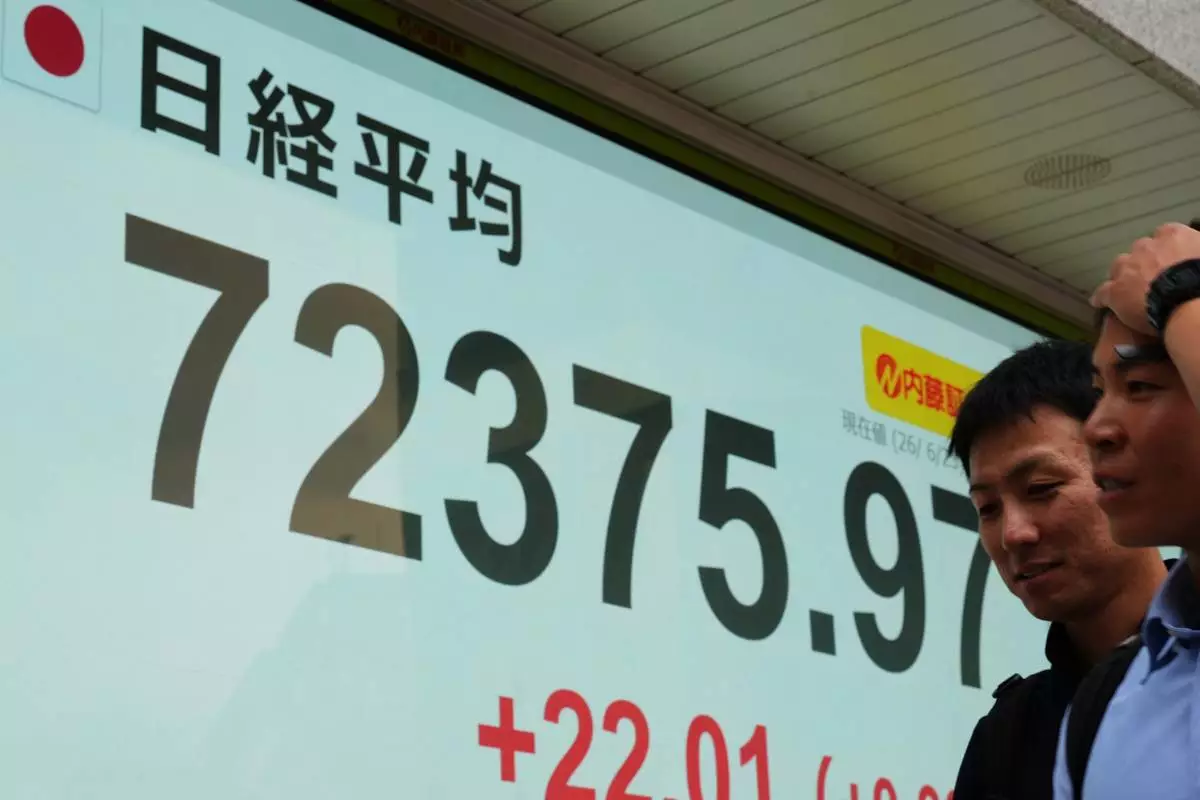
Other markets also rallied, including gains of 4.6% for Japan’s Nikkei 225 and 0.7% for the United Kingdom’s FTSE 100. A 1.4% drop for Hong Kong’s Hang Seng was an outlier.

AP Business Writer Elaine Kurtenbach contributed to this report.

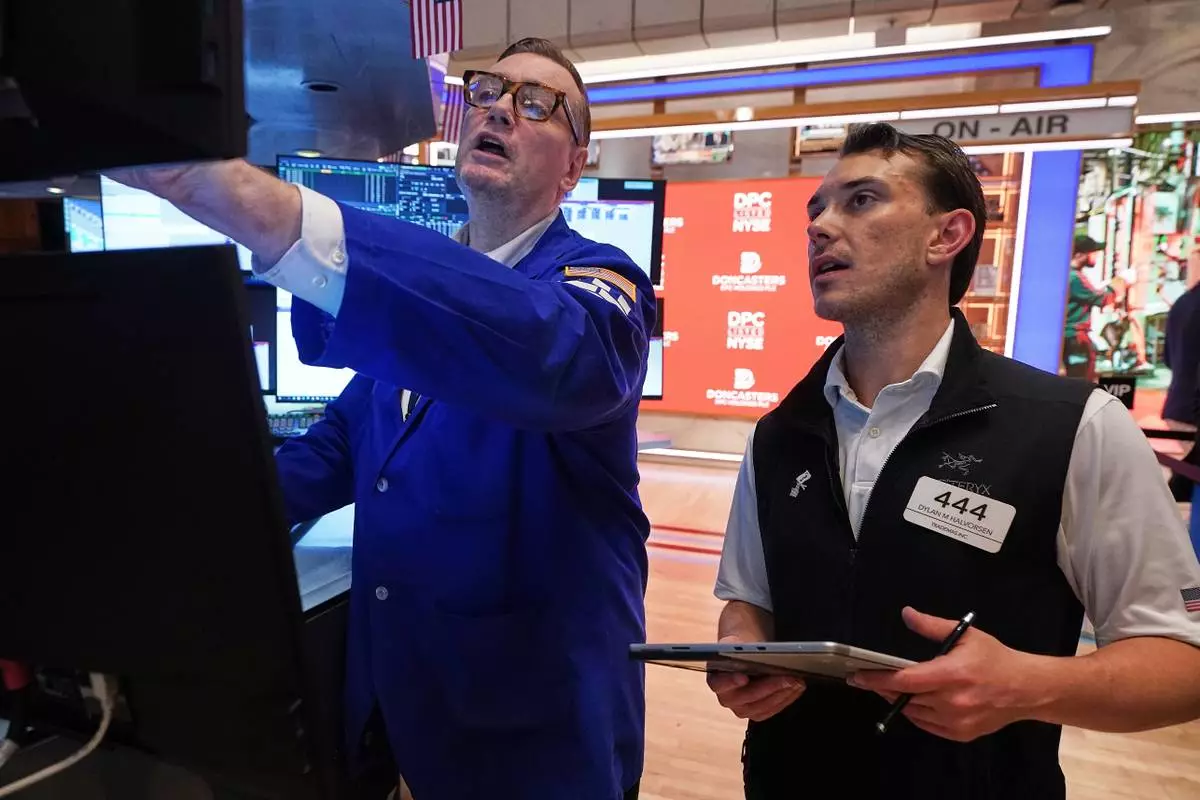
Specialist Patrick King, left, and trader Dylan Halvorsen work on the floor of the New York Stock Exchange, Thursday, June 25, 2026. (AP Photo/Richard Drew)

Specialist Patrick King, left, and trader Dylan Halvorsen work on the floor of the New York Stock Exchange, Thursday, June 25, 2026. (AP Photo/Richard Drew)

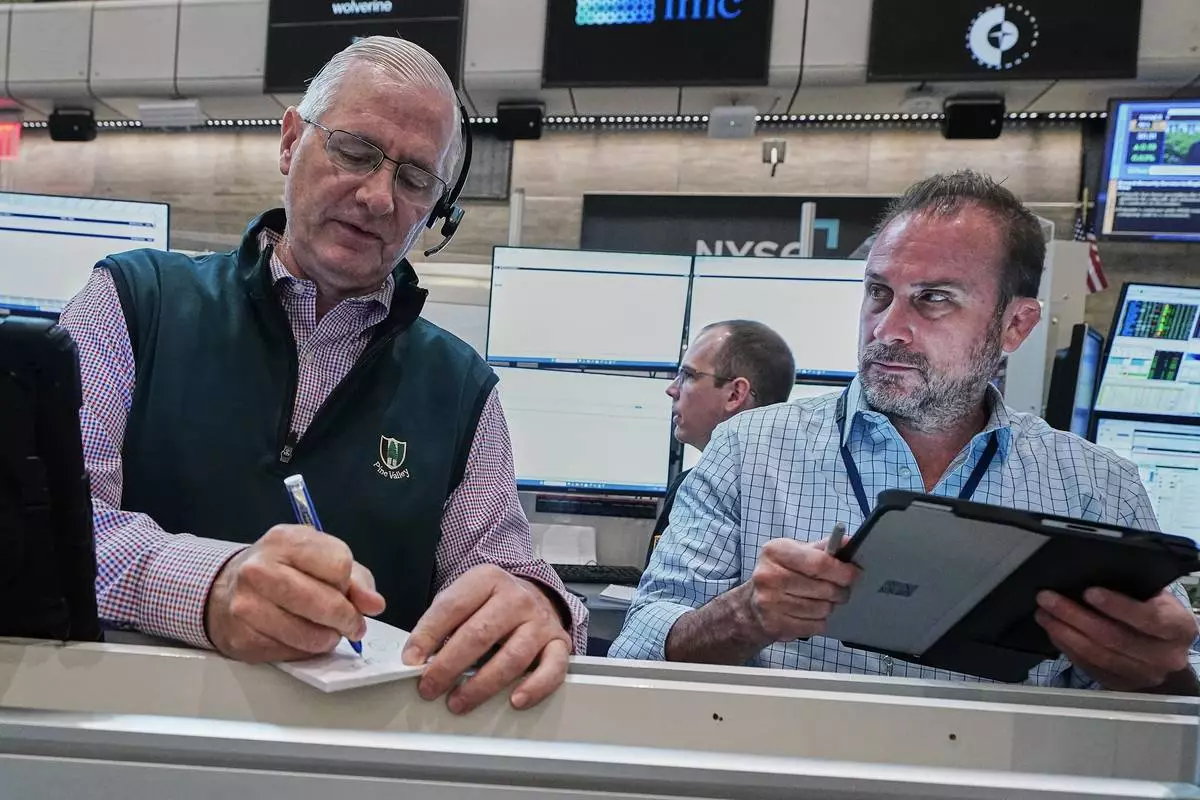
Options traders David Rush, left, and Scott Frinzi work on the floor of the New York Stock Exchange, Tuesday, June 16, 2026. (AP Photo/Richard Drew)

Options traders David Rush, left, and Scott Frinzi work on the floor of the New York Stock Exchange, Tuesday, June 16, 2026. (AP Photo/Richard Drew)

A currency trader watches monitors near a screen showing the Korea Composite Stock Price Index (KOSPI) and the foreign exchange rate between U.S. dollar and South Korean won at the foreign exchange dealing room of the Hana Bank headquarters in Seoul, South Korea, Wednesday, June 24, 2026. (AP Photo/Ahn Young-joon)

A currency trader watches monitors near a screen showing the Korea Composite Stock Price Index (KOSPI) and the foreign exchange rate between U.S. dollar and South Korean won at the foreign exchange dealing room of the Hana Bank headquarters in Seoul, South Korea, Wednesday, June 24, 2026. (AP Photo/Ahn Young-joon)

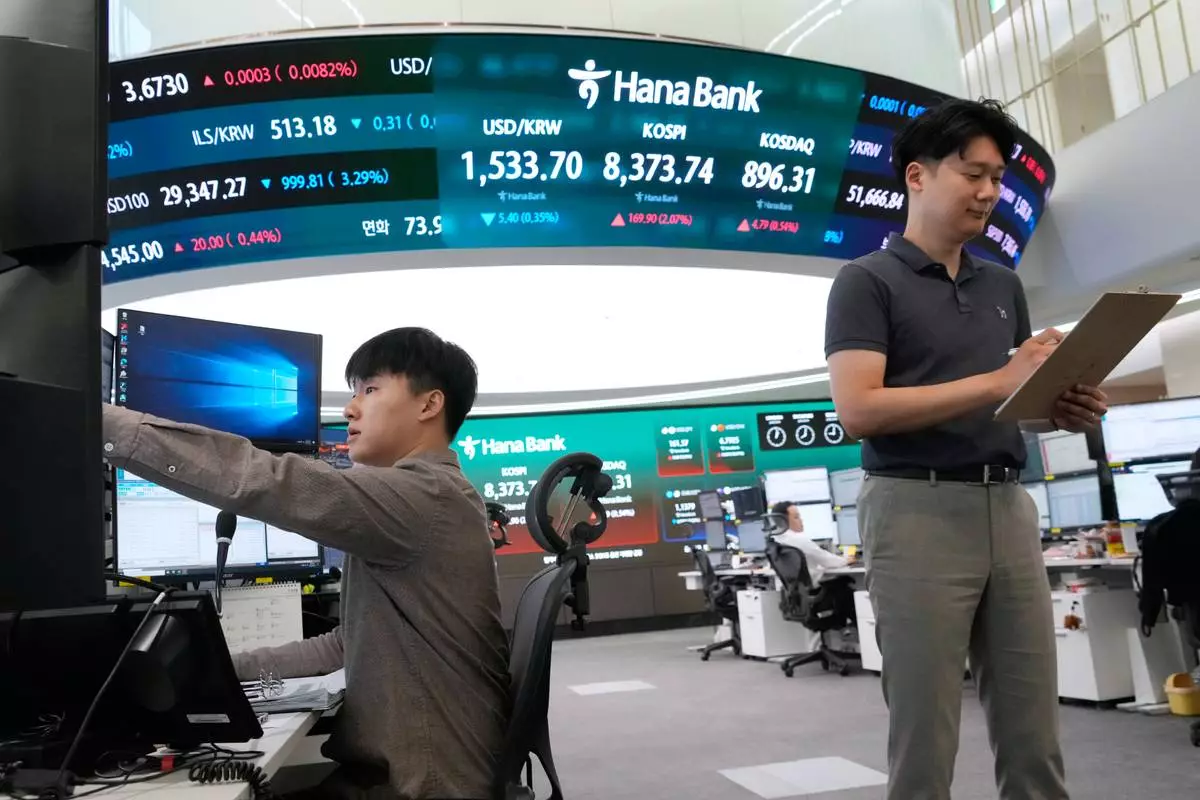
Currency traders work near a screen showing the Korea Composite Stock Price Index (KOSPI) and the foreign exchange rate between U.S. dollar and South Korean won at the foreign exchange dealing room of the Hana Bank headquarters in Seoul, South Korea, Wednesday, June 24, 2026. (AP Photo/Ahn Young-joon)

Currency traders work near a screen showing the Korea Composite Stock Price Index (KOSPI) and the foreign exchange rate between U.S. dollar and South Korean won at the foreign exchange dealing room of the Hana Bank headquarters in Seoul, South Korea, Wednesday, June 24, 2026. (AP Photo/Ahn Young-joon)

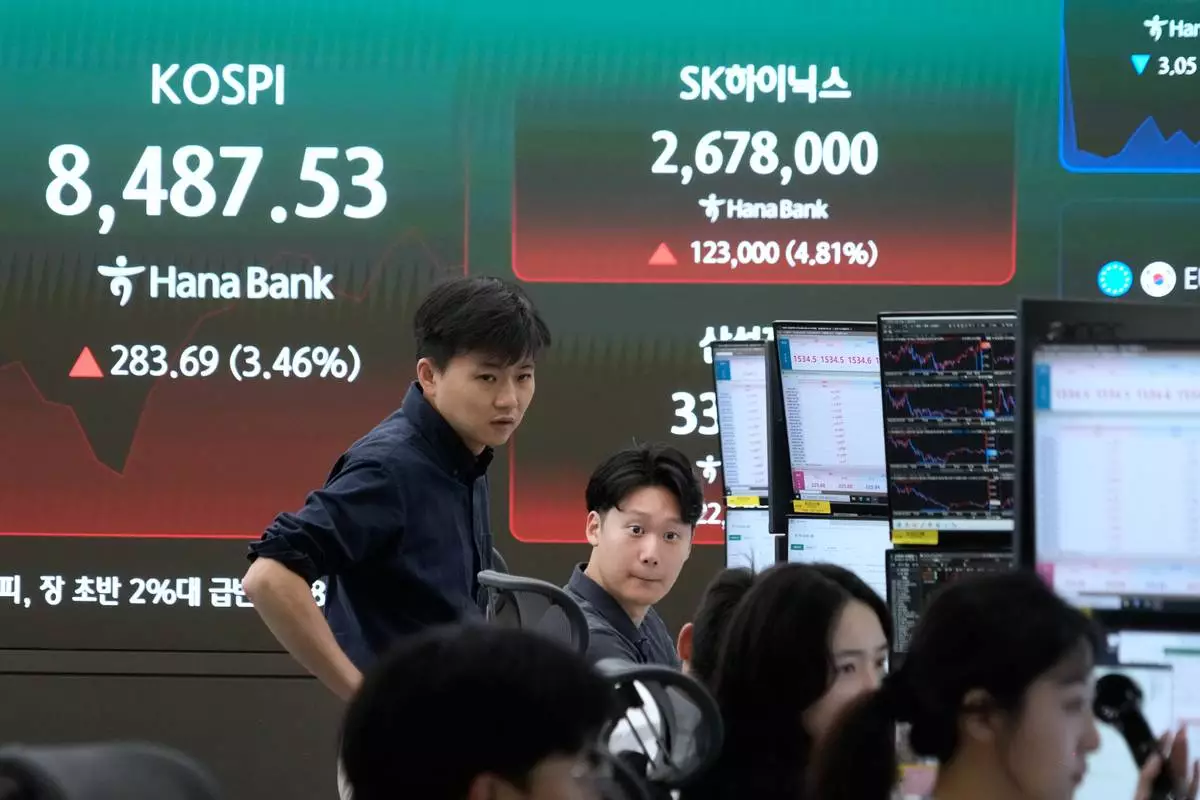
Currency traders work near a screen showing the Korea Composite Stock Price Index (KOSPI) at the foreign exchange dealing room of the Hana Bank headquarters in Seoul, South Korea, Wednesday, June 24, 2026. (AP Photo/Ahn Young-joon)

Currency traders work near a screen showing the Korea Composite Stock Price Index (KOSPI) at the foreign exchange dealing room of the Hana Bank headquarters in Seoul, South Korea, Wednesday, June 24, 2026. (AP Photo/Ahn Young-joon)

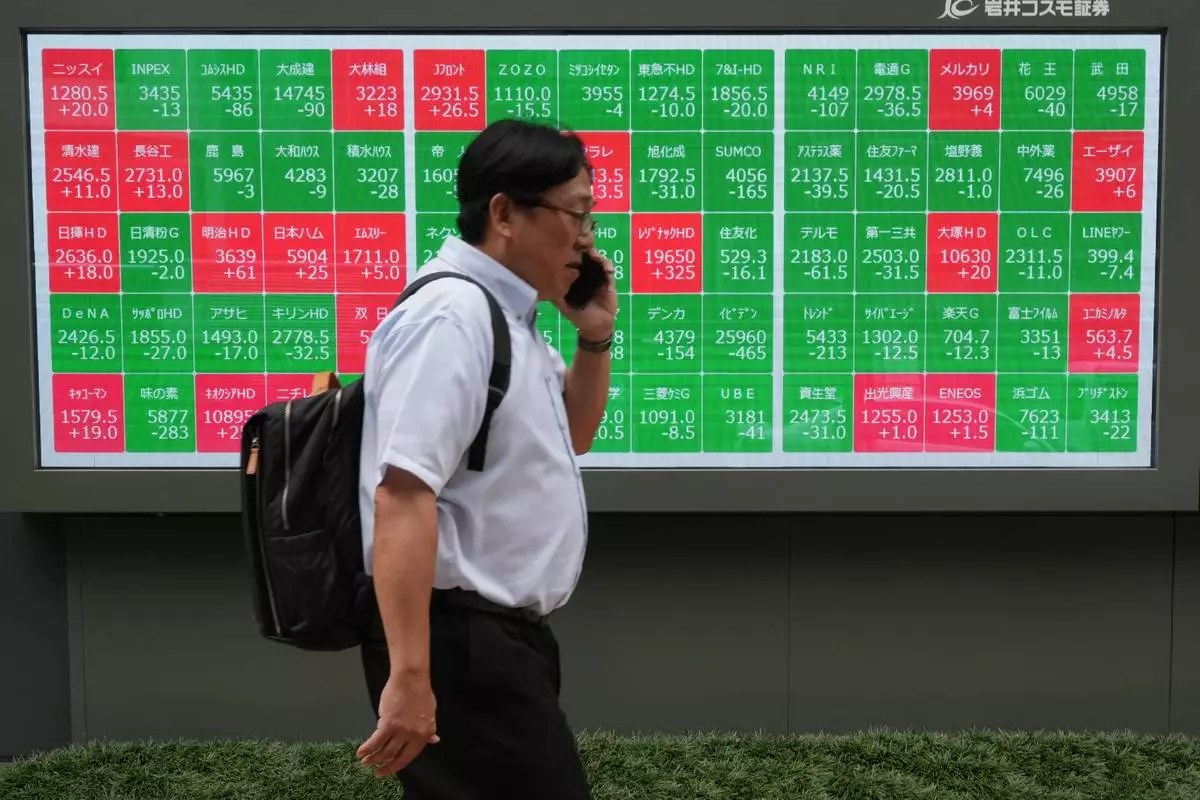
A man walks past a monitor showing stock prices of companies on the Tokyo Stock Exchange in Tokyo, Tuesday, June 23, 2026. (AP Photo/Hiro Komae)

A man walks past a monitor showing stock prices of companies on the Tokyo Stock Exchange in Tokyo, Tuesday, June 23, 2026. (AP Photo/Hiro Komae)

People walk past a monitor showing Japan's Nikkei 225 index at a securities firm in Tokyo, Tuesday, June 23, 2026. (AP Photo/Hiro Komae)

People walk past a monitor showing Japan's Nikkei 225 index at a securities firm in Tokyo, Tuesday, June 23, 2026. (AP Photo/Hiro Komae)

Recommended Articles