They've died from artillery fire, aircraft crashes, gunfire, disease — even by execution — in conflict zones and elsewhere around the world.
Over the 180-year history of The Associated Press, 38 journalists have fallen on the job while working for the independent not-for-profit news organization.
Thursday marks the 150th anniversary of the very first: Mark Kellogg, one of five civilians killed alongside Lt. Col. George Armstrong Custer and his men at the Battle of Little Bighorn.
Kellogg, 43, was embedded with Custer's troops. He was reporting for The Bismarck Tribune and New York Herald — the AP circulated his reports across the country — when Custer underestimated the size of a Sioux village that he attacked.
Custer and his outnumbered men made a last stand on a hill. There, they were annihilated by Native American defenders. Kellogg's scalped body was found not far away.
His last published dispatch read in part: “I go with Custer and will be at the death.”
It was more of an attempt at poetry than prophecy. “At the death” is a foxhunting term for the end of the hunt, suggesting Kellogg expected Custer to prevail.
Still, Kellogg's final words and fate circulated far and wide through his employers and the AP. It gave the obscure, part-time journalist — a widower who worked a variety of jobs to support his two daughters — fame in death.
He got to know Custer. He covered the campaign. He mingled with the soldiers and interviewed them at their camps, historian Sandy Barnard said.
Yet in other ways, Kellogg was much different from modern journalists. He carried a rifle into action, Barnard pointed out. And he made no attempt to avoid not just bias but racism against Native Americans, whom he called “red devils.”
“During the last stages of the campaign, Kellogg was probably more of a soldier than he was a newspaper man,” said Barnard, author of a Kellogg biography and other books on the Battle of the Little Bighorn.
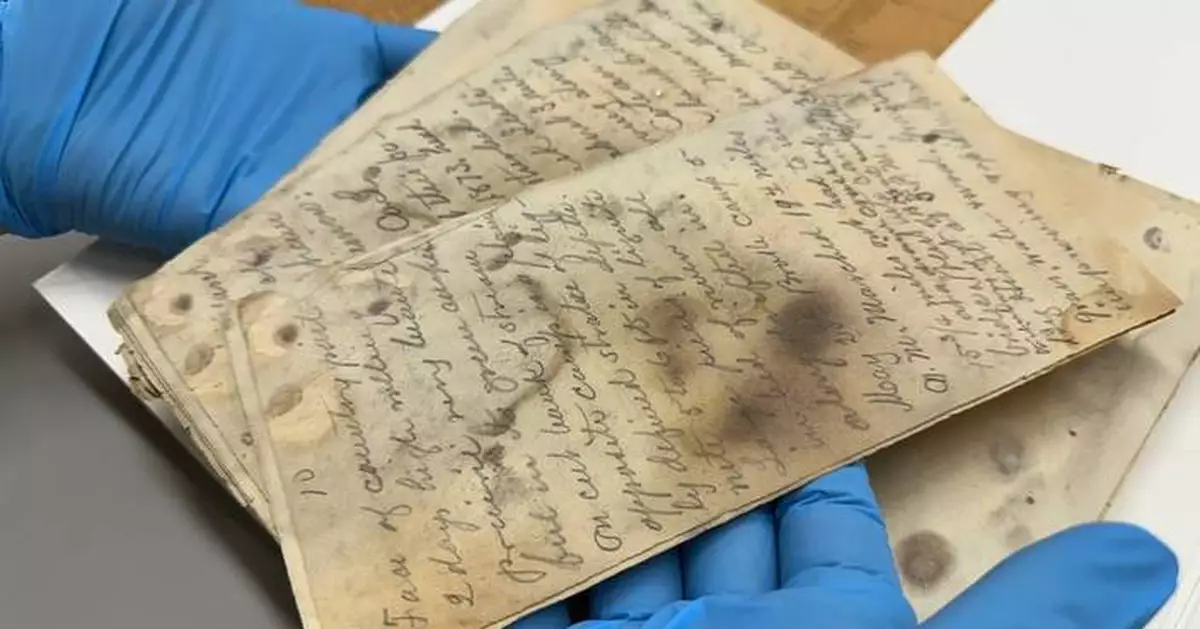
The State Historical Society of North Dakota preserves Kellogg’s diary and various belongings, including eyeglasses, tobacco, clothing and a mosquito head net. The fragile diary, now digitized online, documents weather, distances covered, who was riding in front and in back, how many antelope they saw and other day-to-day operations, Deputy State Archivist Lindsay Meidinger said. The diary ends before the battle.
“It’s a primary source of the historical event,” Barnard said, “that not many other primary sources remain from that time period related to the Seventh Cavalry and Custer.”
“While his record as a journalist might be very small compared to modern reporters who go into combat, he certainly was doing exactly what they are doing,” she said.
Others who have perished while reporting for AP in war zones include:
— Mariam Dagga, a freelance visual journalist who was killed in an Israeli strike on a hospital in the Gaza Strip last August;
— Anja Niedringhaus, a photographer shot by a police officer as she sat in her car in Afghanistan in 2014;
— Myles Tierney, a videojournalist killed while traveling in a convoy that came under fire in Freetown, Sierra Leone, in 1999;
— Joseph Morton, a war correspondent who was the only U.S. reporter known to have been executed by the Nazis following his capture alongside Slovakian partisans in 1944.
Associated Press corporate archivist Sarit Hand in New York and Jack Dura in Bismarck, North Dakota, contributed to this report.
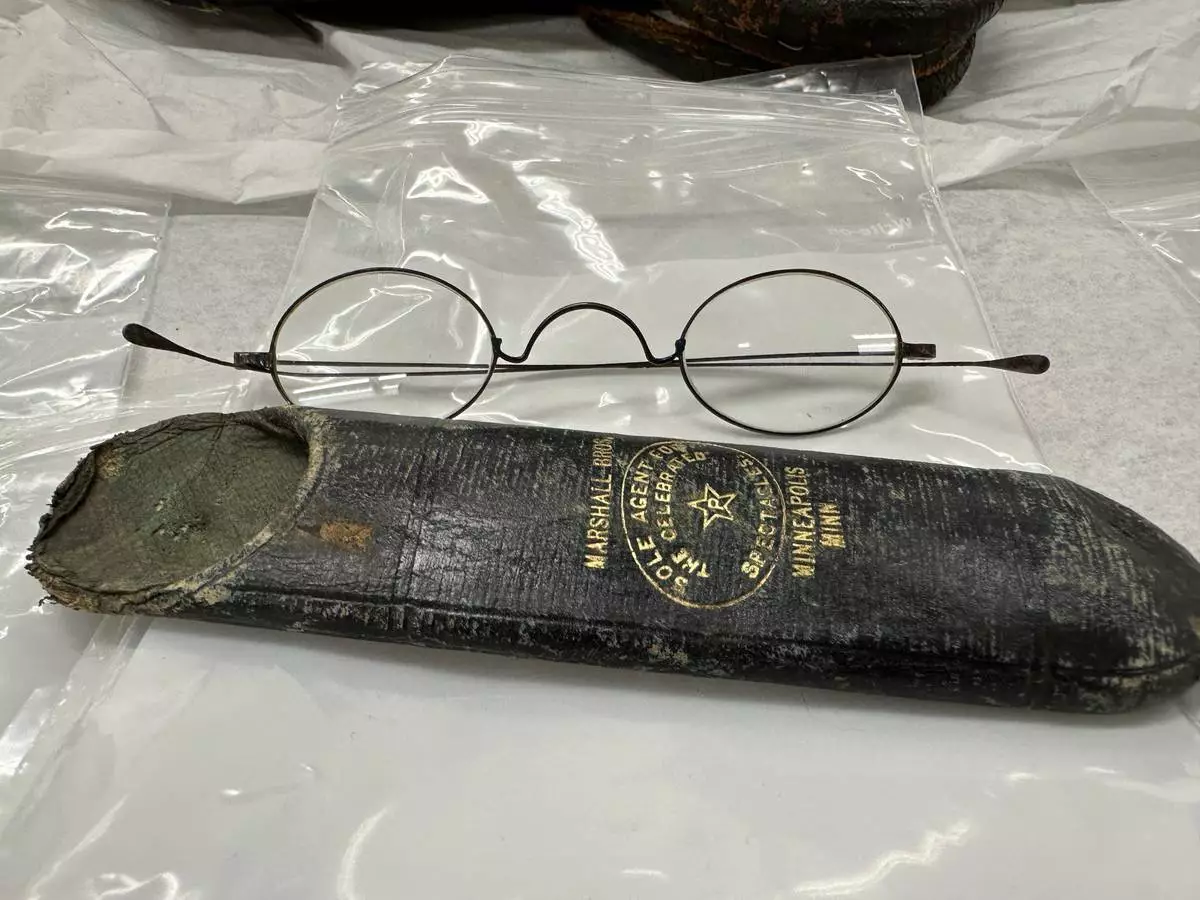
The eyeglasses and case belonging to Mark Kellogg, a reporter killed during the Battle of the Little Bighorn in 1876, are displayed Wednesday, June 24, 2026, at the North Dakota Heritage Center and State Museum in Bismarck, N.D. (AP Photo/Jack Dura)

A commemorative marker with the name of reporter Mark Kellogg, who died in 1876 while covering the Battle of Little Bighorn, is displayed with fellow journalists and others who have fallen on the job of newsgathering for The Associated Press, at its New York headquarters, on Wednesday, June 24, 2026. (AP Photo/Patrick Sison)
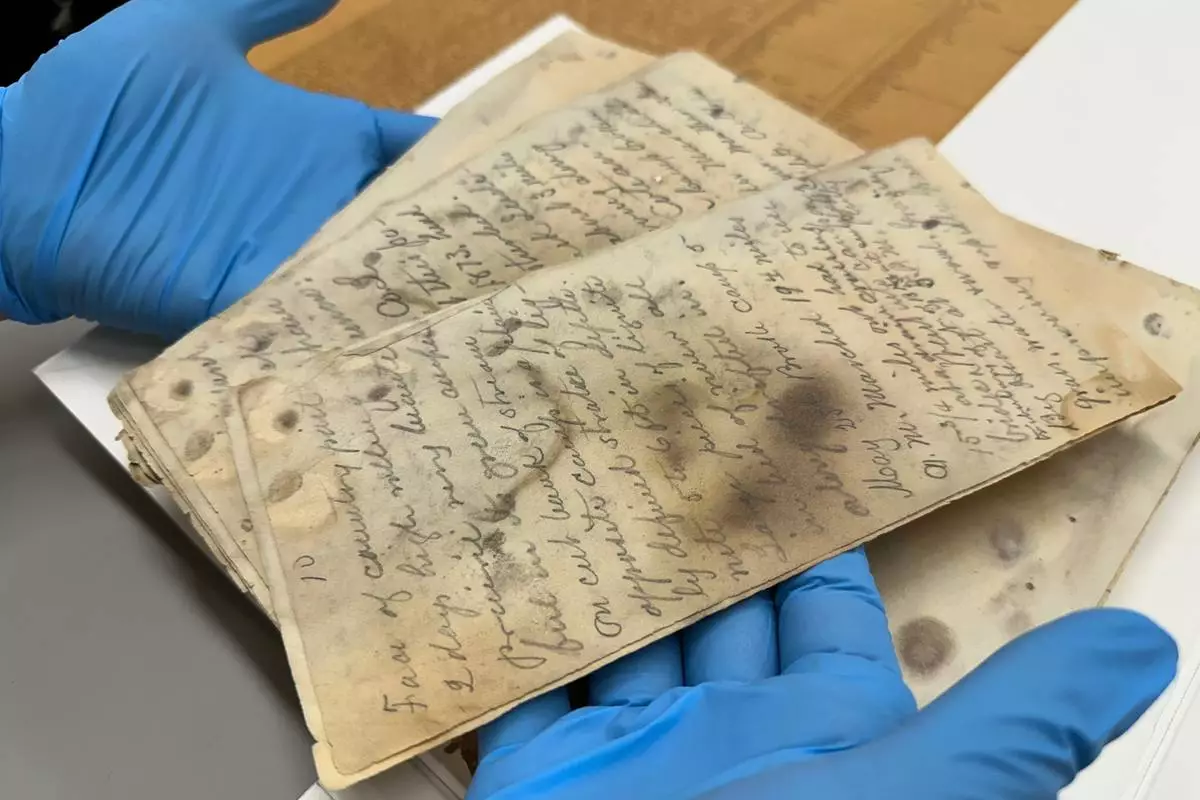
State Historical Society of North Dakota Deputy State Archivist Lindsay Meidinger holds pages of the diary of Mark Kellogg, a reporter killed during the Battle of the Little Bighorn in 1876, at the North Dakota Heritage Center and State Museum in Bismarck, N.D., Wednesday, June 24, 2026. (AP Photo/Jack Dura
WASHINGTON (AP) — The Supreme Court on Thursday allowed the Trump administration to end legal protections for migrants fleeing violence and natural disaster in Haiti and Syria, exposing hundreds of thousands more people to potential deportation.
The 6-3 decision overturns lower court orders and allows the Department of Homeland Security to swiftly end temporary protected status, a program that protects a total of 1.3 million people from 17 countries.
It marked another victory at the high court for Republican President Donald Trump's sweeping crackdown on immigration. Though the conservative-dominated court has put the brakes on some of Trump’s immigration policies over the last year, it handed him a second win Thursday in a decision clearing the way for the revival of a policy restricting immigrants seeking asylum.
The court’s conservative majority found that immigration authorities have sole authority over the program, and the law doesn't allow judges to intervene.
The majority opinion from Justice Samuel Alito also brushed aside arguments that derogatory comments from Trump about Haitians showed the decision was unlawfully tinged by prejudice. He called the statements “insufficient to show that the termination of Haiti’s TPS designation was based on the race of the Haitian people.”
Justice Elena Kagan forcefully disagreed, calling Trump's comments “so repellent and racially inflected that the majority declines to put them in print." She pointed out that Trump had said Haitians in the U.S. “probably have AIDS," and he also amplified false rumors during the 2024 campaign that Haitian immigrants in Ohio were abducting and eating dogs and cats.
Lawyers said Haitian immigrants would be in serious danger if they are sent back. “Simply put, the Supreme Court’s ruling will directly result in thousands of innocent people dying violent, needless deaths,” Geoff Pipoly and Andy Tauber said.
They urged the Senate to approve an extension of deportation protections for Haitians that' passed the House on a rare bipartisan vote in April.
“Families are here, kids are going to school, parents are going into work, folks are trying to commute, and it’s like the Supreme Court just put all those activities on stop and put folks in limbo,” said Viles Dorsainvil, who runs a support center for Haitians in Springfield, Ohio.
Derrick Johnson, president and CEO of the NAACP, called the “a devastating betrayal of Haitian families who have lived, worked, and contributed to this country for years –- only to be cast out based on anti-Black immigration sentiment.”
Haitians with TPS are also a key part of the workforce in long-term care facilities. “This would be a dreadful loss for all seniors in our community,” said Rita Siebenaler, a resident at Goodwin Living, a senior living community in Virginia.
The Justice Department appealed to the Supreme Court after judges postponed the end of the program for about 350,000 Haitians and 6,000 Syrians. The high court sided with the administration before and allowed the end of the program for people from Venezuela.
Federal authorities deny prejudice played a role. They also cited a Supreme Court decision from Trump’s first term that rejected bias claims based on his social media posts and upheld a travel ban on several Muslim-majority countries.
James Percival, DHS general counsel, applauded Thursday's ruling. He said the program had, in many cases, become “de facto amnesty. This is a win for the rule of law and common sense.”
Since Trump returned to the White House in January 2025, Homeland Security has ended the protections, including some that had been in place for more than a decade, for people from 13 countries.
The terminations were made even though countries such as Haiti and Syria remain dangerous, immigration lawyers said. Four Haitian women who were deported from the United States in February were found beheaded and dumped in a river several months later, lawyers said in court documents.
The United States first granted protections to Haitians in 2010 after a catastrophic earthquake and extended them multiple times amid ongoing gang violence that has displaced more than a million people, according to court documents.
Syrians were first granted protected status in 2012, during a civil war that lasted for more than a decade before the fall of President Bashar Assad’s government in late 2024.
“Today, many of our community members they feel lost,” Farrah AlKhorfan of Immigrants Act Now said about Syrian immigrants losing TPS protections. “They are trying to understand … what this decision means for them and how it will be implemented and how much time they will have to prepare for what comes next.”
The program was created by Congress in 1990 to prevent deportations to countries suffering from natural disasters, civil strife and other instability. It allows people already in the country to stay with work permits in increments of up to 18 months, but it does not provide a path to citizenship.
Associated Press writer Tim Sullivan in Minneapolis contributed to this report.
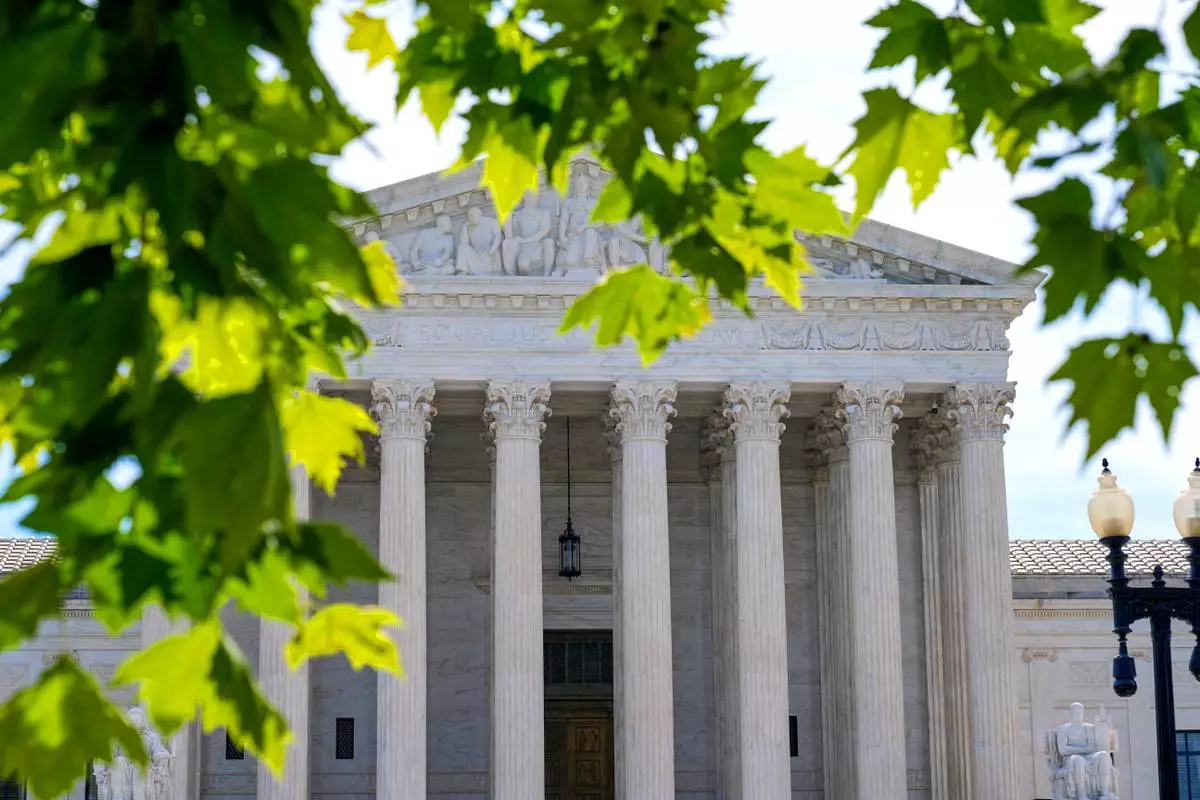
FILE - The U.S. Supreme Court is seen, June 5, 2026, in Washington. (AP Photo/Mariam Zuhaib, File)
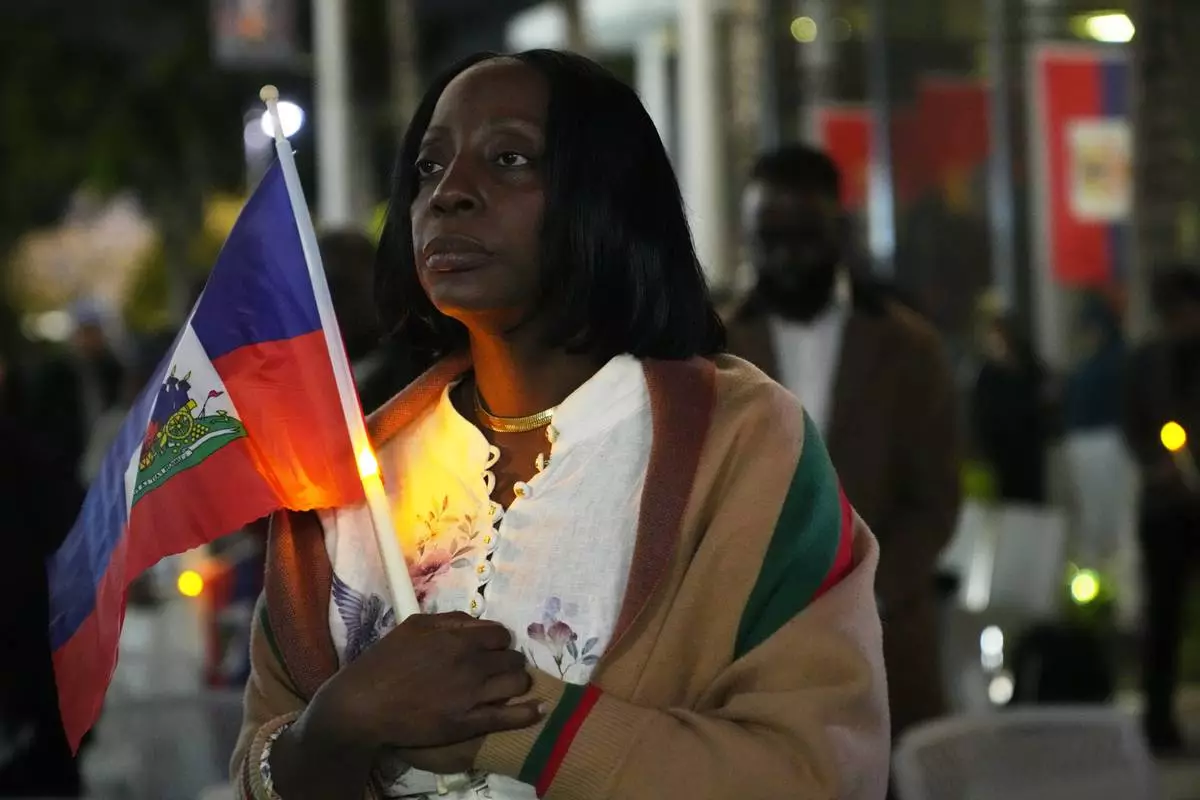
FILE - Linda Joseph holds a candle during a vigil at the Little Haiti Cultural Complex after a federal judge blocked the Trump administration from ending temporary immigration status, or TPS, for Haitians, Tuesday, Feb. 3, 2026, in North Miami. (AP Photo/Lynne Sladky, File)