Skip to Content Facebook Feature Image

US Senator warns of administration plan to hastily remove over 500 unaccompanied migrant children

News

US Senator warns of administration plan to hastily remove over 500 unaccompanied migrant children
News

News

US Senator warns of administration plan to hastily remove over 500 unaccompanied migrant children

2026-06-26 02:28 Last Updated At:02:31

WASHINGTON (AP) — A Democratic U.S. senator warns the Trump administration is getting ready to round up 500 immigrant children in a hasty effort to remove them from the country, bypassing legal protections. It would be their second attempt after a federal court intervened last year in an overnight plan to fly out hundreds of children on Labor Day weekend.

Sen. Ron Wyden of Oregon wrote in a letter Wednesday to U.S. Health Secretary Robert F. Kennedy Jr. that he had “credible information” that the Trump administration had a list of more than 500 migrant children it was targeting for a fast-track removal process and that the department was racing to act in days. He warned that the administration was abdicating “core humanitarian and child welfare mandates” and demanded an immediate halt to any plans to remove the children.

Wyden, who is the ranking member and senior Democrat of the Senate Finance Committee, which has jurisdiction over the Office of Refugee Resettlement, did not detail how he came by his information. His office declined to provide further details. The ORR, which oversees the care of unaccompanied migrant children, falls under the Department of Health and Human Services.

An HHS spokesperson denied any such plans.

“The new information I obtained leads me to believe that the Department is laying the groundwork for another lawless deportation effort, this time on a greater scale, across more countries of origin,” Wyden wrote.

“You have been entrusted with the care and safety of the children placed within the ORR network. Proceeding with this plan knowingly endangers their lives and violates your duty to these vulnerable children.”

Wyden also issued an early warning last August ahead of what eventually became a chaotic weekend of efforts by the Trump administration to remove Guatemalan children in its care and send them home.

HHS spokesperson Emily Hilliard said in “there are no plans to target these children,” calling Wyden's claims ”irresponsible fearmongering."

“The Trump Administration is working to identify the parents or legal guardians of unaccompanied alien children in our care because ensuring every child is placed with a properly vetted sponsor is our top priority,” she said.

Over the Labor Day weekend, dozens of migrant children either staying in government-supervised shelters or with foster families were taken from their homes and bused to airfields in Texas bound for Guatemala. A federal judge woken up in the middle of the night eventually stopped the planes. Lawyers for the children — many who had fled violence at home to come to the U.S. — later described how traumatic the middle-of-the-night removal effort was for them.

The administration insisted it was reuniting the Guatemalan children — at the Central American nation’s request — with parents or guardians who sought their return. Lawyers for at least some of the children said that wasn’t true and argued that in any event, authorities still would have to follow a legal process that they did not.

Some of the children in the plane last year were represented by the American Bar Association’s ProBar project. Lauren Fisher Flores, the legal director, said children that day were seen “crying, praying, vomiting” and some entered into a catatonic state. The effects were long-lasting.

“One child was hospitalized for several days due to nerves. For months, one young client refused to board buses for medical appointments or court hearings. All the rules and laws that exist to protect these children were unable to prevent them from experiencing something deeply traumatic," Fisher Flores added.

Migrant children traveling alone are usually entrusted to U.S. government care, and there are various legal protections designed to protect them once they’re in the U.S. and navigating the immigration system.

The Trafficking Victims Protection Reauthorization Act of 2008 is one of the key pieces of legislation designed to protect them. With some limited exceptions, it requires that children be placed in the “least restrictive setting possible,” which generally means that they can be released to a sponsor such as a relative in the U.S. while their immigration proceedings play out.

The children can apply for a specially protected status if they can’t return to their home country because of abuse or neglect and they can also apply for asylum.

The Trump administration has made it increasingly difficult for those children to be released to sponsors though. The administration says that they are doing due diligence to make sure that sponsors are thoroughly vetted and that in the past, children were released into dangerous situations.

But advocates say that the result has been children lingering for months in government shelters.

This time, Wyden said the children at risk of being removed come from various countries, potentially including Guatemala, Honduras, El Salvador, and Afghanistan, and have been in U.S. custody — mainly in foster care — for at least 180 days. He said they were described as not having any “viable sponsor" who could come forward and take care of them in the U.S.

Not having an identified sponsor could mean the child's parents are in their home countries, are deceased or are too afraid to claim their children after ICE started arresting some parents who are not in the country legally during their reunification efforts.
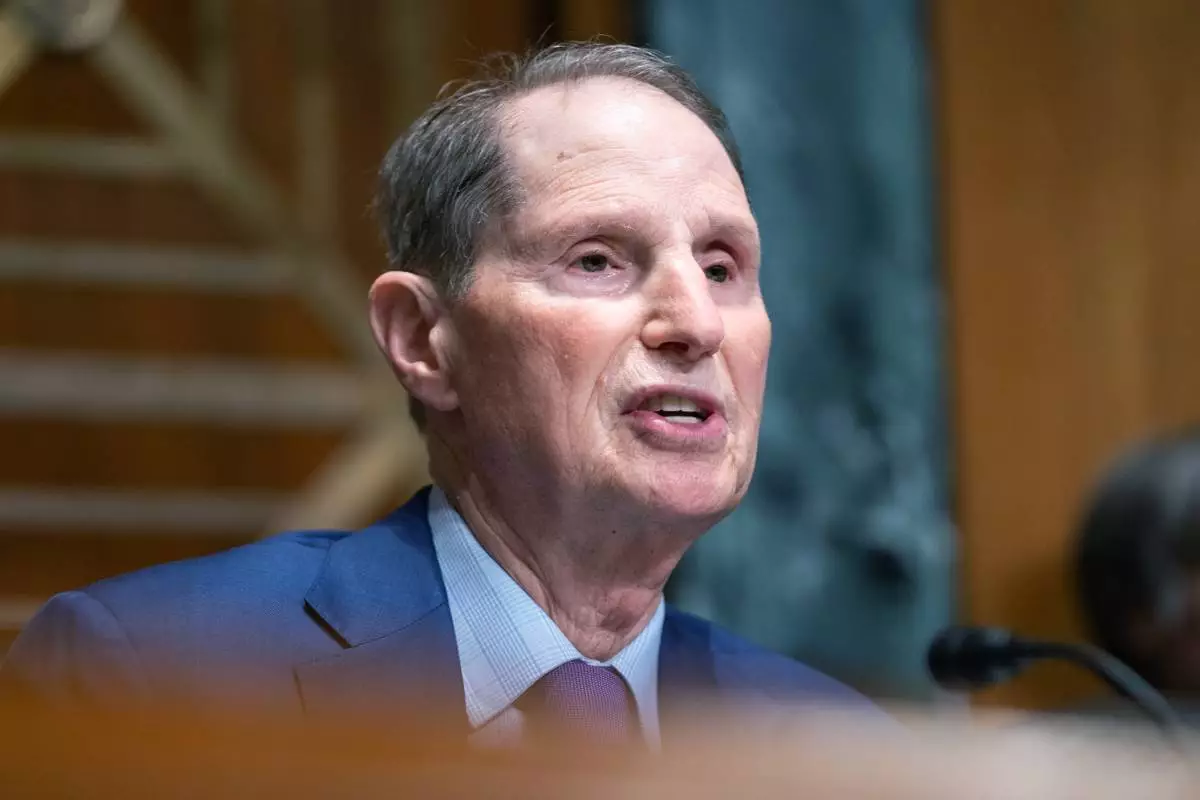
FILE - Sen. Ron Wyden, D-Ore., introduces Treasury Secretary Scott Bessent's testimony before the Senate Committee on Finance, June 3, 2026, in Washington. (AP Photo/Allison Robbert, File)

FILE - Sen. Ron Wyden, D-Ore., introduces Treasury Secretary Scott Bessent's testimony before the Senate Committee on Finance, June 3, 2026, in Washington. (AP Photo/Allison Robbert, File)

FILE - Planes used for deportation flights sit at the Valley International Airport, Aug. 31, 2025, in Harlingen, Texas. (AP Photo/Michael Gonzalez, File)

FILE - Planes used for deportation flights sit at the Valley International Airport, Aug. 31, 2025, in Harlingen, Texas. (AP Photo/Michael Gonzalez, File)
NEW YORK (AP) — Harvey Weinstein won't face a fourth trial on a New York rape charge. Prosecutors dropped the #MeToo-era case on Thursday after his accuser said she could not bear to testify again.

The movie mogul still stands convicted of another sexual felony in New York and others in California, and he remains behind bars. But the New York rape charge had remained unresolved after an overturned conviction followed by two hung juries.

Jessica Mann, a hairstylist and actor, spent days on the witness stand at all three trials, telling jurors that Weinstein raped her in a Manhattan hotel in 2013 and being questioned extensively about the complex relationship she had with him before and afterward. The Oscar-winning producer denied the charge and said everything that happened between him and Mann was consensual.

In a letter that prosecutor Nicole Blumberg quoted in court Thursday, Mann said she could “no longer endure going through this,” adding that the 8-year-old case has “put me through more harm than good.”

Blumberg told the court that prosecutors believe Mann and hail her “bravery, strength, courage and inspiration” to other survivors, but given her feelings about proceeding, “dismissal is appropriate.” With that, Judge Curtis Farber formally dismissed the case.

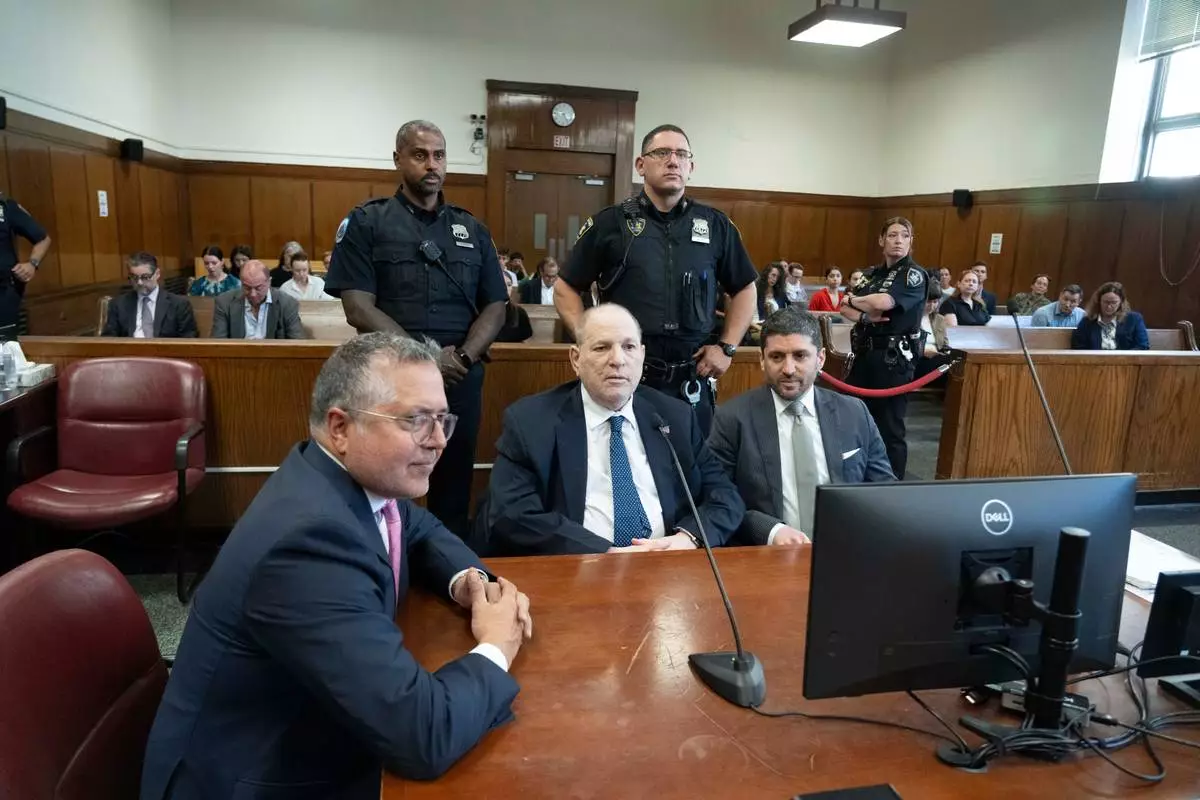
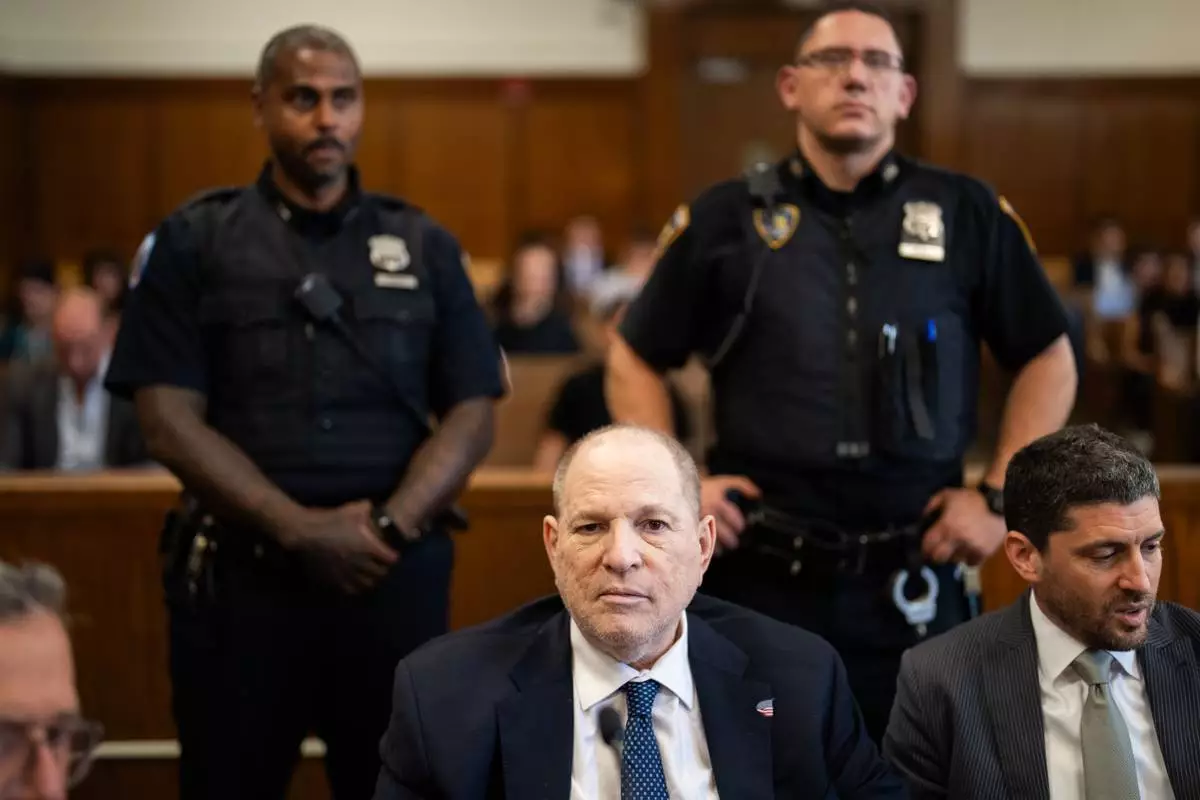
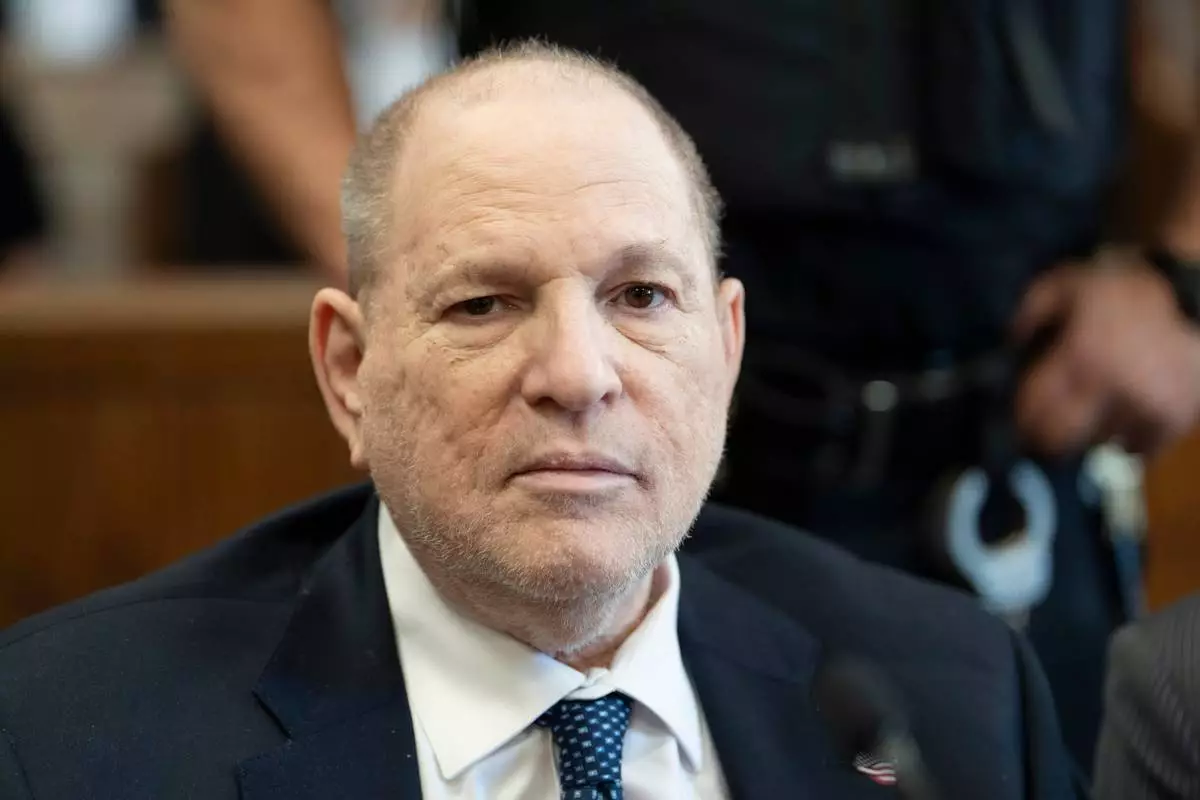
Weinstein left court with a neutral expression, returning to jail to await a September sentencing on a New York sexual assault conviction involving a different woman. Prosecutors are seeking a 20-year prison term.

Once Weinstein finishes whatever punishment he gets in New York, he's due to serve 16 years in California, where he was convicted of raping a third woman, who's an Italian actor. He is appealing both convictions.

Weinstein's lawyers said he was was relieved by the dismissal of the case surrounding Mann's allegation.

“These charges should never have been brought to begin with,” lawyer Jacob Kaplan said outside court. “He is innocent.”

Mann has testified that she had a consensual, on-and-off relationship with Weinstein, who was married at the time.

But she told jurors she repeatedly tried to leave and said no to any sexual activity as he cornered her in a hotel room on March 18, 2013. They had planned to meet in the lobby for breakfast, but he had spontaneously taken a room.

She said he persevered, demanding that she undress and grabbing her arms, until she was afraid to keep protesting.

The latest trial, this spring, took a visible toll on Mann, 40. During five days of testimony, she was questioned for the first time about a diarylike, soul-baring note she wrote two days after the alleged rape, which the note did not mention. At one point during her testimony, Mann said she was struggling to focus, prompting court to wrap up early for the day.

In her letter to the court Thursday, she said she had suffered a concussion shortly before her testimony, had headaches and other symptoms on the stand and ultimately “disassociated.” It was a humiliating addition to an already crushing experience, she wrote.

“I have been fragmented, silenced, defamed and traumatized. I’ve paid the price of my reputation,” Mann wrote. Slamming the court, the media and Weinstein, she said her experience showed that "pursuing justice is better left a pipe dream.”

Weinstein was one of the movie industry’s most powerful figures, a producer of such tastemakers and hits as “Shakespeare in Love,” “Pulp Fiction” and “Chocolat.”

Then a series of sexual misconduct allegations against him became public in 2017, fueling the #MeToo campaign for accountability and eventually leading to criminal charges in New York and Los Angeles.

He denied all of them and was acquitted of some, even as he was convicted of others.

During a series of trials, Weinstein was convicted in 2020 of raping Mann. Then an appeals court overturned that verdict for reasons unrelated to her testimony. Jury deliberations broke down at a 2025 retrial, and jurors deadlocked again at this year's retrial.

The rape charge in this case was a low-level felony punishable by up to four years in prison — less time than Weinstein, 74, already has served.

Weinstein didn’t testify at any of the trials, though he complained during and after the 2025 New York retrial that it was unfair; the judge disagreed.

His lawyers have maintained that all his accusers had completely consensual sexual liaisons with a movie studio boss who could help them go places in show business. Weinstein himself has said he “acted wrongly, but I never assaulted anyone.”

The Associated Press does not identify people who say they have been sexually assaulted, unless they choose to be named, as Mann has done.

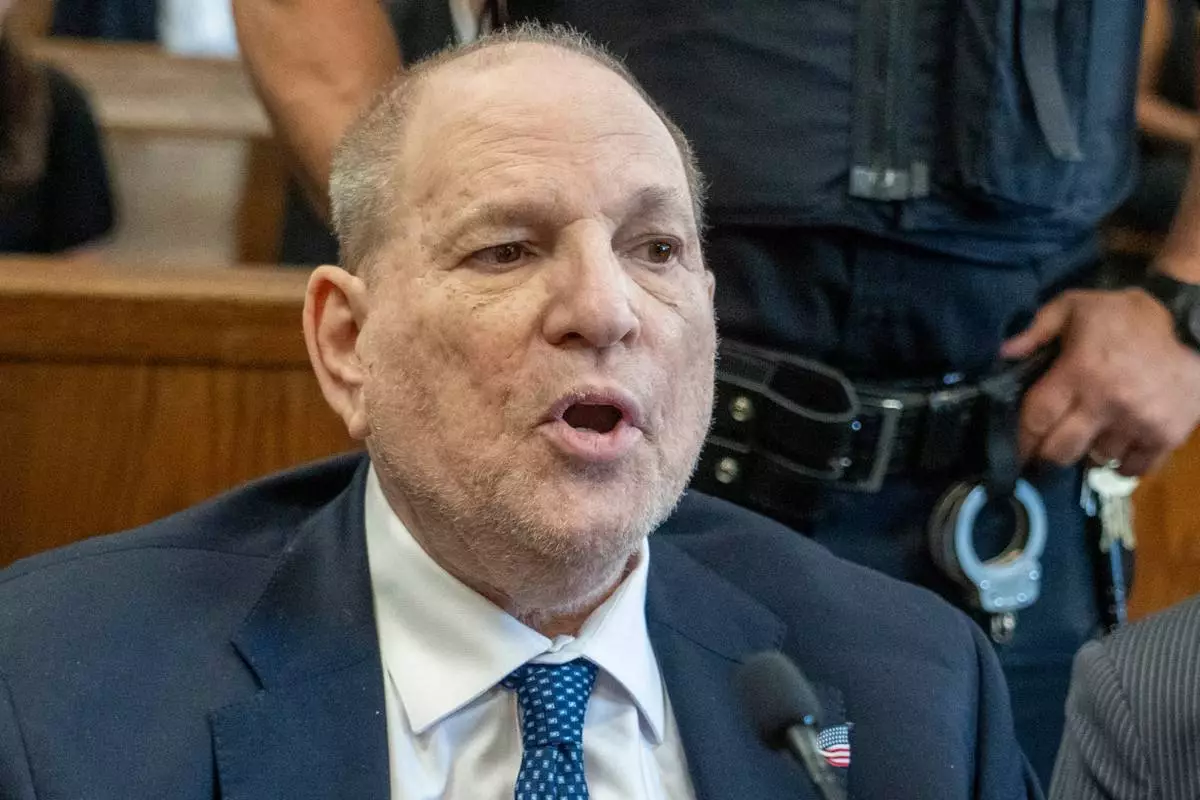
Harvey Weinstein appears in Manhattan Supreme Court Thursday, June 25, 2026 in New York. (Steven Hirsch/New York Post via AP, Pool)

Harvey Weinstein appears in Manhattan Supreme Court Thursday, June 25, 2026 in New York. (Steven Hirsch/New York Post via AP, Pool)

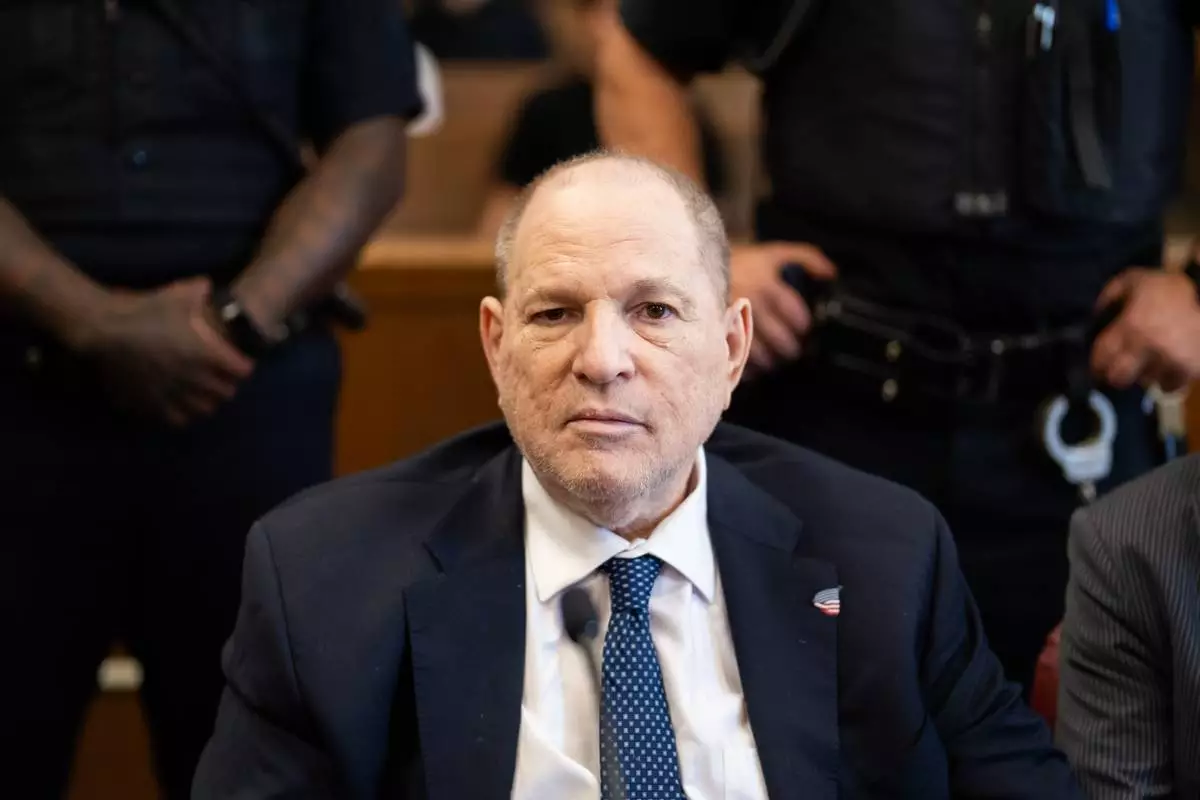
Harvey Weinstein appears in Manhattan Supreme Court Thursday, June 25, 2026 in New York. (Adam Gray/Pool Photo via AP)

Harvey Weinstein appears in Manhattan Supreme Court Thursday, June 25, 2026 in New York. (Adam Gray/Pool Photo via AP)

Harvey Weinstein appears in Manhattan Supreme Court Thursday, June 25, 2026 in New York. (Steven Hirsch/New York Post via AP, Pool)

Harvey Weinstein appears in Manhattan Supreme Court Thursday, June 25, 2026 in New York. (Steven Hirsch/New York Post via AP, Pool)

Harvey Weinstein appears in Manhattan Supreme Court Thursday, June 25, 2026 in New York. (Adam Gray/Pool Photo via AP)

Harvey Weinstein appears in Manhattan Supreme Court Thursday, June 25, 2026 in New York. (Adam Gray/Pool Photo via AP)

Harvey Weinstein appears in Manhattan Supreme Court Thursday, June 25, 2026 in New York. (Steven Hirsch/New York Post via AP, Pool)

Harvey Weinstein appears in Manhattan Supreme Court Thursday, June 25, 2026 in New York. (Steven Hirsch/New York Post via AP, Pool)

Recommended Articles