MANCHESTER, England (AP) — India accounted for Bangladesh by five wickets and simplified its Women's Twenty20 World Cup ambitions on Thursday: Beat mighty Australia to reach the semifinals.
India endured a poor fielding display to limit Bangladesh to 136-8, then chased that down at 139-5 with 19 balls remaining at Old Trafford.
The decisive last group match with Australia is on Sunday at sold-out Lord's. The Australians have cruised to four wins from four, including against South Africa, which thrashed India last Sunday.
“All set for Australia,” India captain Harmanpreet Kaur declared. “We'll get a lot of confidence if we win that.”
South Africa kept the pressure on India by posting 208-1 and thumping the winless Netherlands by 88 runs in Bristol. Opener Tazmin Brits hit her maiden T20 century.
Ultimately, Bangladesh's biggest mistake was to drop Shafali Verma behind the stumps in the first over. Verma broke the chase in the powerplay — 63-1 — then reached a fifty off 29 balls, her second of the tournament.
She was stumped on 53 soon after but India could cruise, and Yastika Bhatia added 23 and Jemimah Rodrigues 26.
“Was sad I got out,” Verma said. “Would've been happier had I batted through.”
India was sloppy in the field, dropped four catches early and medium-pacer Nandani Sharma was warned twice for over-running the pitch. But Bangladesh's lack of power-hitters undermined its chance to cash in.
Juairiya Ferdous was caught and bowled by Sharma on 33 in the ninth over and the only other big contributor was captain Nigar Sultana, who was stumped on 32 near the end.
Brits carried her bat to an unbeaten 114 off 69 balls for her maiden hundred in 82 T20s since 2018.
She was nearly stumped on 46 and 57 but otherwise went chanceless in an opening stand of 121 with captain Laura Wolvaardt (45) and 87 with Annerie Dercksen (37).
Brits bolted from the start, contributing 37 in a 66-0 powerplay. She became the second South African woman to pass 2,000 T20 runs after Wolvaardt, her batting partner.
She clocked the hundred in the 18th over with her first six, which cleared long-on. She hit two more sixes and 15 boundaries.
The Netherlands chase started brightly with a 50-0 powerplay and some eye-catching shots but at run-a-ball rates soon fell far behind what was required.
Phoebe Molkenboer, Sanya Khurana and Sterre Kalis got the Dutch to 100-1 in the 15th over but the last 20 runs cost them seven wickets.
Ayabonga Khaka led South Africa with 3-19 and Shabnim Ismail, who came out of retirement, took her 48th World Cup wicket to equal the all-time record of Australia's Megan Schutt.
On Friday, Scotland plays Sri Lanka.
AP cricket: https://apnews.com/hub/cricket

Bangladesh's Sobhana Mostary, right, batting during the ICC Women's T20 World Cup cricket match between India and Bangladesh in Manchester, England Thursday, June 25, 2026. (Nigel French/PA via AP)

India's Yastika Bhatia during the ICC Women's T20 World Cup cricket match between India and Bangladesh in Manchester, England Thursday, June 25, 2026. (Nigel French/PA via AP)

India's Harmanpreet Kaur, right,during the ICC Women's T20 World Cup cricket match between India and Bangladesh in Manchester, England Thursday, June 25, 2026. (Nigel French/PA via AP)
WASHINGTON (AP) — The Supreme Court cleared the way Thursday for the Trump administration to potentially revive an immigration policy once used to turn back migrants seeking asylum at the U.S.-Mexico border.
The justices, in a 6-3 decision, overturned a lower court order blocking the practice that limited the number of people who could apply for asylum each day, first under the Obama administration and then expanded during President Donald Trump’s first term.
Advocates said the tactic created a humanitarian crisis as thousands of people settled in unsafe makeshift shelters along ports of entry to await their turn for days or months. The Trump administration said it was necessary to deal with an increase in asylum seekers at the border.
The policy is not in place now, and crowds are much thinner as authorities have imposed other restrictions on asylum seekers. The Department of Homeland Security did not say if it plans to revive it, but applauded the ruling. “This decision opens up an important tool to continue securing our southern border,” said James Percival, the agency's general counsel.
The administration argued that metering is a critical tool used by presidents of both parties and should remain available. Federal attorneys say people turned away at the border could come back later, though lines were thousands of people long when the policy was in place before.
The case is one of several immigration suits the court is considering this term, including Trump’s push to restrict birthright citizenship. The high court also allowed his administration to end deportation for migrants fleeing instability and armed conflict on Thursday.
Under federal law, migrants who arrive in the U.S. must be able to apply for asylum and be screened for fear of persecution in their home countries.
The Justice Department argued that people stopped by authorities haven’t arrived in the country, so immigration agents don’t have to let them apply.
The court's conservative majority agreed. “A guest does not arrive in a house when he knocks on the front door,” Justice Samuel Alito wrote.
But attorneys for people seeking asylum say the law has long meant anyone arriving at a port of entry should be screened, and blocking arrivals disregards the nation’s ideals.
Justice Sonia Sotomayor dissented from the bench, saying that the majority’s opinion “regrettably and tragically extinguishes the light of the torch of the Statue of Liberty.”
The decision could also give people a “perverse incentive” to enter the country illegally if they can't count on being able to legally apply for asylum at a port of entry, she said, a concern that Alito's opinion said was overblown.
In an unusual exchange, Alito voiced a response after she finished speaking. He expressed surprise that she had read her dissent aloud and defended his opinion by noting that the policy had been used under two presidential administrations. “I won’t add anything more to that,” Alito said.
Metering was first used under President Barack Obama when large numbers of Haitians appeared at the main crossing to San Diego from Tijuana, Mexico. It was expanded to all border crossings from Mexico during Trump’s first term in the White House.
Customs officers often cited reaching maximum capacity in holding cells at the port of entry as a reason for delays in processing asylum seekers waiting to be accepted for inspection, but those claims were refuted by official data that was disclosed in a lawsuit in 2020. Many waiting in Mexico were exposed to violence by organized crime, severe heat during the summer and cold conditions during the winter. The queue was managed differently at each port of entry, sometimes by Mexican authorities, volunteers or migrants.
The policy ended in 2020 when the government introduced greater restrictions during the coronavirus pandemic, and President Joe Biden formally rescinded it in 2021.
The same year, a California-based federal judge found that metering violated the asylum seekers' rights and the law requiring screening. A divided appeals court panel affirmed the ruling, but nearly half of the judges on the full San Francisco-based court voted to rehear it, a strong signal that might have caught the attention of the Supreme Court.
Since Trump returned to the White House, crowds at international bridges have decreased significantly. In May, the government reported an average of 114 immigrants encountered by customs officers along the southwest ports of entry. Those numbers reached a daily high of 1,703 immigrants in May 2024.
Attorneys with the group Democracy Forward first brought the case, and condemned Thursday's ruling. “We are disappointed in the Court’s decision and call on all Americans to demand that our government protect the families the Court today decided to keep in harm’s way,” said President and CEO Skye Perryman.
They represented the group Al Otro Lado, whose executive director said the decision would mean a “hardening of borders to keep out the most vulnerable" that is "sure to result in many more lives lost.”
U.S. law allows people seeking refuge to apply for asylum once they are on American soil, regardless of whether they came legally. To qualify for asylum, they must show a fear of persecution in their homeland for specific reasons, like race, religion, nationality, membership in a particular social group or political opinion.
People who are eventually granted asylum can’t be deported. They can legally work, bring in immediate family, apply for legal residency and seek citizenship.
Associated Press writers Fatima Hussein and Rebecca Santana in Washington, as well as Valerie Gonzalez in McAllen, Texas, contributed to this report.
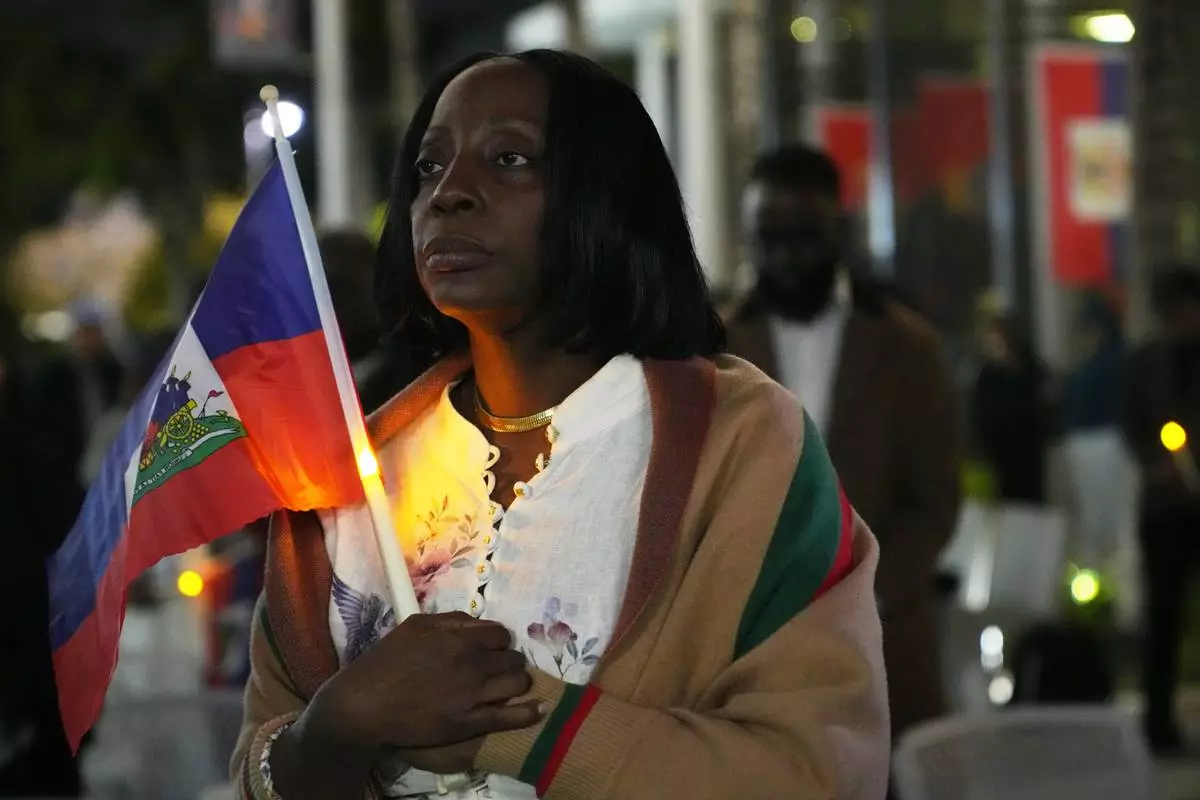
FILE - Linda Joseph holds a candle during a vigil at the Little Haiti Cultural Complex after a federal judge blocked the Trump administration from ending temporary immigration status, or TPS, for Haitians, Tuesday, Feb. 3, 2026, in North Miami. (AP Photo/Lynne Sladky, File)
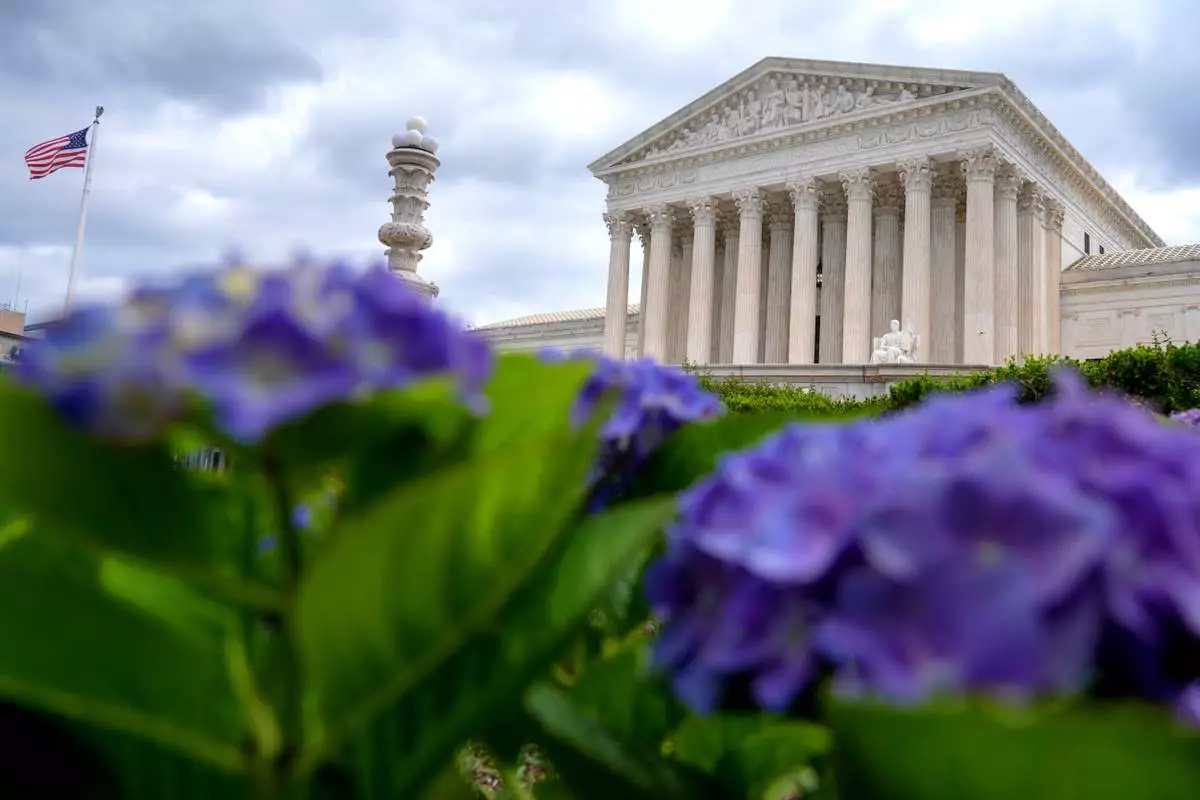
FILE - The U.S. Supreme Court is photographed, June 8, 2026, in Washington. (AP Photo/Mariam Zuhaib, File)