Skip to Content Facebook Feature Image

MLB proposes limiting most free agent contracts to 5 years and 15% of a team's salary cap

Sport

MLB proposes limiting most free agent contracts to 5 years and 15% of a team's salary cap
Sport

Sport

MLB proposes limiting most free agent contracts to 5 years and 15% of a team's salary cap

2026-06-26 03:35 Last Updated At:03:40

Major League Baseball proposed limiting most free agent contracts to five years and 15% of a team's salary cap and to eliminate deferred compensation, fleshing out details of a salary cap plan likely to spark a confrontation with the players' association.

During a bargaining session Thursday at the union's office, MLB said it would accept the union's proposal granting free agency a year early for players who have reached age 30 if the union accepted the league's salary cap system. MLB also proposed boosting the minimum salary from $780,000 to $1 million for those with two years of big league service.

MLB also proposed increasing the pre-arbitration bonus pool from $50 million to $65 million next year and $75 million by 2032, the sixth season of MLB's proposed seven-year deal.

“These misleading offers are designed to look like ‘improvements’ but are of little or no value, given they are expressly conditioned on agreement to the league’s cap system which eliminates the free market, and ensures gains for one player only come at the expense of another,” union head Bruce Meyer said in a statement. “While MLB claims to be acting in the interest of fans, their proposals thus far are entirely consistent with owners’ long-held goals: suppressing player salaries and maximizing club profits."

MLB also said it would agree to eliminate the qualifying offer for free agents that since its inception in 2012 has restricted the market for some players.

Bargaining started May 13 for a contract to replace the five-year deal that expires Dec. 1, and owners proposed a salary cap for the first time since the union fought off the system during a 7 1/2-month strike in 1994-95. MLB is expected to impose a lockout in December, halting free agent signings and trades.

“Owners’ attempts to pit players against players are nothing new," Meyer said. "But they’ve failed in the past and will fail again now, because PA members remain unified.”

After the prior agreement expired in December 2021, intensive bargaining did not start until late February as the threat approached of losing regular-season games — along with revenue and salary. The sides reached an agreement on March 10, the 99th day of the lockout, preserving the 162-game schedule.

In the league's cornerstone proposal, made last month, team spending would be capped next year at $245.3 million, using figures for luxury tax payrolls that include $20.1 million for benefits and the pre-arbitration bonus pool. It also would establish a payroll floor of $171.2 million, forcing several teams to spend more. The two-time World Series champion Los Angeles Dodgers, baseball’s biggest spenders, had a $415.2 million payroll on opening day this year — around $170 million over the proposed cap.

“The biggest issue baseball fans want solved to strengthen the game is fixing the payroll disparity that leaves too many fans without hope of their team competing for a World Series title," MLB spokesman Glen Caplin said in a statement. “Every other major U.S. sport has tackled this problem, and every year more small market teams in those leagues have a chance to win. The salary cap and floor proposal levels the playing field.”

As part of the plan, MLB would establish a “cornerstone player” similar to the NBA's Bird rule, which would allow a team to re-sign a player at 16% of the cap. A free agent switching clubs would be limited to a $36.8 million salary next year and a re-signing player to $39.2 million.

Salaries for free agents in additional seasons of a multiyear contract would be limited to 5% increases, as would salaries for younger players in multiyear deals that cover potential free-agent seasons.

Contracts would be capped by service time: at $500 million and 12 years for those yet to make major league debuts, $461 million and 11 seasons for those with 0-1 years of service, $421 million and 10 years for 1-2, $382 million and nine seasons for 2-3, $343 million and eight years for 3-4, $304 million and seven years for 4-5, and $265 million and six years for free-agent eligible players.

Banning deferred compensation would eliminate a business practice used most prominently by the Dodgers, who owe just under $1.1 billion to 10 players from 2028-47. In addition, MLB would restrict bonus provisions in player contracts and mandate a standard award bonus package.

MLB said it would accept the union's proposal to drop free-agent eligibility to five seasons of service from six for those turning 30 by the Nov. 1 of the offseason. MLB said 354 players on big league rosters as of Thursday would reach free agency a year earlier. MLB would start the change in the 2027-28 offseason.

As part of the minimum salary proposal, MLB said players with less than two years of service would have a $900,000 minimum and if earning a full year of service would get an additional $100,000 from the pre-arbitration bonus pool.

AP MLB: https://apnews.com/hub/mlb

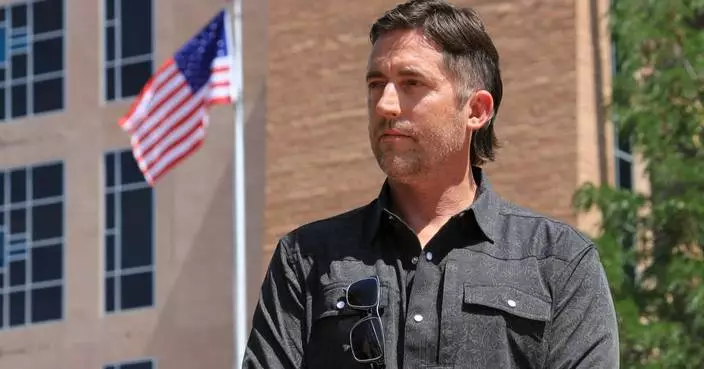
FILE - Attorney Bruce Meyer, the current interim executive director of the Major League Baseball Players Association, speaks at a news conference in New York on March 11, 2022. (AP Photo/Richard Drew, File)
FILE - Attorney Bruce Meyer, the current interim executive director of the Major League Baseball Players Association, speaks at a news conference in New York on March 11, 2022. (AP Photo/Richard Drew, File)

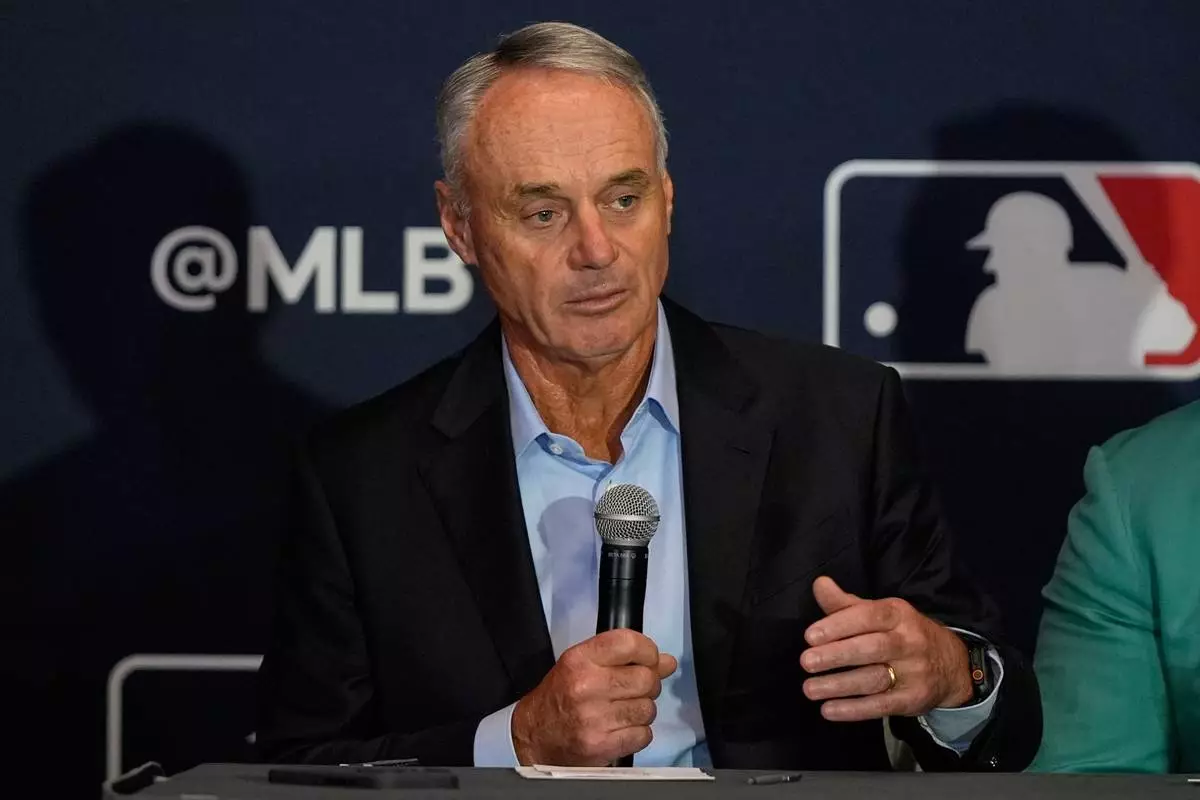
FILE - Commissioner of Major League Baseball Rob Manfred answers questions during a news conference at the MLB winter meetings, Dec. 8, 2025, in Orlando, Fla. (AP Photo/John Raoux, file)


FILE - Commissioner of Major League Baseball Rob Manfred answers questions during a news conference at the MLB winter meetings, Dec. 8, 2025, in Orlando, Fla. (AP Photo/John Raoux, file)
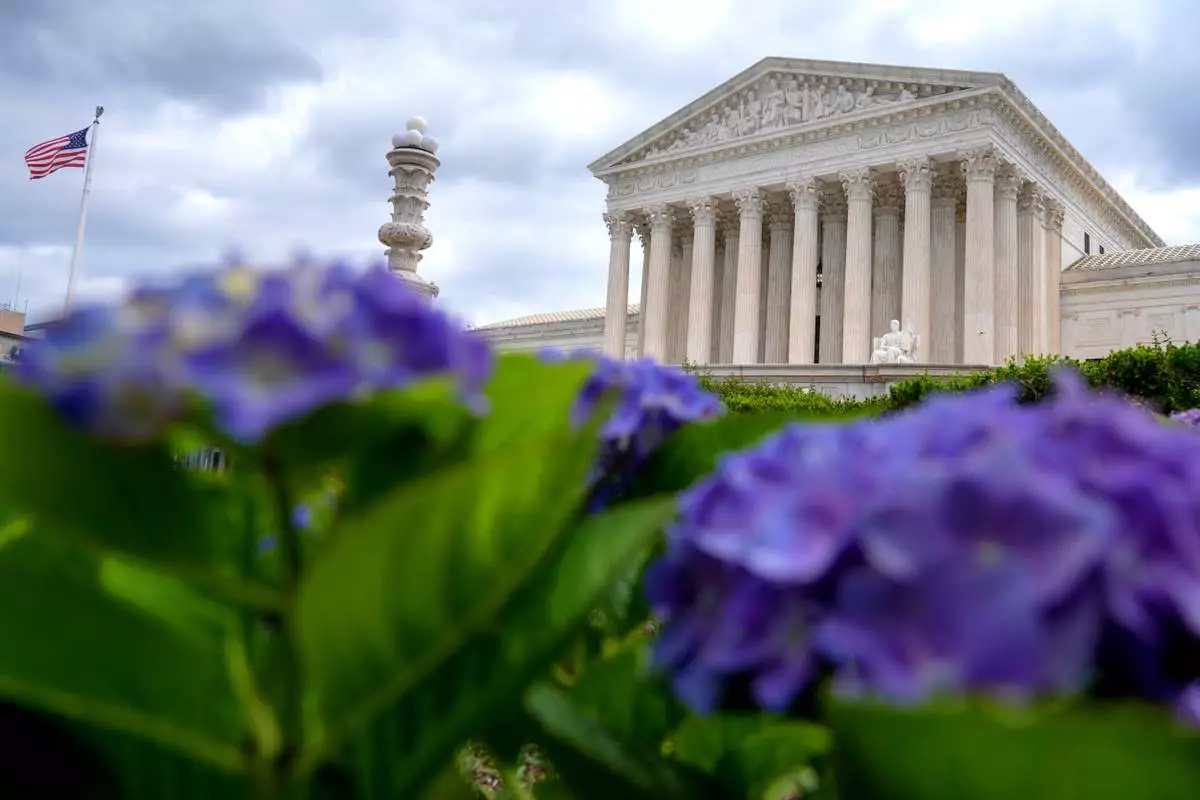
WASHINGTON (AP) — The Supreme Court cleared the way Thursday for the Trump administration to potentially revive an immigration policy once used to turn back migrants seeking asylum at the U.S.-Mexico border.

The justices, in a 6-3 decision, overturned a lower court order blocking the practice that limited the number of people who could apply for asylum each day, first under the Obama administration and then expanded during President Donald Trump’s first term.

Advocates said the tactic created a humanitarian crisis as thousands of people settled in unsafe makeshift shelters to await their turn. The Trump administration said it was necessary to deal with an increase of asylum seekers at the border.

The policy is not in place now, though authorities have imposed other restrictions on asylum seekers. The Department of Homeland Security did not say if it plans to revive it, but applauded the ruling. “This decision opens up an important tool to continue securing our southern border,” said James Percival, the agency's general counsel.

The administration argued that metering is a critical tool that’s been used by presidents of both parties and should stay available. Federal attorneys say people turned away at the border could come back later, though lines were thousands of people long when the policy was in place before.

The case is one of several immigration suits the court is considering this term, including Trump’s push to restrict birthright citizenship. The high court also allowed his administration to end deportation for migrants fleeing instability and armed conflict on Thursday.

Under federal law, migrants who arrive in the U.S. must be able to apply for asylum and be screened for fear of persecution in their home countries.

The Justice Department argued that people stopped by authorities haven’t arrived in the country, so immigration agents don’t have to let them apply.

The court's conservative majority agreed. “A guest does not arrive in a house when he knocks on the front door,” Justice Samuel Alito wrote.

But attorneys for people seeking asylum say the law has long meant anyone arriving at a port of entry should be screened, and blocking arrivals disregards the nation’s ideals.

Justice Sonia Sotomayor dissented from the bench, saying that the majority’s opinion “regrettably and tragically extinguishes the light of the torch of the Statue of Liberty.”

The decision could also give people a “perverse incentive” to enter the country illegally if they can't count on being able to legally apply for asylum at a port of entry, she said, a concern that Alito's opinion said was overblown.

In an unusual exchange, Alito voiced a response after she finished speaking. He expressed surprise that she had read her dissent out loud and defended his opinion by pointing out that the policy had been used during two presidential administrations. “I won’t add anything more to that,” Alito said.

Metering was first used under President Barack Obama when large numbers of Haitians appeared at the main crossing to San Diego from Tijuana, Mexico. It was expanded to all border crossings from Mexico during Trump’s first term in the White House.

It ended in 2020 when the government introduced greater restrictions during the coronavirus pandemic, and President Joe Biden formally rescinded it in 2021.

The same year, a California-based federal judge found that metering violated the asylum seekers' rights and the law requiring screening. A divided appeals court panel affirmed the ruling but nearly half of judges on the full San Francisco-based court voted to rehear it, a strong signal that might have caught the attention of the Supreme Court.

Attorneys with the group Democracy Forward first brought the case, and condemned Thursday's ruling. “We are disappointed in the Court’s decision and call on all Americans to demand that our government protect the families the Court today decided to keep in harm’s way,” said President and CEO Skye Perryman.

They represented the group Al Otro Lado, whose executive director said the decision would mean a “hardening of borders to keep out the most vulnerable" that is "sure to result in many more lives lost.”

U.S. law allows people seeking refuge to apply for asylum once they are on American soil, regardless of whether they came legally. To qualify for asylum, they must show a fear of persecution in their homeland for specific reasons, like race, religion, nationality, membership in a particular social group or political opinion.

People who are eventually granted asylum can’t be deported. They can legally work, bring in immediate family, apply for legal residency and seek citizenship.

Associated Press writers Fatima Hussein and Rebecca Santana contributed to this report.

FILE - Linda Joseph holds a candle during a vigil at the Little Haiti Cultural Complex after a federal judge blocked the Trump administration from ending temporary immigration status, or TPS, for Haitians, Tuesday, Feb. 3, 2026, in North Miami. (AP Photo/Lynne Sladky, File)

FILE - Linda Joseph holds a candle during a vigil at the Little Haiti Cultural Complex after a federal judge blocked the Trump administration from ending temporary immigration status, or TPS, for Haitians, Tuesday, Feb. 3, 2026, in North Miami. (AP Photo/Lynne Sladky, File)

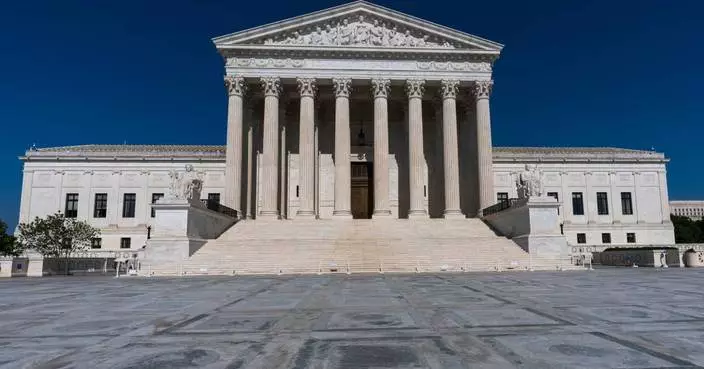
FILE - The U.S. Supreme Court is photographed, June 8, 2026, in Washington. (AP Photo/Mariam Zuhaib, File)

FILE - The U.S. Supreme Court is photographed, June 8, 2026, in Washington. (AP Photo/Mariam Zuhaib, File)

Recommended Articles