OAKLAND, Calif. (AP) — The parents of former All-Pro NFL running back Doug Martin say excessive force by police and delayed medical care led to his death last year, according to a wrongful death lawsuit against the city of Oakland, California, several police officers and an ambulance company.
In the lawsuit filed Tuesday in federal court, Leslie and Douglas Martin say their son was experiencing a mental health crisis in October when responding Oakland police officers held him "face down while one or more officers pressed on his back.” The lawsuit alleges this restraint was a “substantial factor” in causing his death.
Martin, 36, best known for his career with the Tampa Bay Buccaneers, was selected last August as one of the top 50 players in franchise history as part of the team’s 50th anniversary celebration. He was originally from Oakland and lived in Stockton, where he played high school football.
Over a decade, more than 1,000 people have died across the country after police subdued them through means not intended to be lethal, such as physical holds, Tasers and body blows, an investigation led by The Associated Press found. That includes George Floyd, whose murder by a police officer in 2020 led to a national reckoning over the use of force.
Police said in a statement at the time of Martin's death that he was involved in a break-in and that a “brief struggle” happened as police were trying to detain him and he became unresponsive. The department did not release any other details.
The Oakland Police Department said Thursday it does not comment on pending litigation and referred inquiries to the Oakland city attorney's office, which declined comment. Oakland police also said the investigation into Martin's death is ongoing.
After Leslie Martin called paramedics for help, the lawsuit says that responding police officers found Doug Martin hiding in a neighbor’s home and physically restrained him face down after a brief struggle. The complaint alleges he was later turned onto his side and was unresponsive and says officers initially thought he was “sleeping or pretending to be.” They only requested medical assistance after he remained unresponsive, the lawsuit says.
The lawsuit also accuses Falck USA, Inc. and its subsidiary Falck Northern California Corp.'s paramedics of taking more than 15 minutes to respond to the call and not promptly providing medical care after they arrived. Messages seeking comment were left Thursday for Falck.
The Alameda County Coroner’s Office said they are still awaiting autopsy results after extra testing was requested by Martin's family. Messages seeking comment were left with the family's attorney.
Martin was the 31st overall pick in the first round of the 2012 NFL draft after a standout career at Boise State. He rushed for 1,454 yards, scored 11 touchdowns as a rookie and was selected to the Pro Bowl. He also was named first-team All-Pro and made the Pro Bowl again in 2015.

FILE - Oakland Raiders running back Doug Martin looks on during an NFL preseason football game against the Arizona Cardinals, Aug. 15, 2019, in Glendale, Ariz. (AP Photo/Rick Scuteri, File)
WASHINGTON (AP) — The Supreme Court on Thursday allowed the Trump administration to end legal protections for migrants fleeing violence and natural disaster in Haiti and Syria, exposing hundreds of thousands more people to potential deportation.
The 6-3 decision overturns lower court orders and allows the Department of Homeland Security to swiftly end temporary protected status, a program that protects a total of 1.3 million people from 17 countries.
It marked another victory at the high court for Republican President Donald Trump's sweeping crackdown on immigration. Though the conservative-dominated court has put the brakes on some of Trump’s immigration policies, it handed him a second win Thursday in a decision clearing the way for the revival of a policy restricting immigrants seeking asylum.
The court’s conservative majority found that the law doesn’t allow courts to question the process that immigration authorities use to revoke the protections.
The opinion from Justice Samuel Alito also brushed aside arguments that Trump's derogatory comments about Haitians showed the decision was unlawfully tinged by prejudice. He called the statements “insufficient to show that the termination of Haiti’s TPS designation was based on the race of the Haitian people.”
Justice Elena Kagan forcefully disagreed, calling Trump's comments “so repellent and racially inflected that the majority declines to put them in print.” Her dissent pointed out that Trump had said Haitians in the U.S. “probably have AIDS,” and he also amplified false rumors during the 2024 campaign that Haitian immigrants in Ohio were abducting and eating dogs and cats.
Federal authorities deny that prejudice played a role, and argued that TPS was supposed to be temporary but has lasted over a decade in some cases.
James Percival, DHS general counsel, applauded Thursday’s ruling. He said the program had become “de facto amnesty. This is a win for the rule of law and common sense.”
In a Fox News interview Thursday, Deputy White House Chief of Staff Stephen Miller called it “a victory 10 years in the making," saying it allows Haitian migrants to “finally” be removed.
Lawyers said Haitian immigrants would be in danger if they are sent back. “Simply put, the Supreme Court’s ruling will directly result in thousands of innocent people dying violent, needless deaths,” Geoff Pipoly and Andy Tauber said.
They urged the Senate to approve an extension of deportation protections for Haitians that passed the House on a rare bipartisan vote in April.
“Families are here, kids are going to school, parents are going into work, folks are trying to commute, and it’s like the Supreme Court just put all those activities on stop and put folks in limbo,” said Viles Dorsainvil, who runs a support center for Haitians in Springfield, Ohio.
People with TPS are also a key part of the workforce in long-term care facilities, an industry group said. “This would be a dreadful loss for all seniors in our community,” said Rita Siebenaler, a resident at Goodwin Living, a senior living community in Virginia.
The Justice Department appealed to the Supreme Court after judges postponed the end of the program for about 350,000 Haitians and 6,000 Syrians. The high court sided with the administration before and allowed the end of the program for people from Venezuela.
Since Trump returned to the White House in January 2025, Homeland Security has moved to end the protections, including some that had been in place for more than a decade, for people from 13 countries.
Immigration lawyers said the terminations were made through an improperly fast process, even though countries such as Haiti and Syria remain dangerous. Four Haitian women who were deported from the United States in February were later found beheaded and dumped in a river several months later, lawyers said in court documents.
Derrick Johnson, president and CEO of the NAACP, called the ruling “a devastating betrayal of Haitian families who have lived, worked, and contributed to this country for years — only to be cast out based on anti-Black immigration sentiment.”
The United States first granted protections to Haitians in 2010 after a catastrophic earthquake and extended them multiple times amid ongoing gang violence that has displaced more than a million people, according to court documents.
Syrians were first granted protected status in 2012, during a civil war that lasted for more than a decade before the fall of President Bashar Assad’s government in late 2024.
“Today, many of our community members, they feel lost,” Farrah AlKhorfan of Immigrants Act Now said about Syrian immigrants losing TPS protections. “They are trying to understand … what this decision means for them and how it will be implemented and how much time they will have to prepare for what comes next.”
The program was created by Congress in 1990 to prevent deportations to countries suffering from natural disasters, civil strife and other instability. It allows people already in the country to stay with work permits in increments of up to 18 months, but it does not provide a path to citizenship.
Associated Press writer Tim Sullivan in Minneapolis and Collin Binkley in Washington contributed to this report.
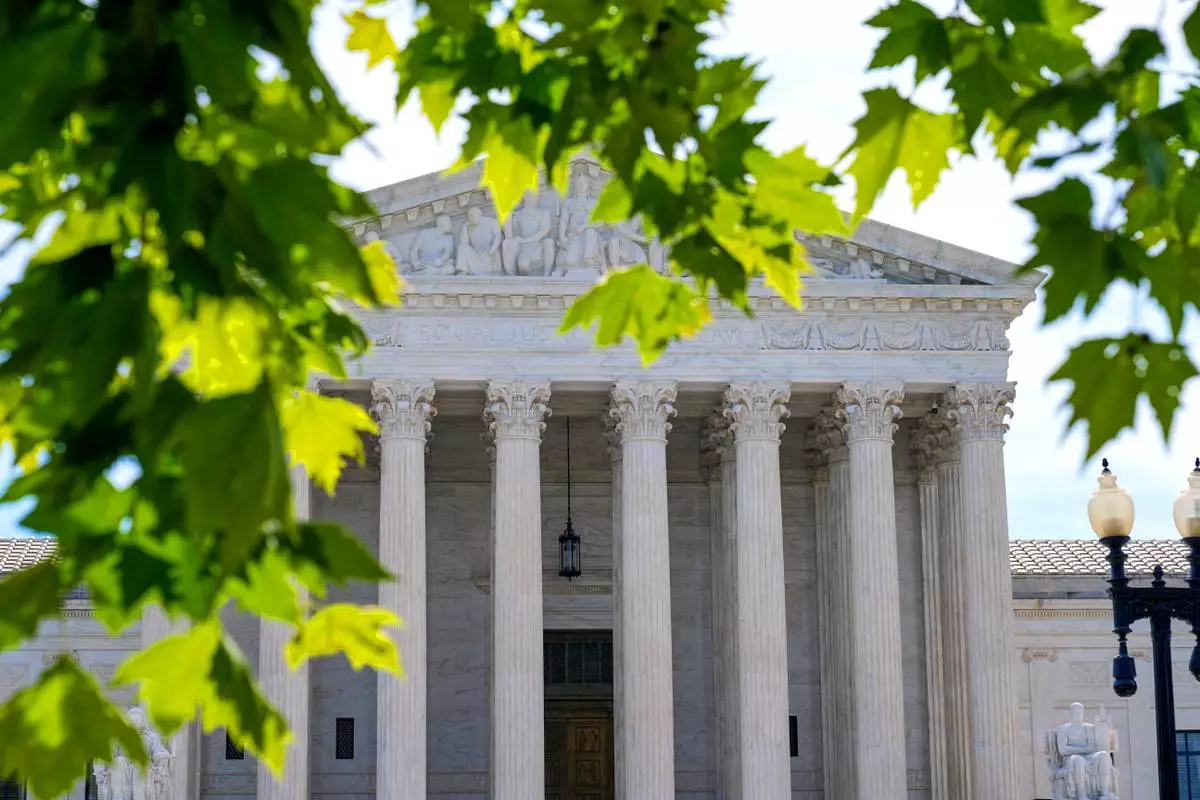
FILE - The U.S. Supreme Court is seen, June 5, 2026, in Washington. (AP Photo/Mariam Zuhaib, File)
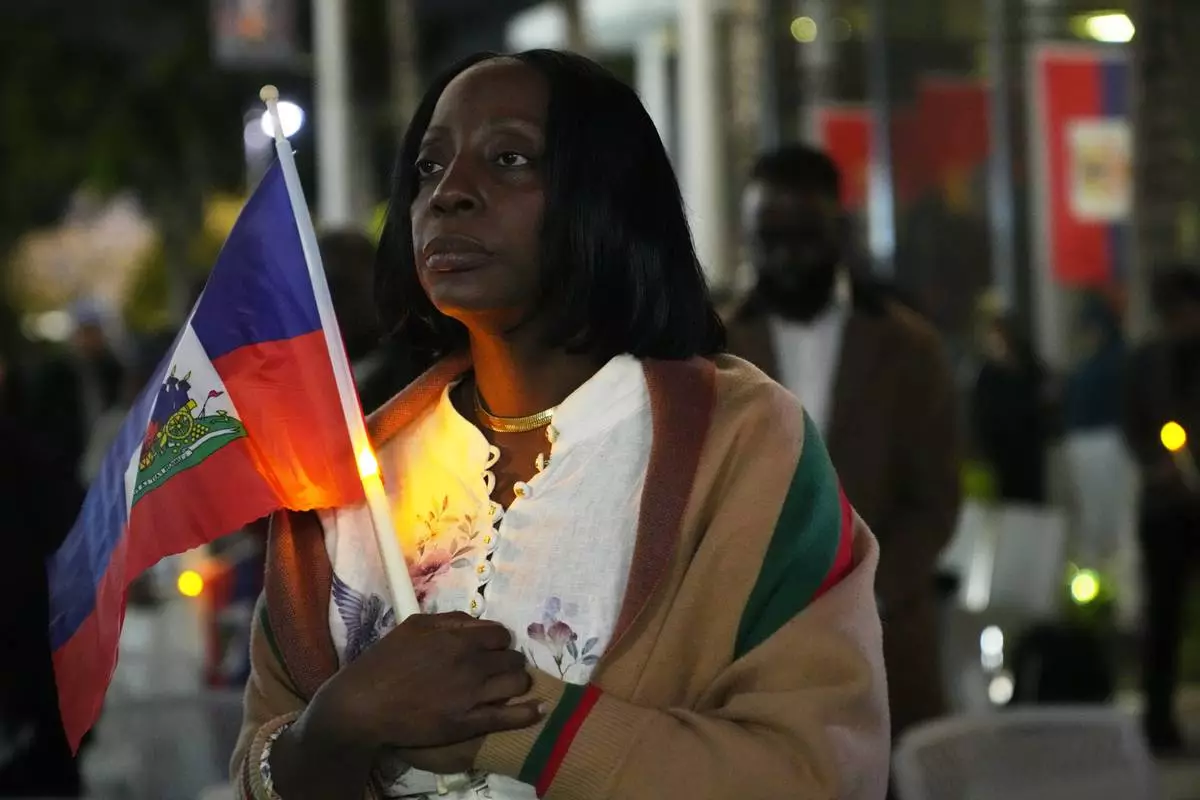
FILE - Linda Joseph holds a candle during a vigil at the Little Haiti Cultural Complex after a federal judge blocked the Trump administration from ending temporary immigration status, or TPS, for Haitians, Tuesday, Feb. 3, 2026, in North Miami. (AP Photo/Lynne Sladky, File)