The record-breaking heat that's scorching Europe day and night this month would not have been possible without climate change, according to a new study.
The World Weather Attribution rapid study released Friday found that the heat would have been virtually impossible just five decades ago, and is 200 times more likely today than it would have been 20 years ago.
Click to Gallery
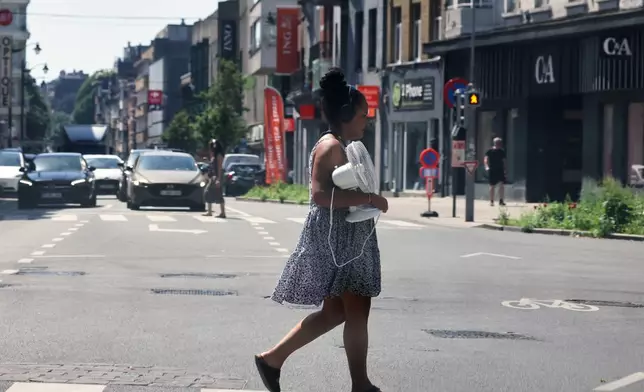
A woman walks across the street with a fan in her arms in the center of Brussels, Thursday, June 25, 2026. (AP Photo/Omar Havana)

A man on a train wipes sweat from his face on a hot day in London, Wednesday, June 24, 2026. (AP Photo/Kin Cheung)
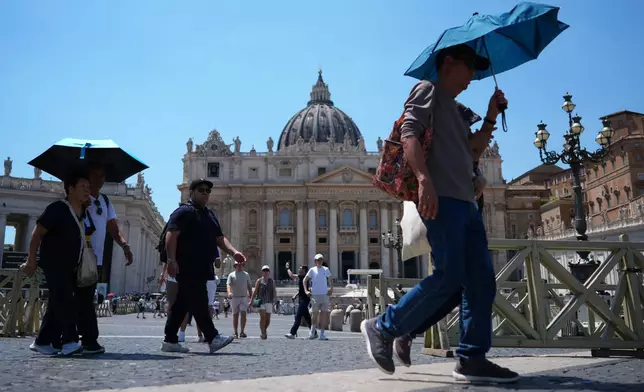
People shade from the sun under umbrellas as they walk through St. Peter's Square at the Vatican, Thursday, June 25, 2026. (AP Photo/Andrew Medichini)
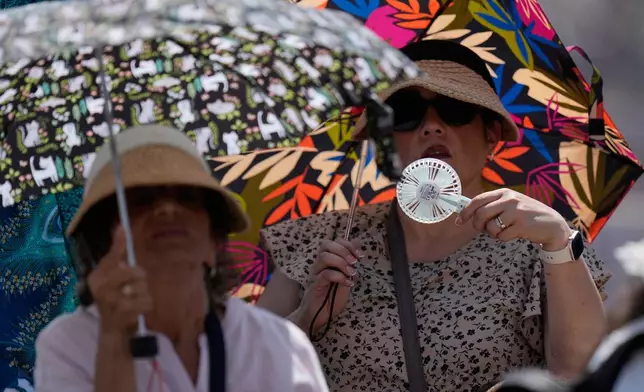
Faithful shelter from the hot sun as Pope Leo's XIV arrives for his weekly general audience in St. Peter's Square at The Vatican, Wednesday, June 24, 2026. (AP Photo/Alessandra Tarantino)
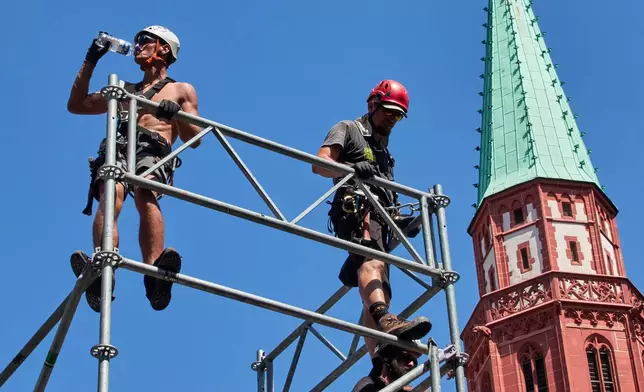
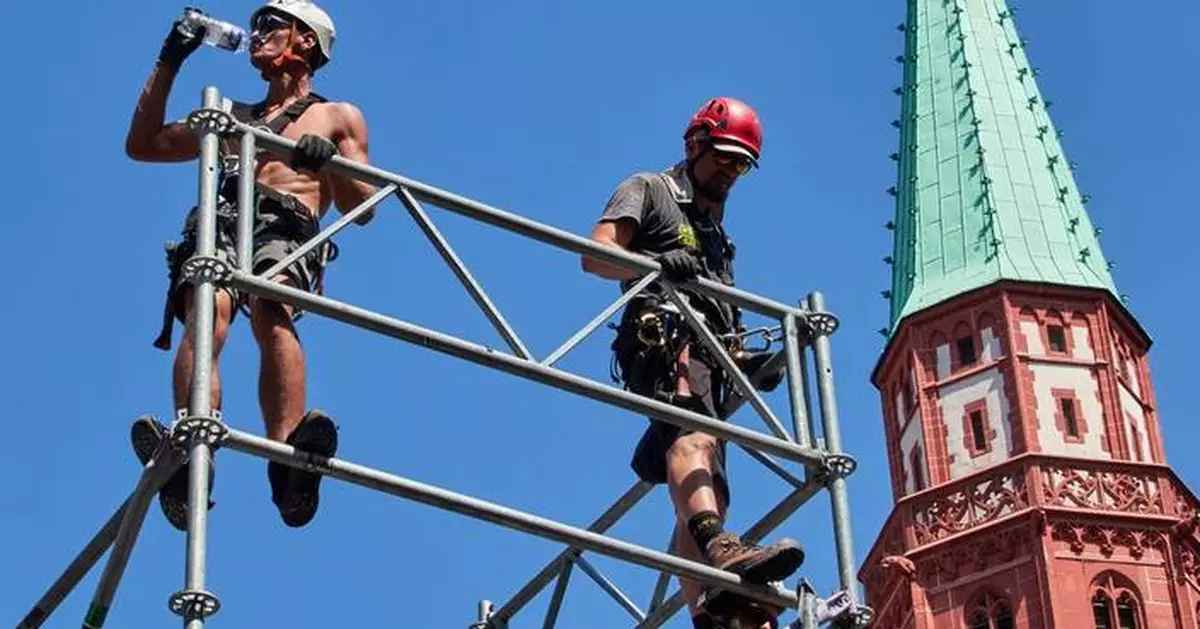
A worker drinks water as he sets up a stage for the upcoming Ironman triathlon, Frankfurt, Germany, Thursday, June 25, 2026. (AP Photo/Michael Probst)
Millions in France, Italy, Spain, the United Kingdom and elsewhere in Europe are experiencing extreme temperatures and humidity this week associated with a heat dome. Daytime temperatures have topped 40 degrees Celsius (104 Fahrenheit) in many places, while high nighttime temperatures have also made it harder to cool down and recover.
The scientists estimated that a heat wave with similar characteristics occurring in the climate of June 1976 would have been about 3.5 degrees Celsius (6.3 Fahrenheit) cooler during the day and about 2 degrees Celsius cooler (3.6 Fahrenheit) in 2003. The nighttime temperatures would have been about 2.4 degrees Celsius (4.3 Fahrenheit) cooler in June 1976 and about 1.3 degrees Celsius (2.3 Fahrenheit) cooler in 2003.
They chose 1976 and 2003 for comparison because those years saw extreme heat in Europe.
“The increase in temperatures was so dramatic that we would have expected to have never seen this event in the 1976 climate,” said the study’s lead author Theodore Keeping, also a climate scientist at the Centre for Environmental Policy at Imperial College London. “And it would also still have been very, very rare, even 23 years ago in 2003.”
World Weather Attribution, a Europe-based collaborative of scientists who study the causes of global extreme weather events, began assessing in 2015 the extent to which those could be attributed to climate change caused by the burning of fossil fuels such as coal, oil and gas. The organization’s rapid attribution studies, including this one, aren’t peer-reviewed but use peer-reviewed methodology.
The current study used observed temperature data and forecasts for an analysis of the heat wave that started on June 18.
It also found that 45% of the 850 cities analyzed across 30 European countries have broken, or are expected to hit, records for heat stress levels, a measure that includes humidity and temperature.
"It directly relates to the heat stress on the human body and our ability to cool ourselves down, and it’s a really good metric for the expected health impacts we expect to see from this heat wave,” Keeping said. Heat and humidity make for a dangerous combination for humans.
Ultimately, this marks the most severe heat wave to have ever been recorded in this region of Europe and most severe humid heat event, WWA researchers said.
Europe is the world’s fastest-warming continent, with temperatures increasing at twice the speed as the global average since the 1980s, according to the European Union’s Copernicus Climate Change Service. In a separate study last year, WWA researchers found there were about 1,500 climate change-caused deaths during a European heat wave last summer.
This week, weather agencies across Europe have issued red alerts about heat risks, and sporting events, schools, public transportation and attractions have been limited as a result. Many of these countries do not have widespread air conditioning or other infrastructure to account for warmer climates. France, which has been bearing much of the brunt of the heat wave, recorded its hottest day ever this week, and has also reported 40 deaths from drownings as people seek cooling relief.
The WWA scientists said the current El Nino warming cycle did not influence this heat.
Europe also experienced record-shattering high temperatures in May. Typically, Europe does not see dramatically warmer weather until July and August.
The findings of the study released Friday are reasonable, but may downplay climate change's role in the heat, said Michael Mann, a climate scientist at the University of Pennsylvania who was not involved in the research.
“If anything, this latest assessment — and all similar assessments — are actually underestimating the role that climate change is playing here,” said Mann, who has separately studied how climate change is increasing heat stress in North America.
Keeping, the study author, said the Europe heat wave shows the need to adapt infrastructure and behavior to extreme temperatures.
"We need to expect them to happen. They’re only going to become more frequent in the near term,” Keeping said. “We also need to address the source of climate change as well. And that is very simply carbon emissions from burning fossil fuels.”
Alexa St. John is an Associated Press climate reporter. Follow her on X: @alexa_stjohn. Reach her at ast.john@ap.org.
Read more of AP’s climate coverage.
The Associated Press’ climate and environmental coverage receives financial support from multiple private foundations. AP is solely responsible for all content. Find AP’s standards for working with philanthropies, a list of supporters and funded coverage areas at AP.org.
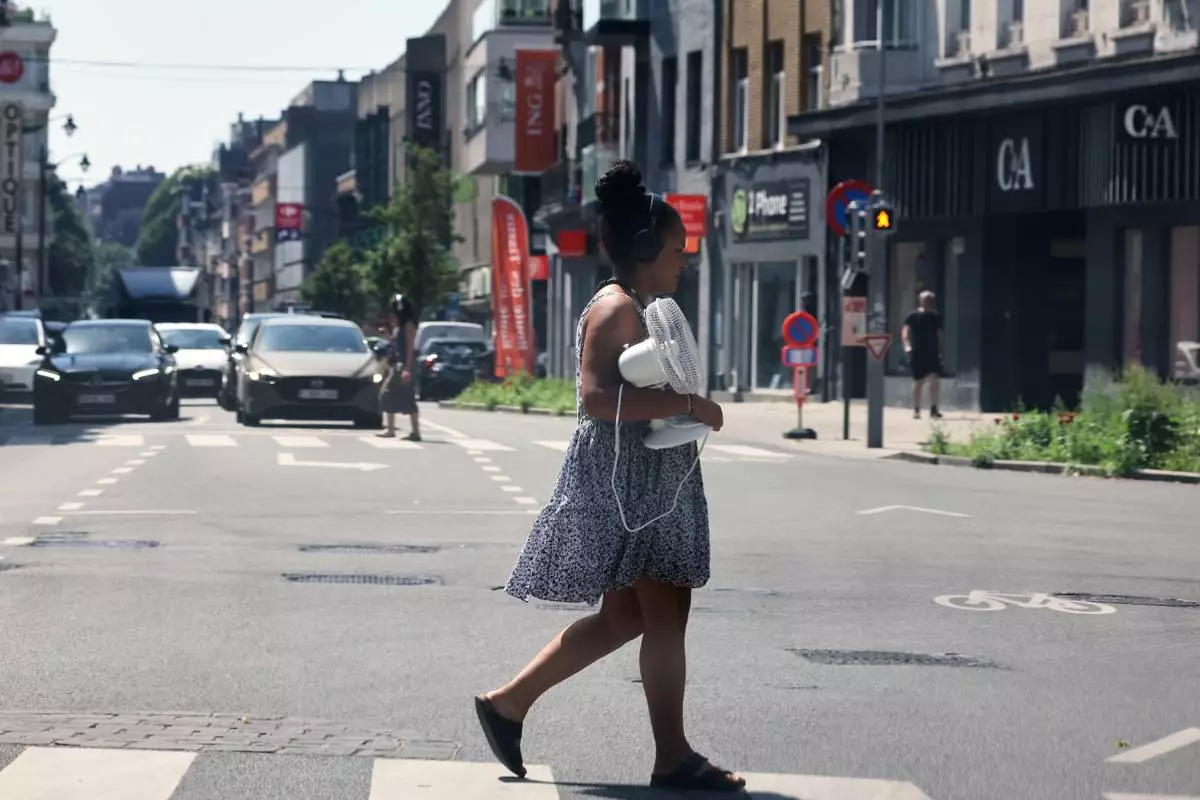
A woman walks across the street with a fan in her arms in the center of Brussels, Thursday, June 25, 2026. (AP Photo/Omar Havana)

A man on a train wipes sweat from his face on a hot day in London, Wednesday, June 24, 2026. (AP Photo/Kin Cheung)
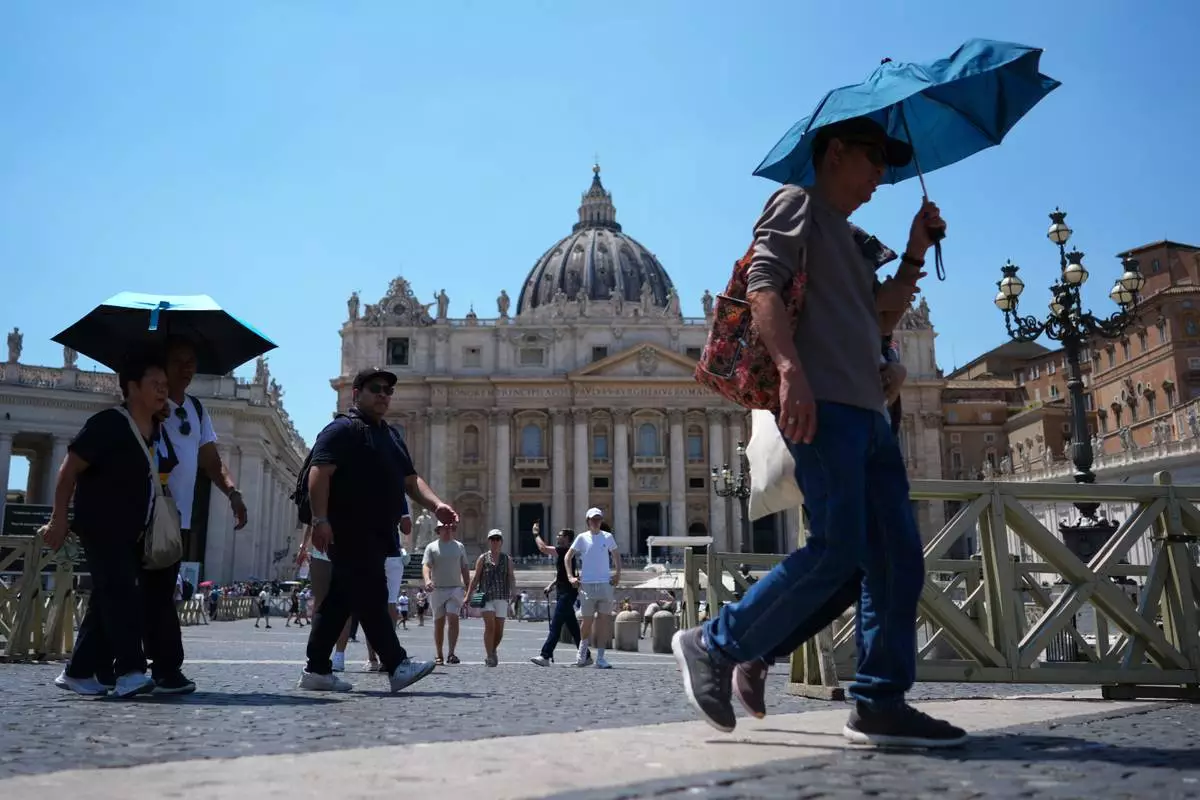
People shade from the sun under umbrellas as they walk through St. Peter's Square at the Vatican, Thursday, June 25, 2026. (AP Photo/Andrew Medichini)
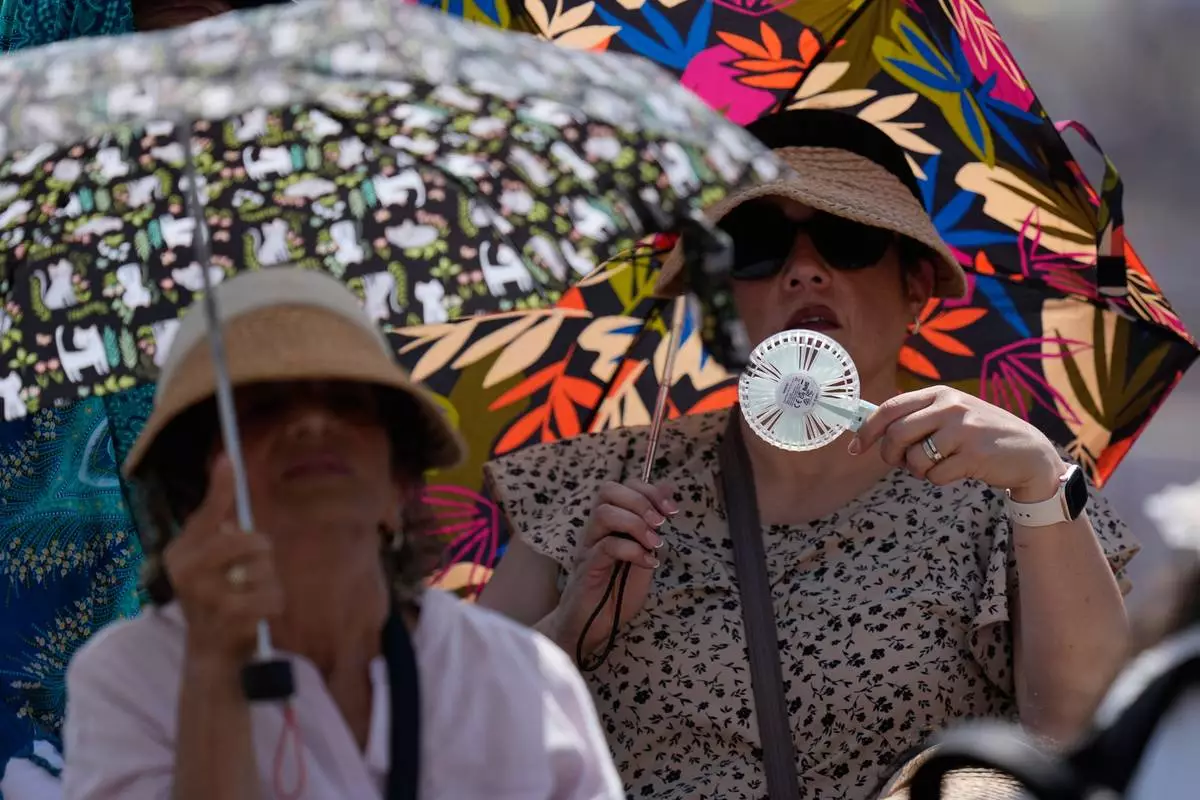
Faithful shelter from the hot sun as Pope Leo's XIV arrives for his weekly general audience in St. Peter's Square at The Vatican, Wednesday, June 24, 2026. (AP Photo/Alessandra Tarantino)
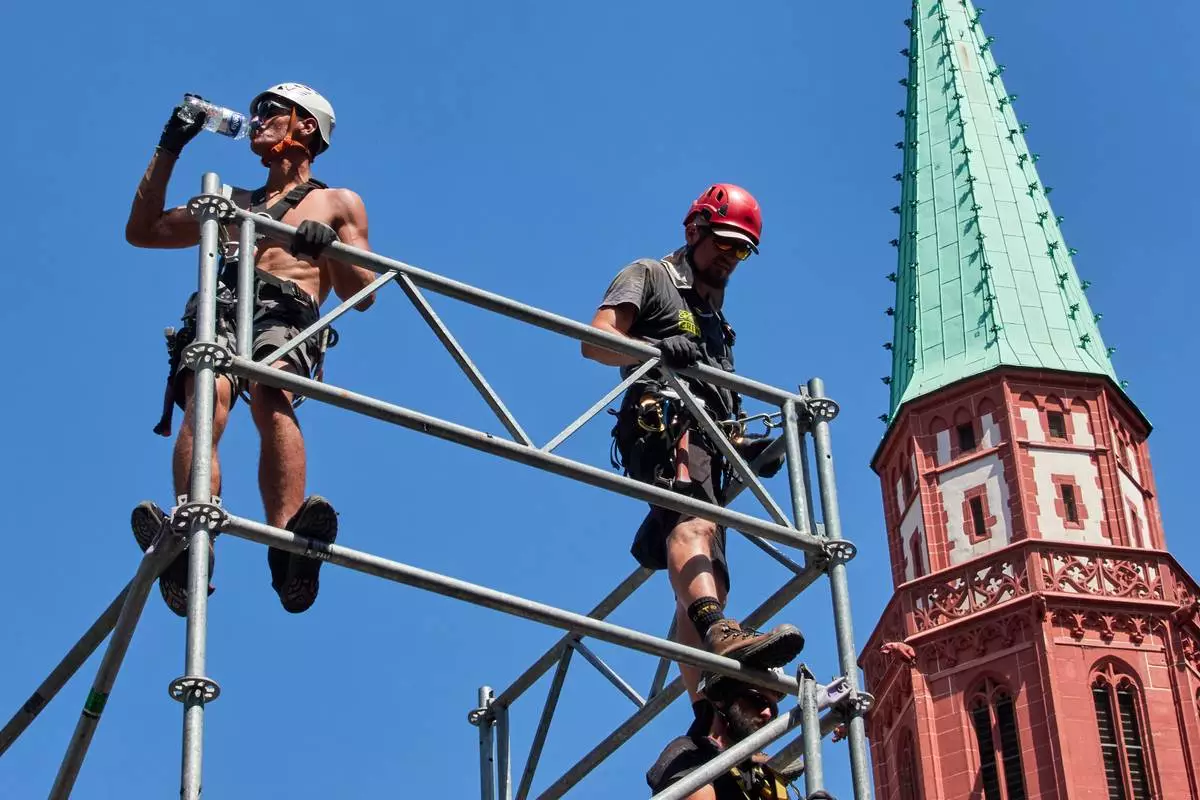
A worker drinks water as he sets up a stage for the upcoming Ironman triathlon, Frankfurt, Germany, Thursday, June 25, 2026. (AP Photo/Michael Probst)