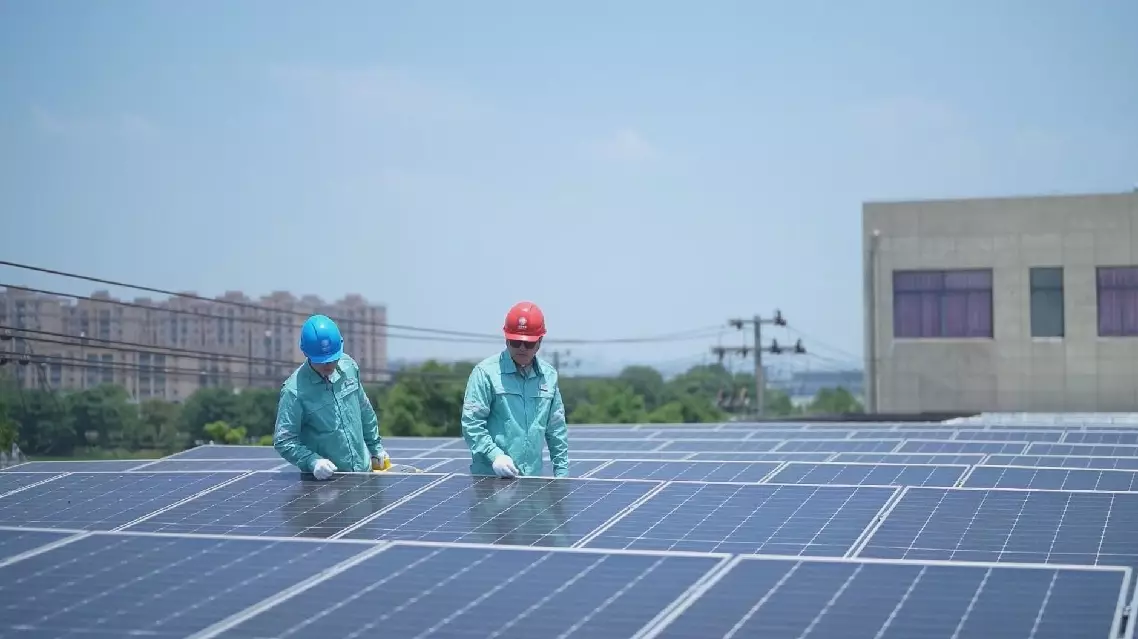
China will accelerate its construction of a new-type energy system during the period of the 15th Five-Year Plan (2026–2030), with new energy expected to become the dominant component of the country's installed power capacity by 2030, Wang Hongzhi, head of the National Energy Administration, said on Friday.
Speaking at a press conference in Beijing, Wang, also a member of the Communist Party of China Leadership Group of the National Development and Reform Commission, briefed the media along with his colleagues on China's key plans for speeding up the development of a clean, low-carbon, safe and efficient energy system in five years.
"By 2030, China will have initially established a new energy system that is clean, low-carbon, safe, and efficient. The share of new energy installed capacity will exceed 50 percent, making it the dominant component of power generation capacity. Non-fossil fuel power generation will account for 50 percent of total electricity output, becoming the primary source of electricity. Additionally, coal and oil consumption will peak,"said Wang.
The National Development and Reform Commission and the National Energy Administration issued a plan in June, which sets out targets for strengthening energy security, advancing the green transition, boosting technological self-reliance and improving market mechanisms, among others.
The plan aims to make key technologies and equipment in the energy industrial chain largely self-reliant and controllable, while positioning China at the forefront of global energy technology innovation.
China has set the dual carbon goals of peaking carbon dioxide emissions before 2030 and achieving carbon neutrality before 2060.
China aims for new energy to become main power source by 2030: official