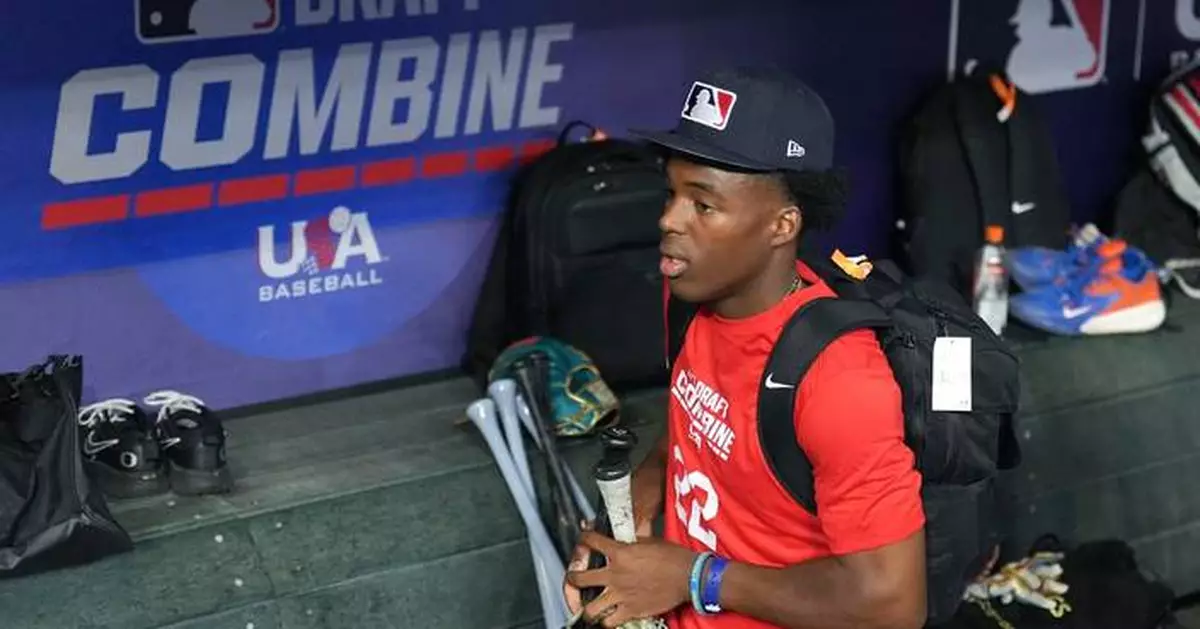
PHOENIX (AP) — James Clark is a young man with enticing options on his baseball horizon.
The promising 18-year-old shortstop was taking infield practice Tuesday during the MLB draft combine at Chase Field, fluidly handling ground balls before firing to first base. It's one of many reasons the California native has a chance to be selected in the first round of next month's draft.
Click to Gallery
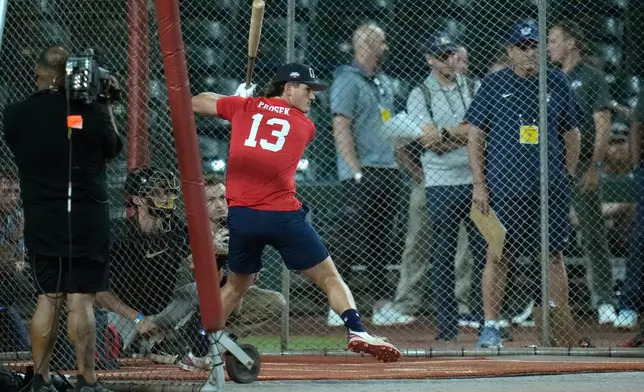
Cole Prosek, a third baseman/catcher at Magnolia Heights High School, gets ready to take a swing during batting practice at the MLB baseball combine in Phoenix, Tuesday, June 23, 2026. (AP Photo/Ross D. Franklin)
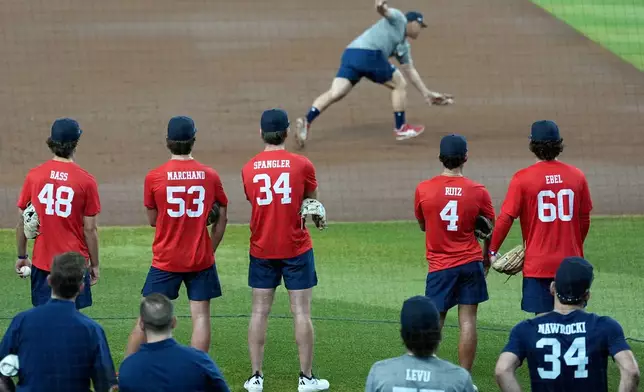
Rintaro Sasaki, of Japan, a first baseman at Stanford, fields a grounder as other players wait their turn at the MLB baseball combine in Phoenix, Tuesday, June 23, 2026. (AP Photo/Ross D. Franklin)
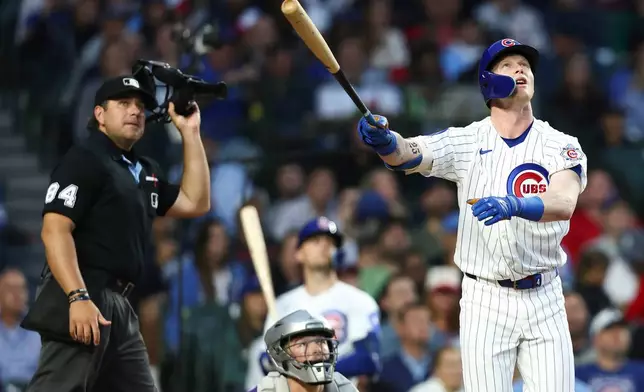
Chicago Cubs' Pete Crow-Armstrong, right, watches his home run as the umpire, back left, and Colorado Rockies catcher Hunter Goodman, back center, watch during the fourth inning of a baseball game in Chicago, Wednesday, June 17, 2026. (AP Photo/Jessie Alcheh)
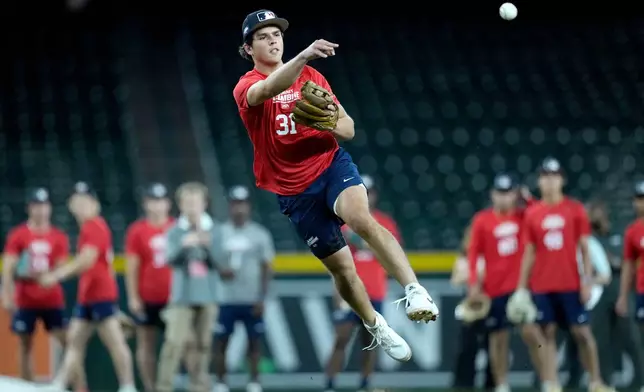
Archer Horn, a shortstop from St. Ignatius High School, throws to first base at the MLB baseball combine in Phoenix, Tuesday, June 23, 2026. (AP Photo/Ross D. Franklin)
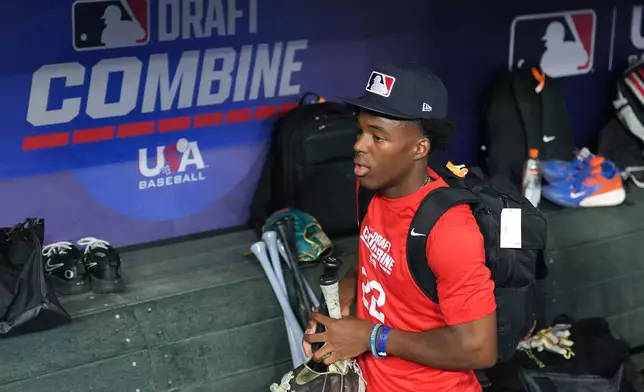
James Clark, a shortstop from St. John Bosco High School, gathers his gear in the dugout at the MLB baseball combine in Phoenix, Tuesday, June 23, 2026. (AP Photo/Ross D. Franklin)
But if he decides he's not ready to start his professional baseball career, he's committed to play college ball at Duke, which has a successful baseball program and an elite academic reputation.
“It's going to be a difficult decision,” Clark said. “But it's a good one to have."
If MLB gets it's way, it's a decision that future baseball prospects won't get to make.
Owners recently proposed banning high school players from signing with major league teams, raising the age for international amateurs and slashing the money spent on signing bonuses in negotiations for a new collective bargaining agreement.
If the league gets its way, starting in 2028, a prospect for the amateur draft would have to be at least 20 years old by the Sept. 1 of his signing year and two years removed from the graduating year of his high school class — a restriction that also would eliminate players who completed their first year of junior college.
There are dozens of current MLB stars who signed as teenagers, including Pete Crow-Armstrong, Mike Trout and Bobby Witt Jr. Even more recently, Pirates phenom Konnor Griffin made his MLB debut at 19 years old.
Crow-Armstrong — who was selected as an 18-year-old with the No. 19 overall pick in 2020 out of Harvard-Westlake High School in Los Angeles — was committed to play college baseball at Vanderbilt but decided to begin his pro career instead.
He hopes other young ballplayers will still have that option in the future.
“I got an opportunity to grow up in a really real-life setting and I was really grateful for it,” the All-Star center fielder said earlier this week. “I think if there’s any sport you can go straight from high school, it’s this one. You’re afforded a lot of time in the minor leagues to develop, and that’s kind of the point.”
Cubs pitcher Ben Brown was drafted by the Philadelphia Phillies as a 17-year-old in 2017 in the 33rd round — which doesn't even exist anymore after MLB shortened the draft to 20 rounds in 2021. The owners' most recent proposal would shorten the draft to 12 rounds starting in 2027.
Brown said he has fond memories of staying in hotels with roommates in the lower levels of the minors, learning how to budget money on a low salary and being on his own trying to make it in the baseball world.
“It was the greatest blessing in the world for me to go into pro ball at a young age,” Brown said. “I had to work in the offseasons. I did plenty of things just to show up to spring training early. And the Phillies took amazing care of me as a young kid.”
Of course, for every Ben Brown or Pete Crow-Armstrong, there are countless high school signees who never reached the majors. There also are lots of baseball players who want to go to college, earn a degree and then embark on their pro career if things work out.
Shortstop Roch Cholowsky was a highly-rated recruit coming out of a high school in Arizona in 2023 but instead played at UCLA for three seasons. Now he could be the No. 1 selection in next month's MLB draft after a standout career with the Bruins.
Still, he had plenty of friends who went straight to the pros out of high school.
“It's different for everybody — whatever is best for you,” Cholowsky said. “A guy like myself needed to go to college. I got to play three years of unbelievable baseball at UCLA, learn a lot and really grow up.”
College baseball has grown rapidly in recent years for many reasons, including that NCAA programs can now offer 34 scholarships instead of the old cap of 11.7. There's also some NIL money available at the top programs, though it's usually not like the high-dollar deals for their football or basketball counterparts.
Mississippi baseball coach Mike Bianco has been at the school for 26 years — winning a national championship in 2022 — and said the college game has become more enticing, with more and more young prospects deciding it's the best option. If MLB bans teenagers from signing out of high school, it likely means the NCAA version becomes even stronger.
Bianco's four sons all played at least some college baseball.
“Even if they had been potential first-round draft picks, I would have made them go to college,” Bianco said. “At the major college level, you're playing the best amateur baseball in the world. You've got a support system that's different than the minor leagues and you're getting educated in lots of different ways.”
In the 2025 MLB draft, 56 college players were selected in the top 90 picks.
Thanks to a variety of factors — especially money and technology — the MLB and NCAA versions of baseball have never been more similar. It’s part of the reason Tony Vitello is now the manager of the San Francisco Giants despite never working or playing for a professional organization before he was hired. That's a first in MLB history.
Athletics slugger Nick Kurtz was last year's AL Rookie of the Year after playing in college at Wake Forest, needing just 210 plate appearances in the minors before dominating MLB pitching with 36 homers and 86 RBIs in 117 games.
Pittsburgh Pirates right-hander Paul Skenes was a star pitcher at LSU before being drafted in 2023 and needed just 34 innings in the minors before making it to the big leagues. He was obviously ready — winning NL Rookie of the Year in 2024 and the Cy Young award in 2025.
From the MLB perspective, it's become advantageous to let prospects develop in college instead of drafting them as teenagers, paying large signing bonuses, and then trying to project their growth. Currently, each MLB team runs five levels of domestic minor leagues, which can get expensive.
Streamlining that process is enticing. The minors are already shrinking — MLB cut 40 minor league affiliates back in 2020. MLB has said it will not seek to reduce the 120 minor league teams in the top four levels when it negotiates new professional development licenses in 2030 to replace expiring 10-year deals. But the makeup of those 120 teams will surely be different if no players are signing out of high school.
“These guys trust (college) programs,” Arizona State coach Willie Bloomquist said earlier this spring. “They say, ‘We’ll just watch them in college in three years at a Power 4 program, see how they development and then we’ll go get them.’”
AP Baseball Writers Mike Fitzpatrick and Ronald Blum contributed to this story.
AP MLB: https://apnews.com/hub/mlb
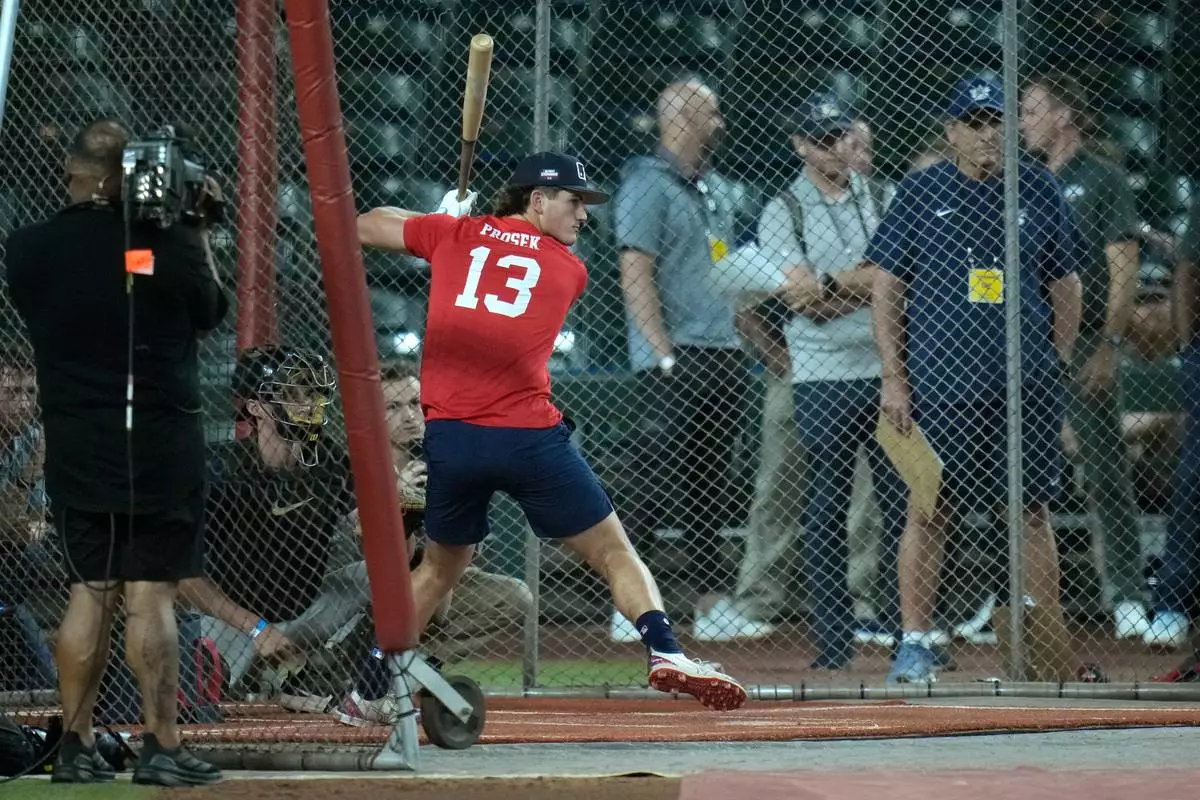
Cole Prosek, a third baseman/catcher at Magnolia Heights High School, gets ready to take a swing during batting practice at the MLB baseball combine in Phoenix, Tuesday, June 23, 2026. (AP Photo/Ross D. Franklin)
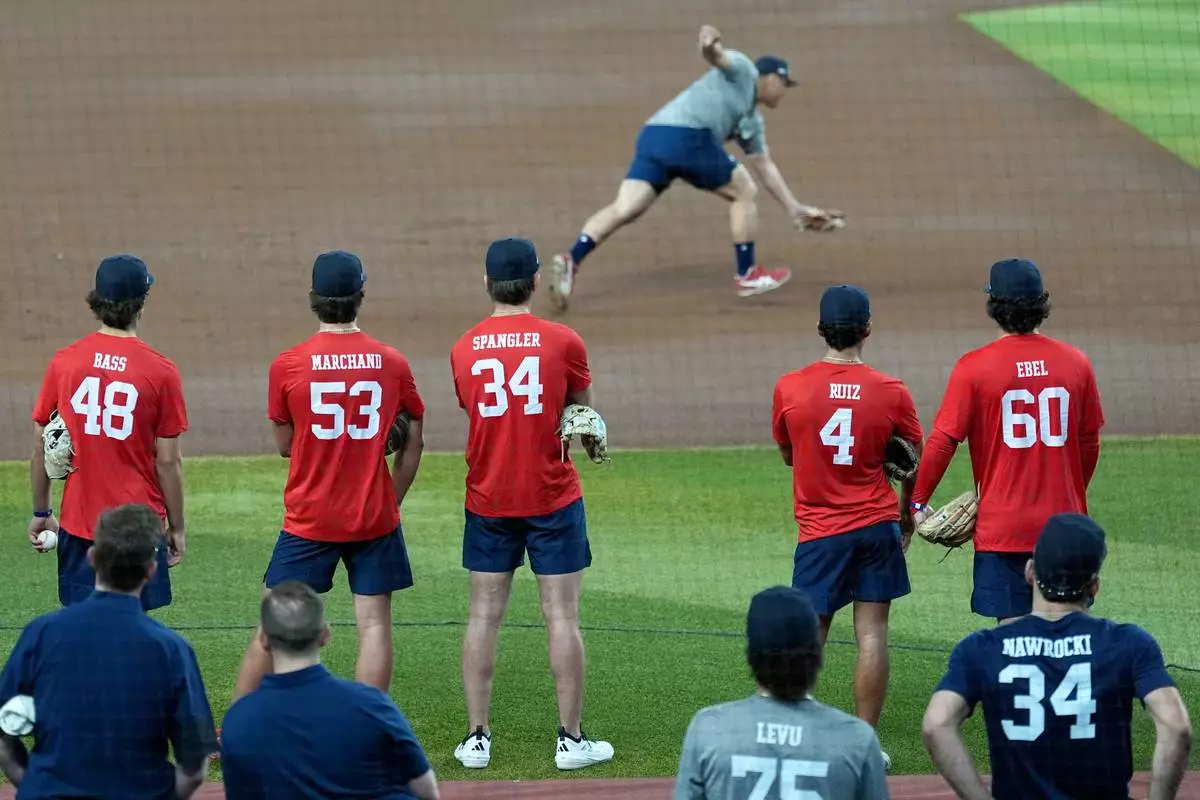
Rintaro Sasaki, of Japan, a first baseman at Stanford, fields a grounder as other players wait their turn at the MLB baseball combine in Phoenix, Tuesday, June 23, 2026. (AP Photo/Ross D. Franklin)
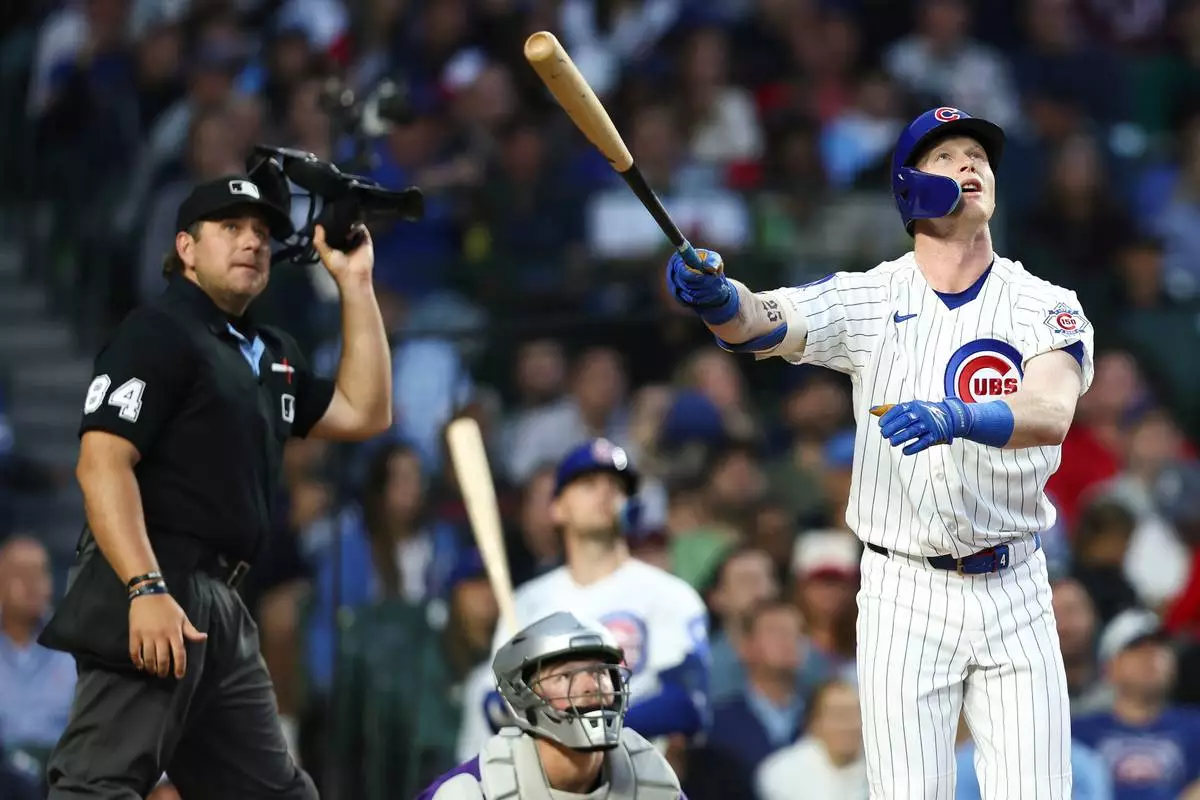
Chicago Cubs' Pete Crow-Armstrong, right, watches his home run as the umpire, back left, and Colorado Rockies catcher Hunter Goodman, back center, watch during the fourth inning of a baseball game in Chicago, Wednesday, June 17, 2026. (AP Photo/Jessie Alcheh)
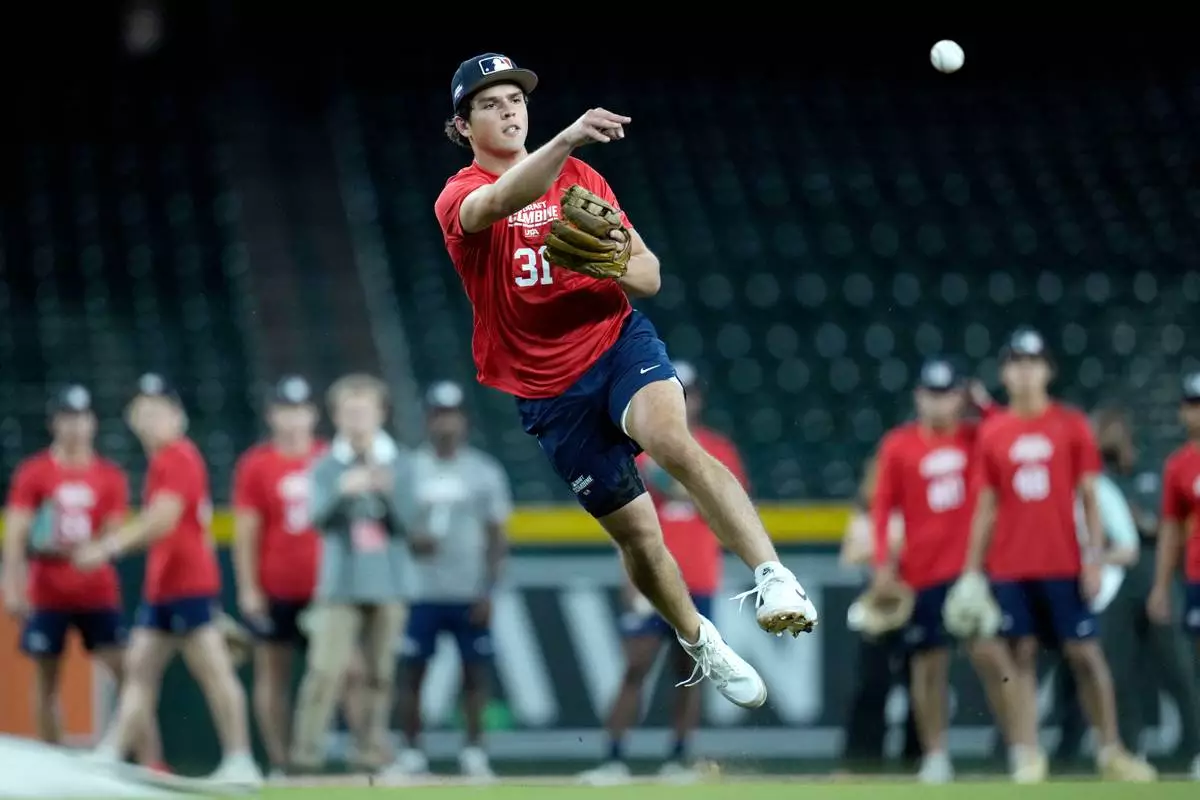
Archer Horn, a shortstop from St. Ignatius High School, throws to first base at the MLB baseball combine in Phoenix, Tuesday, June 23, 2026. (AP Photo/Ross D. Franklin)
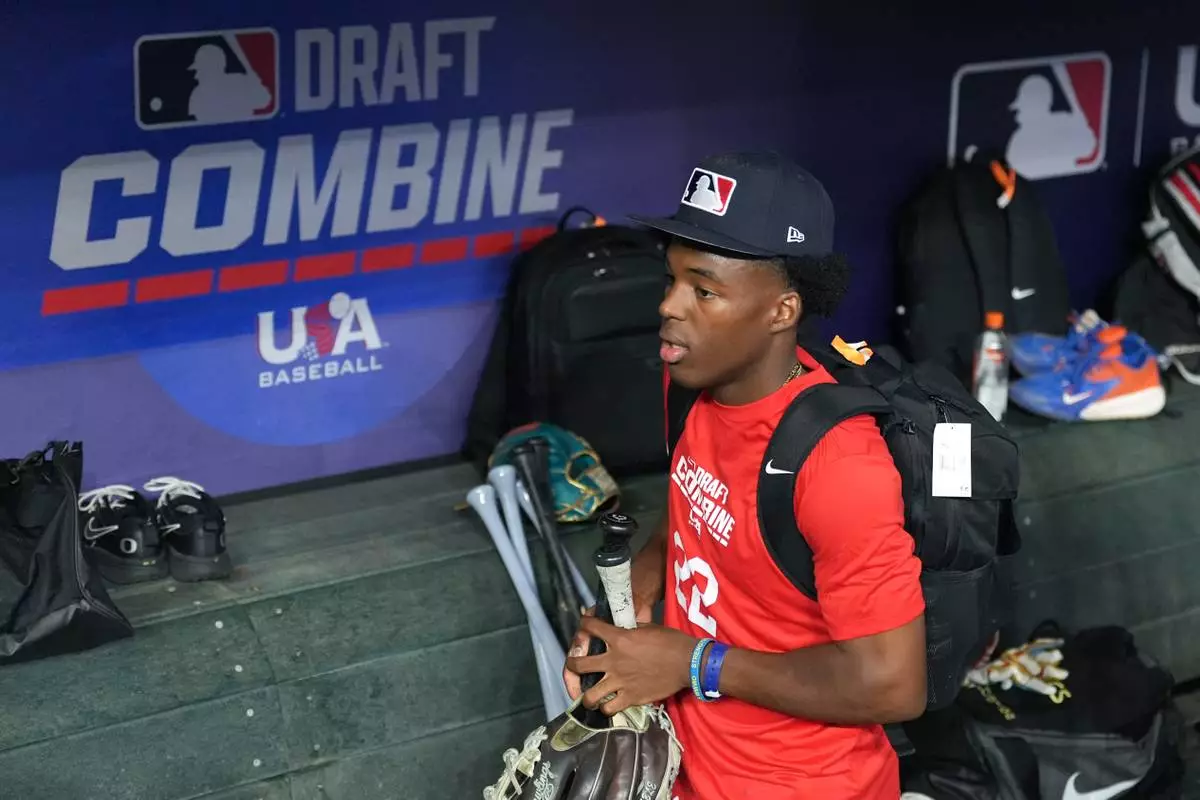
James Clark, a shortstop from St. John Bosco High School, gathers his gear in the dugout at the MLB baseball combine in Phoenix, Tuesday, June 23, 2026. (AP Photo/Ross D. Franklin)