Skip to Content Facebook Feature Image

Massive Shiite crowds mark Ashoura amid fresh Iran-Israel-US war fallout

News

Massive Shiite crowds mark Ashoura amid fresh Iran-Israel-US war fallout
News

News

Massive Shiite crowds mark Ashoura amid fresh Iran-Israel-US war fallout

2026-06-26 19:33 Last Updated At:19:40

NABATIYEH, Lebanon (AP) — Shiite Muslims marked one of the most important days on their calendar Friday with large gatherings in Iran, Iraq, Lebanon and other parts of the world to remember the seventh-century killing of Hussein, the grand son of Islam’s Prophet Muhammad.

The annual commemoration, known as Ashoura, is marked on the 10th day of the month of Muharram in the lunar-based Islamic calendar. Ashoura is the culmination of a 10-day mourning period and marks the day Hussein was killed alongside members of his family and companions as he fought against the army of Caliph Yazid, to whom Hussein had refused to pledge allegiance.

More Images
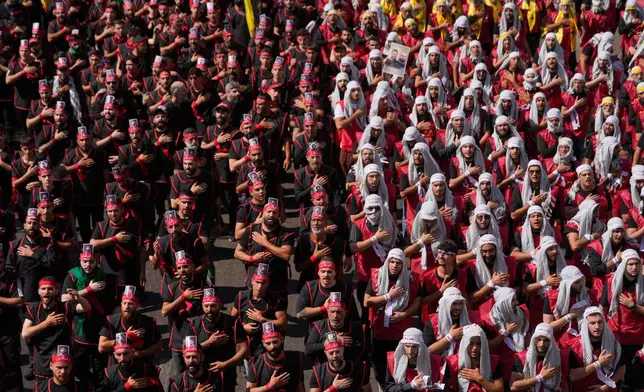
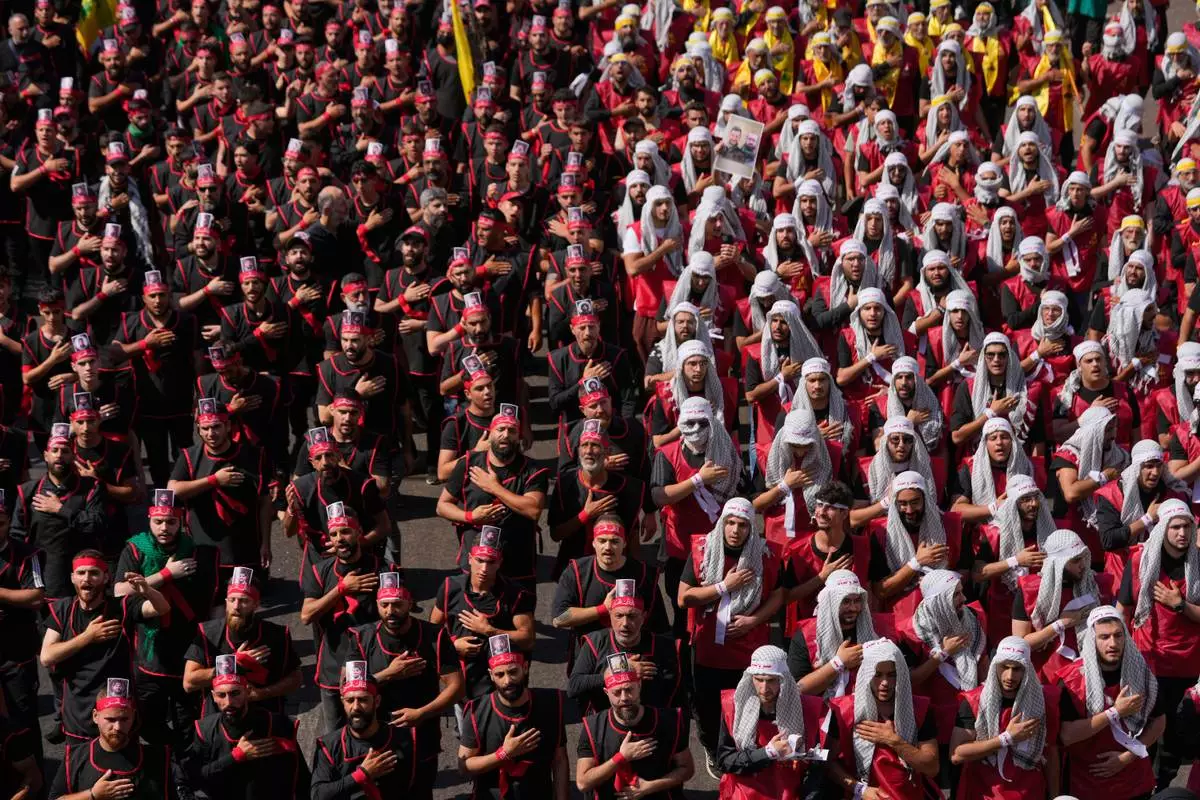
Hezbollah supporters beat their chests, as they march during the holy day of Ashoura that commemorates the 7th century martyrdom of the Prophet Muhammad's grandson Hussein, in Dahiyeh, Beirut's southern suburbs, Lebanon, Friday, June 26, 2026. (AP Photo/Hussein Malla)
Hezbollah supporters beat their chests, as they march during the holy day of Ashoura that commemorates the 7th century martyrdom of the Prophet Muhammad's grandson Hussein, in Dahiyeh, Beirut's southern suburbs, Lebanon, Friday, June 26, 2026. (AP Photo/Hussein Malla)

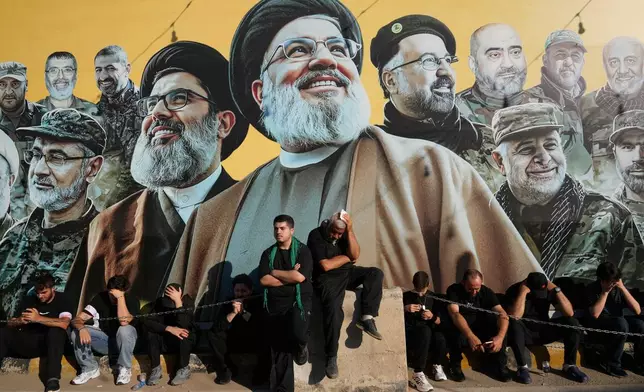
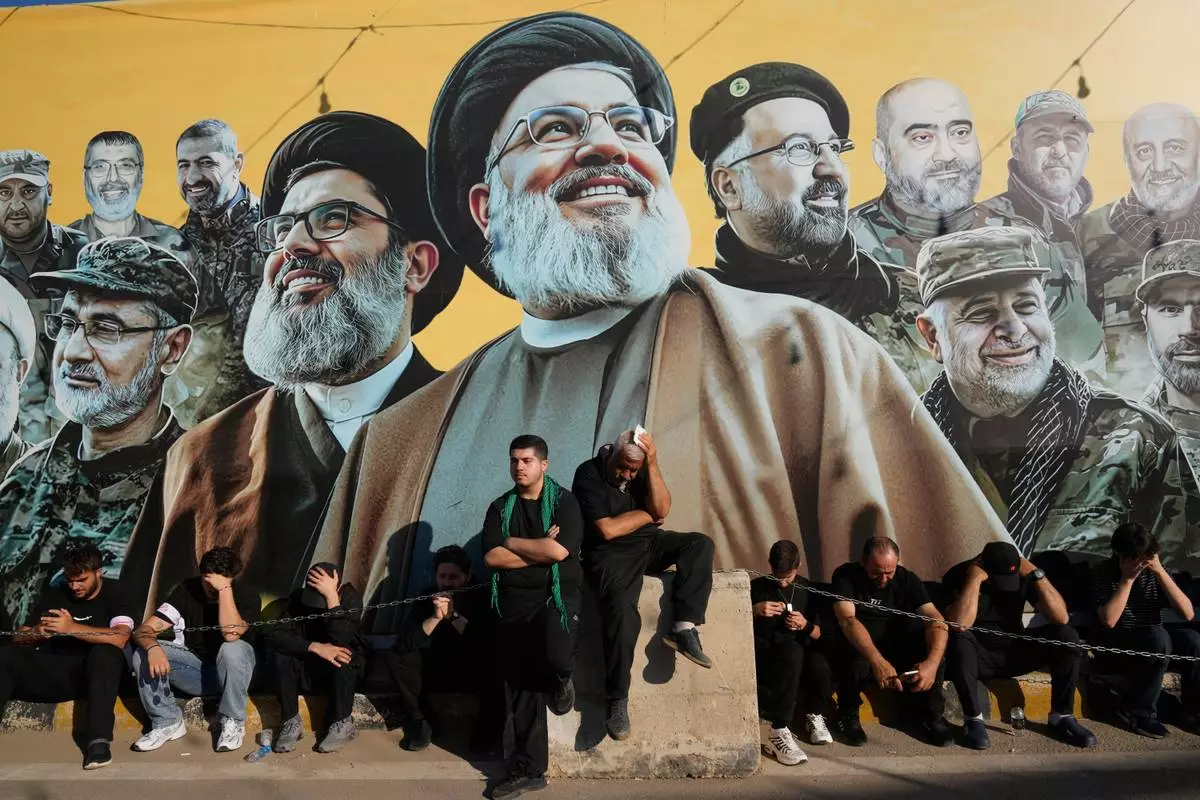
Hezbollah supporters sit in front of a giant billboard, that shows the two late hezbollah leaders Sayyed Hassan Nasrallah and Hashem Safieddine, centre, with other Hezbollah killed commanders, as they listen to the death story of Imam Hussein during the holy day of Ashoura in Dahiyeh, Beirut's southern suburbs, Lebanon, Friday, June 26, 2026. (AP Photo/Hussein Malla)
Hezbollah supporters sit in front of a giant billboard, that shows the two late hezbollah leaders Sayyed Hassan Nasrallah and Hashem Safieddine, centre, with other Hezbollah killed commanders, as they listen to the death story of Imam Hussein during the holy day of Ashoura in Dahiyeh, Beirut's southern suburbs, Lebanon, Friday, June 26, 2026. (AP Photo/Hussein Malla)

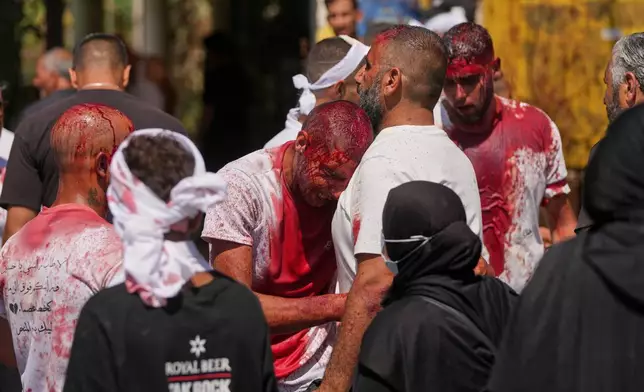
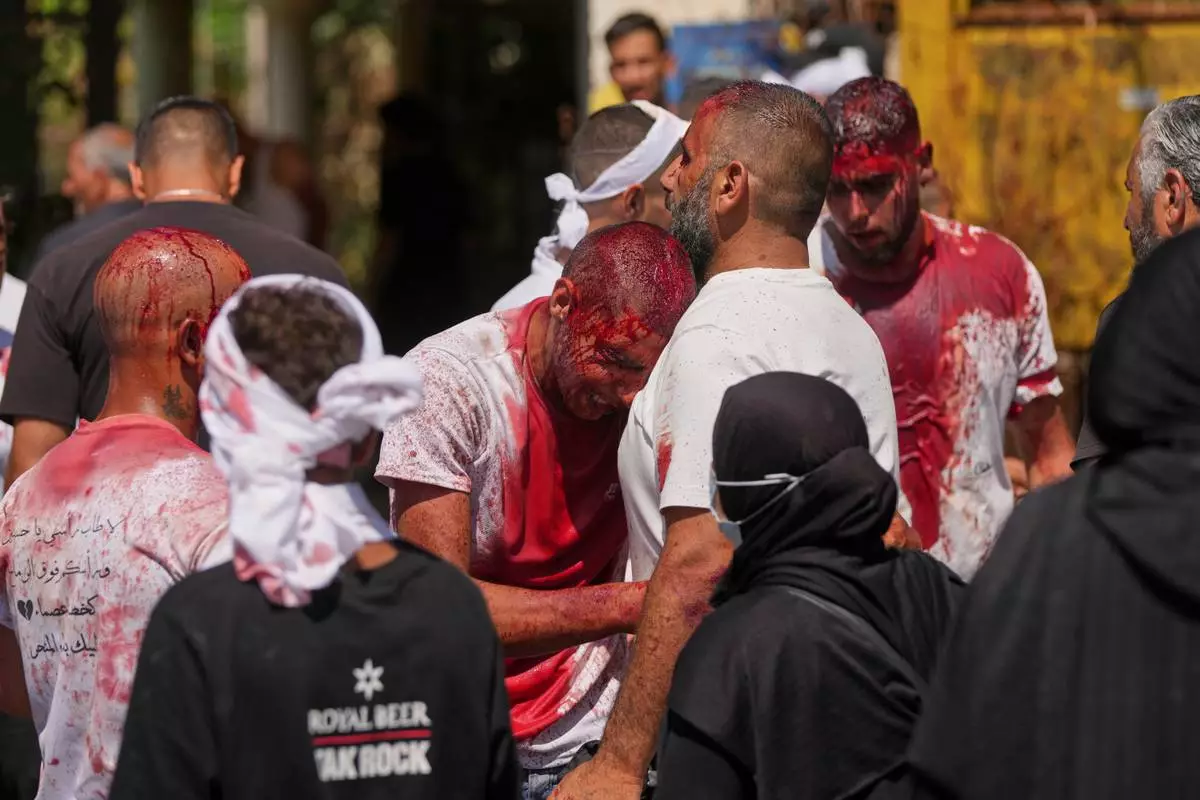
EDS NOTE: GRAPHIC CONTENT - A Lebanese Shiite weeps for a friend killed during the war as he bleeds from a self-inflicted ceremonial head wound during Ashoura, when Shiites commemorate the martyrdom of Imam Hussein, the grandson of the Prophet Muhammad, in Nabatiyeh, southern Lebanon, Friday, June 26, 2026. (AP Photo/Hassan Ammar)
EDS NOTE: GRAPHIC CONTENT - A Lebanese Shiite weeps for a friend killed during the war as he bleeds from a self-inflicted ceremonial head wound during Ashoura, when Shiites commemorate the martyrdom of Imam Hussein, the grandson of the Prophet Muhammad, in Nabatiyeh, southern Lebanon, Friday, June 26, 2026. (AP Photo/Hassan Ammar)

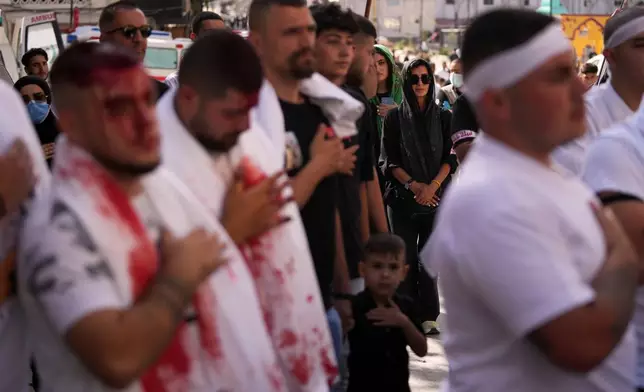
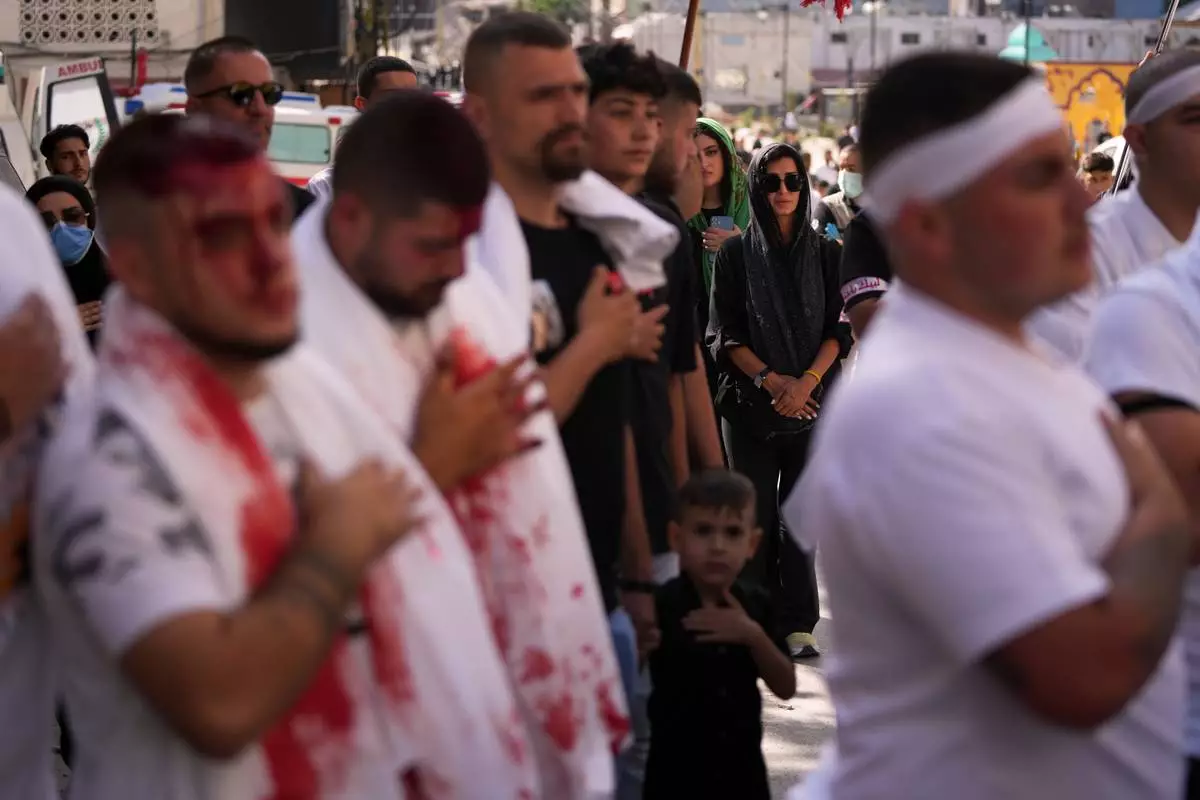
A woman watches as Lebanese Shiites beat their chests and bleed from self-inflicted ceremonial head wounds during Ashoura, when Shiites commemorate the martyrdom of Imam Hussein, the grandson of the Prophet Muhammad, amid buildings destroyed by Israeli strikes in Nabatiyeh, southern Lebanon, Friday, June 26, 2026. (AP Photo/Hassan Ammar)
A woman watches as Lebanese Shiites beat their chests and bleed from self-inflicted ceremonial head wounds during Ashoura, when Shiites commemorate the martyrdom of Imam Hussein, the grandson of the Prophet Muhammad, amid buildings destroyed by Israeli strikes in Nabatiyeh, southern Lebanon, Friday, June 26, 2026. (AP Photo/Hassan Ammar)

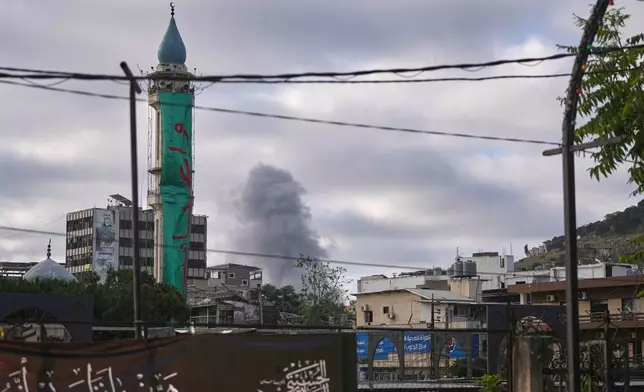
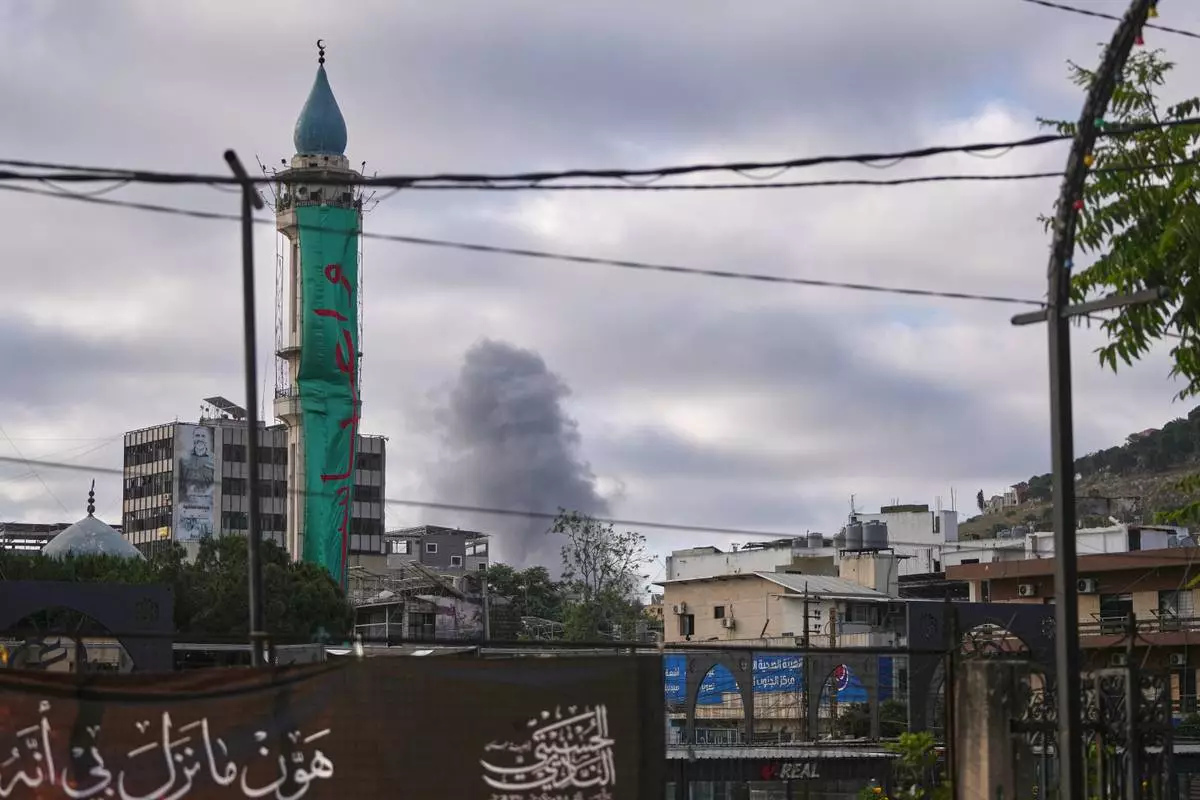
Smoke rises from the site of an Israeli airstrike on the outskirts of Nabatiyeh during Ashoura, when Shiites commemorate the martyrdom of Imam Hussein, the grandson of the Prophet Muhammad, in Nabatiyeh, southern Lebanon, Friday, June 26, 2026. (AP Photo/Hassan Ammar)

Smoke rises from the site of an Israeli airstrike on the outskirts of Nabatiyeh during Ashoura, when Shiites commemorate the martyrdom of Imam Hussein, the grandson of the Prophet Muhammad, in Nabatiyeh, southern Lebanon, Friday, June 26, 2026. (AP Photo/Hassan Ammar)

Hussein’s killing cemented the schism between Sunni and Shiite Islam and remains a powerful symbol of resistance against oppression and injustice.

Ashoura this year comes after a war between predominantly Shiite Iran and the United States and Israel, who launched strikes on the country on Feb. 28, killing senior officials including Supreme leader Ayatollah Ali Khamenei. The 86-year-old Khamenei was not just Iran’s top political leader but also had a final say on all religious matters and was revered by millions of Shiites worldwide.

A funeral procession for Khamenei is scheduled to take place in early July.

On Friday, large crowds of people gathered in the Iraqi Shiite holy city of Karbala to mark Ashoura. Hussein is buried in the city where he was killed in the battle that took place in 680, and his shrine is visited by millions of Shiites from around the world every year.

In Baghdad, thousands marched through the streets, including some who slashed their heads with razors and performed other forms of self-flagellation in a show of grief to mark the occasion.

In Lebanon, where a fragile ceasefire between Israel and the Iran-backed Hezbollah is in place, thousands of black-clad mourners gathered in Beirut’s southern suburbs at a shrine to Hezbollah’s former longtime leader, Hassan Nasrallah, who was killed in a series of massive Israeli strikes in 2024.

Women clutched photographs of sons and brothers killed in the war — many of them fighting for Hezbollah — while others held photographs of Nasrallah or Iran’s Khamenei, who was killed in February in an attack by the U.S. and Israel.

Many of them sobbed. Expressions of grief for the death of the Imam Hussein are traditional during Ashoura, but many of the mourners were also grieving more personal losses.

Nagham Jaber said her fiance was killed in the war.

“This war was truly harsh on all of us, and now we are feeling the meaning of Ashoura more than usual,” she said.

In the southern Lebanese city of Nabatiyeh, that is usually a major center to commemorate Ashoura, dozens of people gathered near the main square, much of which was destroyed by Israeli airstrikes over the past weeks, with some of them inflicting head injuries on themselves to express their mourning. The practice is widely opposed by many Shiites, including Hezbollah.

Earlier on Friday, state media and Associated Press journalists on the ground reported two Israeli airstrikes on the nearby village of Nabatiyeh al-Fawqa. It was not immediately clear if the strike inflicted any casualties.

“Despite all the hardships, everything happening to the Shiite Muslim community, and the wars we are facing, we came to reaffirm our loyalty, our love and our unwavering passion for Imam Hussein," said Khader Kamal.

To Shiites, who make up the second-largest branch of Islam after the Sunni majority, the killing of Hussein holds deep religious and historical resonance and plays a key role in shaping identity.

Hezbollah’s leader, Naim Kassem, said in a speech Friday that Ashoura is being repeated again by the U.S. and Israel, adding that his group and its supporters were subjected to a “war of elimination.”

“America and Israel also wanted to eliminate Iran by removing the regime and controlling the country,” Kassem said. “The memorandum of understanding is a declaration of defeat for America and Israel,” Kassem said of the deal reached this month between Washington and Tehran.

Sewell reported from Beirut. Associated Press writer Bassem Mroue in Beirut contributed to this report.
Hezbollah supporters beat their chests, as they march during the holy day of Ashoura that commemorates the 7th century martyrdom of the Prophet Muhammad's grandson Hussein, in Dahiyeh, Beirut's southern suburbs, Lebanon, Friday, June 26, 2026. (AP Photo/Hussein Malla)
Hezbollah supporters beat their chests, as they march during the holy day of Ashoura that commemorates the 7th century martyrdom of the Prophet Muhammad's grandson Hussein, in Dahiyeh, Beirut's southern suburbs, Lebanon, Friday, June 26, 2026. (AP Photo/Hussein Malla)

Hezbollah supporters sit in front of a giant billboard, that shows the two late hezbollah leaders Sayyed Hassan Nasrallah and Hashem Safieddine, centre, with other Hezbollah killed commanders, as they listen to the death story of Imam Hussein during the holy day of Ashoura in Dahiyeh, Beirut's southern suburbs, Lebanon, Friday, June 26, 2026. (AP Photo/Hussein Malla)
Hezbollah supporters sit in front of a giant billboard, that shows the two late hezbollah leaders Sayyed Hassan Nasrallah and Hashem Safieddine, centre, with other Hezbollah killed commanders, as they listen to the death story of Imam Hussein during the holy day of Ashoura in Dahiyeh, Beirut's southern suburbs, Lebanon, Friday, June 26, 2026. (AP Photo/Hussein Malla)

EDS NOTE: GRAPHIC CONTENT - A Lebanese Shiite weeps for a friend killed during the war as he bleeds from a self-inflicted ceremonial head wound during Ashoura, when Shiites commemorate the martyrdom of Imam Hussein, the grandson of the Prophet Muhammad, in Nabatiyeh, southern Lebanon, Friday, June 26, 2026. (AP Photo/Hassan Ammar)
EDS NOTE: GRAPHIC CONTENT - A Lebanese Shiite weeps for a friend killed during the war as he bleeds from a self-inflicted ceremonial head wound during Ashoura, when Shiites commemorate the martyrdom of Imam Hussein, the grandson of the Prophet Muhammad, in Nabatiyeh, southern Lebanon, Friday, June 26, 2026. (AP Photo/Hassan Ammar)

A woman watches as Lebanese Shiites beat their chests and bleed from self-inflicted ceremonial head wounds during Ashoura, when Shiites commemorate the martyrdom of Imam Hussein, the grandson of the Prophet Muhammad, amid buildings destroyed by Israeli strikes in Nabatiyeh, southern Lebanon, Friday, June 26, 2026. (AP Photo/Hassan Ammar)
A woman watches as Lebanese Shiites beat their chests and bleed from self-inflicted ceremonial head wounds during Ashoura, when Shiites commemorate the martyrdom of Imam Hussein, the grandson of the Prophet Muhammad, amid buildings destroyed by Israeli strikes in Nabatiyeh, southern Lebanon, Friday, June 26, 2026. (AP Photo/Hassan Ammar)

Smoke rises from the site of an Israeli airstrike on the outskirts of Nabatiyeh during Ashoura, when Shiites commemorate the martyrdom of Imam Hussein, the grandson of the Prophet Muhammad, in Nabatiyeh, southern Lebanon, Friday, June 26, 2026. (AP Photo/Hassan Ammar)


Smoke rises from the site of an Israeli airstrike on the outskirts of Nabatiyeh during Ashoura, when Shiites commemorate the martyrdom of Imam Hussein, the grandson of the Prophet Muhammad, in Nabatiyeh, southern Lebanon, Friday, June 26, 2026. (AP Photo/Hassan Ammar)
MELBOURNE, Australia (AP) — The Australian government plans to strengthen laws that ban children younger than 16 from social media platforms, Prime Minister Anthony Albanese said.

Observers said on Friday the government was responding to evidence that the ban on young children holding accounts on platforms including Facebook, Instagram and YouTube had failed since it came into force on Dec. 10 last year. Australia was the first country in the world to pass legislation keeping youth off social media, but others have since followed.

Albanese told Parliament on Thursday this government was considering options to strengthen the ban.

“We’re working on that as a priority because this is something that other generations didn’t have to deal with, which is why it’s complex,” Albanese told Parliament.

He told the Australian Broadcasting Corp. on Friday the government was asking “are the laws as strong as possible?” and did eSafety Commissioner Julie Inman Grant, Australia’s online safety watchdog, “have every power at her disposal?”

Britain announced last week plans to ban children under 16 from a range of platforms to protect them from harmful content and excessive screen time.

Canada, Brazil and Indonesia have introduced legislation or announced age-based restrictions or requirements for children’s access to social media. France, Spain, Denmark, Thailand and South Korea are among others studying or developing similar approaches.

Inman Grant said in April she was considering court action against Facebook, Instagram, Snapchat, TikTok and YouTube, alleging they were not doing enough to keep young Australian children off their platforms.

These platforms, as well as X, Kick, Reddit, Threads and Twitch, face fines of up to 49.5 million Australian dollars ($34 million) if they fail to take reasonable steps to remove the accounts of young children.

Melbourne’s RMIT University expert on information sciences Lisa Given said the government’s proposed reform was a response to evidence that the ban was failing. The evidence included eSafety's own data released in March that showed seven in 10 underage children continued to hold accounts on Facebook, Instagram, Snapchat and TikTok since December.

Given also pointed to a study published in the British Medical Journal on Wednesday that found 85% of a group of Australian 12 to 17-year-olds were using restricted platforms.

“I do think it’s failing,” Given said. “Many kids in the media have reported that they also think that this is really a failed exercise.”

The Sydney Morning Herald newspaper reported Inman Grant saying in an interview in early June: “I don’t have potent powers.”

“What I would say is a regulator is only as good as the tools and the resources that they’re given,” she is quoted as saying.

The Associated Press asked Inman Grant’s office on Friday to comment on the accuracy of that reporting, but her office did not immediately reply.

Given said Inman Grant faced a challenge in enforcing legislation that platforms were resisting.

“Either the eSafety Commissioner needs more powers or we’ve got to have some other approach to enforcement,” Given said.

Given expected the courts would need to decide what constituted “reasonable steps” required by the law to be taken to keep children off platforms.

Albanese said as part of increased efforts to enforce the social media ban, his government would proceed with digital duty of care legislation which would hold platforms accountable for foreseeable harms caused by content and algorithms.

Australian e-Safety Commissioner, Julie Inman Grant appears before the Environment and Communications Legislation Committee at Parliament House in Canberra, Australia, Thursday, Oct. 17, 2024. (Mick Tsikas/AAP Image via AP)

Australian e-Safety Commissioner, Julie Inman Grant appears before the Environment and Communications Legislation Committee at Parliament House in Canberra, Australia, Thursday, Oct. 17, 2024. (Mick Tsikas/AAP Image via AP)

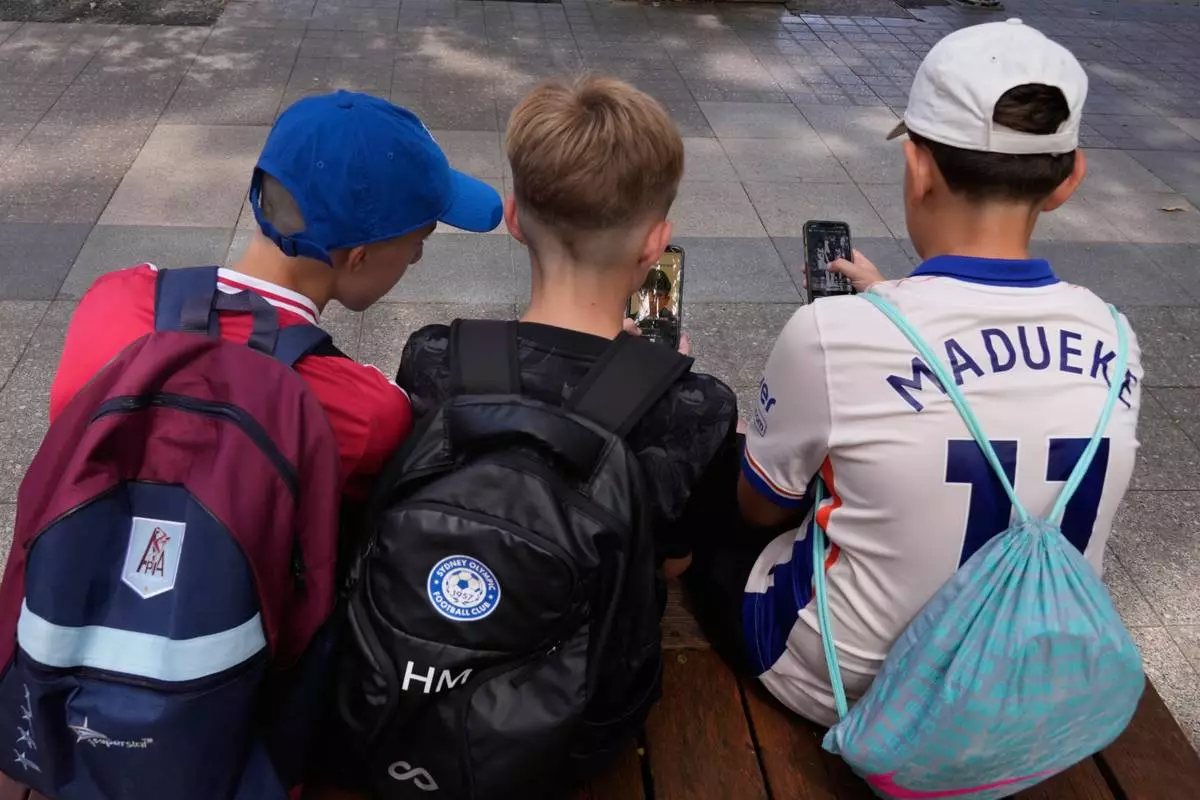
FILE - Three boys use their phones while sitting outside a school in Sydney, Monday, Dec. 8, 2025. (AP Photo/Rick Rycroft, File)

FILE - Three boys use their phones while sitting outside a school in Sydney, Monday, Dec. 8, 2025. (AP Photo/Rick Rycroft, File)

Recommended Articles