Skip to Content Facebook Feature Image

AP Decision Notes: What to expect in Louisiana’s state primary runoff

News

AP Decision Notes: What to expect in Louisiana’s state primary runoff
News

News

AP Decision Notes: What to expect in Louisiana’s state primary runoff

2026-06-26 19:18 Last Updated At:19:20

WASHINGTON (AP) — Louisiana Republicans will nominate a candidate for U.S. Senate in a primary runoff Saturday, six weeks after denying Republican U.S. Sen. Bill Cassidy a shot at a third term.

Although President Donald Trump already achieved one of his top political goals with Cassidy’s defeat, Saturday’s runoff could further demonstrate his ongoing influence in Republican primaries as he tries to populate the halls of Congress with loyalists for his final two years in office. The seat is not a top target among Democrats looking to win back control of the chamber in November.

Republican U.S. Rep. Julia Letlow and state Treasurer John Fleming are the finalists for Cassidy’s now-open U.S. Senate seat. Trump encouraged Letlow to challenge Cassidy in the primary and endorsed her before she entered the race in January. Letlow took office in 2021 in a special election to replace her husband, Luke Letlow, who died from COVID-19 in 2020 before taking office. Fleming served in Congress for eight years leading up to Trump’s first term. He ran for U.S. Senate in 2016 but failed to make the runoff. Republican John Kennedy won the seat.

In the May 16 primary, Letlow placed first with about 45% of the vote, short of the majority required to avoid Saturday’s runoff. Fleming placed second with 28% of the vote, just ahead of Cassidy with about 25%.

Letlow led in small, mostly rural parishes across the state, with outright majorities in parishes in northeastern Louisiana and along the Mississippi border. Fleming mostly placed a distant second across the state. He performed best in northwestern Louisiana, with leads in nine rural parishes, but not in Caddo, home to Shreveport, where he finished a close second behind Letlow.

Cassidy was the top vote-getter in the state’s three most populous parishes, including Orleans Parish where he led Letlow by almost a three-to-one margin. But he barely outperformed Letlow in East Baton Rouge and Jefferson parishes.

The president’s endorsees have generally had a strong winning record at the ballot box, but his recent picks for governor of Iowa and Georgia lost their primaries. Trump endorsed South Carolina Lt. Gov. Pamela Evette for governor ahead of the primary, but after she was forced to a runoff in a close vote, he announced he was backing both her and her opponent, state Attorney General Alan Wilson, who won the nomination on Tuesday.

Trump has reissued his endorsement of Letlow several times since January, including most recently in mid-June. He has not also endorsed Fleming.

Louisiana Democrats will also finalize their U.S. Senate nominee, with farmer Jamie Davis and Navy veteran Gary Crockett competing in the runoff.

Other primary runoffs on the ballot include Republican contests for Public Service Commission and state board of education, where incumbent board member and former Republican U.S. Rep. Joseph Cao faces a challenge from educator and business owner Ellie Schroder.

Primaries for U.S. House were were postponed to November after the U.S. Supreme Court struck down the state’s current congressional map, which includes a majority Black district that favors Democrats. Although the state had previously adopted a new primary system for congressional races, the postponed U.S. House races will revert to using an “open” or “ jungle ” primary system where candidates run on the same ballot regardless of party.

Here are some of the key facts about the election and data points the AP Decision Team will monitor as the votes are tallied:

Polls close at 8 p.m. CT, which is 9 p.m. ET.

The Associated Press will provide vote results and declare winners in primary runoffs for U.S. Senate, state Public Service Commission and state school board.

Registered party members may vote only in their own party’s primary runoffs. In other words, Democrats can’t vote in a Republican runoff or vice versa. Independent or unaffiliated voters who voted in a party’s primary on May 16 may only vote in that same party’s runoff. Independent or unaffiliated voters who did not vote in a partisan primary on May 16 may vote in either party’s runoff.

As of June 1, there were about 3 million registered voters in Louisiana. Registered Democrats and Republicans numbered about 1.1 million each, with registered Democrats at a slight advantage. About 819,000 voters were not registered with any party. The remainder were registered with other parties.

About 832,000 Louisianans participated in the May 16 primary, or about 28% of registered voters. This includes about 347,000 registered Democrats and about 336,000 registered Republicans.

In 2022 when the state still used “open” or “jungle” primary rules for certain contests, turnout fell from 1.4 million in the November primary to about 439,000 in the December runoff, or about 47% of registered voters to about 14%.

About 33% of Democratic primary votes and about 31% of Republican primary votes in the May 16 primaries were cast early in-person or by mail.

As of Thursday, about 82,000 ballots from Republicans and about 61,000 ballots from Democrats had already been cast in Saturday’s runoffs.

Results from early and absentee voting are usually released by each parish in the first vote update.

In the May 16 primary, the AP first reported results at 9:02 p.m. ET, or two minutes after polls closed. By 10:46 p.m. ET, more than 90% of the total vote had been counted. The last vote update of the night was at 1:30 a.m. ET with about 99.9% of total votes counted.

The AP does not make projections and will declare a winner only when it’s determined there is no scenario that would allow a trailing candidate to close the gap. If a race has not been called, the AP will continue to cover any newsworthy developments, such as candidate concessions or declarations of victory. In doing so, the AP will make clear that it has not yet declared a winner and explain why.

There are no automatic recounts in Louisiana, but a candidate may request and pay for a recount of absentee and early votes. The AP may declare a winner in a race that is subject to a recount if it can determine the lead is too large for a recount or legal challenge to change the outcome.

As of Saturday, there will be 129 days until the Nov. 3 general election and the Louisiana congressional primaries, and 168 days until the Louisiana congressional general election on Dec. 12.

Follow the AP’s coverage of the 2026 election at https://apnews.com/projects/elections-2026/.
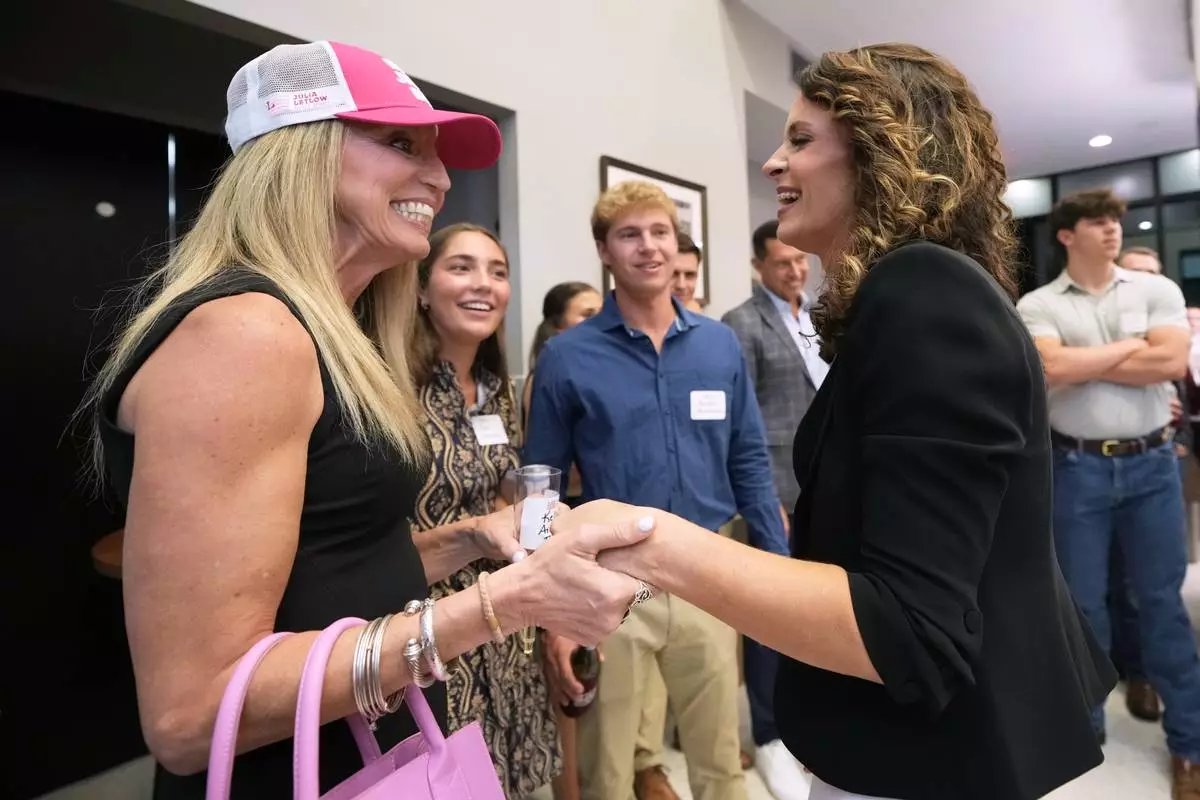
FILE - U.S. Senate candidate Rep. Julia Letlow, R-La., right, speaks with supporters during an election night watch party, May 16, 2026, in Baton Rouge, La. (AP Photo/Matthew Hinton, File)
FILE - U.S. Senate candidate Rep. Julia Letlow, R-La., right, speaks with supporters during an election night watch party, May 16, 2026, in Baton Rouge, La. (AP Photo/Matthew Hinton, File)

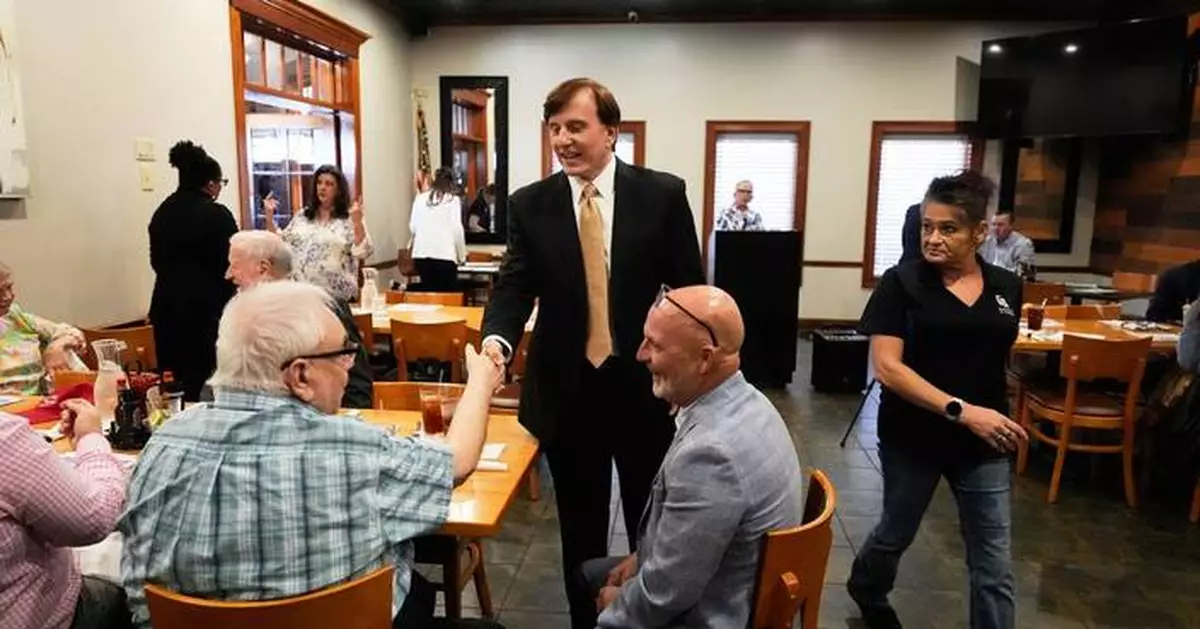
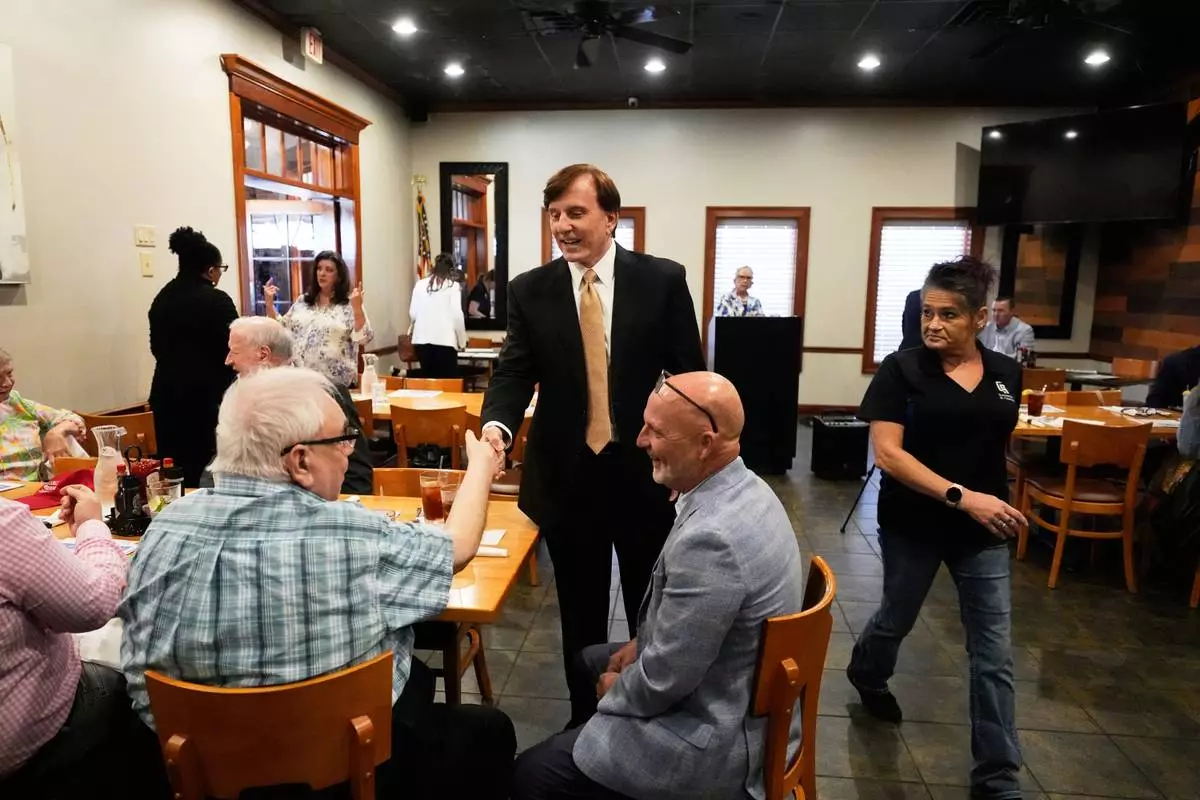
FILE - John Fleming, a U.S. Senate candidate, current Louisiana treasurer and former Republican House representative of Louisiana, greets supporters at a Ronald Reagan Newsmaker Luncheon in Baton Rouge, La., May 12, 2026. (AP Photo/Gerald Herbert, File)

FILE - John Fleming, a U.S. Senate candidate, current Louisiana treasurer and former Republican House representative of Louisiana, greets supporters at a Ronald Reagan Newsmaker Luncheon in Baton Rouge, La., May 12, 2026. (AP Photo/Gerald Herbert, File)

The Trump administration is moving to restart the specialized LGBTQ+ option for youth who contact the 988 crisis intervention hotline, but the group that helped pioneer the idea is being shut out.

The Trevor Project, the leading nonprofit for suicide prevention in LGBTQ+ young people, may not be allowed to offer the service it had helped develop for the 988 Lifeline just a few years ago.

The 988 hotline, which has been dubbed the 911 for mental health emergencies, is credited with reducing teen and young adult suicide deaths. It offers specialized options for certain groups, such as veterans and Spanish speakers, but in July the Trump administration stopped offering the “press 3” option for LGBTQ+ youth with a month’s notice.

The administration said it ended the service because the funding ran out. It is now working to bring it back by the end of the year because Congress directed officials to allocate $33 million toward LGBTQ+-specific interventions for youth.

However, The Trevor Project might not be allowed to offer the services it developed and specializes in.

Dr. Christine Yu Moutier, chief medical officer for the American Foundation for Suicide Prevention, said it “would not make sense” to keep The Trevor Project ineligible to help and it is a “long-standing, high-quality and trusted resource” to LGBTQ+ people.

The development is the latest in what’s become a chaotic chapter for the service for LGBTQ+ youth, who attempt suicide at higher rates than the general population. Leaving The Trevor Project out is raising concerns about the relaunched service, especially given the Trump administration's broader attempt to unravel protections for transgender and non-binary Americans at a time when more of them are reaching out in crisis.

“The Trump administration never should have shut down the ‘press 3’ option and put young Americans at further risk," said Wisconsin Sen. Tammy Baldwin, who has led a bipartisan push to restore the service. She called on the president to restore the service "without needless limitations and with the most qualified, experienced people answering the phone calls and text messages from these vulnerable young people.”

The lifeline's specialized service allowed people to press 3, text “PRIDE” or use online chat to reach counselors who were specially trained to work with LGBTQ+ young people.

The umbrella of services broadly called the “Press 3” option fielded 1.6 million contacts while it was in operation, according to data from the Substance Abuse and Mental Health Services Administration. The Trevor Project handled about half of the program's traffic.

When it canceled the “Press 3” option, federal officials said LGBTQ+ youth could still get help through 988’s general services, but it would “no longer silo” the services “to focus on serving all help seekers," including LGBTQ+ youth.

Now, the nonprofit that administers the 988 service, Vibrant Emotional Health, has called for applications to manage the return of the “Press 3” lines.

But applications are limited to crisis centers that are “current and active” members of the 988 network. The Trevor Project is not currently active — only because the administration canceled the service it specialized in.

The six other crisis centers that worked on the LGBTQ+ youth program are active in the 988 network. They work with the general population as well as LGBTQ+ people. Only The Trevor Project had a specific mission to serve LGBTQ+ youth.

“This troubling development indicates a dangerous step toward degrading the clinical standards to serve high risk groups that the ‘press 3’ specialized services were founded on,” said Jaymes Black, CEO of The Trevor Project, in a statement to the AP.

A spokesperson for the Department of Health and Human Services did not directly respond to questions about The Trevor Project’s eligibility, saying that the department is working with Vibrant to restore the service by the end of the year as directed by Congress.

Moutier said other crisis centers are providing high-quality care for LGBTQ+ youth. LGBTQ+ young people who are often marginalized and bullied need “psychological safety” because they don't always trust institutions to help them. She said it's too soon to say she's worried about the relaunch, but how it is brought back is just as important as the fact that it is.

“I think there's the potential for great good, and some harm as well,” she said.

Even though the service itself may be restored, how it will operate is unclear — and LGBTQ+ advocates are concerned, in part because the Trump administration has indicated that its anti-transgender policies will influence how the program relaunches.

This month, a SAMHSA leader wrote to Illinois Rep. Raja Krishnamoorthi that the agency needed to assess the “most appropriate approach” to restart the service while complying with a Trump executive order that targets the rights of transgender people, claiming “gender ideology extremism” is a threat to women and declaring there are only two sexes.

The Trevor Project's Black worries that the next iteration of 988's LGBTQ+ youth services “may exclude transgender and nonbinary youth entirely.” The organization still independently runs its own 24-7 crisis line for LGBTQ+ young people.

Studies have shown that LGBTQ+ youth are at higher risk of suicide, including a 2024 analysis by the CDC that found 26% transgender and gender-questioning students attempted suicide in the past year. That’s compared with 5% of cisgender male and 11% of cisgender female students.

“While anti-LGBTQ+ politics may be altering the very purpose of this lifeline created to help save young LGBTQ+ lives, it is critical to make clear that politics has no place in suicide prevention,” Black said.

The Associated Press Health and Science Department receives support from the Howard Hughes Medical Institute’s Department of Science Education and the Robert Wood Johnson Foundation. The AP is solely responsible for all content.

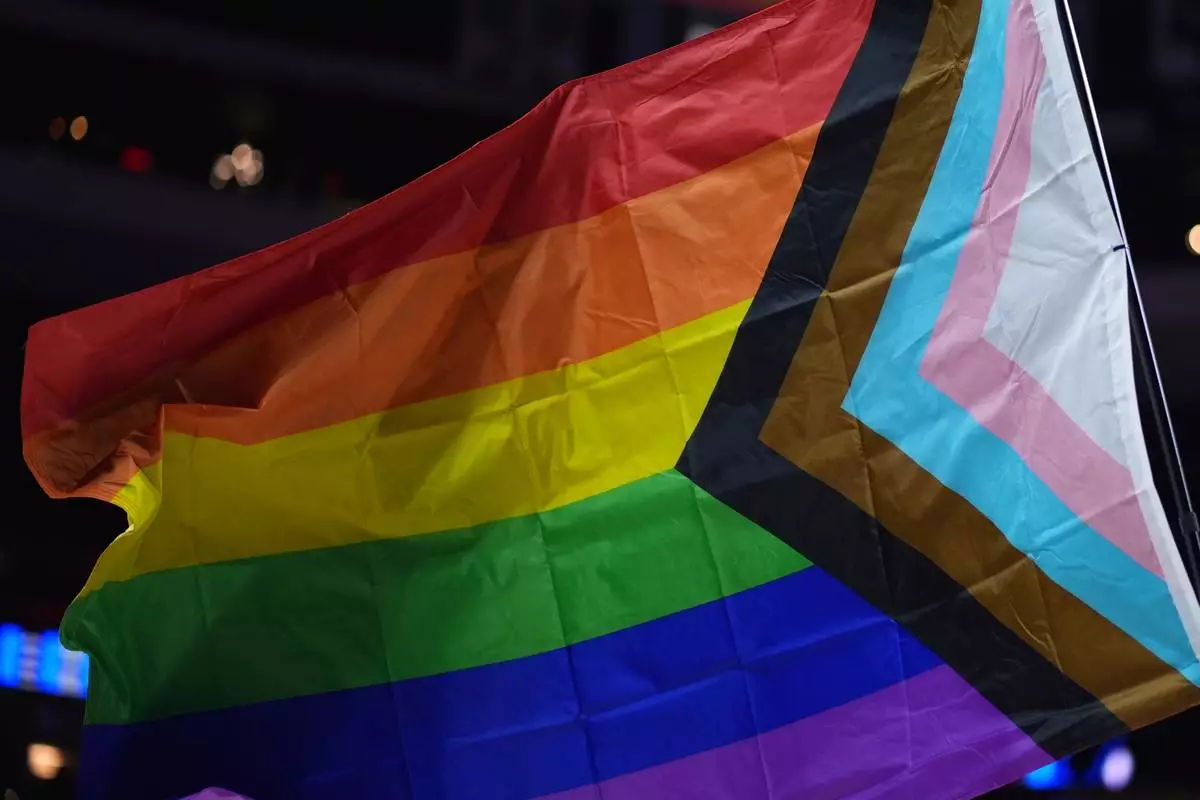
FILE - A pride flag is waved during an NBA basketball game in Philadelphia on Sunday, March 30, 2025. (AP Photo/Matt Slocum, File)

FILE - A pride flag is waved during an NBA basketball game in Philadelphia on Sunday, March 30, 2025. (AP Photo/Matt Slocum, File)

Recommended Articles