ORLANDO, Fla.--(BUSINESS WIRE)--Jun 26, 2026--
Dentalcorp, one of North America's largest dental support organizations, today announced Magdent as the winner of its inaugural Demo Day, with Oral Genome finishing a close second. The live dental technology competition was held on June 24 in Orlando, Florida. Magdent and Oral Genome will receive SAFE investments* of US$150,000 and US$50,000 respectively, with both earning a potential pilot opportunity across Dentalcorp’s network of more than 600 practices. A judging panel that included senior leaders from Dentalcorp, Henry Schein One, VideaHealth and Dental Innovation Alliance selected the winners.
This press release features multimedia. View the full release here: https://www.businesswire.com/news/home/20260626934514/en/
"The response to Demo Day far surpassed our expectations. The quality and range of the technology was striking, and a reminder that the future of this profession is as bright as the people building it." — Nate Tchaplia, President, Dentalcorp
Dentalcorp’s Demo Day is the first competition of its kind hosted by a dental support organization. More than 50 companies from across the world applied. Seven finalists were selected to deliver live technology demonstrations before an expert panel and a curated audience of dental industry executives, investors and operators.
“Magdent and Oral Genome impressed us so much that we increased the size of our initial investment commitment to back them both. We are already looking forward to next year’s edition of Demo Day because the pace of innovation across the dental industry is showing no signs of slowing down and Dentalcorp is committed to supporting the founders and technology that will define the next chapter of clinical care." — Graham Rosenberg, CEO & Chairman, Dentalcorp
The Winner: Magdent
Magdent has built the first electronic healing abutment, a device that helps bone heal faster around dental implants and lowers the risk of failure. The company is led by CEO Benny Barak alongside founders Prof. Shlomo Barak, DMD and Dr. Moshe Neuman, DMD. Already in market across Europe, a pilot with Dentalcorp would mark Magdent's debut in North America.
"Winning Demo Day is an enormous moment for Magdent. We have spent years proving the science behind our technology, and the chance to explore a pilot across Dentalcorp's network would be our first step into the North American market. We're grateful to the judges and the Dentalcorp team for the opportunity to bring this innovation to more clinicians and patients." — Benny Barak, CEO, Magdent
The Runner-Up: Oral Genome
Oral Genome has developed a chairside saliva screening platform that enables dental teams to assess risk indicators associated with cavities, gum disease, and overall health in minutes during a routine dental visit. Designed as a non-diagnostic screening tool, Oral Genome supports clinical decision-making while keeping diagnosis and treatment planning with the provider. Founded by Dr. Tina Saw, DDS, Oral Genome is advancing medical-dental integration through partnerships with dental organizations, healthcare systems, research institutions and public health programs.
“Being recognized at Demo Day means a great deal to our team. I founded Oral Genome with the belief that a routine dental visit can become an opportunity to better understand a patient’s overall health. We’re excited about the opportunity to explore a pilot across Dentalcorp’s network and are grateful to the judges and the entire Dentalcorp team for their support and confidence in our vision.” — Dr. Tina Saw, DDS, Founder & CEO, Oral Genome
The Finalists
In addition to Magdent and Oral Genome, the finalists, in order of presentation, were:
About Dentalcorp
Dentalcorp is one of the largest and fastest-growing dental support organizations in North America, operating a network of more than 600 practices with over 5.7 million patient visits annually. Dentalcorp partners with leading dental professionals to deliver technology-enabled care through its model of frictionless dentistry, removing the operational and administrative barriers that slow clinical excellence. For more information, visit dentalcorp.com.
About Dentalcorp Demo Day
Dentalcorp Demo Day is an annual live dental technology showcase that brings together the most promising dental innovations, AI, software and software-enabled startups with the clinical network, capital and mentorship needed to scale. The inaugural event took place June 24, 2026 at the Gaylord Palms Resort & Convention Center in Orlando, Florida. The second edition is planned for 2027. For more information, visit frictionlessdentistry.com.
General Disclaimer
The SAFE (Simple Agreement for Future Equity) investment represented herein is not a cash prize and remains subject in all respects to the Demo Day Terms and Conditions and SAFE Investment Summary available at frictionlessdentistry.com/terms-conditions.
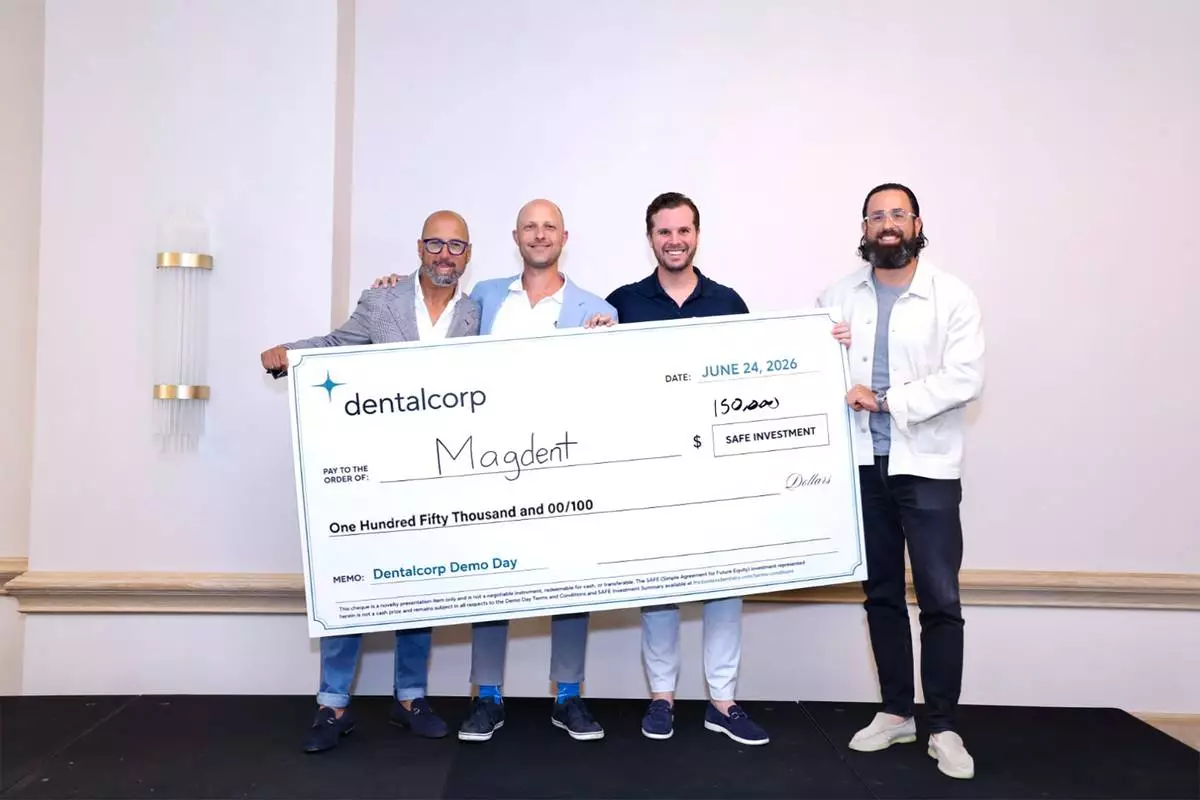
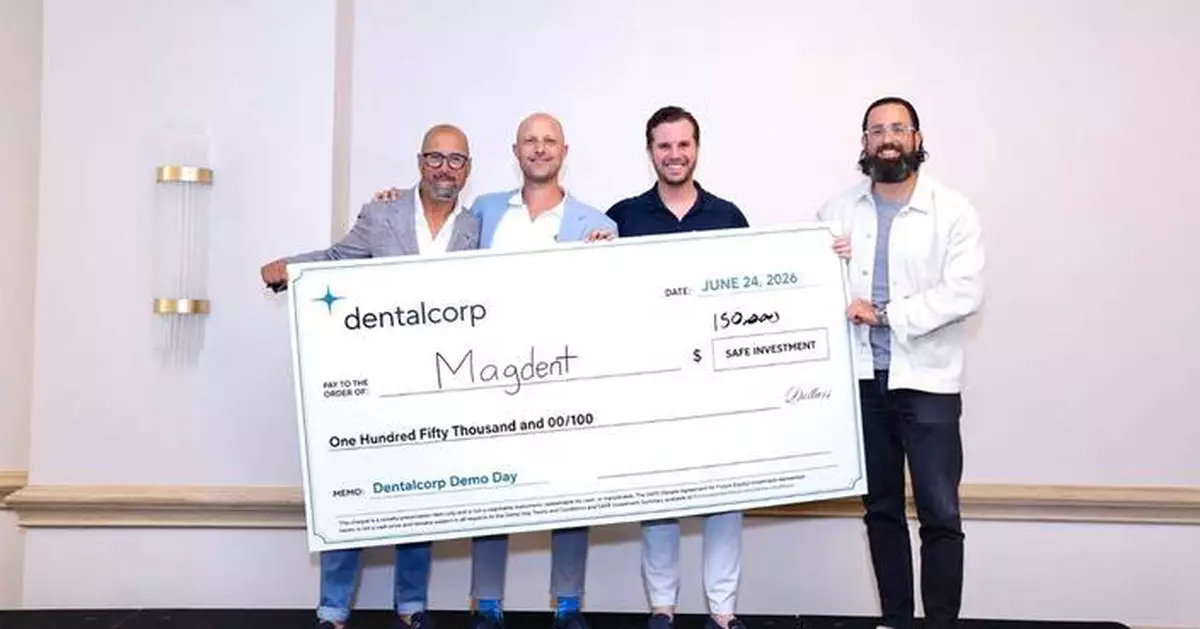
Representatives from Dentalcorp and Magdent at Dentalcorp's inaugural Demo Day. From left to right: Graham Rosenberg, CEO and Chairman, Dentalcorp; Benny Barak, CEO, Magdent; Jeremy Goldlist, Chief of Staff, Dentalcorp; Nate Tchaplia, President, Dentalcorp. (Photo credit: Dynamite Studio Inc. @dynamitestudioinc)
NEW YORK (AP) — Most of the U.S. stock market is rising Friday after oil prices fell back to where they were before the war with Iran, but drops for AI stocks are keeping the market in check.
The S&P 500 was virtually unchanged after recovering from an early loss of 0.9%. The index at the heart of many 401(k) accounts is still on track for its second losing week in the last 13, largely because of drops for stocks swept up in the mania around artificial-intelligence technology.
The Dow Jones Industrial Average was up 39 points, or 0.1%, as of 10:45 a.m. Eastern time, and the Nasdaq composite was down 0.2%.
Stocks got a boost as the price of Brent crude oil, the international standard, dropped 3.9% to $72.53. That's basically where it was the day before the United States and Israel attacked Iran, which eventually led to the closure of the Strait of Hormuz and the curtailment of oil shipments worldwide.
The easier oil prices helped stocks of companies with big fuel bills, and United Airlines climbed 1.7%.
Health care stocks, meanwhile, were some of the strongest forces pushing upward on the market after a committee of the European Medicines Agency recommended several medicines for approval and the extension for another dozen of their therapeutic indications. That included one for Eli Lilly, whose stock jumped 6.3%.
Besides Lilly, roughly two out of every three stocks within the S&P 500 were rising. But more drops for AI stocks were overshadowing them.
After soaring to tremendous heights and leading the market for years, AI stocks been under pressure recently because of worries their profits can’t possibly keep pace with the tremendous rallies for their stock prices. And those drops have an outsized effect because AI stocks have grown into Wall Street’s largest and most influential, giving movements for their stock prices more weight on indexes than others.
Micron Technology's drop of 4.1% was one of the heaviest weights on the market, for example. The maker of memory for computers has been a big winner this year, with its stock roughly quadrupling, because the AI boom has created a surge of demand for its products.
But investors saw the downside of that surge Thursday, when Apple said it had to raise prices on many of its products by significant percentages to make up for the increases in memory prices. The worry is that such higher prices could ultimately lead to lower demand.
Highlighting the roller-coaster ride that AI stocks have been on, SpaceX dipped 0.8% below $152 and toward the lowest level since its ballyhooed debut on Wall Street earlier this month.
After initially selling its stock at $135 apiece, SpaceX's stock price briefly soared above $225 within its first few days of trading. Besides rockets, Elon Musk's company also owns the xAI artificial-intelligence business.
The day's largest loss in the S&P 500 was a 21.1% drop for Onsemi, which said it agreed to buy Synaptics in an all-stock deal valued at roughly $7 billion.
In the bond market, Treasury yields eased with oil prices. The yield on the 10-year Treasury fell to 4.37% from 4.40% late Thursday.
High yields in bond markets worldwide caused by worries about inflation have been threatening to slow economies, and they have already sent rates higher for mortgages and other kinds of loans. High yields also hurt prices for investments, particularly those seen as the most expensive. That raises the pressure on AI winners.
Asian stock markets began Friday with sharp drops because of losses for AI winners.
In Japan, a 12.5% plunge for Softbank Group Corp helped pull the Nikkei 225 down by 4.2%. The company is a major investor in OpenAI, the maker of AI chatbot ChatGPT, and a report in The New York Times suggested OpenAI is considering delaying an initial public offering of its stock to next year from the second half of this year.
Such an IPO would give OpenAI the chance to raise more cash to spend on data centers, as well as the opportunity for early investors like Softbank to cash out some of their holdings. But the recent stumbles for SpaceX’s stock and for AI stocks broadly may be a signal of less appetite for big AI stocks among investors.
In South Korea, SK Hynix fell 8.4%, and Samsung Electronics sank 5.3%. That helped pull the Kospi 5.8% lower and trim its gain for the year so far to 99.6%.
AP Business Writers Matt Ott and Elaine Kurtenbach contributed.
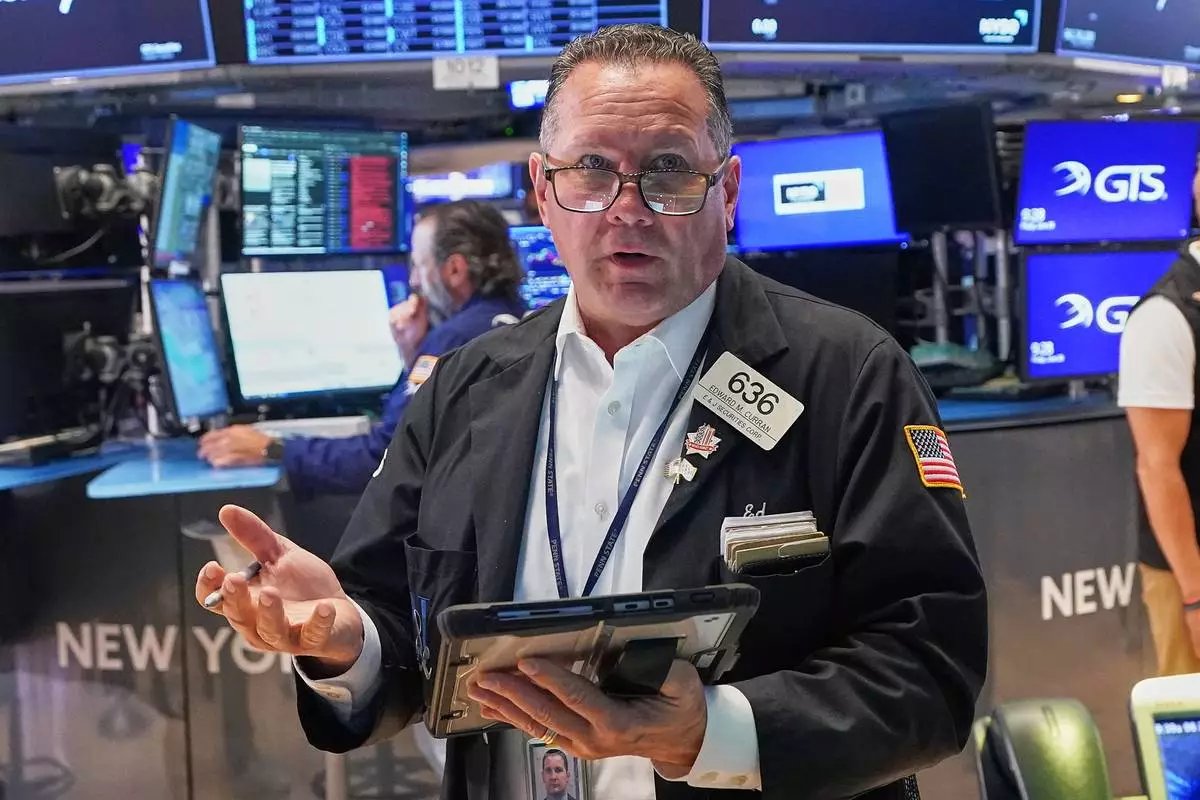
Trader Edward Curran works on the floor of the New York Stock Exchange, Friday, June 26, 2026. (AP Photo/Richard Drew)
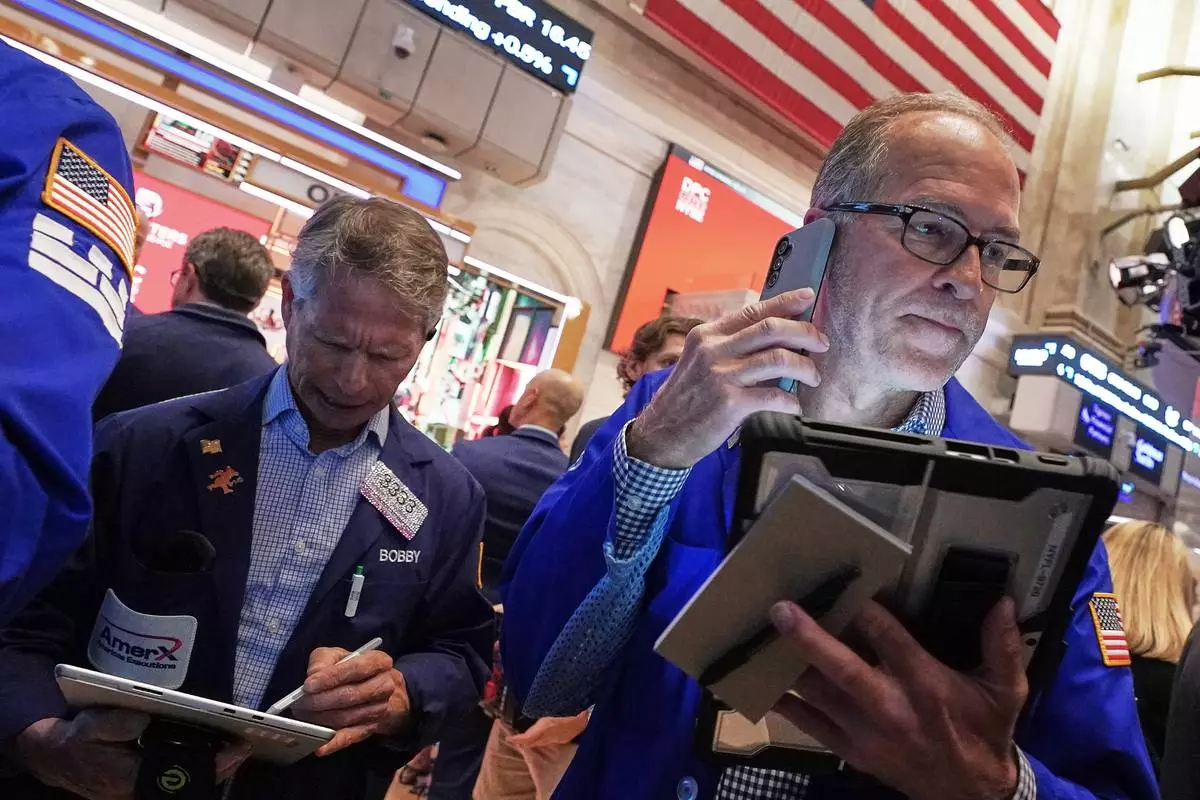
Traders Robert Charmak, left, and Mark Puetzer work on the floor of the New York Stock Exchange, Thursday, June 25, 2026. (AP Photo/Richard Drew)
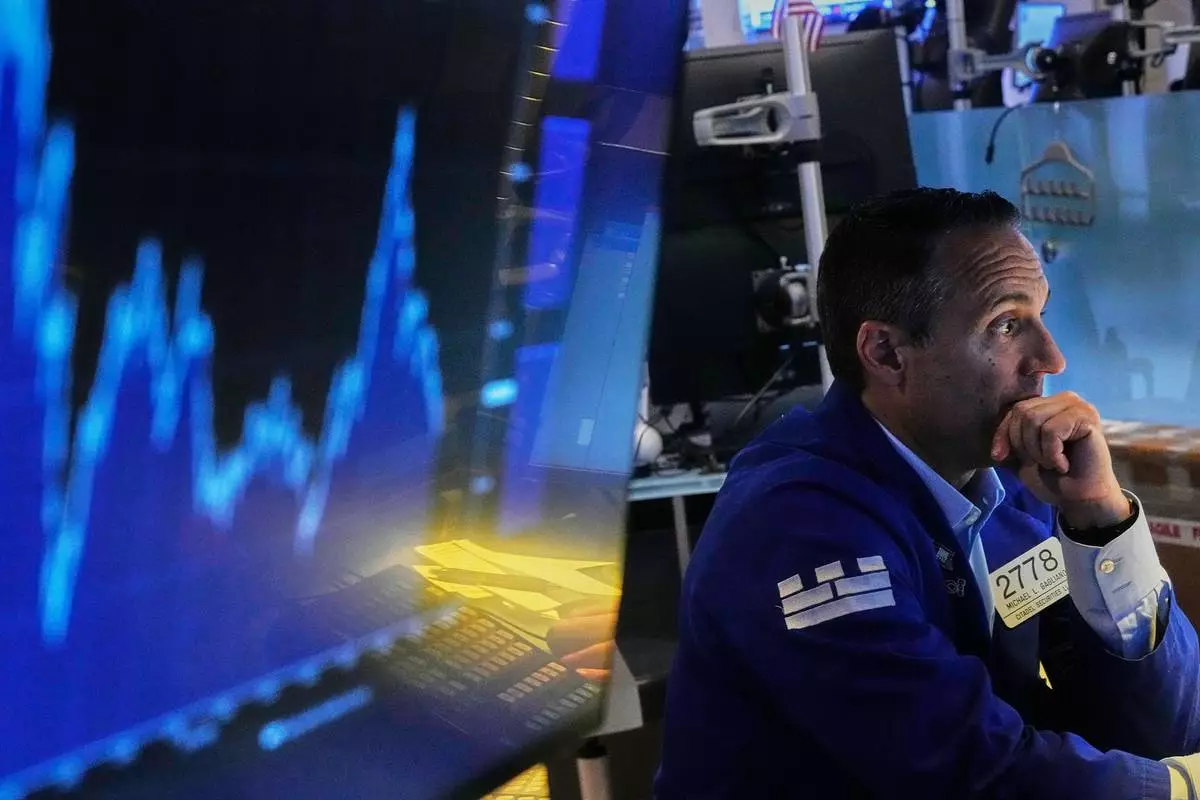
Specialist Michael Gagliano works at his post on the floor of the New York Stock Exchange, Thursday, June 25, 2026. (AP Photo/Richard Drew)
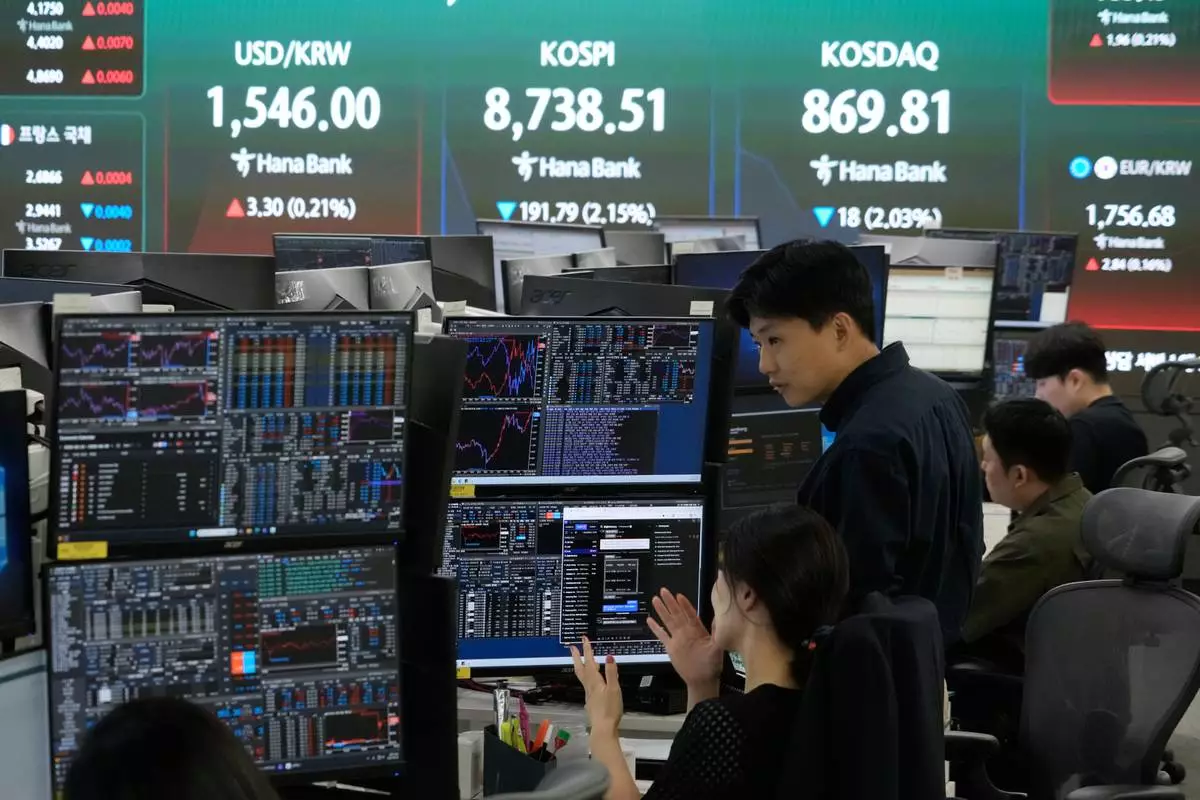
Currency traders work near a screen showing the Korea Composite Stock Price Index (KOSPI) and the foreign exchange rate between U.S. dollar and South Korean won at the foreign exchange dealing room of the Hana Bank headquarters in Seoul, South Korea, Friday, June 26, 2026. (AP Photo/Ahn Young-joon)
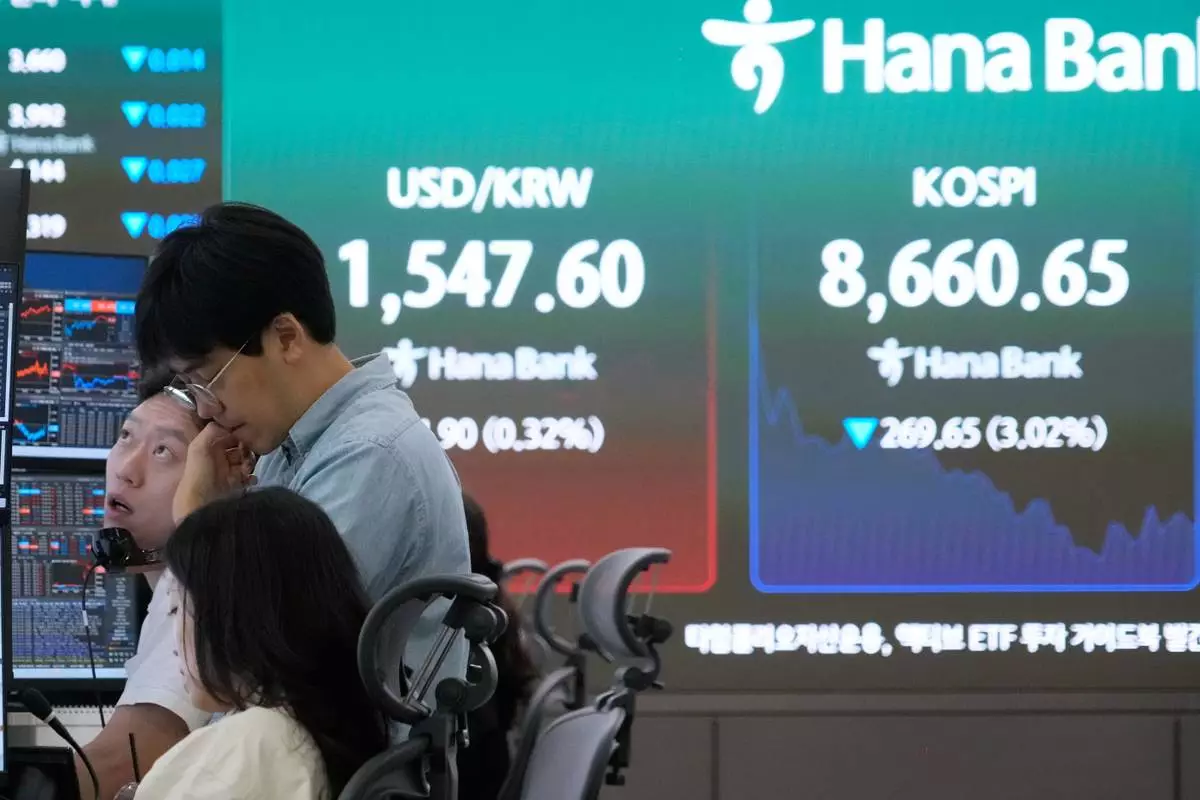
Currency traders work near a screen showing the Korea Composite Stock Price Index (KOSPI) and the foreign exchange rate between U.S. dollar and South Korean won at the foreign exchange dealing room of the Hana Bank headquarters in Seoul, South Korea, Friday, June 26, 2026. (AP Photo/Ahn Young-joon)
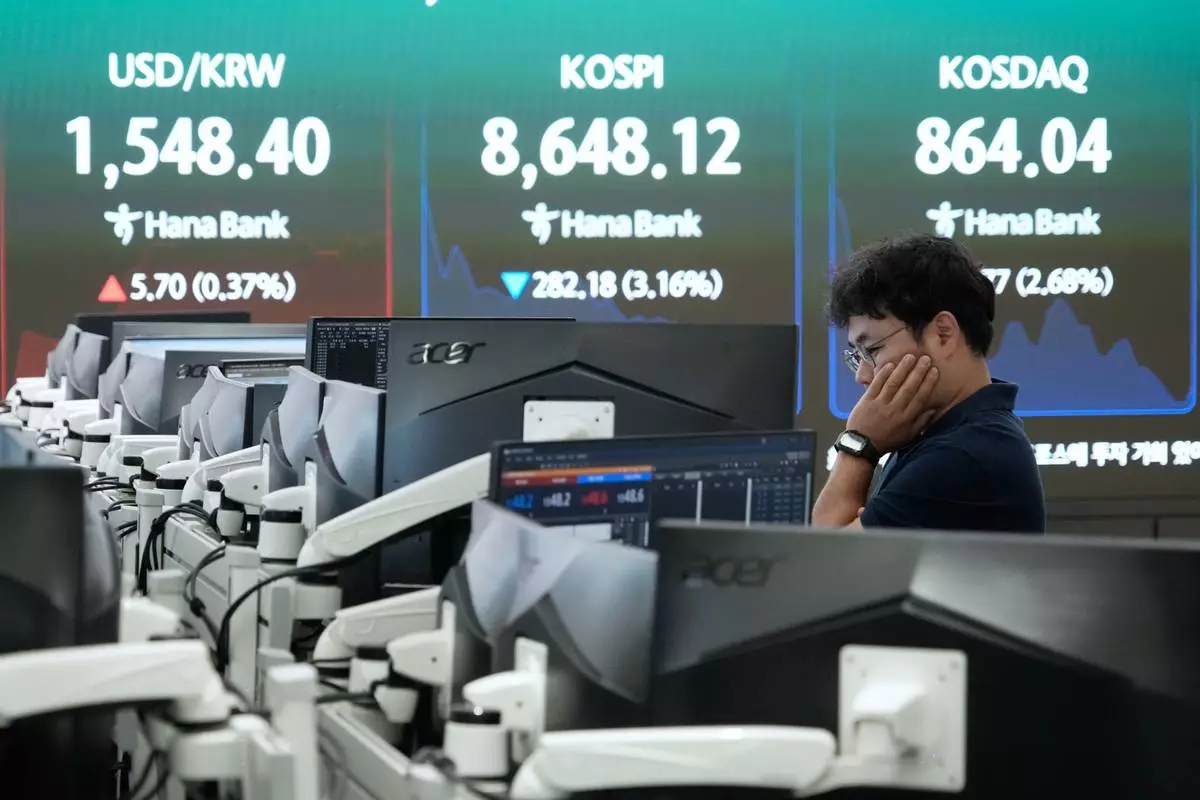
A currency trader watches monitors near a screen showing the Korea Composite Stock Price Index (KOSPI) and the foreign exchange rate between U.S. dollar and South Korean won at the foreign exchange dealing room of the Hana Bank headquarters in Seoul, South Korea, Friday, June 26, 2026. (AP Photo/Ahn Young-joon)
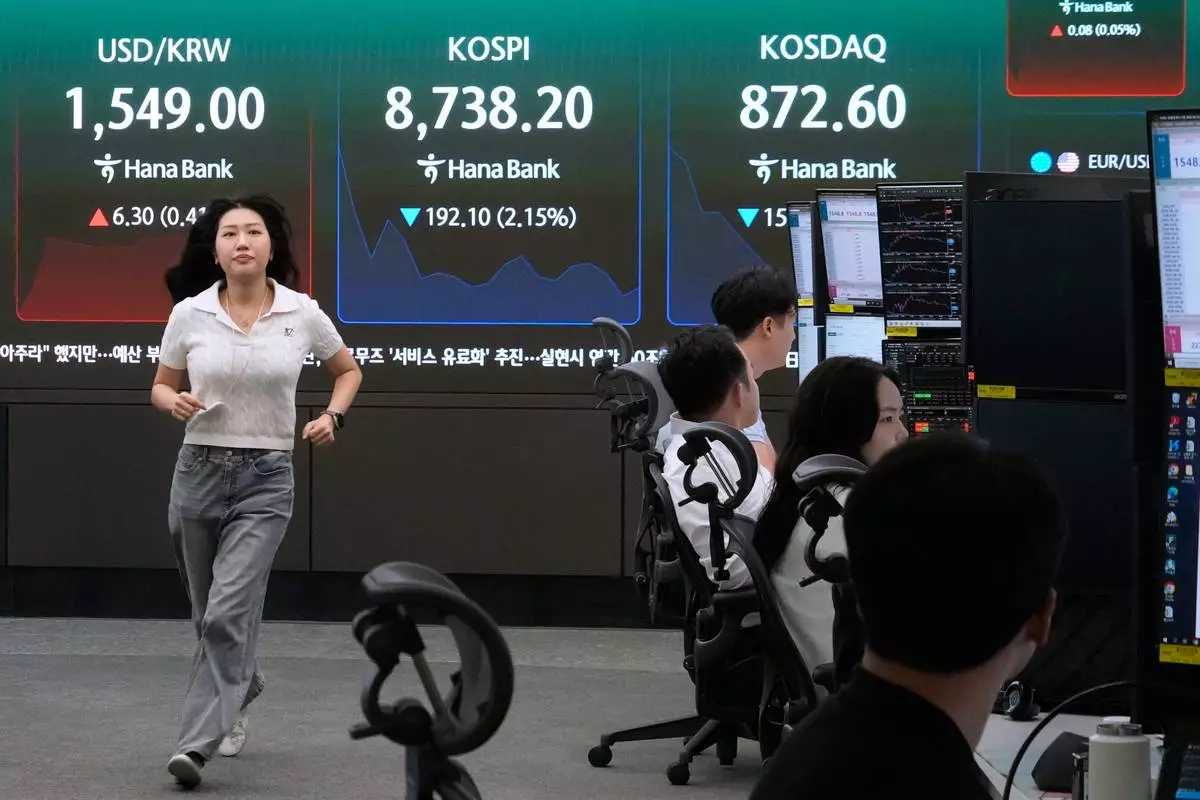
A currency trader passes by a screen showing the Korea Composite Stock Price Index (KOSPI) and the foreign exchange rate between U.S. dollar and South Korean won at the foreign exchange dealing room of the Hana Bank headquarters in Seoul, South Korea, Friday, June 26, 2026. (AP Photo/Ahn Young-joon)