Industry insiders at the ongoing China International Supply Chain Expo (CISCE) are highlighting how artificial intelligence (AI) is tackling real‑world business challenges and delivering tangible benefits as the technology moves beyond the lab into the economy.
AI has steadily advanced from concept to application across manufacturing and supply chains, yet the "last mile" remains the toughest. Data often sits in silos, platforms don’t always connect, and deployment costs still weigh on businesses.
At the expo, however, companies said those barriers are beginning to fall.
Schneider Electric, the global energy technology leader, pointed to its 30‑year‑old lighthouse factory in Shanghai, where AI has driven a sweeping transformation. Executives stressed the shift was possible only because the digital groundwork had already been laid.
"AI is creating value across the entire lifecycle of our business, from research and development to manufacturing and operations. Through machine learning, we've been able to improve product performance. In our factories, AI also helps optimize production scheduling, making it easier to manage a wide range of products and smaller batch sizes more efficiently," said Xia Xueying, vice president of Corporate Affairs and Sustainable Development of Schneider Electric China.
French cosmetics giant L'Oréal says AI is also delivering tangible results in logistics. At its Suzhou Smart Fulfillment Center, the company is using the technology to better handle growing demand.
"Our Suzhou Smart Fulfillment Center ,which opened in 2024, can process up to 7,000 parcels within an hour. During major shopping events, it can ensure that, in 99 percent of cases, orders are sorted and fulfilled within 48 hours. AI-powered solutions, combined with technological cooperation between China and France, have helped us achieve very strong results across all stages of the beauty supply chain," said Lan Zhenzhen, president of Public Affairs for L'Oréal North Asia and China.
In healthcare, companies are also finding new applications for AI. It can connect different pieces of health information and help people make better sense of their health.
"AI is playing an increasingly important role in health management. The system we present this time brings together many different types of health data. AI helps integrate information from different sources, giving users a more comprehensive understanding of their health risks and enabling them to manage their health more effectively," said Huang Hui, chief omics consultant and genomics researcher of Chinese biotech giant BGI Genomics.
AI may not yet reach the last mile everywhere. But across the exhibition floor, there are signs that the gap between innovation and application is getting smaller.
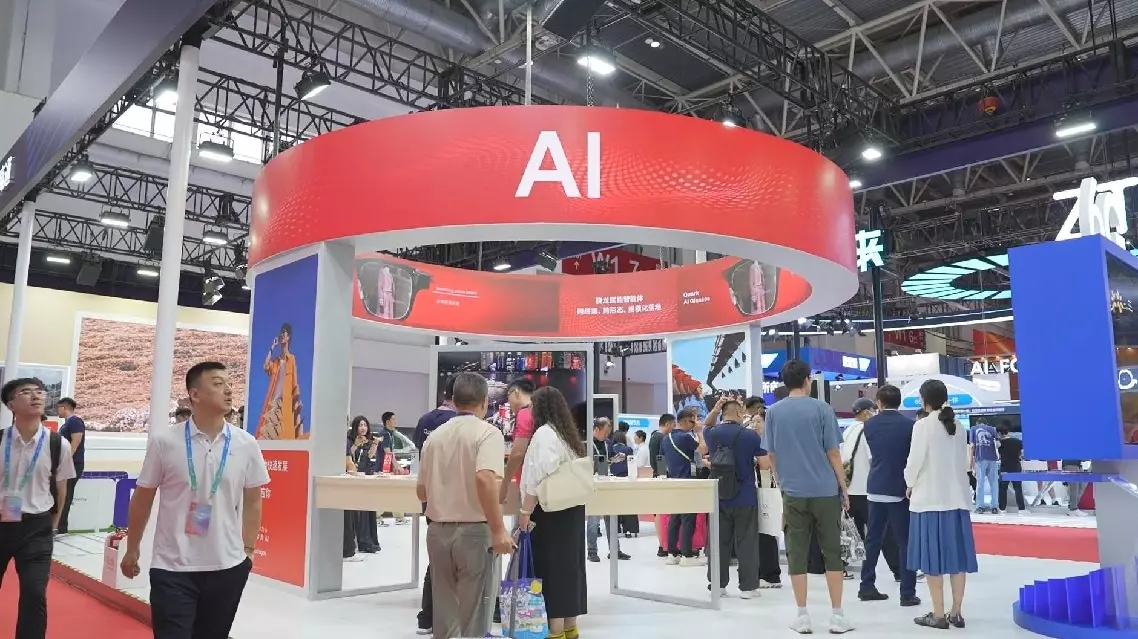
Global firms spotlight AI's real‑world impact in China's supply chain expo