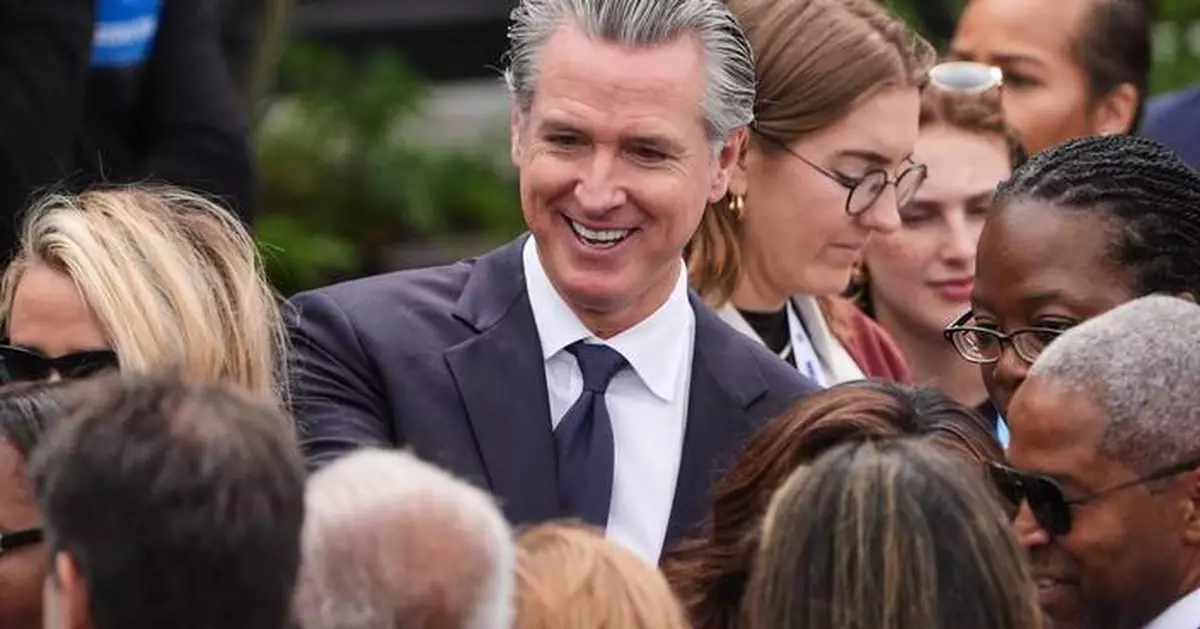
California Gov. Gavin Newsom, a Democrat who is considering a run for president as he approaches the end of his term, called for a national “billionaires' tax” on Friday even as he fights another proposal targeting the wealthy in his home state.
Newsom also said the U.S. government should own a stake in artificial intelligence companies. His proposals, outlined in a Substack post, aligns him with the Democratic Party's populist left, and he argued that urgent changes are needed to prevent the elite concentration of wealth and power from undermining democracy.
“It’s time for an economic reset for America,” Newsom wrote.
The governor announced his agenda a day after an influential health care union in California pledged to go forward with a ballot measure that would impose a one-time 5% tax on the assets of billionaires living in the state as of Jan. 1, 2026.
Newsom opposes that measure, as do many of the liberal interest groups that typically favor higher taxes. They fear it would drive billionaires out of California, eroding the state’s tax base over the long term for a one-time influx of cash. A technology mecca, California has more billionaires than any other state — a few hundred, by some estimates.
“You may not be able to pick up and move to Texas or Florida to shelter your income from taxation, but I promise you that billionaires can, and do,” Newsom wrote. “Wealth is movable, and it shops for the state with the lowest taxes. The fight belongs at the federal level, where this broken system was created in the first place.”
Newsom said the solution is a new national tax policy, rather than a state-by-state system. He proposed a minimum tax on anyone with a net worth above $100 million. He also wants to make it illegal for the wealthy to borrow against their stock portfolios to fund their luxury lifestyles tax free.
Newsom said there should be new rules for inheritance taxes, warning that “the transfer of wealth among the ultra-wealthy will lock in a permanent American aristocracy of inherited wealth.” And he wants to raise corporate tax rates to where they were before President Donald Trump’s first-term tax cut.
The need is especially urgent as artificial intelligence threatens to displace workers and further concentrate wealth, he wrote.
“We need to ensure every American owns a stake in the future being built by AI through a national public equity fund that takes a major stake in the new economy,” he wrote. "Simply, as artificial intelligence reshapes the country, every American should own a piece of the future it builds."
Revenue generated by his proposals could be used to retrain workers, fund universal child care, make college free and increase funding for health care.
Newsom, who has drawn attention as one of Trump's most high-profile political antagonists, is getting an early start on laying out a policy framework for his potential White House bid months before the midterm elections, which have typically marked the informal start of overt presidential campaigning.
The embrace of a wealth tax by Newsom, a moderate on tax policy despite his liberal reputation, signals a notable shift in the political landscape since Massachusetts Sen. Elizabeth Warren struggled to get traction in her 2020 campaign, which she largely centered around a 2% levy wealth tax.
Newsom portrayed the nation's tax code as a corrupt system built to help an elite few.
“Money buys influence, and influence rewrites the rules,” he wrote. “Those rewritten rules funnel even more wealth to the few. Under this weight, democracy itself starts to buckle.”
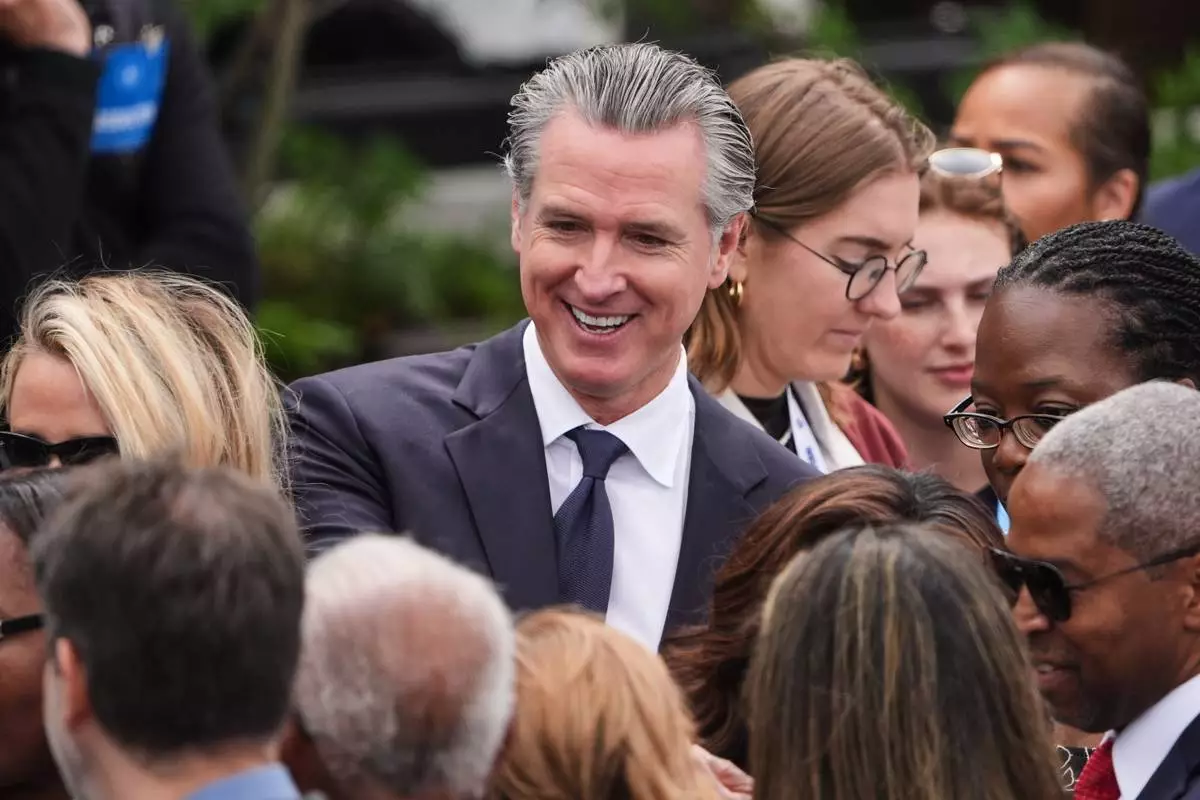
California Gov. Gavin Newsom mingles ahead of the Obama Presidential Center dedication ceremony Thursday, June 18, 2026, in Chicago. (AP Photo/Jeff Roberson)
NASHVILLE, Tenn. (AP) — For a few years at the turn of this century, Nashville was home to a remarkable carousel.
Described by its artist-creator Red Grooms as a sculpto-pictorama, the “horses” were 36 whimsical figures related to Tennessee. Legendary country musician Chet Atkins rode the neck of a guitar. Davy Crockett wrestled a bear. You could even ride a chigger, a summer mite that latches onto ankles causing an intense itch.
The Tennessee Fox Trot Carousel was magical but was perhaps in the wrong place at the wrong time, perched on the riverfront at the edge of downtown Nashville when the area was up-and-coming but not quite the tourist draw of today. When it could no longer support itself financially, the carousel was disassembled and given over to the care of the Tennessee State Museum, which placed it in a storage facility where it sits to this day.
Now, more than 20 years later, momentum is building for the carousel to ride again.
Tennessee State Museum Executive Director Ashley Howell says the question she most commonly hears from the public is: “What about the Red Grooms carousel?”
The museum was planning a grand new building when it took custody of the ride, but it didn’t create an area for the carousel due to a lack of funds, Howell said. The new museum opened in downtown Nashville in 2018 with a retrospective of Grooms’ work but no carousel.
In November, the museum put out feelers for private parties interested in “partnering with the Museum in the restoration, placement, and operation of the Red Grooms Fox Trot Carousel.”
Howell, who took the top job at the museum in 2017, said she had planned to turn her attention to the carousel sooner, but was hindered by twin disasters in 2020: A tornado clipped the new museum and destroyed a storage building then, just days later, the COVID-19 pandemic shut everything down.
However, all the questions about the carousel's return underscore “how beloved this work of art is to the community,” she said.
“It was only on the riverfront for a short time, but it has sort of lived in memory much longer than it was in operation,” Howell said. “We're excited to think about next steps.”
Grooms, who was born in Nashville in 1937, left the city after high school and spent most of his career in New York.
His work is colorful and whimsical, and he often creates large installations that viewers can enter and touch.
One of his best known exhibits is Ruckus Manhattan, from 1976. The New York Times described it as “a walk‐in carnival reconstruction of Manhattan landmarks and the sometimes bizarre fauna that inhabit them,” including a subway car that was “a form of participation theater.”
Marina Pacini, who curated a Grooms exhibit for the Memphis Brooks Museum of Art in 2016, said he is really a storyteller whose work is filled with “absolutely riveting” details.
“They operate on multiple levels, but you do not have to be an art expert in order to enjoy unpacking what’s going on in them,” she said, adding: “People adore his work.”
While selecting pieces for the exhibit, Pacini visited the carousel in storage. She said it was hard to choose from among them.
“The generosity of him making something like a carousel — that he put that much thought and effort into the individual characters and into how he defined them — and then to create them into something that you can actually climb on! I mean, most people go to museums and you’re not allowed to touch anything,” she said. “Here you are, you’re actually getting to climb onto a work of art. How much more fun could it possibly be?”
Grooms, who is 89 years old, did not respond to questions about the carousel.
Some of Grooms' biggest fans and collectors are in Nashville, so when his Manhattan gallery closed a few years ago, he moved his representation to David Lusk, who operates galleries in Nashville and Memphis.
An exhibition last year of drawings and ephemera from the making of the Fox Trot Carousel reminded people about the carousel, Lusk said.
He said the question remains as to “whether it's an artwork or whether it's meant for people to be straddling and riding it.”
If it has to be restored like an Old Master painting, then the cost is likely prohibitive. But if the goal is for it to be a working carousel, it need not be in pristine museum condition.
“He’s pretty assured that it is in good shape and ready to go again. So it’s just frustrating that it's not out there for people to enjoy,” Lusk said. “Red wants it used — looked at, used, loved.”
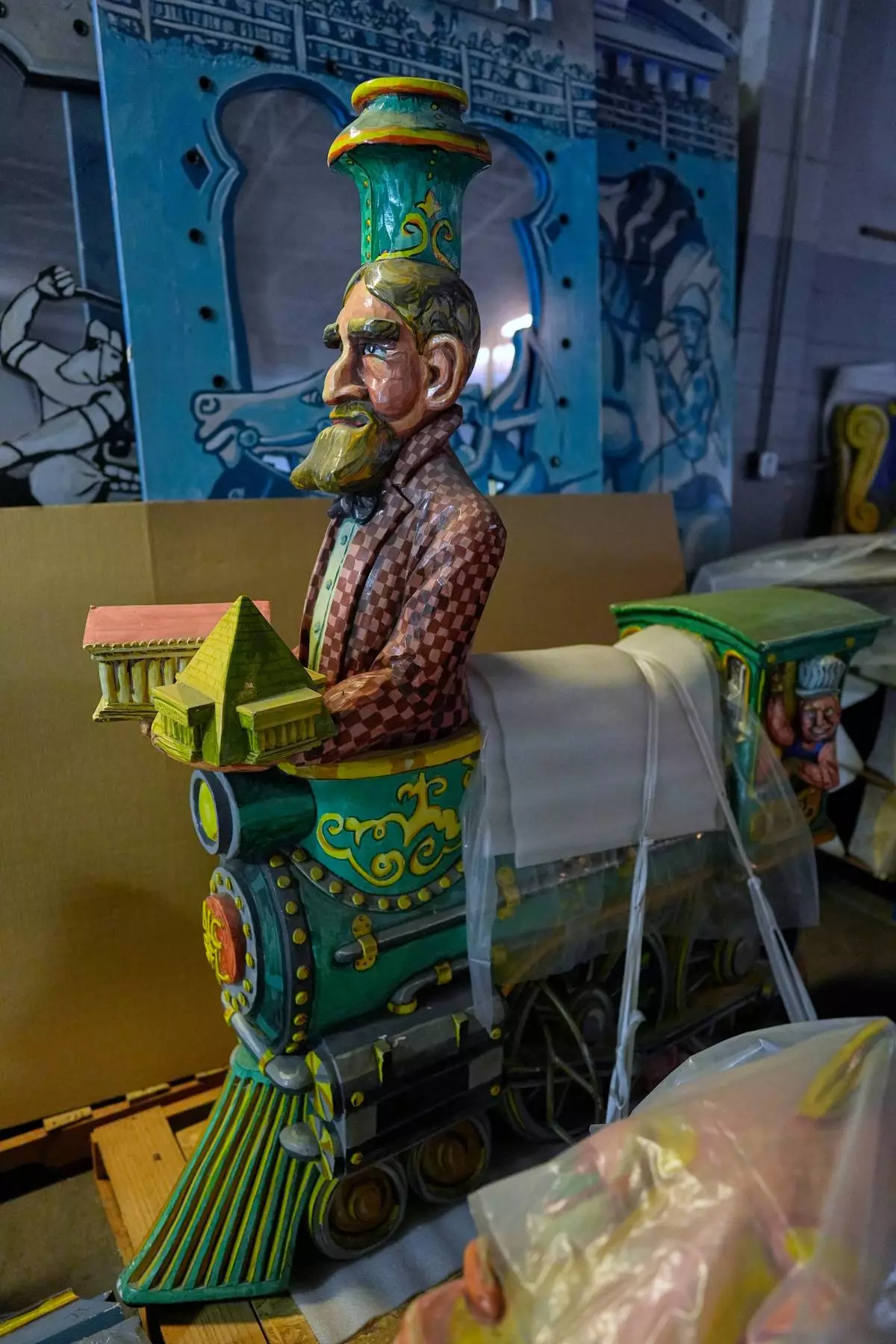
A figure of Eugene Lewis from the Fox Trot Carousel is seen in a state government storage facility Wednesday, June 24, 2026, in Nashville, Tenn. (AP Photo/George Walker IV)
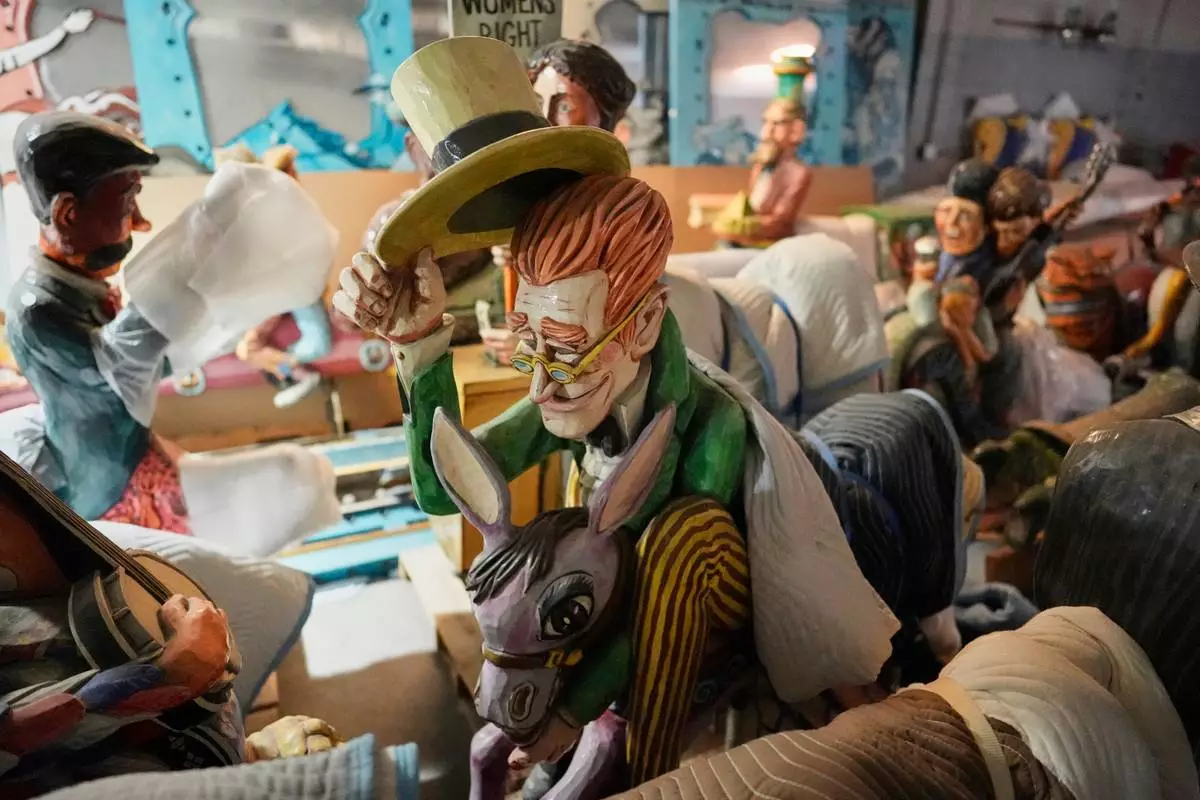
A figure of Andrew Jackson from the Fox Trot Carousel is seen in a state government storage facility Wednesday, June 24, 2026, in Nashville, Tenn. (AP Photo/George Walker IV)
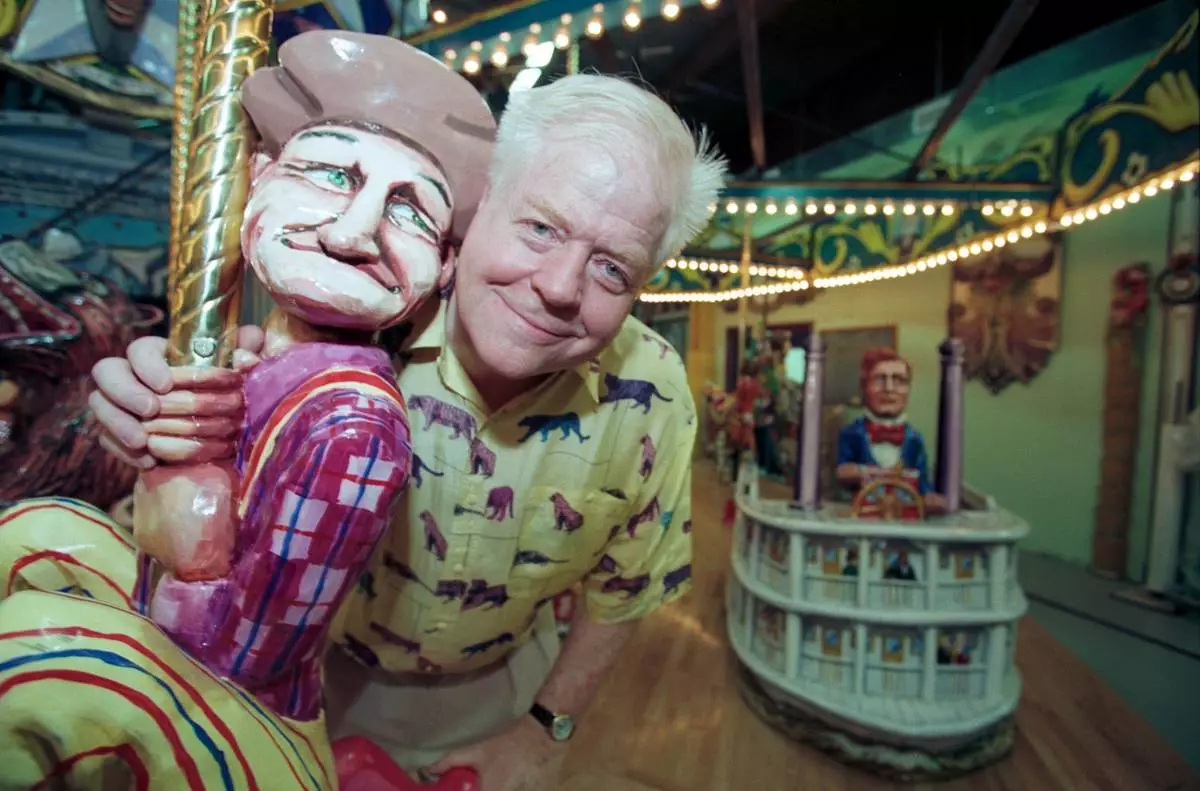
FILE - Artist Red Grooms poses in New York, July 16, 1998, with one of the figures for the Tennessee Fox Trot Carousel he has created for Nashville, his native town. (AP Photo/Suzanne Plunkett, File)
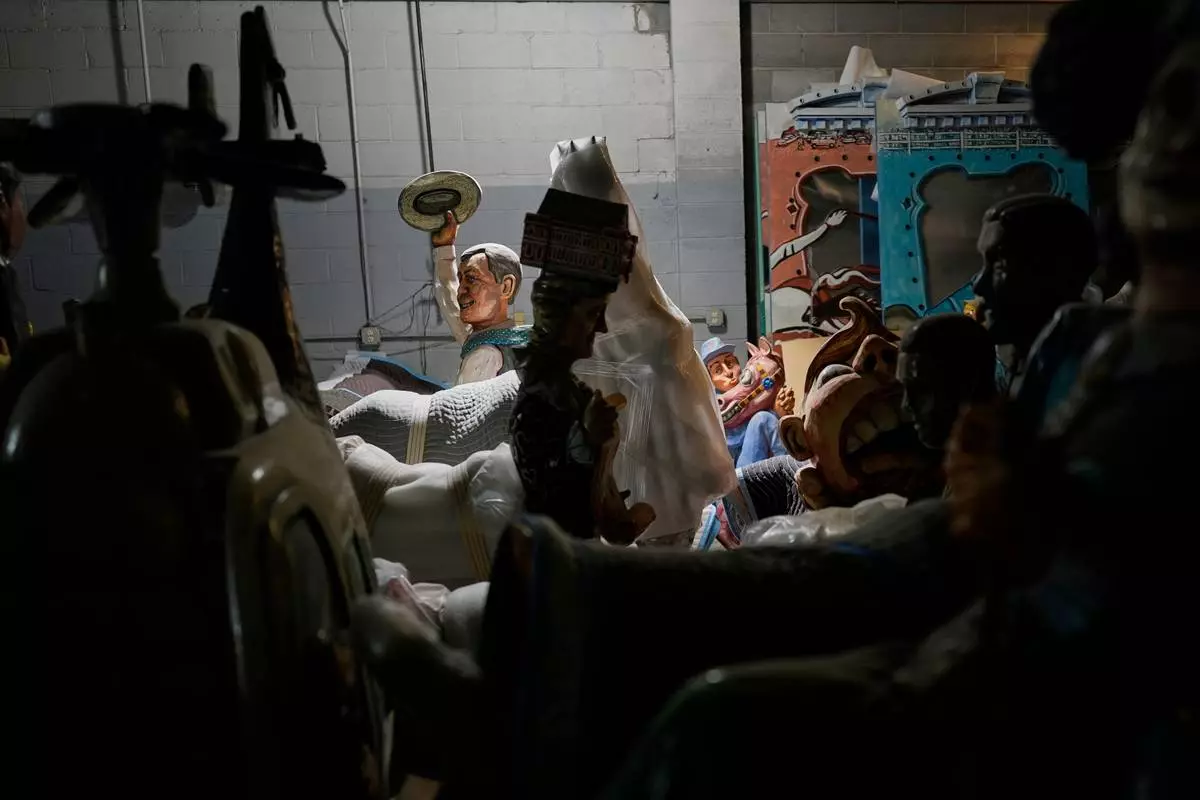
A figure of Chet Atkins and other parts of the Fox Trot Carousel are seen in a state government storage facility Wednesday, June 24, 2026, in Nashville, Tenn. (AP Photo/George Walker IV)
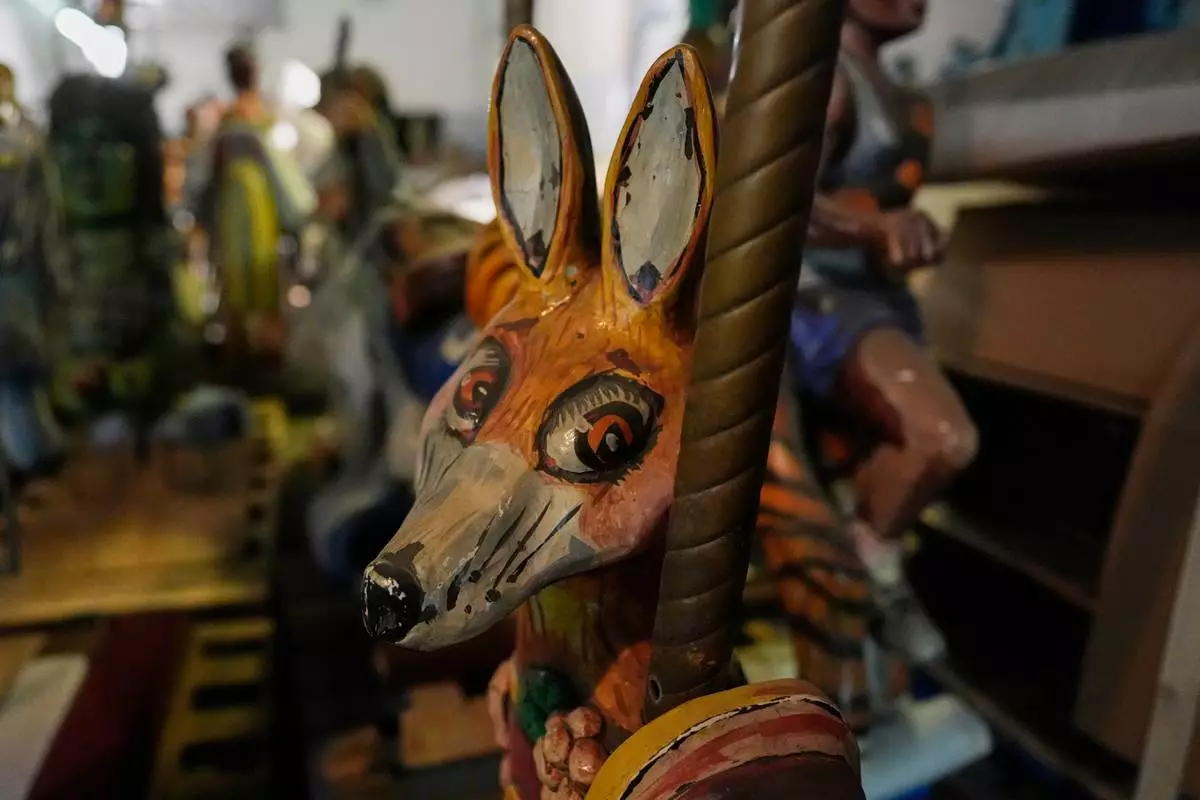
A figure of Mr. Fox Trot from the Fox Trot Carousel is seen in a state government storage facility Wednesday, June 24, 2026, in Nashville, Tenn. (AP Photo/George Walker IV)