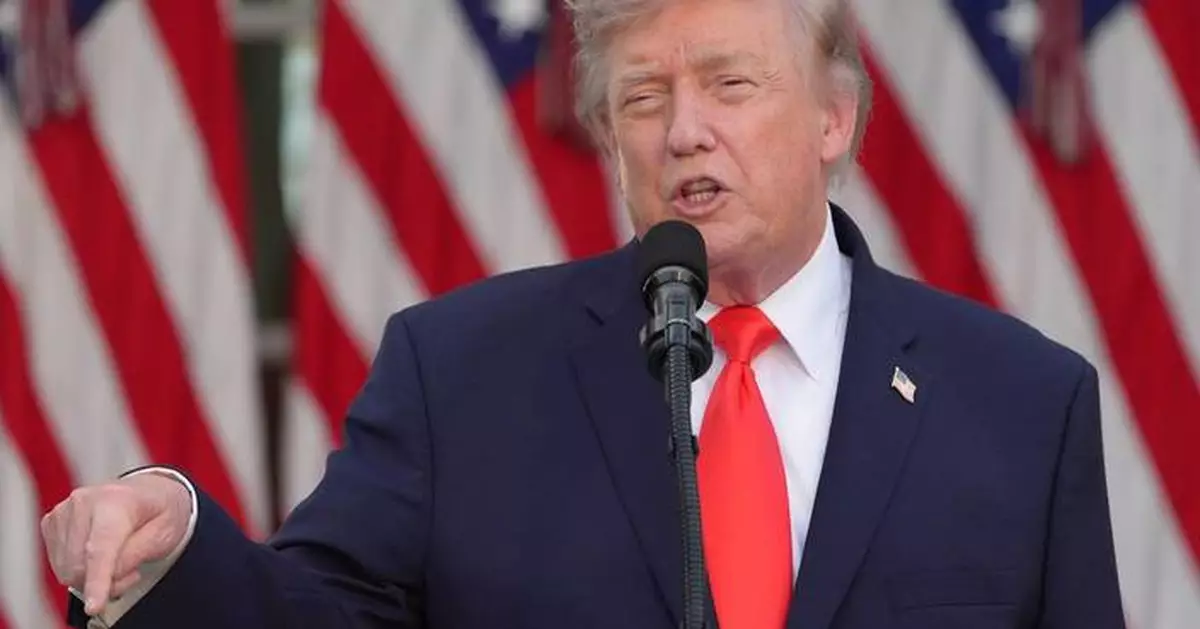
WASHINGTON (AP) — President Donald Trump on Friday threatened a 100% tax on imports from any country that imposes a tax on digital services from United States companies.
In a post on social media, Trump took aim at European countries that he said are discussing “imminent” implementation of taxes on American companies. The U.S. president has repeatedly sought to use tariffs as way to deter such taxes, but many countries are looking for revenues as their economies increasingly operate in digital realms that are dominated by American companies.
“Please let this statement serve to represent that any Country that imposes such a Tax will immediately be met with a 100% TARIFF on any and all Goods sent to the United States of America,” Trump wrote.
He added that the new tax would supersede any previously negotiated trade deals. Trump said the penalty would apply to any country that moves forward with such a tax, but he singled out European nations in his post.
Trump has repeatedly pushed against foreign efforts to tax or regulate American tech giants. Last year he threatened new tariffs on any country that moved to do so. A post from last August said that digital taxes and regulation “are all designed to harm, or discriminate against, American Technology.”
The threat comes ahead of Trump's July 4 deadline for the European Union and United States to start implementing a tariff deal that caps tariffs on most EU exports at 15%.
The European Union in May finalized a trade deal with the United States that caps most tariffs on EU exports at 15%. The deal followed months of debate within the EU after European Commission chief Ursula von der Leyen tentatively struck the deal last year while visiting Trump’s golf course in Scotland.
Digital taxes were not part of the agreement and have remained a sticking point between the U.S. and the European bloc.
The U.S. government has in the past had tariff investigations on digital services taxes under Section 301 of the Trade Act of 1974. But it was unclear how Trump would enact his threat and whether he would apply the tariffs broadly or target them initially at certain nations.
Britain, which is no longer part of the EU, has since 2020 levied a 2% digital services tax on revenues earned by search engines, social media sites and online marketplaces that “derive value” from U.K. users.
The British government said in a policy document at the time that corporate tax rules for digital businesses had “led to a misalignment between the place where profits are taxed and the place where value is created.”
The U.K. tax includes thresholds that mean mainly big international companies will pay it. The tax was designed to “ensure the large multinational businesses in-scope make a fair contribution to supporting vital public services,” the document said.
AP Business Writer Kelvin Chan contributed to this report from London.
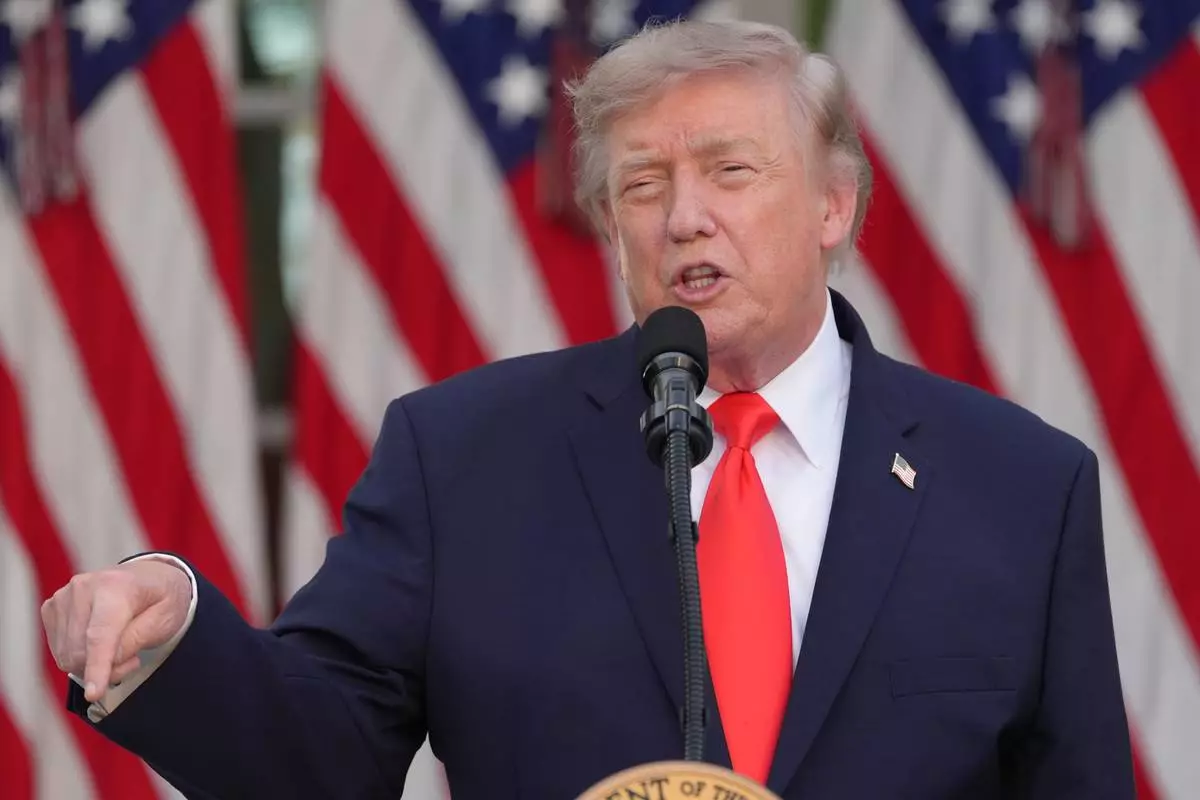
President Donald Trump speaks at a Rose Garden Club dinner with farmers, in the Rose Garden of the White House, Thursday, June 25, 2026, in Washington. (AP Photo/Jacquelyn Martin)
WASHINGTON (AP) — The Democratic National Committee is organizing hundreds of community events across the country this weekend in hopes of harnessing the same concerns about affordability that President Donald Trump capitalized on to return to the White House.
The events include school supply giveaways, food bank drives, neighborhood door knockings and organizer trainings.
“Everything costs too damn much under Donald Trump and the Republicans,” Democratic National Committee Chair Ken Martin said in a statement.
Martin said party members planned “to reach, engage, register, and mobilize voters who will make the difference in races up and down the ballot.”
Two years ago, Democrats were the ones accused of being indifferent to Americans’ anger about rising prices. Now they're pointing the finger at Trump, who has downplayed the impact of lingering inflation.
He has described affordability concerns as a “hoax” and recently said, “I love the inflation” because he expects costs to drop as he tries to resolve his war with Iran.
About one-third of U.S. adults approve of how Trump is handling the economy, according to an AP-NORC poll from June. That’s down from the start of his second term, when 40% approved.
About 7 in 10 U.S. adults say the country’s economy is “poor,” according to an AP-NORC poll from June. That’s up from 65% in March, and underscores Americans’ ongoing unhappiness with the cost of living, which is being compounded by high gas prices due to the war in Iran.
Slightly more U.S. adults say the Democratic Party would do a better job than the Republican Party in handling inflation and the cost of living, according to a Marquette Law School/SSRS poll from May. Roughly one-third of U.S. adults — 35% — said the Democrats would do a better job, while 28% believe the Republicans would. Roughly one-third say the parties would be the same, or neither would be good.
This weekend's events vary by region.
In New Mexico, Gov. Michelle Luján Grisham will convene a training for 150 potential campaign staffers. Nevada’s statewide campaigns will knock on doors in rural and working class neighborhoods. Others will call voters in swing districts with competitive U.S. House races to talk about the rising price of gas.
Some events are geared toward directly helping voters to persuade them that Democrats are concerned about affordability.
For instance, the local party in Kenosha County, Wisconsin, plans to collect and distribute school supplies to poor families. And canvassers will fan out to discuss affordability issues in Arizona, Pennsylvania and Wisconsin.
The Republican National Committee dismissed the weekend's events.
“Despite being millions of dollars in debt, the DNC is choosing to throw pitiful pep rallies to distract from the fact they created the inflation crisis," said Delanie Bomar, an RNC spokeswoman. "Meanwhile, Republicans are hard at work fixing the economic mess Joe Biden and the Democrats created.”
Democrats hope that the events will show that their time in the political wilderness has made it more serious and effective at tackling kitchen table issues. But some fear their agenda may not be heard by voters in an increasingly fractured media environment.
“One of Donald Trump’s greatest strengths is that he’s so loud,” said Brian Derrick, a Democratic strategist. He said that events like the weekend’s itinerary help Democrats focus on an “Achilles’ heel” issue for Trump, “which right now is his lack of interest in addressing everyday costs for people.”
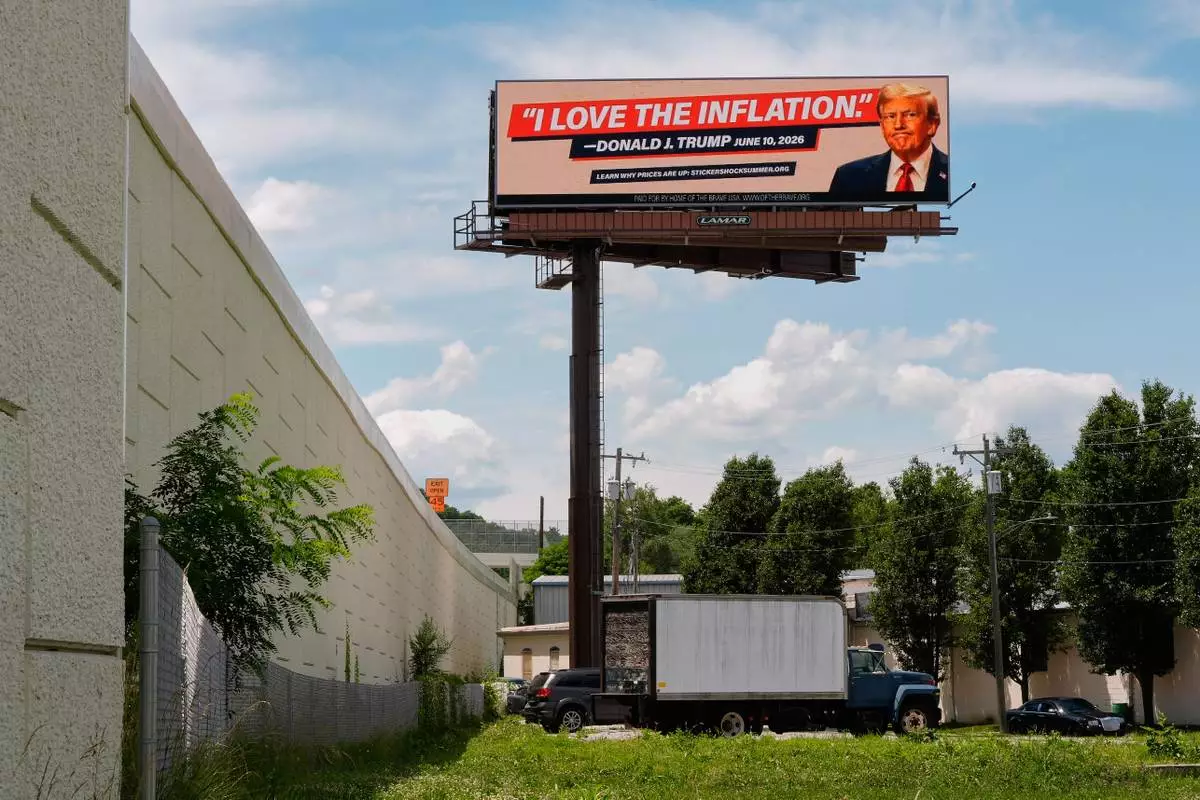
An electronic billboard that reads "I love the inflation." - Donald J. Trump June 10, 2026," is seen near I-74 in Cincinnati, Tuesday, June 16, 2026. (AP Photo/Carolyn Kaster)