PHOENIX (AP) — A polygamous sect leader already serving a 50-year federal prison sentence for orchestrating sex involving children was convicted Friday on state child abuse charges after girls were found in an unventilated trailer he was hauling through Arizona.
Someone alerted authorities about the trailer in August 2022 after seeing small fingers reaching through gaps in the doors. Police stopped Samuel Bateman's vehicle as he was driving through Flagstaff and found three girls inside, who were ages 11 to 14 at the time. The trailer was enclosed with a makeshift toilet, a sofa and camping chairs.
In the federal case, Bateman was convicted of coercing girls as young as 9 to submit to sex acts with him and other young adults, and for scheming to kidnap girls from protective custody, the story of which is the focus of a Netflix series, “Trust Me: The False Prophet.”
Bateman previously claimed to have more than 20 "spiritual wives," including 10 girls under the age of 18. He testified in his own defense in the state case, telling jurors he would never harm the people he loves. He acknowledged during cross-examination that he knew the girls were in a hot trailer for hours and the ventilation wasn't good, but downplayed the conditions.
“I just trusted myself as a driver,” he said. “I asked God to bless me every time we hopped in that vehicle.”
He claimed he thought the girls had gotten out when they stopped. He said he was as “shocked as could possibly be” when he learned that they were still inside when he was pulled over.
During closing arguments, prosecutor Eric Ruchensky told jurors, “It’s common sense that you don’t carry people in a trailer designed for cargo on a hot day with no ventilation."
Jurors in the state case weren't supposed to hear about Bateman's conviction in federal court. The judge barred the evidence from being introduced. But Bateman brought it up several times as he represented himself, leading the judge to strike the comments from the record.
The jury delivered the verdict Friday in about 40 minutes, convicting him on all three counts of child abuse. . Each count carries a mandatory sentence, between four and eight years. The judge has discretion to run the counts consecutively or concurrently. A sentencing hearing is scheduled Aug. 25.
The Associated Press left a voice mail and email messages Friday for Bateman’s appointed advisory counsel.
Federal authorities said Bateman, a self-proclaimed prophet, traveled extensively between Arizona, Utah, Colorado and Nebraska as he built an offshoot network of the Fundamentalist Church of Jesus Christ of Latter-day Saints, which historically has been based in the neighboring communities of Colorado City, Arizona, and Hildale, Utah.
He and his followers practiced polygamy, a legacy of the early teachings of the mainstream Church of Jesus Christ of Latter-day Saints, which abandoned the practice in 1890 and now strictly prohibits it.
Bateman was one of the trusted followers of Warren Jeffs, who previously led the sect and is serving a life sentence in Texas for sexual assault of children.
The influence of the polygamous sect has waned significantly over time in the towns where the sect has historically been based. In 2017, a court order placed the towns under supervision, excising the church from their governments and shared police department.
But the area has since transformed so quickly that they were released from court-ordered supervision last summer, almost two years earlier than expected. Practicing sect members are now believed to account for only a small percentage of the towns’ populations.
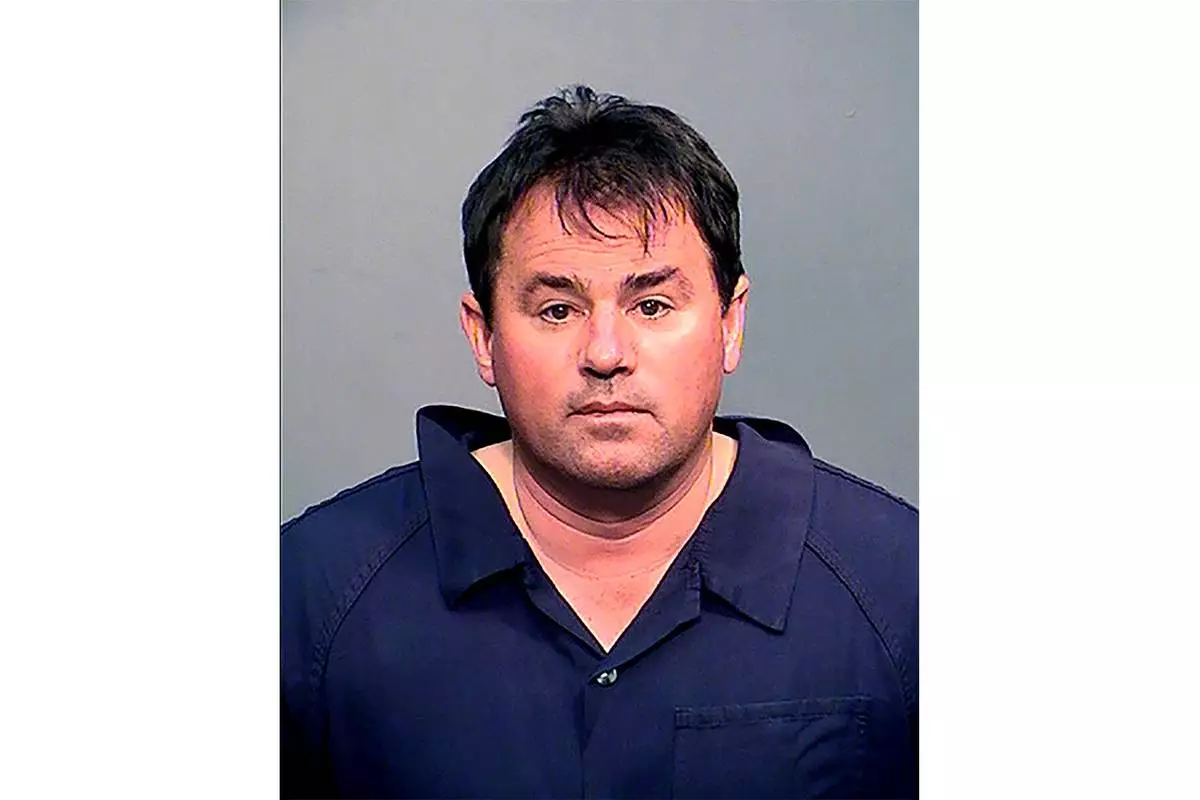
FILE - This undated photo provided by the Coconino County, Ariz., Sheriff's Office shows Samuel Bateman, the leader of a small polygamous group near the Arizona-Utah border. (Coconino County Sheriff's Office via AP, File)
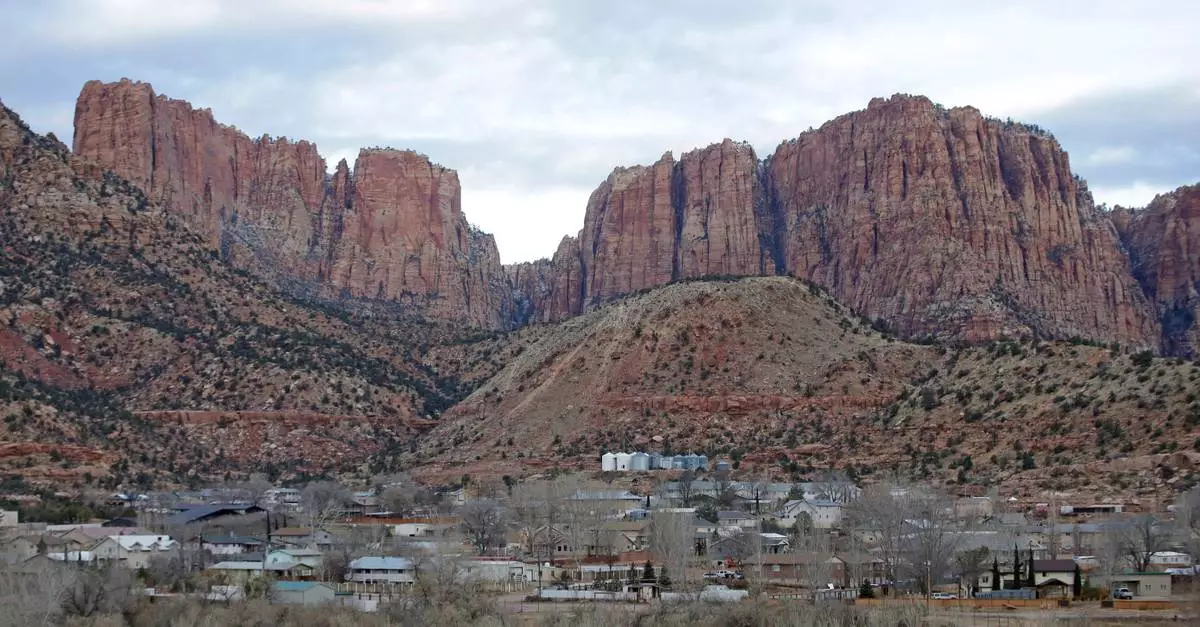
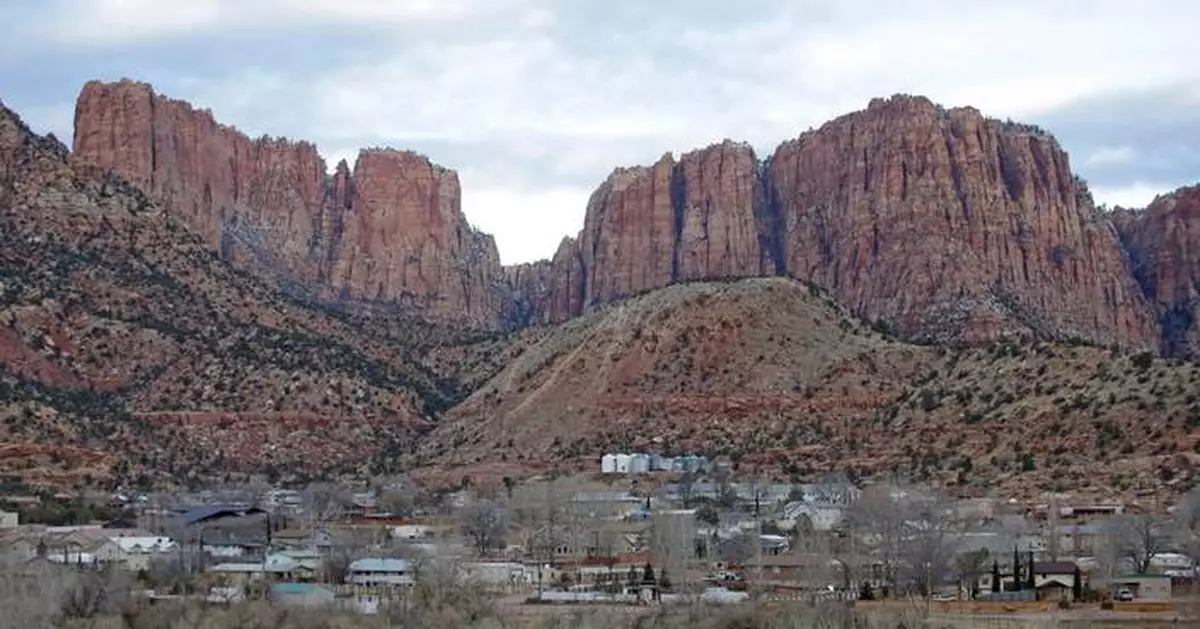
FILE - Hildale, Utah, sits at the base of Red Rock Cliff mountains, with its sister city, Colorado City, Ariz., in the foreground, on Dec. 16, 2014. (AP Photo/Rick Bowmer, File)
MIAMI GARDENS, Fla. (AP) — Juan Nicolas wants this time to be different.
The Bogotá, Colombia, native saw the scary scene two years ago during the Copa America final as thousands of ticketless fans breached the security gates at Hard Rock Stadium to watch Colombia face Argentina.
Colombia's soccer team will play Portugal on Saturday in a World Cup group stage match, returning to the stadium for the first time since that incident — this time with heightened security and multiple checkpoints.
“Now that we’re here, I feel a little pressure just to show myself better and like to show a better country to the world," said Nicolas, who said he was not at the match in 2024. "Colombia is new now. Colombia has new stuff to give to the world. We’re a different country, so now we have to show that.”
The crowd trouble began hours before the July 2024 match. Supporters — many of them wearing Colombia’s yellow and red colors — rushed the gates at the home stadium of the NFL's Miami Dolphins, leaving fans terrified and bloodied as security struggled to contain the rush.
Screams could be heard in the background of many videos circling social media, and posts showed some fans trying to climb through air vents to gain entry.
Questions were sparked on how to handle two more years of major soccer tournaments in the United States — the Club World Cup last year and this year's World Cup.
There was increased security last summer at the Club World Cup matches held in Miami, which served as a preview of the ticket-screening measures to expect on Saturday.
Fans must pass through three separate checkpoints that enclose the entire campus before getting close to the stadium, and parking passes are checked well before entry. Steel fencing is also set up around the perimeter.
“It’s been a layered approach that people have to go through,” said Andrew Giuliani, executive director of President Donald Trump’s World Cup task force, which is overseeing the tournament's multiagency security effort.
“We’re going to make sure that everybody is on their guard ready to go that day in particular,” Giuliani added, “just making sure that there are no issues. ... We’re leaning in on the 27th to make sure we can talk about the action that happened (on the pitch)."
Giuliani said there will be a “strong federal presence” both around the stadium and city on Saturday, declining to answer if that includes more than a typical match day. There have been three World Cup group matches in Miami so far. Each has seen a heavy police presence.
“I think we like showing up for our team, and some people take it a little bit too far," said Lucas Gaviria, a native of Manizales, Colombia, who attends Florida Atlantic University. “That has to do with our culture. We care about it too much, we have a ‘any means necessary’ type of thinking. ‘I need to see this game, even though I know I don’t have the money for it.’”
Saturday's match has been in high demand, both because of South Florida's large Colombian community and the draw of Portugal star Cristiano Ronaldo. Tickets on the resale site StubHub were listed from around $3,000 to more than $5,000.
“If you don’t have tickets, you shouldn’t be on site here,” Giuliani said in January, when he and other members of the task force visited the stadium during the College Football Playoff national championship. “It’s not like an American football game where there’s tailgating. This is very different. We want to make sure the security resources are here for those ticketed fans. If you’re not ticketed, you have fan festivals. You have other events in the Miami area where you can go and enjoy and be safe.”
Hard Rock Stadium — Miami Stadium is its name during the World Cup because of FIFA’s policies about sponsorship — has not commented because of its ongoing involvement in multiple lawsuits related to the Copa America final.
Those lawsuits, which list multiple defendants, claim — among other things — that the stadium and soccer officials didn’t have enough security present to handle such a crowd, lacked proper numbers of Spanish-speaking personnel working at the event and didn’t protect legitimate ticket holders “from foreseeable criminal activity.”
Ahead of Saturday's match, Colombia supporters said they hope that moment doesn't define them.
"There are a lot of great things that Colombia stands for," said Nadia Rodriguez, a Bogota, Colombia, native living in Miami. “Great coffee, beautiful landscapes, amazing songs, the soccer team. The darkness is in the past.”
AP Sports Writer Tim Reynolds contributed to this report.
Zach Pascuzzi is a student in the University of Georgia’s Carmical Sports Media Institute.
See more of AP’s World Cup coverage here
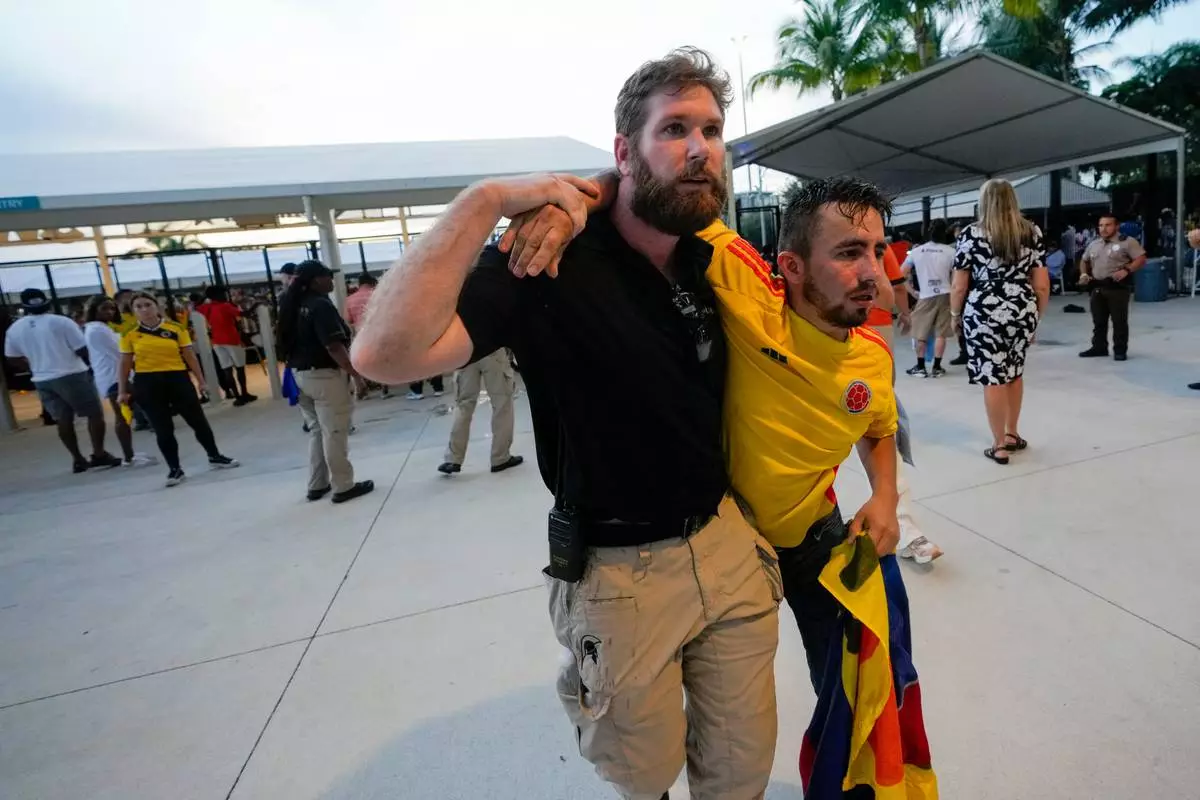
FILE - A security agent assists a fan who was waiting to enter the stadium prior to the Copa America final soccer match between Argentina and Colombia, in Miami Gardens, Fla., July 14, 2024. (AP Photo/Lynne Sladky, File)
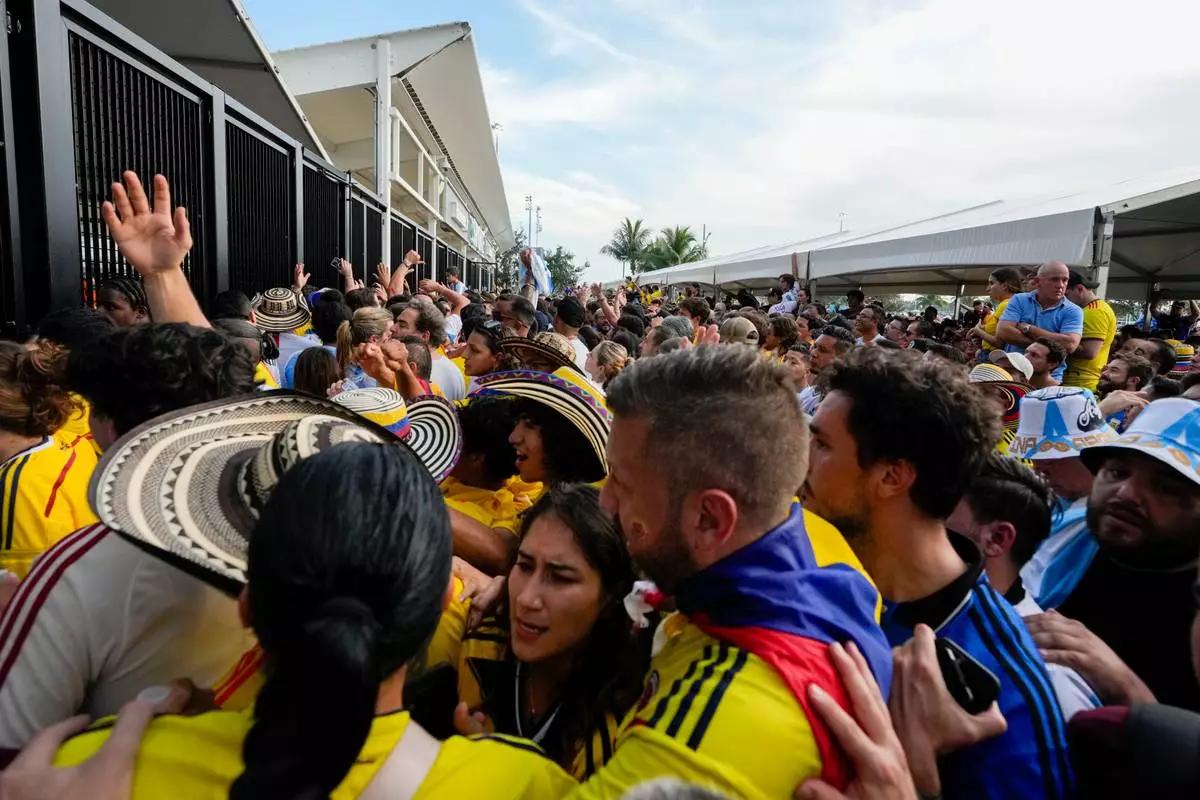
FILE - Fans wait to enter the stadium prior to the Copa America final soccer match between Argentina and Colombia in Miami Gardens, Fla., July 14, 2024. (AP Photo/Lynne Sladky, File)