China will intensify its efforts to support private enterprises in participating in the construction of a new energy system during the 15th Five-Year Plan period (2026-2030), said an official of the National Energy Administration at a press conference in Beijing on Friday.
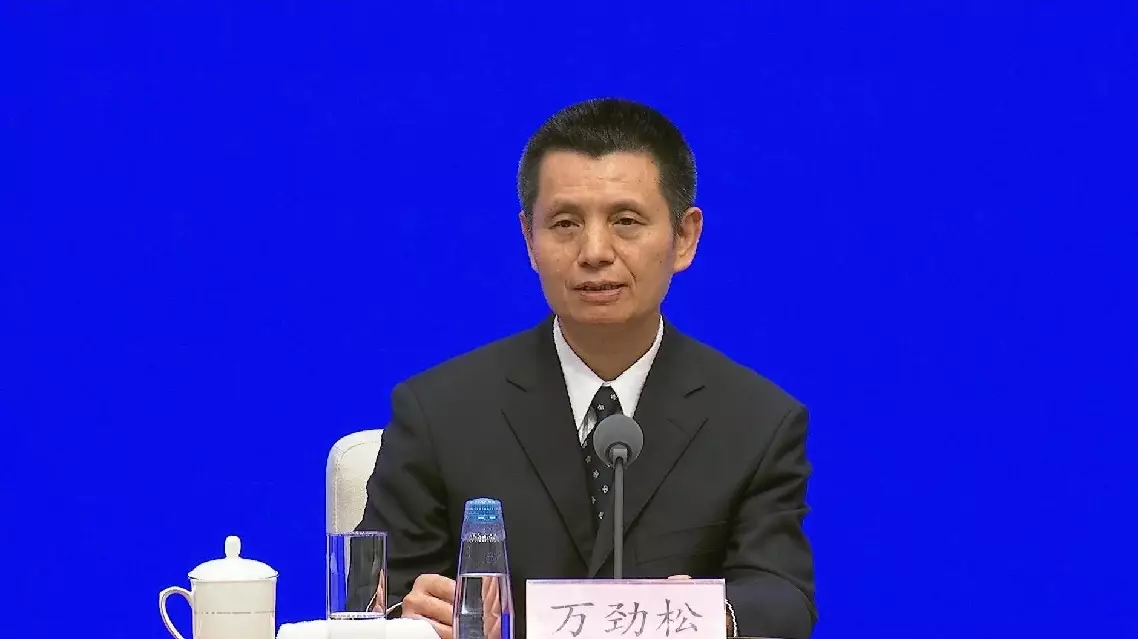
Wan Jinsong, deputy head of the National Energy Administration, said that supportive measures will be rolled out on expanding investment projects, upgrading business models, and optimizing the business environment.
"In major energy projects, the space for private enterprises to invest will be expanded. During the 15th Five-Year Plan period, efforts will be made to continuously open up more energy projects to the public, and issue guidelines for private enterprises to participate in large and medium-sized hydropower projects, so that enterprises have clear direction for investment with guaranteed returns," Wan said.
In terms of new models and business formats, private enterprises will be supported to invest in projects such as virtual power plants, charging facilities, and new energy storage, he said.
"In optimizing the business environment, we will provide better services for private enterprises, focus on rectifying irregularities in bidding and tendering processes, disorderly competition in the photovoltaic industry, and additional administrative conditions for project approval. We will continuously work to promote fair access to infrastructure such as power grids and oil and gas pipelines for private enterprises, streamline project approval procedures, implement 'one-stop online service and one-window reception,' and improve the level of access to electricity services, making it easier and less time-consuming for businesses. We will also regularly conduct government-enterprise dialogs to evaluate policy effectiveness, and respond to development needs, acting as a trusted partner for businesses," Wan said.
China to support private enterprises in new energy system construction
AI-powered factories and wind-assisted cargo ships were among the solutions on display at the 4th China International Supply Chain Expo (CISCE), highlighting how innovation is shaping the global green transformation.
The event, which ran from Monday to Friday, featured supply chain exhibitions in digital technology, advanced manufacturing, green agriculture, healthy life, smart vehicle and clean energy, as well as a supply chain service zone.
At the booth of leading solar manufacturer TCL Zhonghuan, a domestically developed AI large model is lifting both crystal pulling efficiency and stability by 20 percent. Trained on massive volumes of historical production data, the system continuously optimizes process parameters, directly boosting green energy output, according to officials.
"We built a vision-enabled AI large model. Trained on historical production data, it continuously optimizes product and process parameters to boost line performance and stability," said Shi Peng, senior manager of informatization of TCL Zhonghuan.
Beyond individual enterprises, the expo highlighted that China's industrial ecosystem is becoming a testbed and launchpad for global low-carbon solutions.
Maersk, the Danish shipping giant, presented an AI-powered logistics planning system first developed in China and now being rolled out worldwide. The tool enables customers to optimize container loading, cutting costs while shrinking carbon footprints.
"This is actually a local innovation in China and then now become global. So, this systems allow customers, for example, to optimize the loading of their containers, improving cost efficiency while lowering carbon emissions," said Silvia Ding, president of Maersk Greater China.
According to Ding, the AI system slashes container planning time from weeks to mere hours, significantly improving supply chain fluidity.
Meanwhile, Airbus, joining the Expo for the second year, displayed a specialized green-powered cargo vessel designed to transport aircraft components.
"Why I put this here is because this vessel has its unique shape with these six columns of rotor sails. This can take advantage of the wind energy. In the real operation, it can reduce as much as 50 percent of carbon emissions," said George Xu, CEO of Airbus China.
As the world's first national-level exhibition focusing on supply chains, the CISCE is an internationally shared public good. First held in 2023, the expo has contributed to building more secure, stable, open and inclusive global industrial and supply chains.
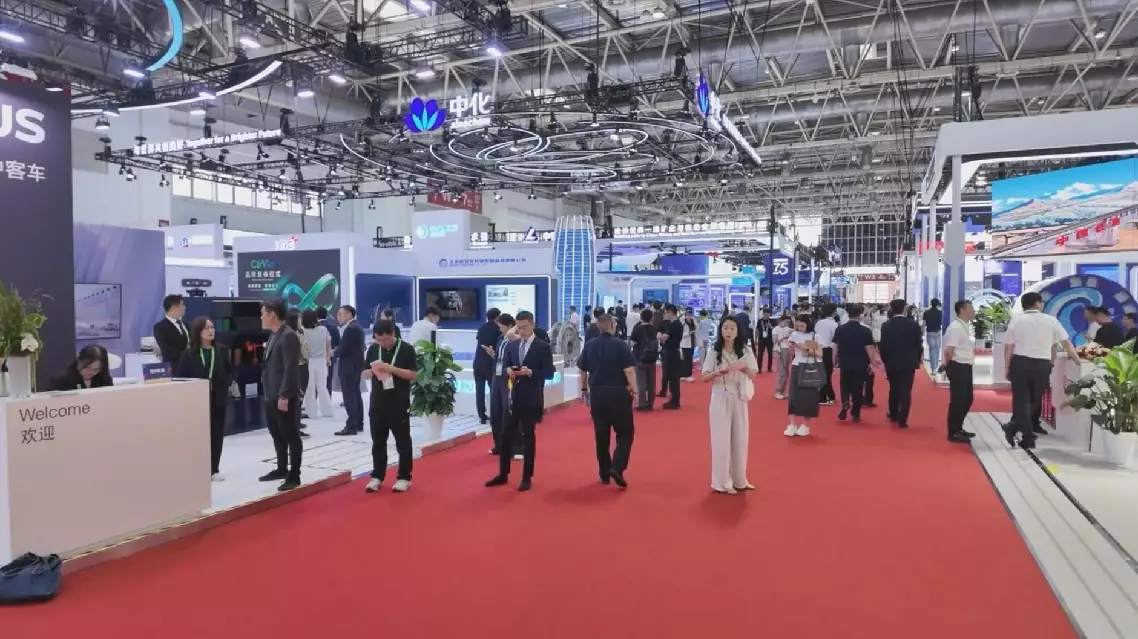
Global green transition solutions take center stage at China supply chain expo