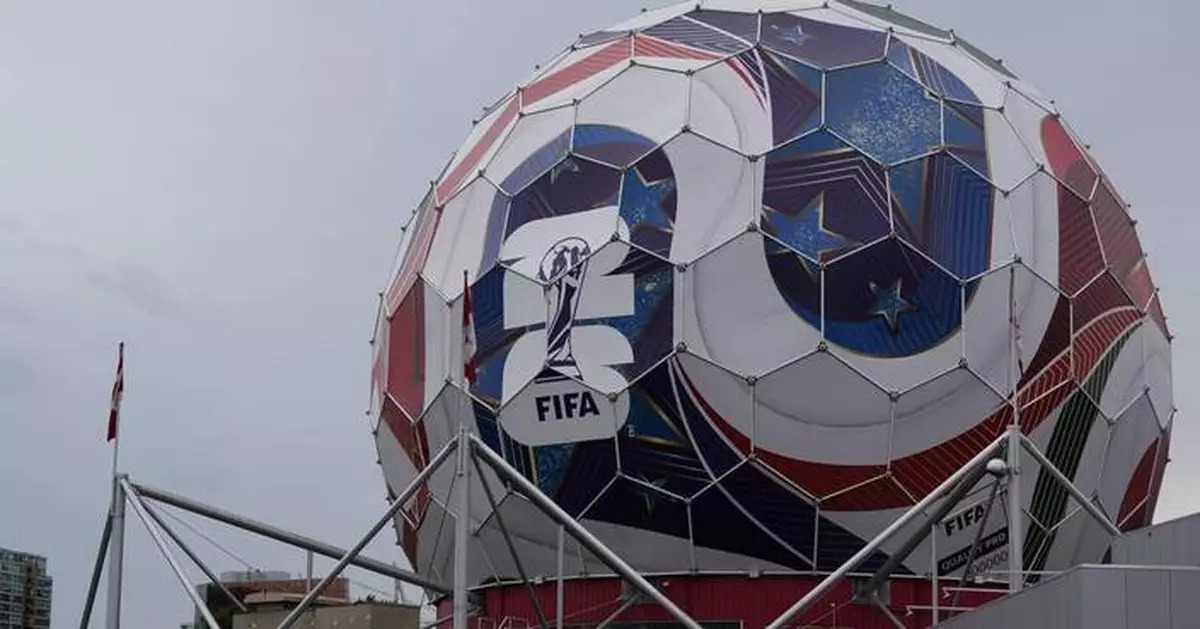
VANCOUVER, British Columbia (AP) — It started with a whimsical idea. Why not transform the landmark Science World museum in downtown Vancouver, the geodesic dome-topped building not far from BC Place stadium, into a gigantic 17-story soccer ball for the World Cup?
Easier said than done, actually. But now the larger-than-life replica match ball has become the iconic symbol for Vancouver during the World Cup, a favored shot by both broadcasters and social media posts.
Some two years ago, Science World, stadium and host city officials were discussing the best ways to capitalize on the World Cup coming to their city.
“We were kind of saying, well, we should definitely wrap the dome as a soccer ball, right? And it was kind of a joke, because then it was like, well, who’s going to pay for it and how do we do it? So many questions,” said Rob Hollingsworth, senior director for commercial Sales and partnerships at Science World. “But I think in this instance the idea was actually the easy bit, because you know we’ve got a massive ball on our roof.”
Adidas, which designed the World Cup's official match ball, agreed to allow the replica. Local businesses, organizations and government agencies pitched in to help pay for the project. The only question left was how to pull it off.
The normally silver dome has been a fixture of the Vancouver skyline since it was built for the 1986 World's Fair. At the 2010 Winter Games, it served as the Sochi House to preview the 2014 Olympics. And it has long housed Science World, a museum that includes an IMAX theater.
But when the decision was made to transform it into an enormous soccer ball there were some complications. The only schematics for the building were the original hand-drawn blueprints by local architect Bruno Freschi.
So a drone was dispatched to take detailed laser measurements of each of the geodesic dome's many panels. To everyone's dismay, all of the panels were slightly different.
Yet, pliable panels were manufactured and numbered for their precise locations, then installed and connected with special ties to give slightly in windy conditions.
“We’d orientated it really with broadcast in mind, so you’ll notice that the logo on the ball, that the trophy faces kind of southeast, so that if you’re getting the shot, that iconic Vancouver shot, that lines up Science World, with the stadium, with downtown, with the water and the mountains, you get everything in one," Hollingsworth said.
Turns out, however, that Science World isn't just a soccer ball during the World Cup, it's still a museum and it's hosting a special exhibit, Soccer and Technology, from the FIFA Museum.
It's the first time the immersive exhibit has been displayed outside of Zurich. Science World tweaked it to add a bit of Canadian flavor, like national star Christine Sinclair's jersey worn during the gold medal match at the Tokyo Olympics, and the match ball from the 2022 men's World Cup in Qatar when Alphonso Davies scored Canada's first-ever goal in the tournament.
The museum has seen a rise in visitors during the tournament, but nothing prepared Science World for the visual explosion on social media, which is filled with photos of the dome, Hollingsworth said.
“We hoped that this would be what happened, but we had no idea, really. In the context of the World Cup, we were one of 16 host cities, so we didn’t know what everyone else was doing, we just knew what we were doing. But we hoped above all it would be a shot that broadcasters would pick up as being kind of the iconic Vancouver shot, and that it would travel around the world in that way during the tournament, and I believe it has,” he said. "What we didn’t know or necessarily foresee is just the organic earned media and the organic social media that’s happening every single day."
See more of AP’s World Cup coverage here.
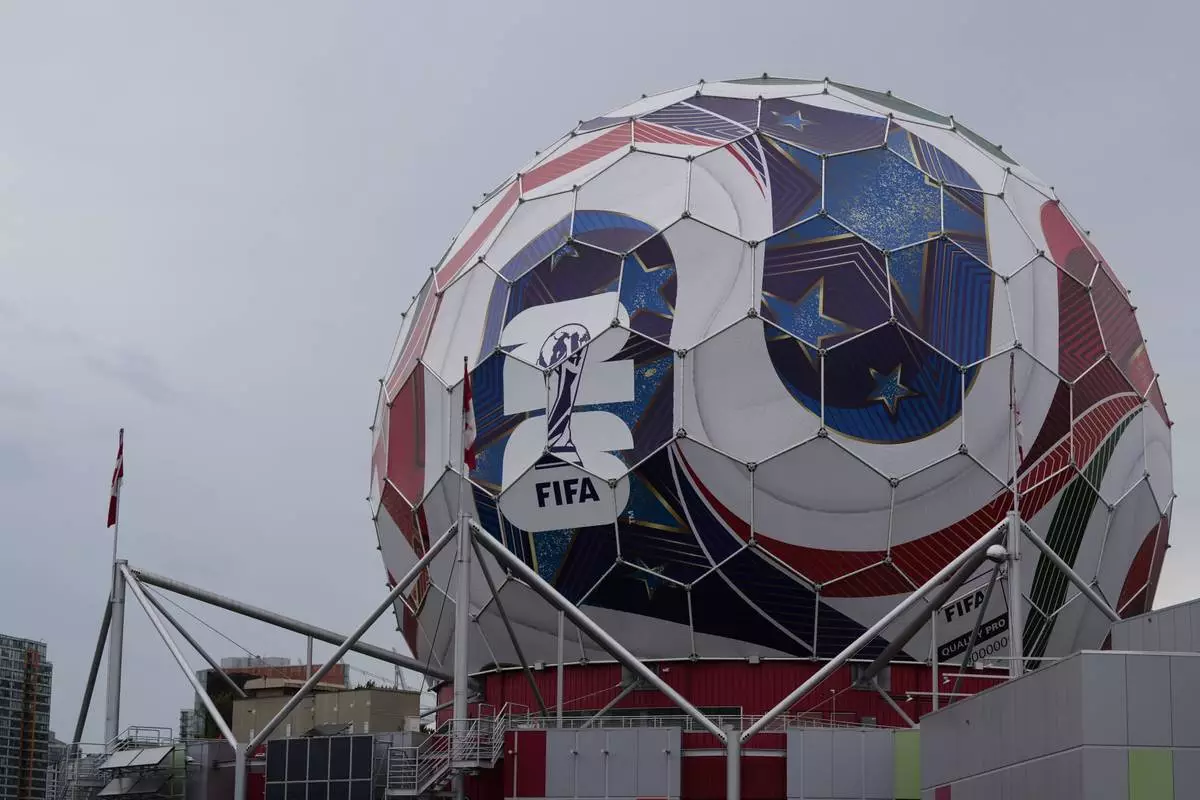
A giant FIFA World Cup match ball is displayed at Science World, Thursday, June 25, 2026 in Vancouver, British Columbia. (AP Photo/Abbie Parr)
JUNEAU, Alaska (AP) — A man with the same name and party affiliation as Alaska Republican U.S. Sen. Dan Sullivan is eligible to challenge the senator in the August primary, a judge ruled Friday.
Superior Court Judge Thomas Matthews’ ruling overturns a June 15 decision by Division of Elections Director Carol Beecher to disqualify the challenger and keep him off the primary ballot. Matthews’ ruling can be appealed to the state Supreme Court.
Attorneys for the state have said Tuesday is the deadline for a final ruling so that ballots for the Aug. 18 primary can be printed.
The judge ruled that the division’s decision to exclude Dan J. Sullivan because his candidacy was not “in good faith” was not based on the Constitution, Alaska law or the division’s own regulations. The retired teacher from the small fishing community of Petersburg filed to challenge the incumbent.
“Instead, the decision was based upon a new, previously unstated, ‘good faith’ criteria,” the judge wrote.
The division is appealing the decision, Sam Curtis, a spokesperson with the state Department of Law, said by email Saturday. Jeffrey Robinson, an attorney for Dan J. Sullivan, said in an email he expected the division to appeal and couldn't comment until the Alaska Supreme Court rules on the case.
The controversy over the two Dan Sullivans has underscored the stakes involved in the incumbent’s reelection campaign. The Alaska race is one of about half a dozen U.S. Senate races expected to be highly competitive in the fall, and the seat is one Democrats are trying to flip in their efforts to try to regain the majority.
The senator and allies, including the National Republican Senatorial Committee, have condemned the challenger’s efforts to join the race, arguing his presence could confuse voters. Under Alaska’s election system, the top four candidates from the primary, regardless of party, move on to the ranked-choice November general election.
The senator has accused the challenger Sullivan of working with Democrats and the campaign of Democratic former U.S. Rep. Mary Peltola — who is considered the senator’s main opponent — to cause confusion and boost Peltola’s chances. Peltola’s campaign and state Democrats have denied the allegation, as has the challenger.
Sen. Sullivan and Peltola are the highest-profile candidates in the crowded race and the only ones to report raising any money.
Beecher has said she determined the challenger Sullivan is not eligible to run because his candidacy was not filed in good faith and instead was done with an intent to confuse voters. She said he had registered to vote as Daniel J. Sullivan Jr. and, in conjunction with his candidacy, changed his party affiliation to Republican. She also cited similarities between his campaign website and the senator’s, and his work with a consultant whose clients have included some Democrats. She did not mention finding any evidence of alleged coordination.
In arguing to keep the challenger disqualified, attorneys for the state pushed back on suggestions the ballot could be designed in a way to reduce voter confusion over two candidates with the same name and party running for the same office.
“The Constitution does not require States to place a sham candidate on the ballot and then attempt to mitigate the damage through design choices,” attorney Rachel Witty, with the Alaska Department of Law, and outside attorneys Christopher Murray and Michael Francisco wrote in court filings.
Attorneys for the challenger Sullivan argued that the Constitution lays out three exclusive qualifications for the Senate, addressing only age, citizenship and residency. They said Beecher lacked the legal authority to boot their client off the ballot.
The challenger Sullivan has said that sharing a name and party affiliation with the incumbent gave him “an instant megaphone.” But the 69-year-old retired teacher and former U.S. Forest Service employee said he had considered a run for some time and had grown frustrated with the senator.
He initially was certified on the state’s candidate list as Dan J. Sullivan, with the senator listed as Dan S. Sullivan and identified as the incumbent.
———
This story has been updated to correct the surname of Dan J. Sullivan's attorney: it is Robinson, not Robertson.
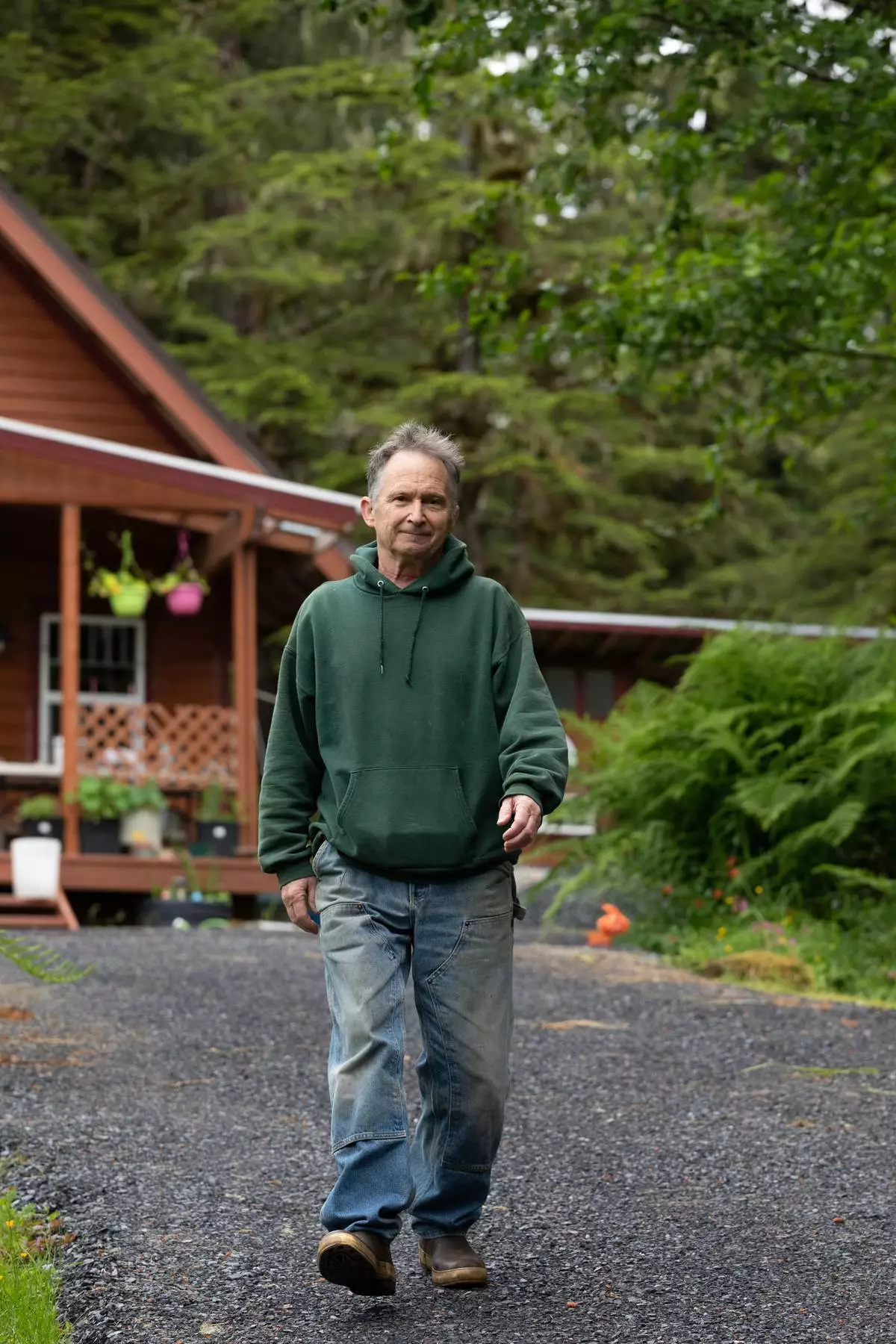
Dan Sullivan, who has filed to run for U.S. Senate in Alaska, poses for a photo Friday, June 26, 2026, in Petersburg, Alaska. (AP Photo/Katie Holmlund)
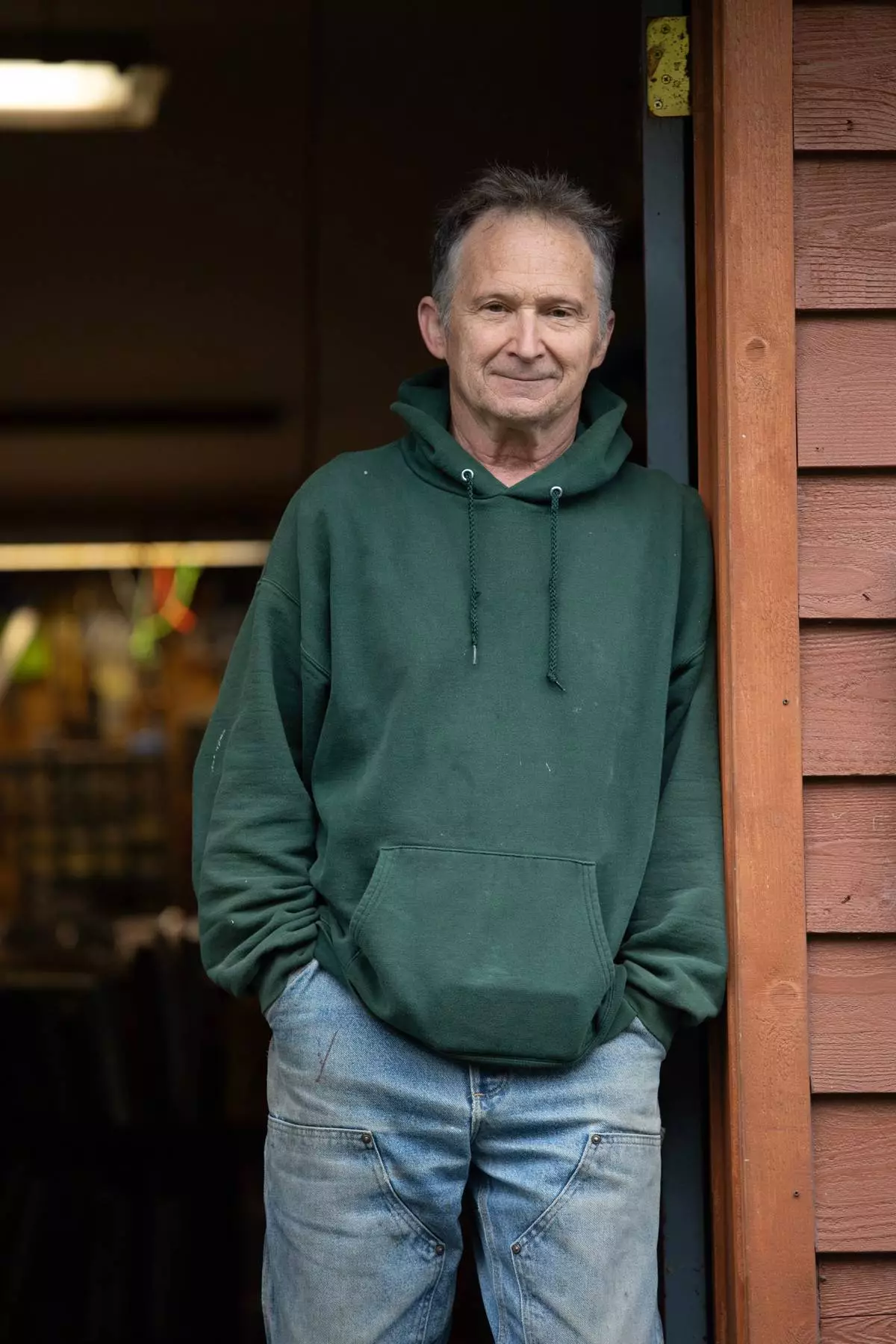
Dan Sullivan, who has filed to run for U.S. Senate in Alaska, poses for a photo Friday, June 26, 2026, in Petersburg, Alaska. (AP Photo/Katie Holmlund)
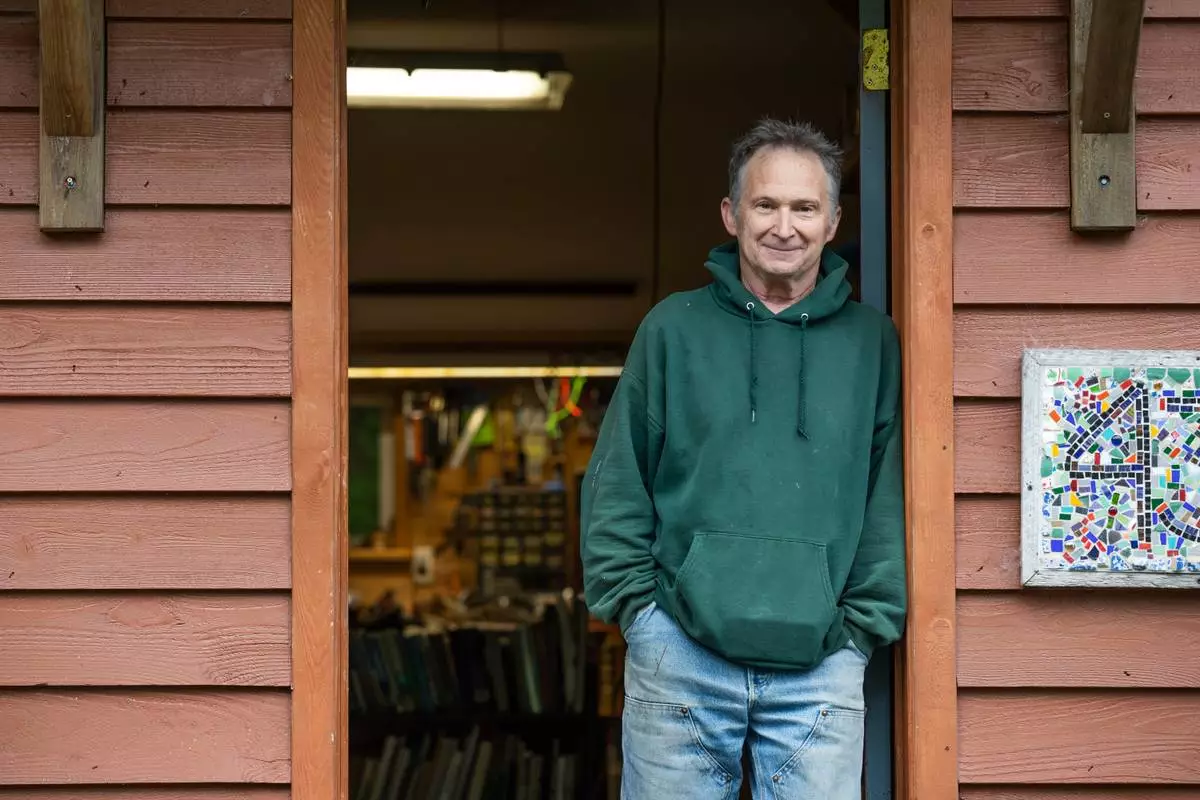
Dan Sullivan, who has filed to run for U.S. Senate in Alaska, poses for a photo Friday, June 26, 2026, in Petersburg, Alaska. (AP Photo/Katie Holmlund)