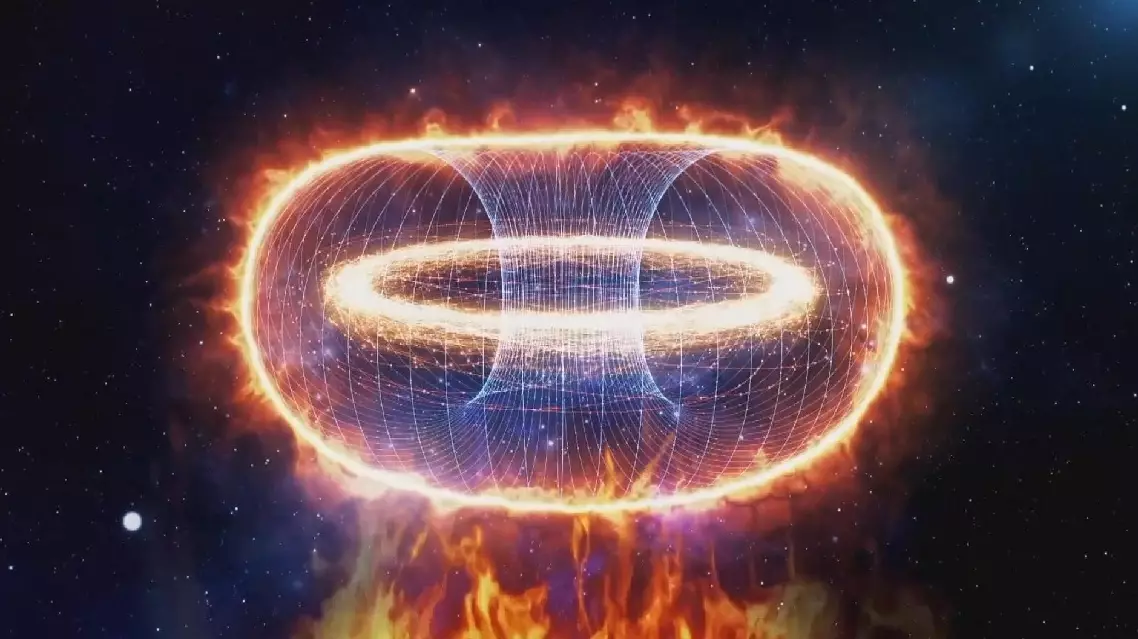
China has completed a key test on a high-temperature superconducting magnet for its "artificial sun" project, advancing its efforts to develop nuclear fusion energy.
The magnet is designed for the Burning Plasma Experimental Superconducting Tokamak, or BEST, a compact fusion energy experimental facility in Hefei Future Science City, located in east China's Anhui Province.
Known as a central solenoid magnet, the component works somewhat like the spark plug of a car engine. It helps start a fusion device by driving electric current through plasma, the superheated gas used in nuclear fusion.
Test data showed the magnet carried a stable current of 60 kiloamperes and stored 6.03 megajoules of energy, with its core performance the highest ever achieved internationally.
The magnet was developed with domestically made superconducting materials, structural designs and manufacturing processes, according to the Institute of Plasma Physics at the Chinese Academy of Sciences’ Hefei Institutes of Physical Science.
"The central solenoid magnet is actually the magnet with the most complex operating conditions. Its performance directly determines whether our fusion device can be started and kept stable. It is a key component that will determine whether fusion can move from experimental devices toward fusion energy applications," said Qin Jinggang, deputy director of the Institute of Plasma Physics.
BEST is scheduled to be completed around 2027 and aims to achieve fusion power generation by 2030.
"This superconducting magnet is one of the most advanced in the world. It is a core component and key technology for realizing fusion power generation and building fusion reactors in the future," said Song Yuntao, director of the Institute of Plasma Physics.
The latest breakthrough, along with the technical acceptance of the world's largest superconducting magnet for a fusion reactor, is expected to strengthen China's independent research, development and engineering capabilities in fusion technology.
China completes key magnet test for "artificial sun" project