Skip to Content Facebook Feature Image

Iran attacks Bahrain and Kuwait following US strikes and threatens to halt talks to end the war

News

Iran attacks Bahrain and Kuwait following US strikes and threatens to halt talks to end the war
News

News

Iran attacks Bahrain and Kuwait following US strikes and threatens to halt talks to end the war

2026-06-28 17:24 Last Updated At:17:30

DUBAI, United Arab Emirates (AP) — Iran launched drone and missile attacks Sunday targeting Bahrain and Kuwait in response to U.S. airstrikes that hit the Islamic Republic, and threatened a “complete halt” could come to negotiations to end the war if Washington continues its attacks.

Efforts to reopen the Strait of Hormuz without Iran's direct oversight sparked the crossfire now gripping the region and imperiled negotiations for a lasting ceasefire. A multinational maritime body overseen by the U.S. Navy said Saturday that it would expand a route near Oman to allow for both inbound and outbound traffic, setting up a new flashpoint with Tehran.

The global community has long considered the strait an international passageway, despite its sitting in Iran and Oman's territorial waters. In recent days, Tehran has twice attacked vessels going through a route on the Omani side of the strait backed by a United Nations agency.

Iran insists that it alone must govern the strait, the narrow mouth of the Persian Gulf that once carried a fifth of the world’s oil and natural gas. Iranian Foreign Minister Abbas Araghchi reiterated the claim during a state visit to Iraq on Sunday.

“Any interference in this matter, any attempt to establish new or separate arrangements from those currently being carried out by the Islamic Republic of Iran, will only lead to further complications, delay the reopening of the Strait of Hormuz, and increase the level of tension, just as over the past two nights we witnessed incidents in the Strait of Hormuz that led to an increase in tension and confrontation,” he said in Baghdad.

The United States and Iran are still debating the terms of an interim peace deal, including issues such as getting ships through the narrow mouth of the Persian Gulf, removing U.S. blockades and sanctions, and addressing the future of Iran’s stockpile of highly enriched uranium. Under the memorandum of understanding signed earlier this month, the U.S. and Iran have 60 days to iron out the details. The strikes threaten to torpedo the deal before it can be finalized.

The Kuwaiti military said air defenses intercepted incoming Iranian drones and missiles Sunday morning, just after the U.S. strikes.

Kuwait, which hosts a major U.S. army base, said it had detected and intercepted two ballistic missiles and there were no reports of injuries or damage.

Bahrain's Interior Ministry said the Iranian strikes damaged a residential building near the international airport and no one was killed. The ministry released photos of an 8-story building, with the top floor completely destroyed, filled with rubble and its windows blown out.

Bahrain is home to the U.S. Navy’s 5th Fleet, whose base there came under repeated attack during the war. The damaged building on Sunday was not near the fleet's headquarters, in downtown Manama.

Bahrain’s Foreign Ministry issued a statement denouncing what it called “a dangerous escalation that reveals that what Tehran is doing is not a passing act, nor an isolated incident, but rather a deliberate approach and a systematic pattern of repeated aggression against the sovereignty of the kingdom, and the security of its citizens and residents.”

The strikes came after the US and Iran traded attacks over the weekend. The U.S. military’s Central Command said it struck Iranian military “surveillance infrastructure, communication systems, air defense sites, drone storage facilities and minelayer capabilities” on Sunday, following an attack on a ship at sea early Saturday morning. That ship, the Panamanian-flagged tanker Kiku, carried crude oil for the state-run energy company of Qatar, a key negotiator between Iran and the U.S.

In a social media post, Trump said the U.S. had “struck Iranian missile and drone storage locations, and coastal radar sites, for violating the Cease Fire Agreement, AGAIN!” He warned of a point where the U.S. may no longer be able to be reasonable “and will be forced to militarily complete the job.”

“If that happens, the Islamic Republic of Iran will no longer exist!” Trump wrote on Truth Social.

The incident follows a similar back-and-forth that occurred just days prior, when an Iranian drone struck a merchant vessel off the coast of Oman on Thursday, and the U.S. military retaliated with strikes

The Guard claimed responsibility for both attacks, saying it targeted Al Asad Air Base in Kuwait.

“Let the enemy know that violating the ceasefire ... will lead to a complete halt of ongoing processes,” the Guard added.

The Guard, which controls Iran's ballistic missile arsenal, answers only to Supreme Leader Ayatollah Mojtaba Khamenei and is thought to be wielding even greater influence now in the Islamic Republic.

The U.S. military said that “Iran had a chance to honor the ceasefire agreement” but “elected not to” when its forces attacked the Kiku.

According to ship-tracking websites, the Kiku appeared to be attempting to use a route established near the coast of Oman, serving as an alternative to the route sanctioned by Iran that runs through its own waters, when it was attacked.

U.S. Secretary of State Marco Rubio, left, and Bahrain's King Hamad bin Isa Al Khalifa share a word after their meeting, at Al-Sakhir Palace near Zallaq, Bahrain Thursday, June 25, 2026. (Eric Lee/Pool Photo via AP)

U.S. Secretary of State Marco Rubio, left, and Bahrain's King Hamad bin Isa Al Khalifa share a word after their meeting, at Al-Sakhir Palace near Zallaq, Bahrain Thursday, June 25, 2026. (Eric Lee/Pool Photo via AP)
BEAVER, Utah (AP) — Three firefighters died and two were injured while tackling fires on the Colorado-Utah border, the U.S. Wildland Fire Service reported Sunday.

The agency — created earlier this year to streamline firefighting and fire reduction across public lands — said the firefighters had been part of an interagency response to the Knowles and Gore fires on Saturday.

“The U.S. Wildland Fire Service stands united with the USDA Forest Service in grief and in our unwavering support for the loved ones left behind. Their bravery, dedication, and sacrifice will never be forgotten," it said in a statement on Facebook.

Wildfire activity has intensified across the western United States, as consecutive days of hot, dry and windy weather have fueled flames in Utah, Arizona and elsewhere as new fires popped up across the region.

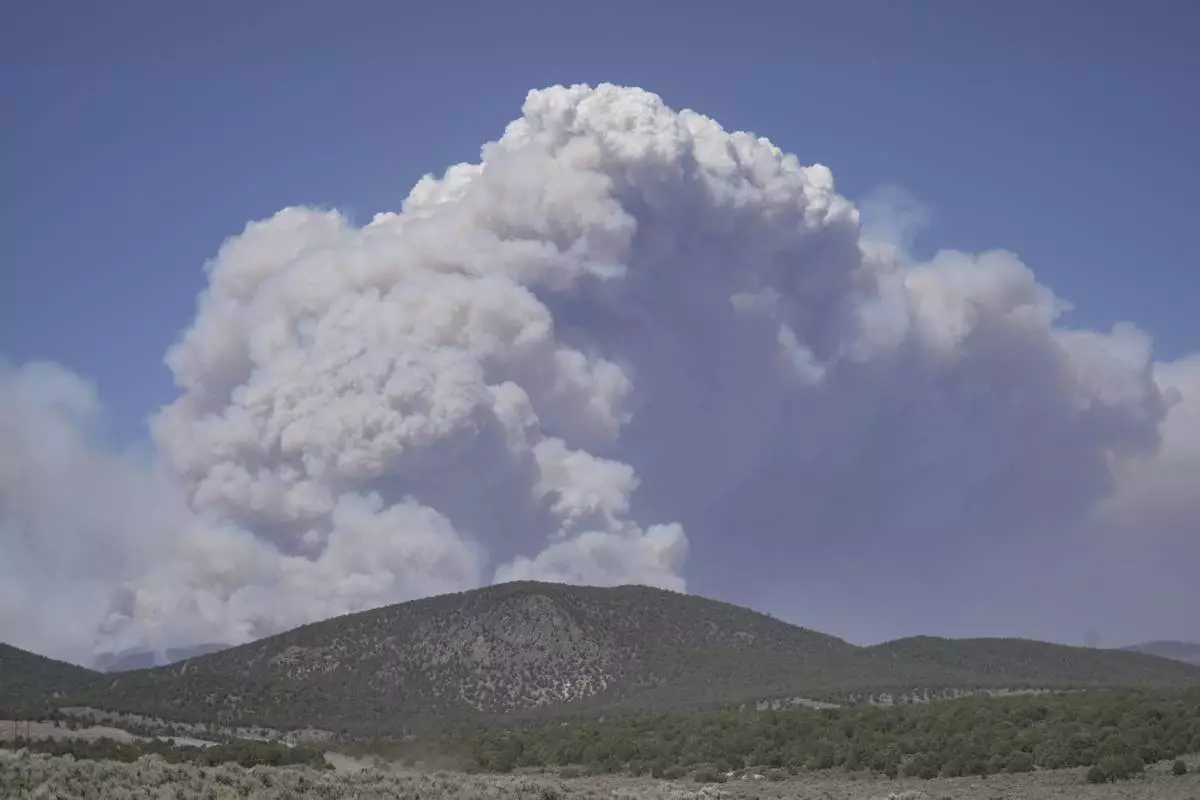
The largest blaze, the Cottonwood Fire, was burning in rugged terrain in southwest Utah. It ballooned Saturday to more than 144 square miles (373 square kilometers) after marching through canyons and mountainsides, destroying part of a ski resort and other summer cabins along the way.

Authorities in Beaver County began working with fire teams on Saturday to assess the extent of the damage, but no estimates were immediately available. Gov. Spencer Cox in a post on social media called it bleak, but he thanked crews for what he called "several miraculous stops and saves.”

The cliffs and steep slopes have made the job even harder, said Alyssa Mason, a spokesperson assigned to the fire.

“It's hard to get dozers and other heavy equipment into that. It's hard to get engines into that,” she said. “It doesn't make it impossible to firefight, but it does just kind of slow things down.”

Hundreds of firefighters have been arriving in the arid state to battle new starts as well as those that have been growing because of what forecasters called critical fire weather — dangerously low humidity levels, warm temperatures and gusty winds.

The danger is even higher this year because of Utah's record-low snowpack and its warmest winter on record. Much of the West is grappling with similar conditions, according to the National Interagency Fire Center.

From Alaska to Florida, crews worked Saturday to corral dozens of fires, including three dozen that were classified as large and uncontained.

Nationally, nearly 3 million acres (1.2 million hectares) have burned since the start of the year. That is more than the 10-year average.

The conditions in Utah were critical enough for Gov. Spencer Cox to declare an emergency earlier this week and clear the way for the state to ban fireworks ahead of the July Fourth holiday. The order comes as Utah is experiencing one of the most severe wildfire seasons in recent history, fueled by historic drought conditions.

State officials said that over the past week, Utah has seen an increase in wildfire starts, with each fire showing unprecedented behavior. These starts have stretched the state’s wildland firefighting capabilities, State Forester Jamie Barnes said.

Colorado Gov. Jared Polis also declared an emergency on Saturday, and authorized the use of the National Guard to tackle the fires.

Forecasters with the National Weather Service over recent days have been issuing red flag warnings for a wide swath of the West, from California to Arizona and New Mexico.

South of Grand Canyon National Park, authorities said the flames of a new wildfire were moving away from Grand Canyon Village and the nearby community of Tusayan on Saturday. But about 50 miles (80 kilometers) away, another fire prompted Coconino County officials to issue evacuation orders for those near Kendrick Mountain.

Parts of northern Arizona were without power Saturday as the utility serving the area initiated a safety shut-off in hopes of lessening the wildfire risk.

Power shutoffs have become more common in the West as wildfire risk has expanded. It is usually a last resort after utility forecasters weigh factors like sustained wind and gust speeds, available fuels and topography.

With extreme fire conditions persisting in Utah, Rocky Mountain Power also shut off power lines serving Beaver County and other areas.

Montoya Bryan reported from Albuquerque, New Mexico. Associated Press writers Jamie Stengle in Dallas; Julie Carr Smyth in Columbus, Ohio; and Ed White in Detroit contributed.

A plume of smoke rises from the Cottonwood Fire, Friday, June 26, 2026, near Beaver, Utah. (AP Photo/Ty ONeil)

A plume of smoke rises from the Cottonwood Fire, Friday, June 26, 2026, near Beaver, Utah. (AP Photo/Ty ONeil)

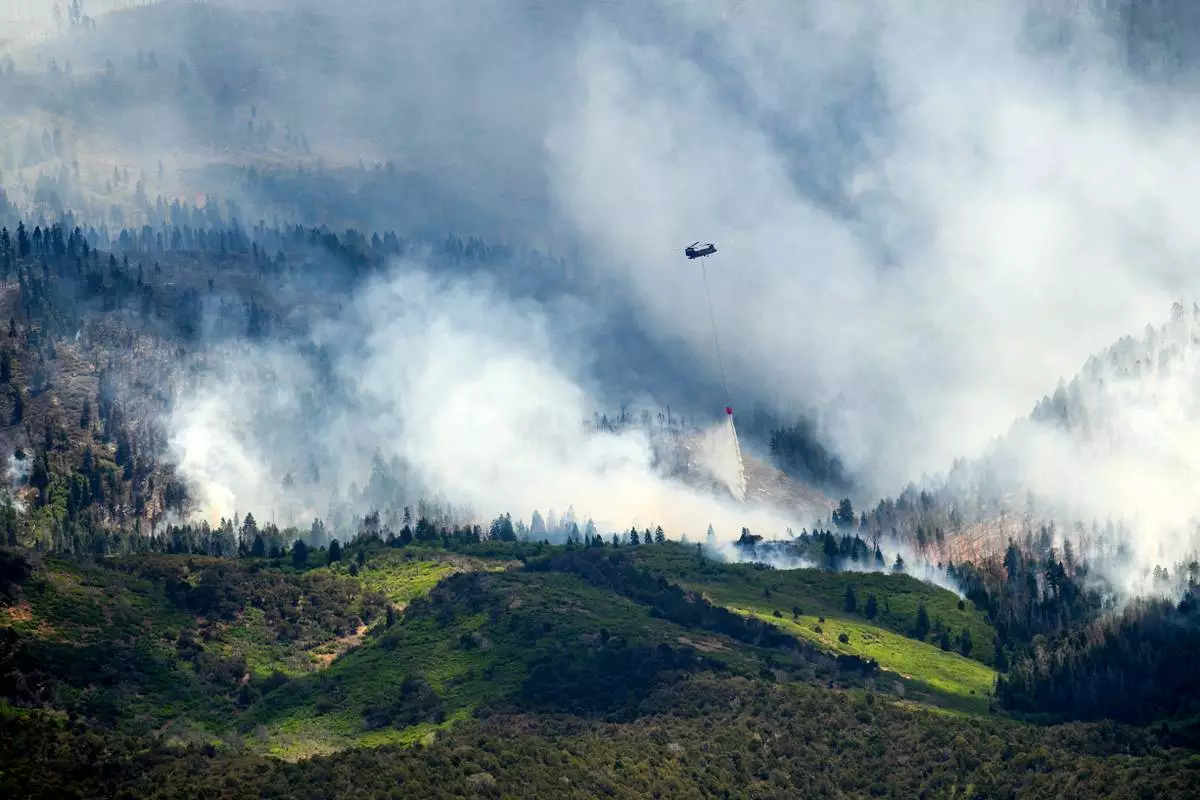
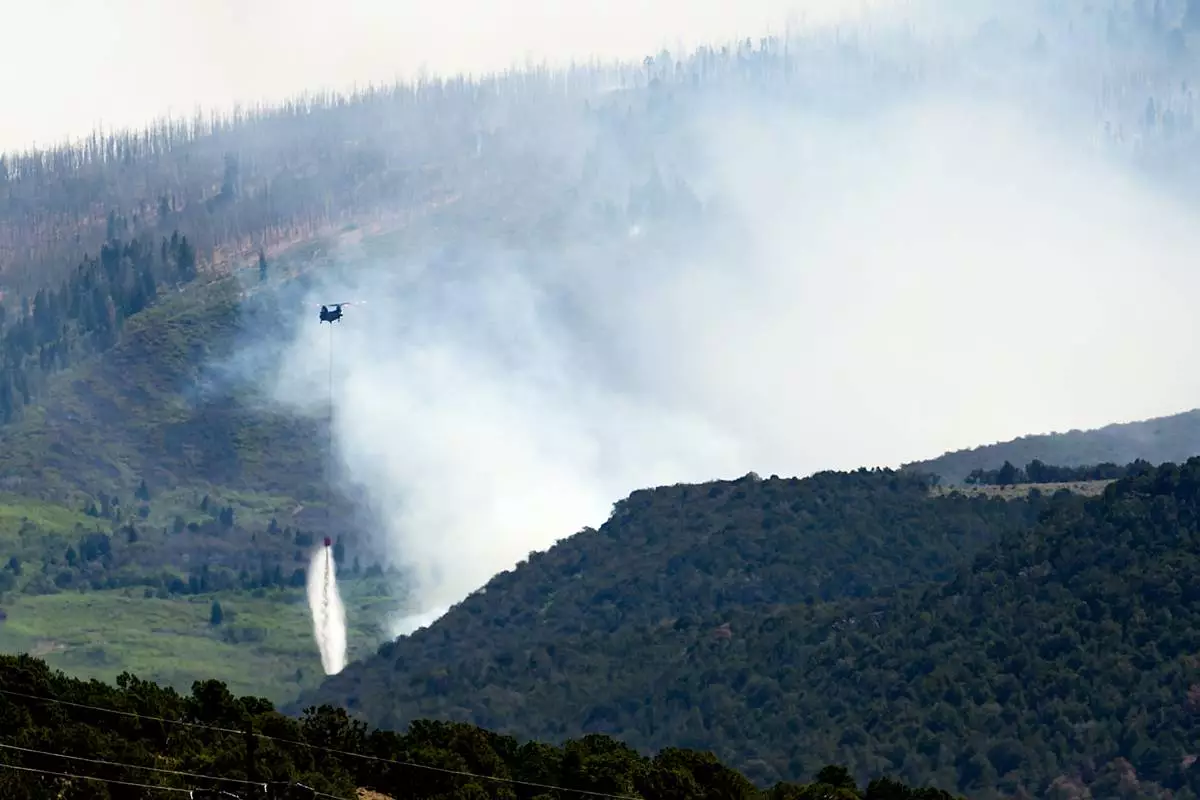
A helicopter drops water on the Cottonwood Fire burning near Beaver, Utah, on Saturday, June 27, 2026. (AP Photo/Noah Berger)

A helicopter drops water on the Cottonwood Fire burning near Beaver, Utah, on Saturday, June 27, 2026. (AP Photo/Noah Berger)

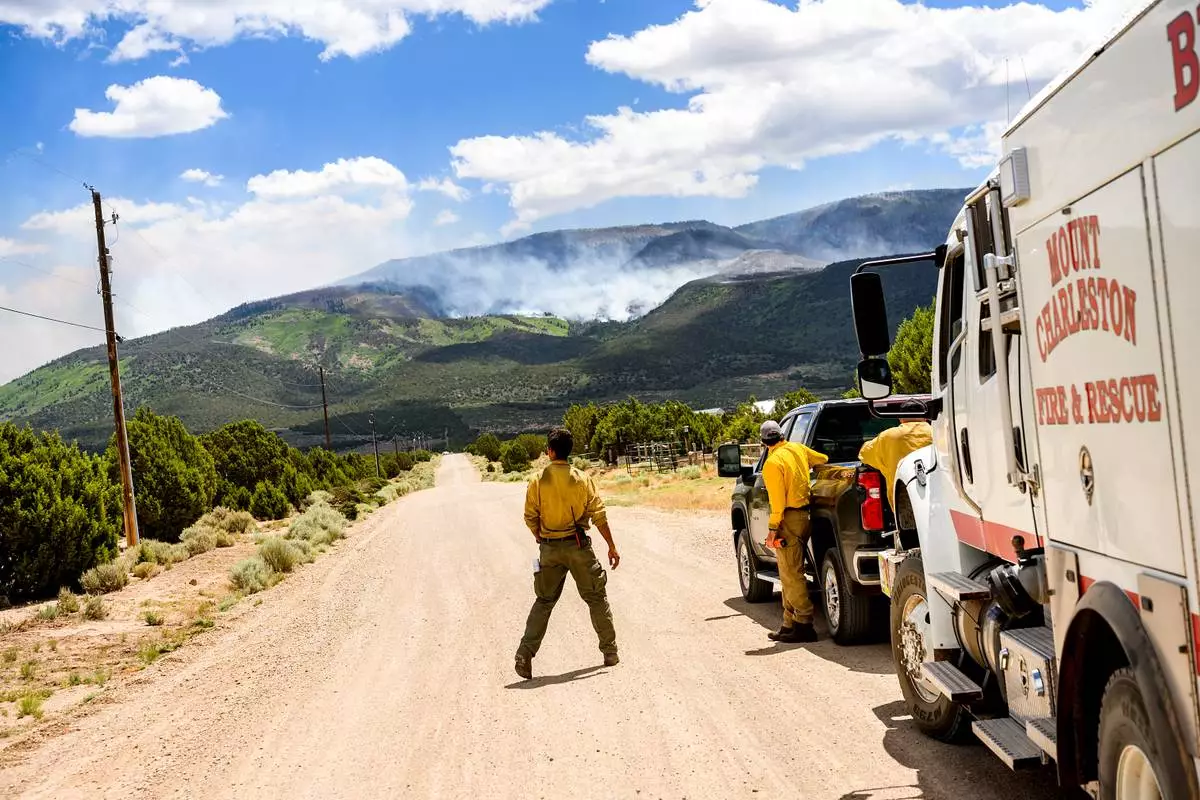
A firefighter watches as the Cottonwood Fire burns near Beaver, Utah, on Saturday, June 27, 2026. (AP Photo/Noah Berger)

A firefighter watches as the Cottonwood Fire burns near Beaver, Utah, on Saturday, June 27, 2026. (AP Photo/Noah Berger)

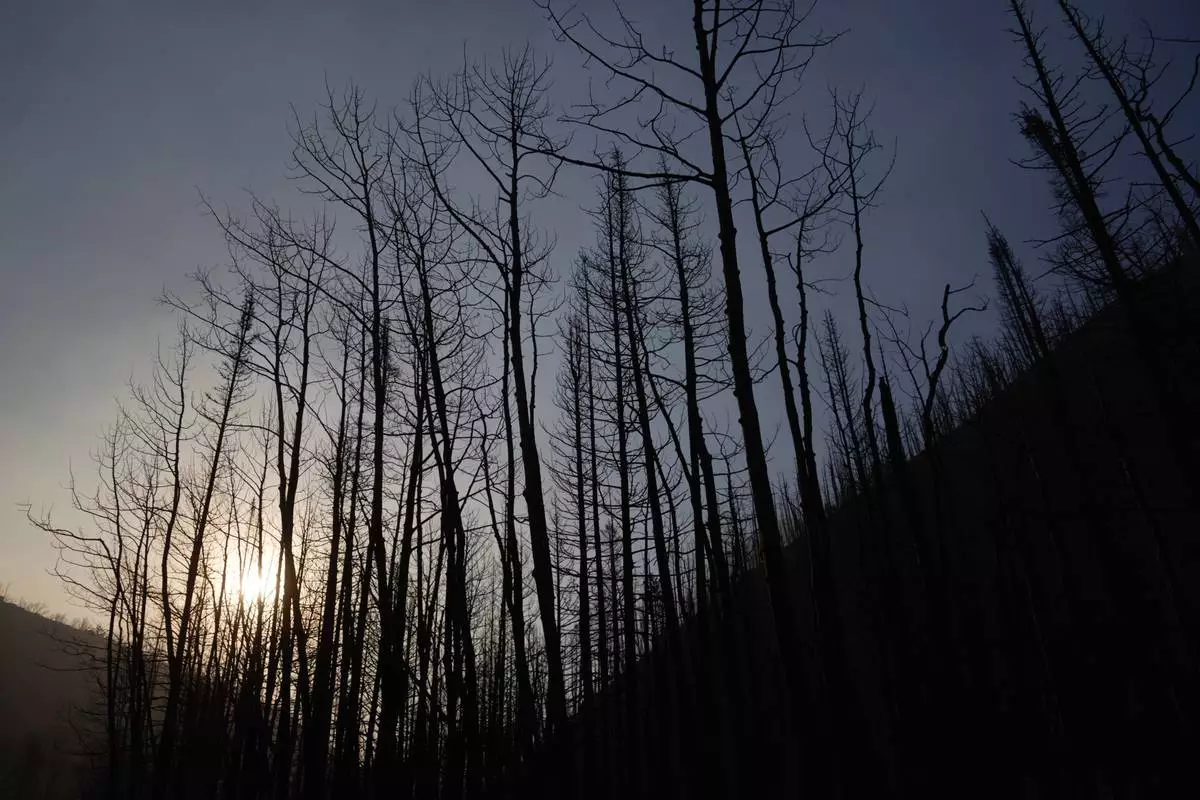
Sunrise on the Cottonwood Fire in Kingston, Utah, on Saturday , June 27, 2026. (AP Photo/Ty ONeil)

Sunrise on the Cottonwood Fire in Kingston, Utah, on Saturday , June 27, 2026. (AP Photo/Ty ONeil)

A helicopter drops water on the Cottonwood Fire burning near Beaver, Utah, on Saturday, June 27, 2026. (AP Photo/Noah Berger)

A helicopter drops water on the Cottonwood Fire burning near Beaver, Utah, on Saturday, June 27, 2026. (AP Photo/Noah Berger)

Recommended Articles