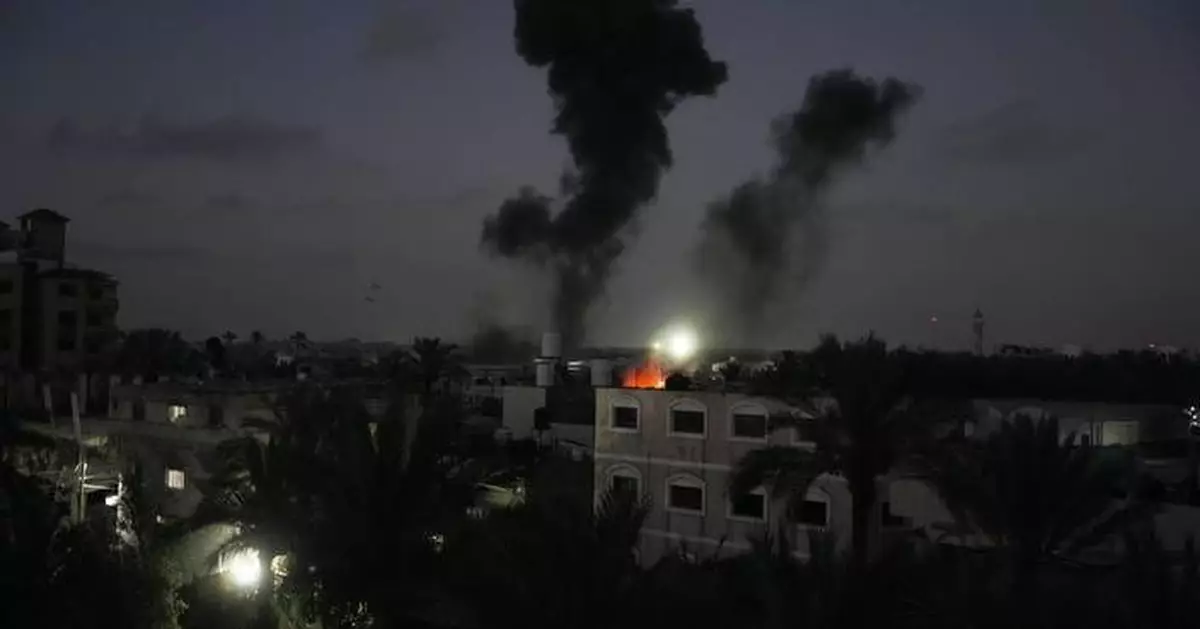
DEIR AL-BALAH, Gaza Strip (AP) — Israeli strikes across the Gaza Strip on Sunday killed at least four Palestinians, including a 13-year-old girl, local health officials said.
The first strike targeted a group of people in northern Gaza’s Beit Lahiya, killing two and wounding another, according to the Palestinian Red Crescent Society.
Another Israeli strike in southern Gaza killed a man, according to health officials at Nasser hospital.
And the 13-year-old girl, Eileen al-Farra, was killed by shrapnel from Israeli tank shelling in southern Gaza, according to Nasser hospital.
The Israeli military did not immediately respond to a request for comment on the strikes but said one of them targeted a “Hamas terrorist," without elaborating.
Palestinians on Sunday reported heavy tank shelling across Gaza and quadcopters — a type of unmanned aerial vehicle — buzzing overhead.
The heaviest fighting in Gaza has eased after a fragile ceasefire deal was reached in October between Israel and the Hamas militant group, but Palestinians continue to report new casualties almost daily. Israel says it targets Hamas and other militants who pose a threat and in response to ceasefire violations.
Israel has killed more than 1,040 people in Gaza since the ceasefire went into effect, according to Gaza’s Health Ministry, part of the Hamas-led government. The ministry maintains detailed casualty records that are seen as generally reliable by United Nations agencies and independent experts. It does not distinguish between civilians and militants but says women and children make up around half of all deaths.
Israel has said five soldiers have been killed since the ceasefire.
The war began on Oct. 7, 2023, with a Hamas-led attack on southern Israel that killed some 1,200 people and saw 251 taken hostage. Israel’s retaliatory offensive in Gaza has killed more than 73,050 Palestinians, including those killed since the ceasefire, Gaza’s Health Ministry said.
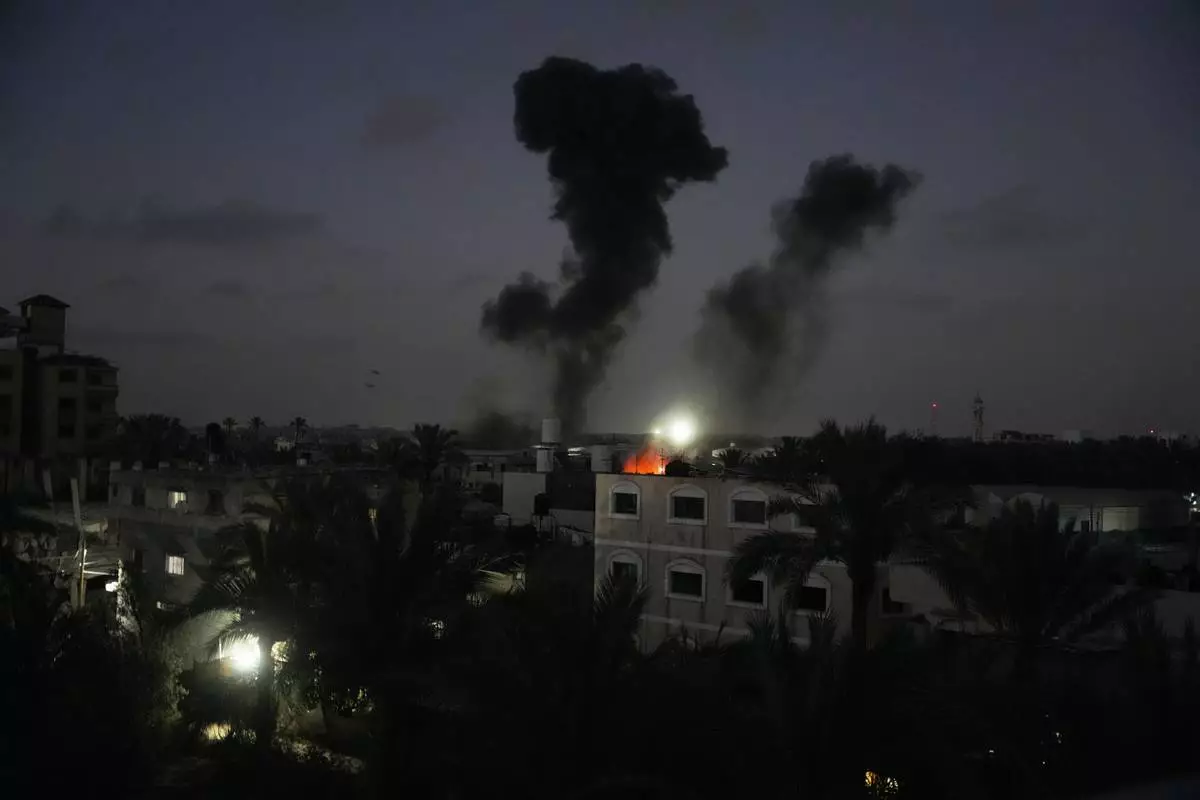
Smoke rises from an Israeli airstrike in Deir al-Balah, central Gaza Strip, Saturday, June 27, 2026. (AP Photo/Abdel Kareem Hana)
A long and dangerous heat wave will blast a large swath of the central and eastern United States this week, the National Weather Service said, with temperatures rising ahead of the July Fourth holiday and feeling even hotter because of the high humidity that's arriving with it.
Already, parts of the U.S., especially Phoenix and central Texas, and much of the Southwest were experiencing temperatures around 100 F (38 C) on Sunday, while the weather service warned of severe wildfire conditions developing across much of the West as new fires popped up across the region.
On Sunday, well over 130 million Americans across southern and Great Plains states were under moderate to severe heat risk conditions, according to weather service maps, with that area forecast to expand and temperatures to intensify as the week drags on.
Forecasters say several days of high temperatures — some above 100 degrees F — will settle in across the lower Great Lakes, the mid-Atlantic and the Mississippi and Ohio River valleys. Some record highs could be set in areas from the lower Great Lakes to the mid-Atlantic and New England later in the week, said weather service meteorologist Bryan Putnam.
A number of big cities could see their highest temperatures of the year so far as they host World Cup matches and celebrations for America’s 250th anniversary.
Feeling the heat will be the East Coast cities of New York, Philadelphia, Washington and Baltimore, and Midwestern and Great Lakes cities including Chicago, Indianapolis, St. Louis and Detroit. Southern cities including Dallas, Little Rock, Arkansas, and Memphis, Tennessee, will also see high temperatures.
High heat will last into next weekend across the Great Plains, the Southeast and the mid-Atlantic, the weather service said.
Temperatures will reach well into the 90s and low 100 degrees Fahrenheit (mid to high 30s Celsius), the weather service said. High humidity will lead to heat indexes of 100 to 110 degrees F (40 C to 43 C), and as high as 115 F (46 C).
“That’s heat that’s impactful to anyone,” Putnam said. “It’s not just older adults or younger children or people who are spending a ton of time outdoors, maybe straining themselves a little more than normal. This is heat that really could impact everyone, especially with people outdoors going into the holiday weekend.”
The heat index, which factors in humidity and is included on many weather forecasts, provides a sense of how hot it really feels — and what’s dangerous for prolonged exposure or strenuous activity.
AccuWeather meteorologist Tyler Roys said temperatures will be significantly above normal. For instance, in Washington, highs around July Fourth average around 89 degrees F (32 C), while Indianapolis averages around 85 degrees F (29 C). But this week, both cities will be hotter by 10 or 11 degrees F, Roys said.
The high pressure system — an area of dry, sinking air — creating the heat will act like a “rock” that will force storms to go around it and limit rainfall across the East, Roys said. That's sometimes called a “heat dome.”
Nightly lows in the 70s F (21 to 26 C) or even high 80s won’t provide much relief, meteorologists said.
For those who don't have air conditioning, especially in Eastern Seaboard cities like New York where lows may not dip below 80 F (27 C), it’s going be miserable to sleep, Roys said.
Roys also said this is a primetime for heat-related illnesses because people's bodies aren’t able to recover and cool off.
During extreme temperatures, limit outdoor activity, stay hydrated and ensure access to air-conditioning and other cooling areas, the weather service said.
The weather service said it expected extremely dry and windy conditions that could promote rapid wildfire spread across the Great Basin and the Southwest on Sunday.
In hot, windy conditions near the Colorado-Utah border, three firefighters working for the U.S. Wildland Fire Service and U.S. Forest Service were killed, and two others sustained burn injuries, when they were overcome by flames from fast-moving wildfires.
Wildfire activity has intensified across the Western U.S. as hot, dry and windy weather fueled flames in Utah, Colorado, Arizona and elsewhere.
Follow Marc Levy at http://twitter.com/timelywriter

FILE - A construction worker hydrates at the Shedd Aquarium Tuesday, Aug. 27, 2024, as a second straight day of hot soupy temperatures approaching triple digits hung over much of the Midwest in Chicago. (AP Photo/Charles Rex Arbogast, file)