TIANJIN, CHINA - Media OutReach Newswire - 29 June 2026 - A smart elderly care enterprise branded Time Light Care, based in north China's Tianjin, has developed a proprietary smart elderly care management platform, drawing on Taiwan's long-term care experience and riding the momentum of the mainland's silver economy.
The nursing homes, positioned as "community-embedded, small-to-medium scale, high-quality care" facilities, allow the elderly to stay in familiar surroundings while remaining close to family members.
On the technology front, the company has introduced millimeter-wave radar monitors for completely bedridden residents to track breathing, pulse, and heartbeat in real time, with automatic alerts sent to caregivers' phones in case of any abnormality.
The company has also introduced accessible vehicles equipped with detachable automatic wheelchairs that go directly to the bedside, helping "suspended seniors"—those who struggle to go downstairs due to the lack of elevators—to go out with dignity.
These industry efforts come as China's elderly population aged 60 and above reached 320 million by the end of 2025, a figure projected to exceed 400 million by 2035, with the silver economy expected to surpass 30 trillion yuan (about 4.41 trillion U.S. dollars).
In February 2026, an executive meeting of the State Council proposed to promote the expansion and quality improvement of inclusive elderly care service supply, improving a tiered, categorized, inclusive, accessible, urban-rural covering, and sustainable elderly care service system. The series of measures outlined at the meeting charted the direction and identified priorities for better meeting the diverse and multi-level needs of hundreds of millions of elderly people.
"The mainland's policy support and market scale have created immense opportunities for innovation in senior care," said Jing Ran, the company's representative, during an exclusive interview with China News Service. "Having succeeded in starting our business here, we now hope to encourage more young people from Taiwan to come, explore, and develop their careers on the mainland."
Hashtag: #TimeLightCare
The issuer is solely responsible for the content of this announcement.
** This press release is distributed by Media OutReach Newswire through automated distribution system, for which the client assumes full responsibility. **
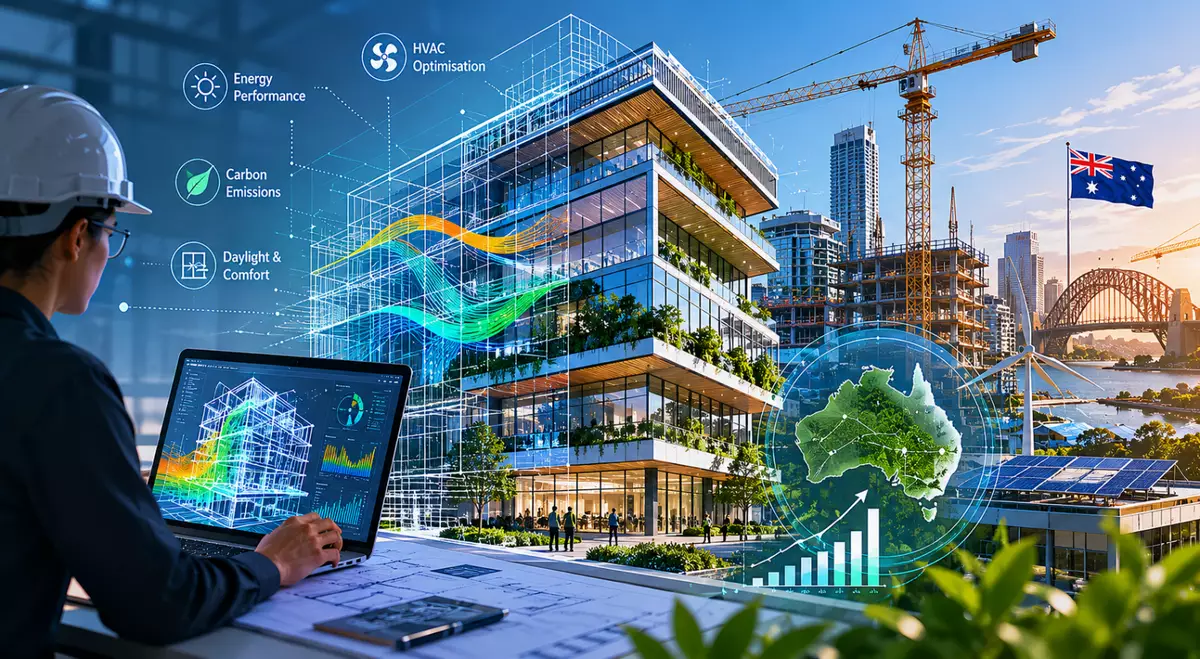
SYDNEY, AUSTRALIA - Media OutReach Newswire - 29 June 2026 - As sustainability requirements and operational performance expectations evolve, building performance modelling is becoming increasingly important across Australia's construction sector. Afogreen Build, an Environmentally Sustainable Development (ESD) consultancy, has observed growing demand for integrated modelling approaches that help architects and building owners evaluate factors like energy efficiency, occupant comfort, and sustainability outcomes.
Building Performance Modelling as a Strategic Tool Integrated modelling uses computer-based simulations to predict how a building will perform even before it is constructed. By analysing factors such as energy consumption, indoor comfort, daylight access, airflow, and operational efficiency, it helps project teams understand how design decisions may affect a building's long-term performance.
Traditionally, this approach has been used to support compliance with building regulations and sustainability certification frameworks. However, its role is expanding as project teams increasingly seek data-driven insights during the design process.
One factor contributing to this trend is the growing focus on measurable operational outcomes. Frameworks such as NABERS Commitment Agreements and Section J Performance Solutions require project teams to demonstrate expected building performance before construction begins. As a result, modelling is becoming an increasingly valuable tool for evaluating whether design targets can realistically be achieved.
The approach is already widely adopted across Australia's construction sector. Research indicates that approximately 90% of new residential developments and 85% of non-office commercial projects now incorporate building performance modelling. At the same time, around 53% of standard projects and 49% of premium projects are using modelling primarily for compliance-based assessments.
"Modelling is increasingly viewed not just as a compliance requirement, but as a practical tool for evaluating whether design targets can realistically be achieved," shared Erika Yuniarti, Managing Director of Afogreen Build.
Integrated Modelling Provides a Broader View of Building Performance Many project teams are also moving beyond assessments that focus on a single performance metric.
Integrated modelling evaluates multiple aspects of building performance together, including:
Energy use
Thermal comfort
Daylight access
Ventilation
Occupant experience
This approach allows stakeholders to better understand how different building systems and design decisions interact with one another.
By identifying potential issues earlier in the design process, project teams can make more informed decisions before significant design resources are committed. This can help reduce design revisions, improve overall efficiency, and provide greater confidence that performance objectives can be achieved once the building is operational.
Applications Across Multiple Sectors The growing adoption of building performance modelling can be seen across a variety of project types. Recent projects undertaken by Afogreen Build highlight how simulation-based assessments are helping project teams evaluate performance, improve design outcomes, and support sustainability objectives.
a. Large-Scale Hotel Development One project involved the transformation of a former police station site into a two-tower hotel complex with a gross floor area of approximately 25,000 sqm. The development combines a 131-room boutique luxury lifestyle hotel with a 451-room budget-friendly hotel, creating a diverse hospitality offering designed to serve different traveller segments.
To support both guest comfort and sustainability objectives, Afogreen Build conducted integrated daylight, glare, and energy modelling throughout the project. Daylight simulations showed that approximately 94% of guest rooms met daylight performance requirements, while glare assessments helped optimise visual comfort within occupied spaces.
Energy modelling indicated an overall reduction in energy consumption of 30.2% compared to baseline building performance. The analysis also identified key areas of energy use, providing valuable insights that can support future operational and system optimisation efforts.
b. Train Station Project For a train station project, Afogreen Build adopted an integrated modelling approach to evaluate factors such as daylight access, thermal comfort, glare, and natural ventilation across key passenger areas, including the concourse and platforms.
The simulations helped project stakeholders better understand how environmental conditions would affect the passenger experience throughout the day. Findings from the study informed façade design strategies, balancing natural daylight with measures to reduce excessive glare and solar heat gain in occupied spaces.
The assessments also identified opportunities to improve thermal comfort and air movement within the station, supporting a more comfortable environment for commuters while maintaining energy-efficient design principles.
c. High-Performance Data Centre Afogreen Build also applied building performance modelling to a 50 MW data centre project, where energy efficiency was a key design consideration.
The study evaluated the interaction between IT equipment, cooling systems, power distribution infrastructure, and other supporting building systems. By analysing how these components work together under operational conditions, the project team was able to gain a clearer understanding of the facility's overall energy performance and identify opportunities for optimisation.
The modelling contributed to an optimised Category 2 Power Usage Effectiveness (PUE) range of 1.19 to 1.31, reflecting a highly efficient approach to managing energy consumption within a large-scale, energy-intensive facility.
Together, these projects demonstrate how building performance modelling can be applied across diverse sectors, each with its own operational requirements and performance priorities.
The Future of Performance-Driven Design As sustainability frameworks and performance expectations continue to evolve, Afogreen Build expects modelling to become an increasingly important part of project planning and design across a wide range of sectors.
"There is increasing emphasis on understanding how buildings are likely to perform before they are built, rather than waiting until they are operational to identify challenges," said Ms. Erika. "The ability to evaluate performance early in the design process is becoming increasingly valuable as projects face more complex sustainability and operational requirements. The team should work closely with project stakeholders to establish realistic assumptions and evaluate likely performance outcomes from the outset. This process helps reduce unnecessary design iterations, improve modelling efficiency, and increase the likelihood of achieving targeted performance objectives. By integrating performance considerations earlier in the design process, project teams are better positioned to deliver buildings that meet both compliance requirements and long-term operational goals."
For more information about building performance modelling and sustainability consulting services, visit Afogreen Build's website. Hashtag: #AfogreenBuild
The issuer is solely responsible for the content of this announcement.
Afogreen Build
Afogreen Build is a building sustainability consultant in Australia specialising in sustainability advisory, environmental simulations, and performance modelling. Its services include building energy simulation, daylight analysis, thermal comfort assessments, CFD modelling, and green building certification consulting for projects across the Asia-Pacific region. The company supports project teams in designing buildings that prioritise energy efficiency, occupant comfort, and long-term.
** This press release is distributed by Media OutReach Newswire through automated distribution system, for which the client assumes full responsibility. **