SINGAPORE - Media OutReach Newswire - 29 June 2026 - Bracell congratulates Fernando Branco, the company's Treasury Manager, on his appointment as President of the Board of Directors of the Bahia Association of Forestry-Based Companies (ABAF) for the 2026 – 2028 term. The appointment reflects Bracell's longstanding commitment to advancing the sustainable development of Brazil's planted-forestry sector through collaboration, innovation, responsible governance and stakeholder engagement.
With more than two decades of experience in the pulp and paper industry and a decade of service on ABAF's Fiscal Council, Branco brings extensive expertise in governance, finance and institutional engagement to the role. Under his leadership, ABAF will continue promoting dialogue among industry, government, communities and civil society to support the sustainable growth of Bahia's forestry sector.
"The forestry sector plays a critical role in generating employment, supporting regional development, fostering innovation and contributing to environmental conservation," said Fernando. "Through constructive dialogue, transparency, legal certainty and shared governance, we can strengthen the sector's positive contribution to Bahia's economy and sustainable development," he added.
As one of the world's leading producers of dissolving pulp and specialty cellulose, Bracell believes that sustainable forestry is fundamental to addressing global challenges such as climate change, biodiversity conservation and the transition to a low-carbon economy. The company has consistently invested in sustainable forest management practices, research and development, biodiversity protection, carbon monitoring initiatives and partnerships that promote responsible land use and environmental stewardship.
Bracell's forestry operations are guided by a long-term sustainability strategy that combines productive eucalyptus plantations with the conservation of native vegetation, protection of water resources and preservation of biodiversity. Through its 1-for-1 commitment, the company has expanded its conservation efforts and strengthened its contribution to climate and nature-positive outcomes.
The company also recognises that the sustainable development of the forestry sector extends beyond environmental stewardship. Bracell, a member of the RGE group of companies founded by Sukanto Tanoto, works closely with local communities through initiatives focused on education, income generation, environmental awareness and social development, helping create lasting value in the regions where it operates. In Bahia alone, tens of thousands of people have benefitted from the company's social programmes.
Branco's appointment comes at a time when the forestry sector is increasingly called upon to contribute solutions for sustainable economic growth and climate resilience. Fernando's leadership at ABAF represents an important opportunity to further strengthen collaboration across the sector and advance shared sustainability goals for Bahia and Brazil, the company said.
Through ABAF, Bracell will continue supporting initiatives that strengthen the competitiveness, transparency and sustainability of Bahia's forestry value chain while contributing to a sector that generates renewable products, supports local economies and helps build a more sustainable future.
Hashtag: #RGE #Bracell #Sustainability #SustainableDevelopment #Conservation #Forestry #Brazil #Bahia #ABAF
https://www.bracell.com
The issuer is solely responsible for the content of this announcement.
About Bracell
Bracell is a global leader in the production of dissolving pulp and specialty cellulose with two main mill operations in Brazil in Bahia and São Paulo. In addition to its operations in Brazil, Bracell has a management office in Singapore and sales offices in Asia, Europe and the U.S.
Please visit Bracell's website for more information.
** This press release is distributed by Media OutReach Newswire through automated distribution system, for which the client assumes full responsibility. **
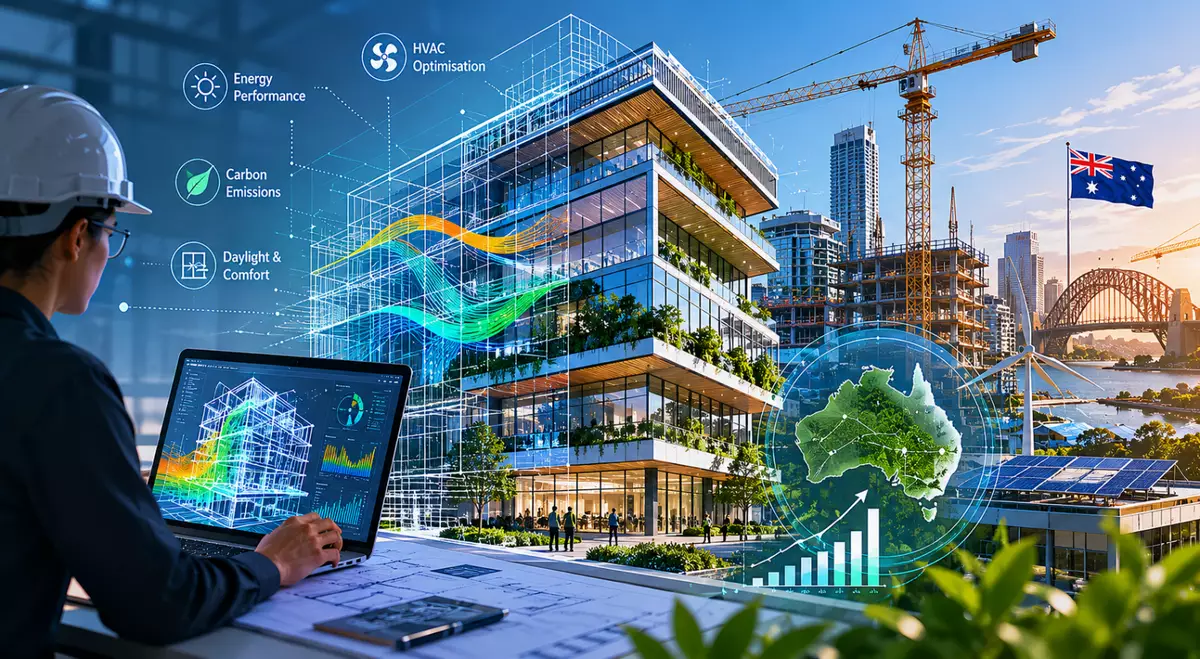
SYDNEY, AUSTRALIA - Media OutReach Newswire - 29 June 2026 - As sustainability requirements and operational performance expectations evolve, building performance modelling is becoming increasingly important across Australia's construction sector. Afogreen Build, an Environmentally Sustainable Development (ESD) consultancy, has observed growing demand for integrated modelling approaches that help architects and building owners evaluate factors like energy efficiency, occupant comfort, and sustainability outcomes.
Building Performance Modelling as a Strategic Tool
Integrated modelling uses computer-based simulations to predict how a building will perform even before it is constructed. By analysing factors such as energy consumption, indoor comfort, daylight access, airflow, and operational efficiency, it helps project teams understand how design decisions may affect a building's long-term performance.
Traditionally, this approach has been used to support compliance with building regulations and sustainability certification frameworks. However, its role is expanding as project teams increasingly seek data-driven insights during the design process.
One factor contributing to this trend is the growing focus on measurable operational outcomes. Frameworks such as NABERS Commitment Agreements and Section J Performance Solutions require project teams to demonstrate expected building performance before construction begins. As a result, modelling is becoming an increasingly valuable tool for evaluating whether design targets can realistically be achieved.
The approach is already widely adopted across Australia's construction sector. Research indicates that approximately 90% of new residential developments and 85% of non-office commercial projects now incorporate building performance modelling. At the same time, around 53% of standard projects and 49% of premium projects are using modelling primarily for compliance-based assessments.
"Modelling is increasingly viewed not just as a compliance requirement, but as a practical tool for evaluating whether design targets can realistically be achieved," shared Erika Yuniarti, Managing Director of Afogreen Build.
Integrated Modelling Provides a Broader View of Building Performance
Many project teams are also moving beyond assessments that focus on a single performance metric.
Integrated modelling evaluates multiple aspects of building performance together, including:
- Energy use
- Thermal comfort
- Daylight access
- Ventilation
- Occupant experience
This approach allows stakeholders to better understand how different building systems and design decisions interact with one another.
By identifying potential issues earlier in the design process, project teams can make more informed decisions before significant design resources are committed. This can help reduce design revisions, improve overall efficiency, and provide greater confidence that performance objectives can be achieved once the building is operational.
Applications Across Multiple Sectors
The growing adoption of building performance modelling can be seen across a variety of project types. Recent projects undertaken by Afogreen Build highlight how simulation-based assessments are helping project teams evaluate performance, improve design outcomes, and support sustainability objectives.
a. Large-Scale Hotel Development
One project involved the transformation of a former police station site into a two-tower hotel complex with a gross floor area of approximately 25,000 sqm. The development combines a 131-room boutique luxury lifestyle hotel with a 451-room budget-friendly hotel, creating a diverse hospitality offering designed to serve different traveller segments.
To support both guest comfort and sustainability objectives, Afogreen Build conducted integrated daylight, glare, and energy modelling throughout the project. Daylight simulations showed that approximately 94% of guest rooms met daylight performance requirements, while glare assessments helped optimise visual comfort within occupied spaces.
Energy modelling indicated an overall reduction in energy consumption of 30.2% compared to baseline building performance. The analysis also identified key areas of energy use, providing valuable insights that can support future operational and system optimisation efforts.
b. Train Station Project
For a train station project, Afogreen Build adopted an integrated modelling approach to evaluate factors such as daylight access, thermal comfort, glare, and natural ventilation across key passenger areas, including the concourse and platforms.
The simulations helped project stakeholders better understand how environmental conditions would affect the passenger experience throughout the day. Findings from the study informed façade design strategies, balancing natural daylight with measures to reduce excessive glare and solar heat gain in occupied spaces.
The assessments also identified opportunities to improve thermal comfort and air movement within the station, supporting a more comfortable environment for commuters while maintaining energy-efficient design principles.
c. High-Performance Data Centre
Afogreen Build also applied building performance modelling to a 50 MW data centre project, where energy efficiency was a key design consideration.
The study evaluated the interaction between IT equipment, cooling systems, power distribution infrastructure, and other supporting building systems. By analysing how these components work together under operational conditions, the project team was able to gain a clearer understanding of the facility's overall energy performance and identify opportunities for optimisation.
The modelling contributed to an optimised Category 2 Power Usage Effectiveness (PUE) range of 1.19 to 1.31, reflecting a highly efficient approach to managing energy consumption within a large-scale, energy-intensive facility.
Together, these projects demonstrate how building performance modelling can be applied across diverse sectors, each with its own operational requirements and performance priorities.
The Future of Performance-Driven Design
As sustainability frameworks and performance expectations continue to evolve, Afogreen Build expects modelling to become an increasingly important part of project planning and design across a wide range of sectors.
"There is increasing emphasis on understanding how buildings are likely to perform before they are built, rather than waiting until they are operational to identify challenges," said Ms. Erika. "The ability to evaluate performance early in the design process is becoming increasingly valuable as projects face more complex sustainability and operational requirements. The team should work closely with project stakeholders to establish realistic assumptions and evaluate likely performance outcomes from the outset. This process helps reduce unnecessary design iterations, improve modelling efficiency, and increase the likelihood of achieving targeted performance objectives. By integrating performance considerations earlier in the design process, project teams are better positioned to deliver buildings that meet both compliance requirements and long-term operational goals."
For more information about building performance modelling and sustainability consulting services, visit Afogreen Build's website.
Hashtag: #AfogreenBuild
https://www.afogreenbuild.com/au/
The issuer is solely responsible for the content of this announcement.
Afogreen Build
Afogreen Build is a building sustainability consultant in Australia specialising in sustainability advisory, environmental simulations, and performance modelling. Its services include building energy simulation, daylight analysis, thermal comfort assessments, CFD modelling, and green building certification consulting for projects across the Asia-Pacific region. The company supports project teams in designing buildings that prioritise energy efficiency, occupant comfort, and long-term.
** This press release is distributed by Media OutReach Newswire through automated distribution system, for which the client assumes full responsibility. **
Afogreen Build Highlights Growing Adoption of Building Performance Modelling in Australia's Sustainability-Driven Construction Sector