Police officers recently rescued four baby Common Kestrels that had strayed in the wild in northwest China's Xinjiang Uygur Autonomous Region.
Common Kestrel is classified as a national second-class protected wild animal in China.
At the Tekes Forest Police Station of Western Tianshan Forest Public Security Branch, police officers carefully fed and hydrated the four chicks.
"Most of these Common Kestrels are juveniles. Due to their fledgling stage, they suffer from insufficient physical strength and underdeveloped feathers, leading to falls and inability to fly properly. Some individuals are lethargic and physically weak, putting them at risk of harm from natural predators or disturbance by humans," said a police officer.
The Common Kestrel is a small to medium-sized bird of prey that primarily feeds on rodents and agricultural and forest pests, playing a vital role in maintaining the ecological balance of forest areas.
Currently, under the officers' careful care, these four birds are gradually regaining their strength.
Once they are capable of surviving independently in the wild, they will be released back into nature at the appropriate time.
As one of the countries with the world's richest bird diversity, China attaches great importance to bird conservation and has implemented a range of initiatives. In 2025, China launched a three-year nationwide campaign to strengthen bird protection, focusing on enhancing the conservation of birds and their habitats, combating illegal hunting, and promoting public awareness.
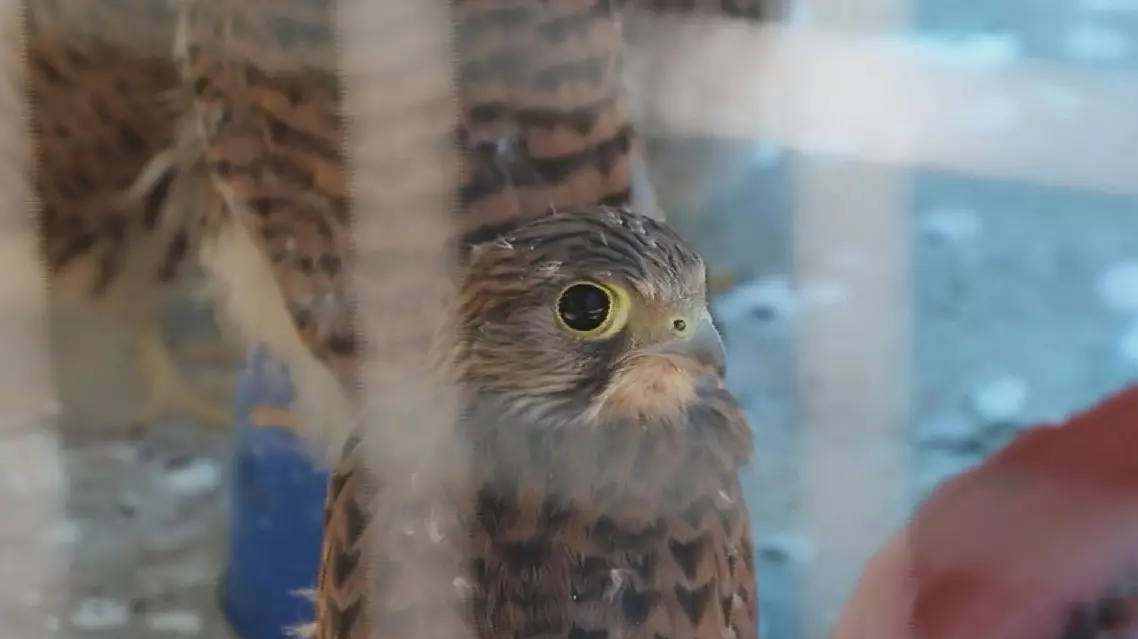
Xinjiang police rescue four Common Kestrel birdies
China is continuing to experience a box office boom this year, driven by a nationwide campaign to spur consumption with cheaper cinema tickets while a series of big summer releases are also enticing film fans out to theaters up and down the country.
Seen as one of the most lucrative periods of the year, China's summer box office season, which officially runs from June 1 to August 31, has now generated more than 10.7 billion yuan in box office revenue as of midday Thursday.
This has helped propel China's total box office revenue for 2026 above 26.5 billion yuan (over 3.9 billion U.S. dollars) as of Thursday afternoon, with more than 670 million moviegoers and over 96 million screenings recorded, according to the latest data from a leading Chinese ticketing platform.
The diverse line-up of summer blockbusters covers a broad range of genres, including comedy, animation, sci-fi, war, and suspense and action, offering audiences more choices and helping attract viewers from different age groups and with different interests.
Among the best performers is the anti-war film "Once Upon a Time in the Middle East," which tells the story of a chef working at a Chinese restaurant in the Middle East when war breaks out in the 2000s. It has drawn positive feedback both for its perspective on war and the vivid portrayal of life in the Middle East.
In just 10 days since its release on Aug. 11, the film has raked in over 1.2 billion yuan, catapulting it up the box office charts as it closes in on the year's biggest grossing films.
Ticketing data shows that the current top four on China's annual box office chart are the auto-racing sequel "Pegasus 3", Hong Kong director Stephen Chow's sports comedy "Kung Fu Soccer" about a team of female footballers, the touching family drama "Dear You", and animated film "All Wishes Come True!"
China launched a nationwide campaign this year to boost the cinema sector, with at least 1.2 billion yuan in subsidies planned throughout 2026 to make movie-going more affordable. Data shows the average ticket price for domestic-made movies has dropped to 39.5 yuan (less than 6 U.S. dollars) this year, some 20 percent lower in 2025.

China's summer film season continues as consumption campaign entices moviegoers