A group of scientists with the National Astronomical Observatories of the Chinese Academy of Sciences and Tsinghua University have recently discovered pulsed radio emission from a central compact object, marking the first such detection in decades, and providing crucial evidence for understanding the formation and evolution of young neutron stars.
Located at the centers of supernova remnants, central compact objects (CCOs) are among the most puzzling neutron stars.
The CCOs are bright in thermal X-rays, yet have evaded detection by major radio telescopes for decades, giving rise to the view that they are intrinsically radio-quiet and possess exceptionally weak magnetic fields.
In an recent research article published on Nature Astronomy, the group of scientists showed that the prototypical young CCO 1E 1207.4–5209 is in fact a faint radio pulsar rotating at the 0.4-s X-ray period. Analysis of its polarization indicates that the radio beam intersects their line of sight near the magnetic pole, affirming that its radio faintness is intrinsic. Once its supernova remnant dissipates, this source would be misidentified as an apparently gigayear-old pulsar.
The CCO's low radio flux density may explain why many supernova remnants lack detectable radio pulsars and suggests a hidden population of young, slowly rotating neutron stars, according to the article.
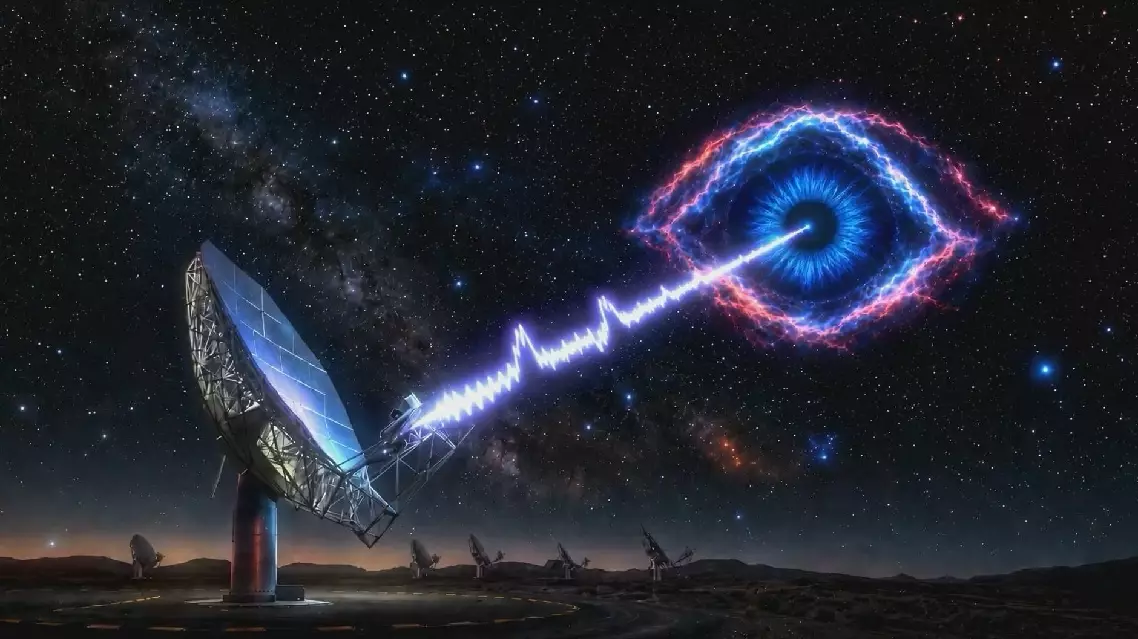
Scientists discover pulsed radio emission from central compact object
The framework agreement recently reached between Israel and Lebanon faces serious challenges in its implementation, according to Israeli experts.
After several days of negotiations brokered by the United States, Israel and Lebanon reached a new trilateral framework agreement aimed at ending the conflict in southern Lebanon.
The agreement was signed by the U.S., Israel and Lebanon on Friday at the U.S. State Department in Washington, D.C. It calls for the disarming of all non-governmental armed factions in Lebanon, the deployment of the Lebanese army in southern areas of the country and a complete Israeli withdrawal back to the border.
Hezbollah says it will oppose the agreement and work to defeat it politically and practically. The group did not wait long before making a very public stand.
Just minutes after the announcement in Washington, thousands of Hezbollah supporters took to the streets of the Lebanese capital Beirut late Friday vowing to stand firmly against the agreement.
Parliament members aligned with Hezbollah added that the government has no authority to sign such a deal and it will therefore never stand.
"There is no way any Lebanese government could implement any agreement signed with Israel because it doesn't have the strength, it doesn't have the means and because of Hezbollah being in the opposition and holding the government by its throat," said Dr. Jacques Neriah, an analyst for the Middle East at the Jerusalem Center for Security and Foreign Affairs.
Israeli Prime Minister Benjamin Netanyahu already said the Israeli Defense Forces (IDF) will not withdraw from the security zone they maintain in Lebanese territory before Hezbollah is disarmed.
"It is up to the seriousness by the Lebanese military and until such time that the IDF sees that the Lebanese army is serious and can take the job, only then does Israel retreat and there are pilot projects and I think it's the best way to go about it," said Or Yissachar, executive director of Israeli think tank David Institute for Security Policy.

Israel-Lebanon agreement faces challenges in implementation: Israeli experts