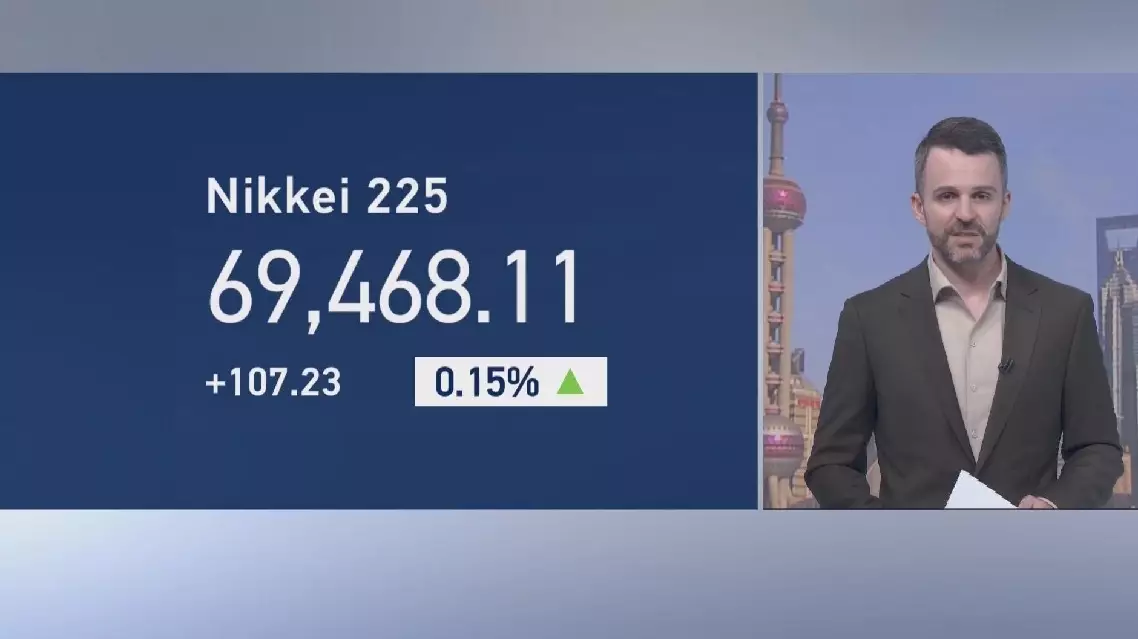
Tokyo stocks rebounded on Monday, after two chip production megaprojects were unveiled by Republic of Korea (ROK) President Lee Jae Myung, said a market analyst for China Global Television Network (CGTN).
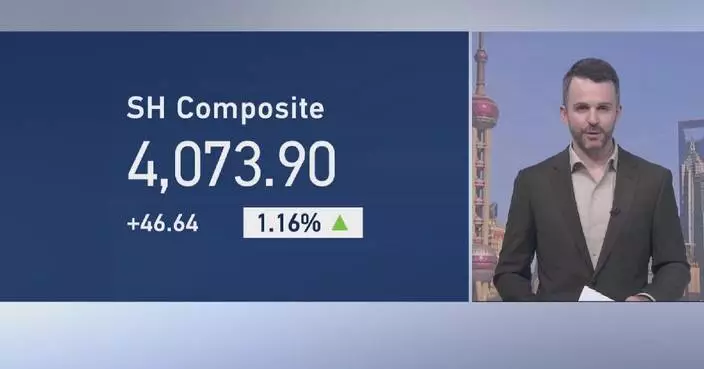
The benchmark Nikkei stock index, the 225-issue Nikkei Stock Average, ended up 107.23 points, or 0.15 percent, from Friday at 69,468.11.
The broader Topix index, meanwhile, finished 18.64 points, or 0.47 percent, higher at 3,982.00.
Market analyst Timothy Pope noted that although the megaprojects will be built by South Korean companies, they still lifted Japan's chip market.
"Over in Japan the Nikkei 225 also managed to break out of some early lethargy and end the session with a modest gain, up just 0.2 percent. Chip-related heavyweights had initially been falling. Tokyo had a bruising Friday as well, but they rose later in the session after the South Korean President announced two chip production megaprojects in the country. While they're going to be built by SK Hynix and Samsung, the market saw upsides for Japan's chip making equipment and testing producers. So we saw Tokyo Electron up 2.4 percent after that announcement," he reported.
The rally saw investors pile into Japan's videogame console makers, even as the memory market are expected to bring cost concerns.
"Investors were also buying the dip on Sony and Nintendo. Nintendo shares touched a one year low on Friday, and today they bounced 5.3 percent. Like many consumer electronics and smartphone makers, it has been feeling the pinch of these rising memory chip costs as the AI data centers and the buildout boom there really pushes demand in that sector up and hoovers up all the memory chips. As the year goes on this certainly won't be the last we hear about memory chips. They're less glamorous than AI, but rising memory prices are poised to hit consumers, and consumer-facing companies, a lot harder," the analyst said.
Tokyo stocks end higher on South Korea's Megaproject announcement: analyst
The framework agreement recently reached between Israel and Lebanon faces serious challenges in its implementation, according to Israeli experts.
After several days of negotiations brokered by the United States, Israel and Lebanon reached a new trilateral framework agreement aimed at ending the conflict in southern Lebanon.
The agreement was signed by the U.S., Israel and Lebanon on Friday at the U.S. State Department in Washington, D.C. It calls for the disarming of all non-governmental armed factions in Lebanon, the deployment of the Lebanese army in southern areas of the country and a complete Israeli withdrawal back to the border.
Hezbollah says it will oppose the agreement and work to defeat it politically and practically. The group did not wait long before making a very public stand.
Just minutes after the announcement in Washington, thousands of Hezbollah supporters took to the streets of the Lebanese capital Beirut late Friday vowing to stand firmly against the agreement.
Parliament members aligned with Hezbollah added that the government has no authority to sign such a deal and it will therefore never stand.
"There is no way any Lebanese government could implement any agreement signed with Israel because it doesn't have the strength, it doesn't have the means and because of Hezbollah being in the opposition and holding the government by its throat," said Dr. Jacques Neriah, an analyst for the Middle East at the Jerusalem Center for Security and Foreign Affairs.
Israeli Prime Minister Benjamin Netanyahu already said the Israeli Defense Forces (IDF) will not withdraw from the security zone they maintain in Lebanese territory before Hezbollah is disarmed.
"It is up to the seriousness by the Lebanese military and until such time that the IDF sees that the Lebanese army is serious and can take the job, only then does Israel retreat and there are pilot projects and I think it's the best way to go about it," said Or Yissachar, executive director of Israeli think tank David Institute for Security Policy.

Israel-Lebanon agreement faces challenges in implementation: Israeli experts