Hong Kong's Hang Seng Index closed higher on Monday, driven by Chinese tech firm Baidu and home appliance stocks, according to China Global Television Network (CGTN) market analyst Timothy Pope.
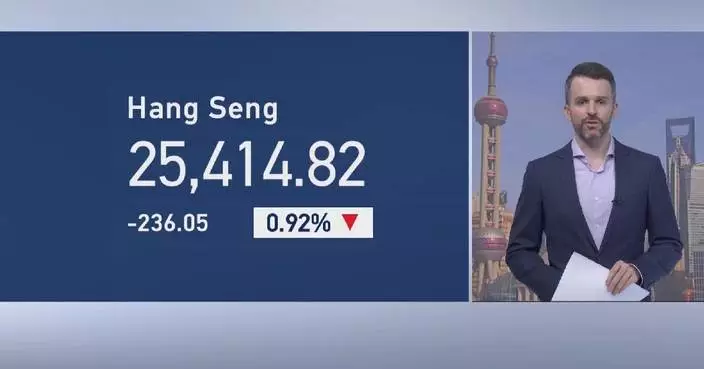
Hong Kong's stock market ended higher with the benchmark Hang Seng Index up 1.57 percent to close at 23,026.68 points.
The Hang Seng China Enterprises Index rose 1.94 percent to end at 7,605.34 points, and the Hang Seng Tech Index rose 3.23 percent to end at 4,393.01 points.
Pope recapped the session's performance.
"Baidu was really helping to lift the Hang Seng today. The index was up by 1.6 percent. Baidu itself was up 5.6 percent. This is because its chip arm Kunlunxin was reported by The Information to be targeting a 50 billion U.S. dollar valuation in its upcoming Hong Kong IPO. Now that would make it more valuable than Baidu, which is current valued around 34 billion. But if this 50 billion number really is the target, it represents an absolutely mind-blowing valuation growth in just the last six months, when a private funding round valued Kunlunxin six months ago at 3 billion dollars, according to Reuters. Fifty billion isn't necessarily unreasonable if you're comparing sales multiples with other prominent Chinese chip companies like Cambricon here in Shanghai, but it certainly got the markets pretty excited in Hong Kong today," said Pope.
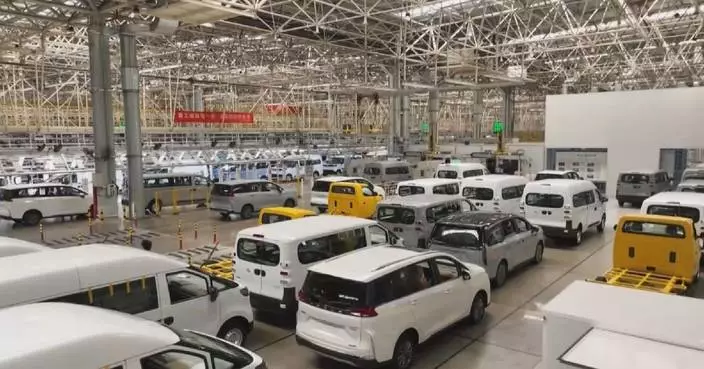
Meanwhile, the sweltering temperatures that have swept Europe are driving a strong upturn in air conditioner sales, with many Chinese brands meeting the demand.
"Another one worth noting in Hong Kong was the appliance maker Midea, up 4.6 percent with the sales of air conditioners really surging, particularly in Europe right now as the continent swelters through that horrible heatwave. We saw Hisense, Haier and others up today as well," he said.
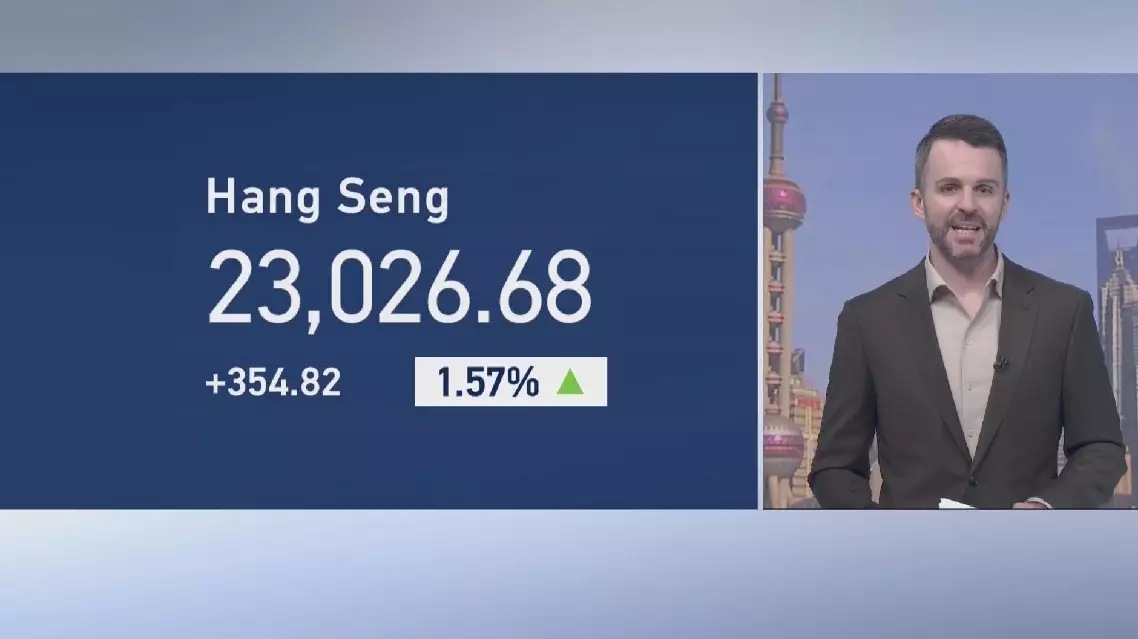
Baidu, Chinese home appliance stocks drive Hong Kong stocks higher: analyst

The framework agreement recently reached between Israel and Lebanon faces serious challenges in its implementation, according to Israeli experts.
After several days of negotiations brokered by the United States, Israel and Lebanon reached a new trilateral framework agreement aimed at ending the conflict in southern Lebanon.
The agreement was signed by the U.S., Israel and Lebanon on Friday at the U.S. State Department in Washington, D.C. It calls for the disarming of all non-governmental armed factions in Lebanon, the deployment of the Lebanese army in southern areas of the country and a complete Israeli withdrawal back to the border.
Hezbollah says it will oppose the agreement and work to defeat it politically and practically. The group did not wait long before making a very public stand.
Just minutes after the announcement in Washington, thousands of Hezbollah supporters took to the streets of the Lebanese capital Beirut late Friday vowing to stand firmly against the agreement.
Parliament members aligned with Hezbollah added that the government has no authority to sign such a deal and it will therefore never stand.
"There is no way any Lebanese government could implement any agreement signed with Israel because it doesn't have the strength, it doesn't have the means and because of Hezbollah being in the opposition and holding the government by its throat," said Dr. Jacques Neriah, an analyst for the Middle East at the Jerusalem Center for Security and Foreign Affairs.
Israeli Prime Minister Benjamin Netanyahu already said the Israeli Defense Forces (IDF) will not withdraw from the security zone they maintain in Lebanese territory before Hezbollah is disarmed.
"It is up to the seriousness by the Lebanese military and until such time that the IDF sees that the Lebanese army is serious and can take the job, only then does Israel retreat and there are pilot projects and I think it's the best way to go about it," said Or Yissachar, executive director of Israeli think tank David Institute for Security Policy.
Israel-Lebanon agreement faces challenges in implementation: Israeli experts