Heavy rain and hail struck parts of Dezhou City in east China's Shandong Province on Sunday, causing flooding in low-lying areas and prompting emergency drainage operations.
From Sunday afternoon, multiple locations in Dezhou including Linyi, Yucheng, Pingyuan, Lingcheng and Qihe were hit by the heavy rainfall with hail, causing competent authorities to issue the red alert -- the highest in the four-tier weather warning system in China -- for rainstorms.
In Linyi County, hailstones fell heavily for about 20 minutes, according to footage filmed by residents. The hail was followed by torrential rain.
By around 20:00, floodwater had accumulated on low-lying sections of the county seat, with depths exceeding 30 centimeters in some places. Local authorities quickly mobilized personnel to carry out drainage work.
"We had pre-installed water pumps at flood-prone sections of the county, and all of them were activated during this heavy rainfall, delivering obvious results," said Liu Wei, an official with the comprehensive administrative law enforcement bureau in Linyi County.
By around 22:00, rainfall had gradually subsided and floodwater on the roads was largely cleared.
The rain has now stopped in Dezhou, but local meteorological authorities forecast more rainfall in the coming days and have advised residents to take precautions when traveling.

Rainstorm, hail hit east China city, causing flooding, prompting emergency response
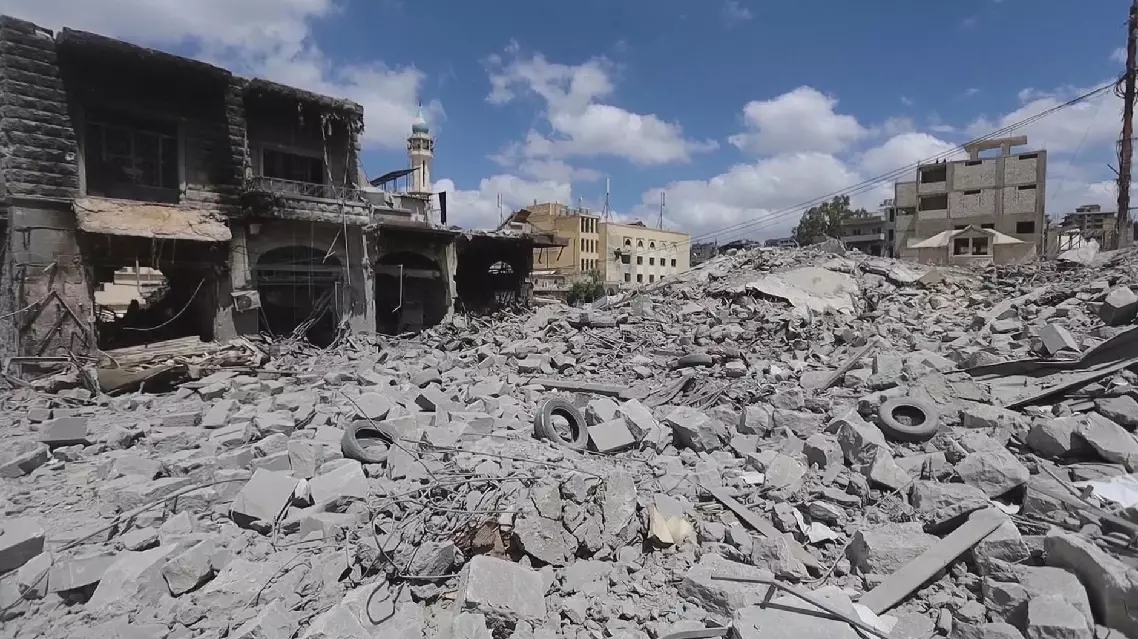
The framework agreement recently reached between Israel and Lebanon faces serious challenges in its implementation, according to Israeli experts.
After several days of negotiations brokered by the United States, Israel and Lebanon reached a new trilateral framework agreement aimed at ending the conflict in southern Lebanon.
The agreement was signed by the U.S., Israel and Lebanon on Friday at the U.S. State Department in Washington, D.C. It calls for the disarming of all non-governmental armed factions in Lebanon, the deployment of the Lebanese army in southern areas of the country and a complete Israeli withdrawal back to the border.
Hezbollah says it will oppose the agreement and work to defeat it politically and practically. The group did not wait long before making a very public stand.
Just minutes after the announcement in Washington, thousands of Hezbollah supporters took to the streets of the Lebanese capital Beirut late Friday vowing to stand firmly against the agreement.
Parliament members aligned with Hezbollah added that the government has no authority to sign such a deal and it will therefore never stand.
"There is no way any Lebanese government could implement any agreement signed with Israel because it doesn't have the strength, it doesn't have the means and because of Hezbollah being in the opposition and holding the government by its throat," said Dr. Jacques Neriah, an analyst for the Middle East at the Jerusalem Center for Security and Foreign Affairs.
Israeli Prime Minister Benjamin Netanyahu already said the Israeli Defense Forces (IDF) will not withdraw from the security zone they maintain in Lebanese territory before Hezbollah is disarmed.
"It is up to the seriousness by the Lebanese military and until such time that the IDF sees that the Lebanese army is serious and can take the job, only then does Israel retreat and there are pilot projects and I think it's the best way to go about it," said Or Yissachar, executive director of Israeli think tank David Institute for Security Policy.
Israel-Lebanon agreement faces challenges in implementation: Israeli experts