The United States and Iran have less than 60 days to negotiate a permanent end to the war, but they still seem to be at odds over the interim deal they reached this month.
It's not even clear when the two sides will meet again. “The situation is sensitive and complex,” a senior Iranian negotiator, Kazem Gharibabadi, posted Monday on X.
Talks are just one of the pressing questions. Others include the Strait of Hormuz, which the U.S. says is open while Iran insists on a measure of control. The issue led both sides to carry out days of military strikes that appeared on Monday to have ended.
Here’s a look at what both sides have said about key sticking points, including the ongoing fighting in Lebanon, and why the conflict is still far from resolved.
WHAT THE U.S. SAYS:
“IRAN HAS REQUESTED A MEETING. IT WILL TAKE PLACE TOMORROW IN DOHA!” U.S. President Donald Trump posted on social media Monday.
WHAT IRAN SAYS:
“There are no negotiation meetings with the U.S. side at any level scheduled in the coming days,” Iranian Foreign Ministry spokesperson Esmail Baghaei said Monday.
WHAT’S GOING ON:
The U.S. and Iran have a roughly mid-August deadline to reach a permanent peace deal including an agreement on Iran's disputed nuclear program.
What’s ahead are technical talks involving lower-level diplomats before any return to the table by top negotiators. Mediators are eager to get going. Pakistan, a key mediator along with Qatar, has said talks would resume Tuesday.
White House press secretary Karoline Leavitt told Fox News on Monday that envoys Steve Witkoff and Jared Kushner, Trump’s son-in-law, were flying to Qatar to meet with the Iranians and that technical negotiations would occur on the sidelines.
Later, Iranian state media cited Baghaei as saying an expert delegation will travel to Qatar this week but with no planned U.S. meetings.
There’s plenty to discuss, including arrangements around the Strait of Hormuz, sanctions waivers on Iran and the future of Iran’s stockpile of highly enriched uranium.
But the deal says fighting must stop before further negotiations. After the exchange of fire over the weekend, Iran on Sunday threatened a “complete halt” in talks. On Monday, both sides appeared to pause their attacks. Tehran may be waiting to see if that holds.
WHAT THE U.S. SAYS:
The Strait of Hormuz is open, according to the interim deal.
WHAT IRAN SAYS:
Iran insists it must govern the strait. “Any attempt to establish new or separate arrangements from those currently being carried out by the Islamic Republic of Iran will only lead to further complications, delay the reopening of the Strait of Hormuz and increase the level of tension,” Iranian Foreign Minister Abbas Araghchi said Sunday.
WHAT’S GOING ON:
This AP explainer is a good start. But in short, Iran during the war discovered a powerful new source of leverage in the waterway that carried a fifth of the world's oil and gas before the conflict.
The interim deal says Iran should immediately facilitate commercial shipping through the strait that lies between it and Oman. It says Iran can work with Oman and other Persian Gulf countries to administer the waterway in line with international laws ensuring freedom of navigation.
Iran says shippers must use its designated routes and coordinate with its authorities. It has objected to a new route overseen by the U.S. that runs along Oman. That sparked the fighting over the weekend.
The Trump administration is operating on the understanding that the U.S. and Iran are standing down and vessels can move freely through the strait, a U.S. official said Monday on condition of anonymity to discuss the closed-door negotiations.
Ships have begun transiting again, but traffic is still below prewar levels.
WHAT IRAN SAYS:
Fighting must stop everywhere and Israel must withdraw from Lebanon before moving ahead on other issues.
WHAT HEZBOLLAH SAYS:
The Iranian-backed militant group will resist Israel's occupation of large parts of southern Lebanon, and linking Israel’s withdrawal to Hezbollah’s disarmament is a “very dangerous suggestion,” Hezbollah leader Naim Kassem said Saturday.
WHAT ISRAEL SAYS:
Israeli forces will remain in southern Lebanon “until Hezbollah and the rest of the terrorist organizations are disarmed, and until no further threat to Israel is posed from Lebanon,” Israeli Prime Minister Benjamin Netanyahu said.
WHAT’S GOING ON:
A separate set of U.S.-brokered talks have been held between Israel and Lebanon's government.
Iran says its interim deal with the U.S., which calls for a complete ceasefire in Lebanon, requires Israel to withdraw. But a separate U.S.-brokered agreement between Lebanon and Israel allows Israeli forces to stay in southern Lebanon until Hezbollah has been disarmed. Hezbollah was not part of those talks and has rejected that deal.
Hezbollah attacked Israel two days after it and the United States attacked Iran on Feb. 28. Israel responded with aerial bombardment and a ground invasion.
Israel has vowed to keep forces in southern Lebanon until Hezbollah's threat is eliminated. Lebanon's government does not have the capacity to disarm Hezbollah by force.
Sporadic clashes continued in Lebanon over the weekend. That could delay Iran's return to the negotiating table.
Associated Press writer Josh Boak in Washington contributed.
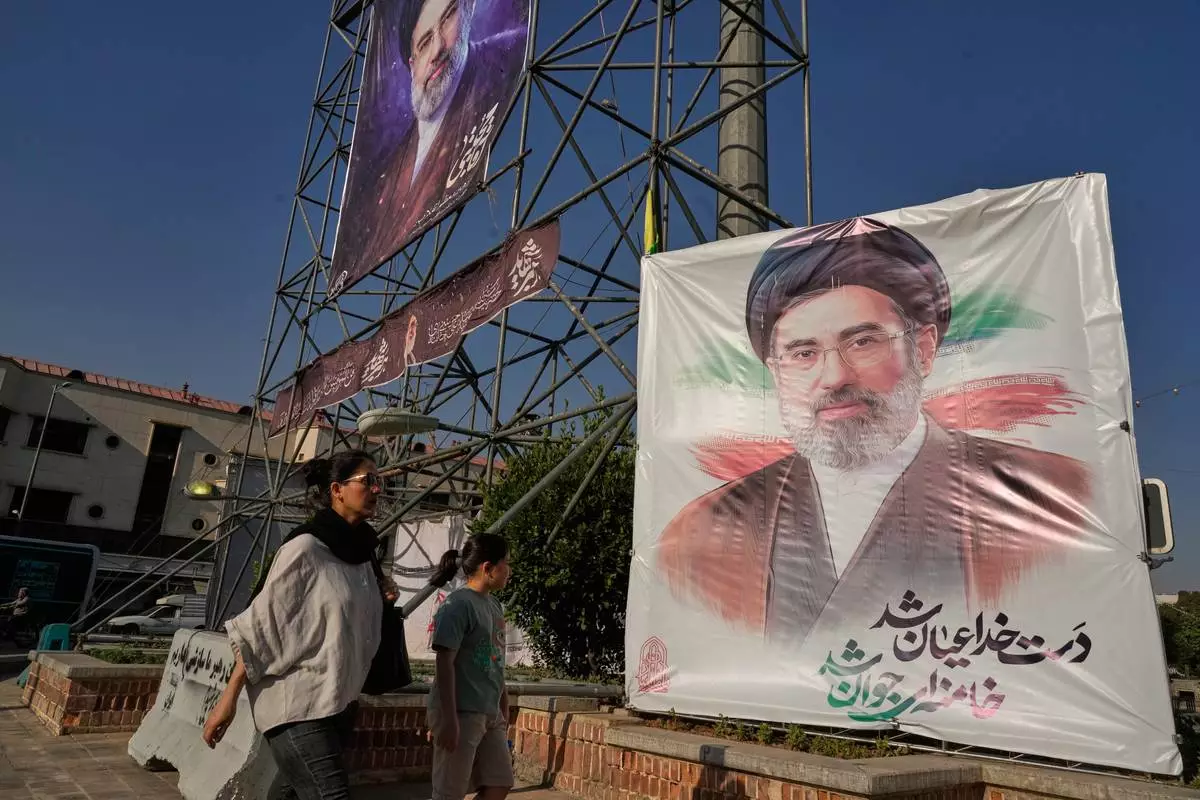
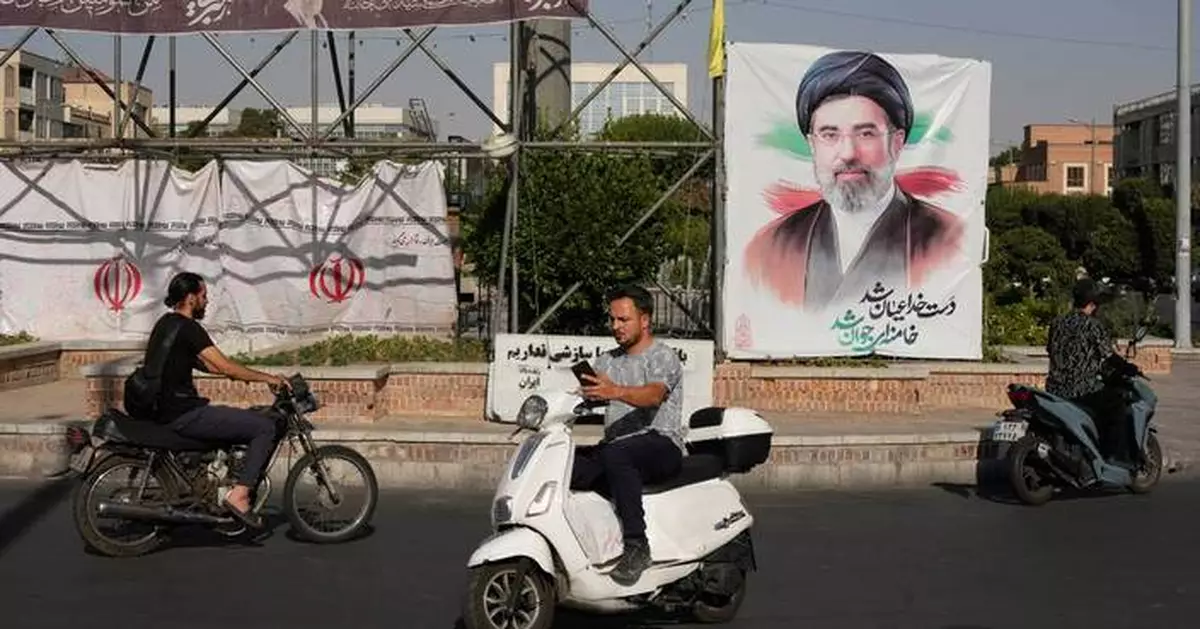
People walk past banners showing portraits of the Iranian Supreme Leader Ayatollah Mojtaba Khamenei in downtown Tehran, Iran, Monday, June 29, 2026. (AP Photo/Vahid Salemi)
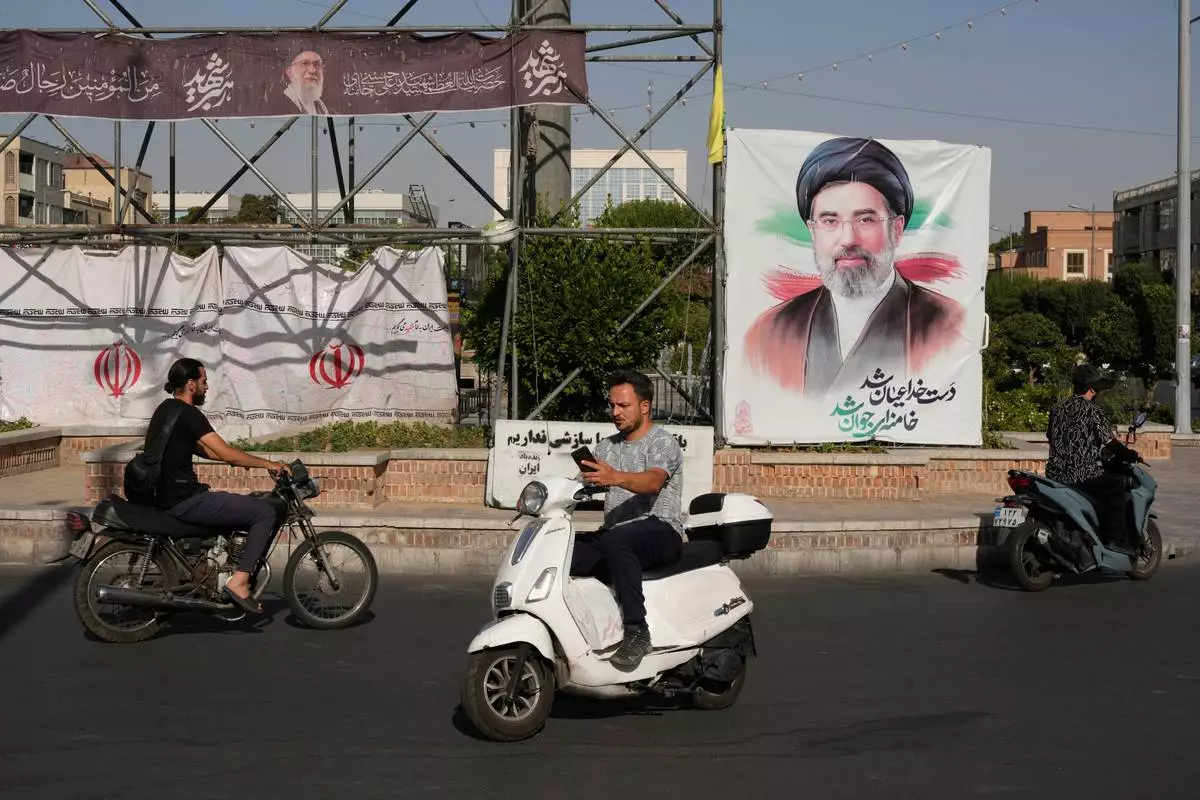
Motorbikes drive past a banner showing a portrait of the Iranian Supreme Leader Ayatollah Mojtaba Khamenei in downtown Tehran, Iran, Monday, June 29, 2026. (AP Photo/Vahid Salemi)
GRAND JUNCTION, Colo. (AP) — Three firefighters killed over the weekend in a wildfire along the Colorado-Utah border were trying to shield themselves from flames by deploying tent-like shelters when they were overcome, authorities said.
The firefighters were part of a specialized crew that goes into remote areas by helicopter to quickly put out new and rapidly escalating wildfires, federal officials said Monday.
Their deaths Saturday came almost 13 years to the day since an elite crew of 19 wildland firefighters died when they were trapped in a steep canyon in Yarnell, Arizona.
Like this weekend's victims, the men in Arizona tried to deploy emergency shelters that are a “last resort” for firefighters when there's no other way out. Investigators didn't blame anyone for the deaths in 2013, but cited radio communication problems that contributed to the Granite Mountain Hotshots becoming trapped. Arizona's workplace safety commission also fined the state's forestry division for not pulling them out.
Wildfires have erupted over the past week all across the West, fueled by months of dry weather and a record lack of snow in some places this past winter. Wildfire experts have warned for months that extreme fire dangers are likely this summer.
U.S. Wildland Fire Service Chief Brian Fennessy said he would not speculate about whether the crew overrun by the weekend fire in Colorado should have been where they were.
“I will say the fact that they were there was, I’m 100% sure, based on good decision-making,” Fennessy said during a news conference Monday. “The fires in this region over the decades, you know, killed many firefighters. They weren’t being foolish. They weren’t being careless. They were there because they thought they could do what needed to be done to suppress that fire. And many times the weather changes.”
With more than two dozen large fires burning, almost 8,000 wildland firefighters and dozens of firefighting helicopters have been deployed. About half the largest blazes are in Alaska while the rest are mostly in Western states.
Even as firefighting resources were increasingly strained, evacuations were ordered near seven fires, including in Arizona, Washington state, New Mexico and Utah. About 800 people living in and around the small town of Beulah in eastern Colorado were told to evacuate as a wildfire threatened the area on Monday afternoon, Gov. Jared Polis said.
“We're really at the mercy of the winds,” Polis said.
The U.S. Forest Service and Interior Department identified the firefighters killed as Emily Barker, 38, of Clinton Township, Michigan; Nick Hutcherson, 27, of Glendale, Arizona; and Sydney Watson, 26, of Warrior, Alabama.
Two others who were with them sustained burn injuries. They were in stable condition but remained hospitalized in the Denver area, officials said at Monday's news conference.
“The loss we experience here is not felt by just one agency. It is felt by an entire wildland fire community,” Fennessy said. “We grieve together, we support one another and we continue the mission together.”
A long line of fire trucks and vehicles from a wide array of emergency response agencies made their way slowly through Grand Junction, Colorado, Monday with their lights flashing. A scattering of people, some with their hands on their hearts, watched silently from the sidewalk as they passed.
The procession ended at a cemetery, and the bodies of two of the firefighters draped in American flags were taken into a funeral home as officials from fire agencies saluted.
The three killed were assigned to a Helitack crew that can be dropped into remote areas by helicopters and whose mission is to prevent new fires from growing into out-of-control blazes. But it can be extremely dangerous, often taking place in areas where fires are rapidly expanding.
Watson worked for the Wildland Fire Service and the other two firefighters who died were assigned to the Forest Service. All were part of an interagency response to fires just west of Grand Junction.
The Snyder Fire in the area has burned about 44 square miles (114 square kilometers), authorities said.
Watson's death was the first within the the new Wildland Fire Service, which was created within the Department of Interior earlier this year to coordinate firefighting on public lands.
The deaths are being investigated by the Forest and Wildland Fire services, a process that typically results in recommendations for how to prevent or reduce the risk of a similar accident. Agencies can also convene an accident review board to suggest any further actions.
More hot, dry and windy weather across the Southwest will elevate the fire threat at least until the weekend, according to the national Storm Prediction Center.
Among the concerns were high winds in the mountains of Colorado and Wyoming, in the Black Hills of South Dakota and across portions of the High Plains.
Utah already has restricted firework usage going into the July Fourth holiday.
The national “preparedness level” for wildfires was increased to a 4, on a scale of 1 to 5, the National Interagency Fire Center said Monday. That’s a sign resources are beginning to be strained, and officials warned of a high potential for new, large fires in multiple parts of the country in coming days.
There are enough firefighting resources for now across the Rocky Mountains to deal with the blazes, said Mike Morgan, director of Colorado’s Division of Fire Prevention and Control. But that could change quickly if conditions worsen in other parts of the country, Morgan said, adding that crews that battle fires on the ground already are in short supply.
“We know hand crews are always a hot commodity. We're getting a little short on those, so that would be one I would say we're a little concerned with,” Morgan said. “At the moment, I would say I feel pretty good about where we're at, but I'm very concerned about where we go.”
So far this year, wildfires have burned more than 4,800 square miles (12,400 square kilometers) — the most by this point in the year since 2022 and significantly above the 10-year average.
Brown reported from Billings, Montana, and Seewer from Toledo, Ohio.
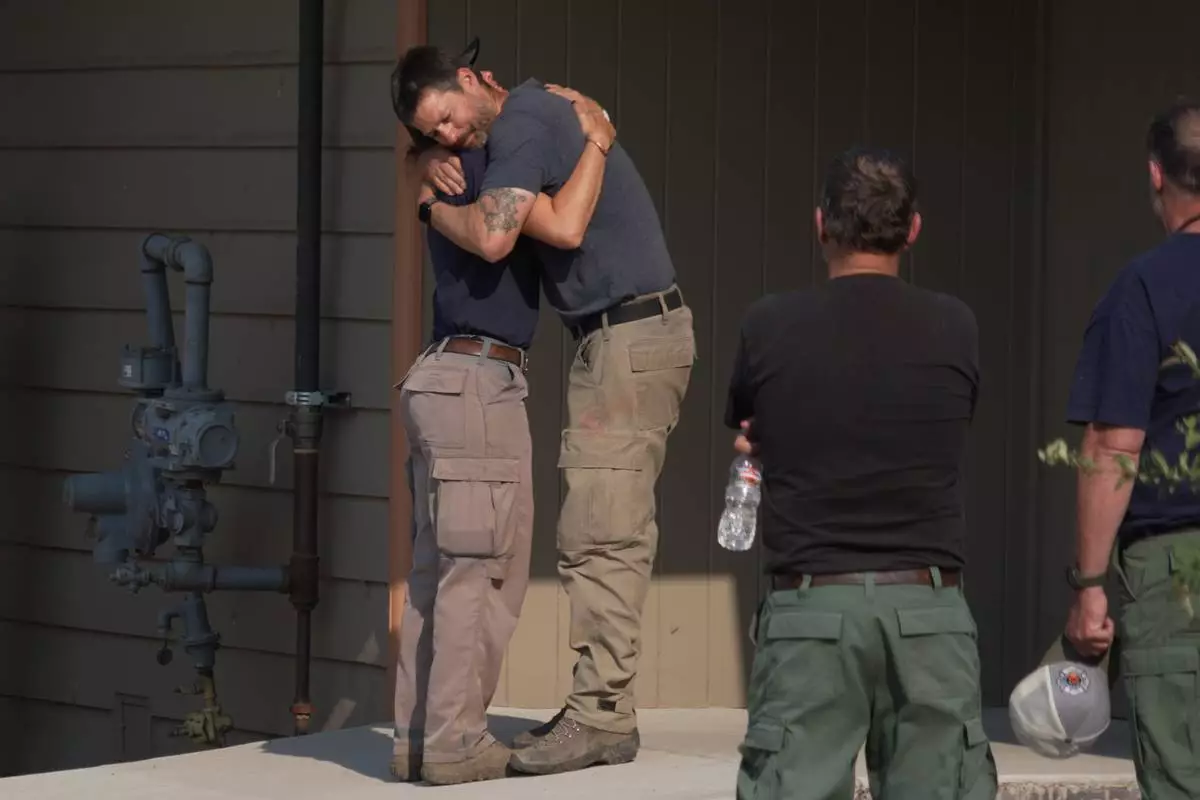
First responders hug during a procession in Grand Junction, Colo., Monday, June 29, 2026, for firefighters that died battling blazes near the Colorado-Utah border. (AP Photo/Ty ONeil)
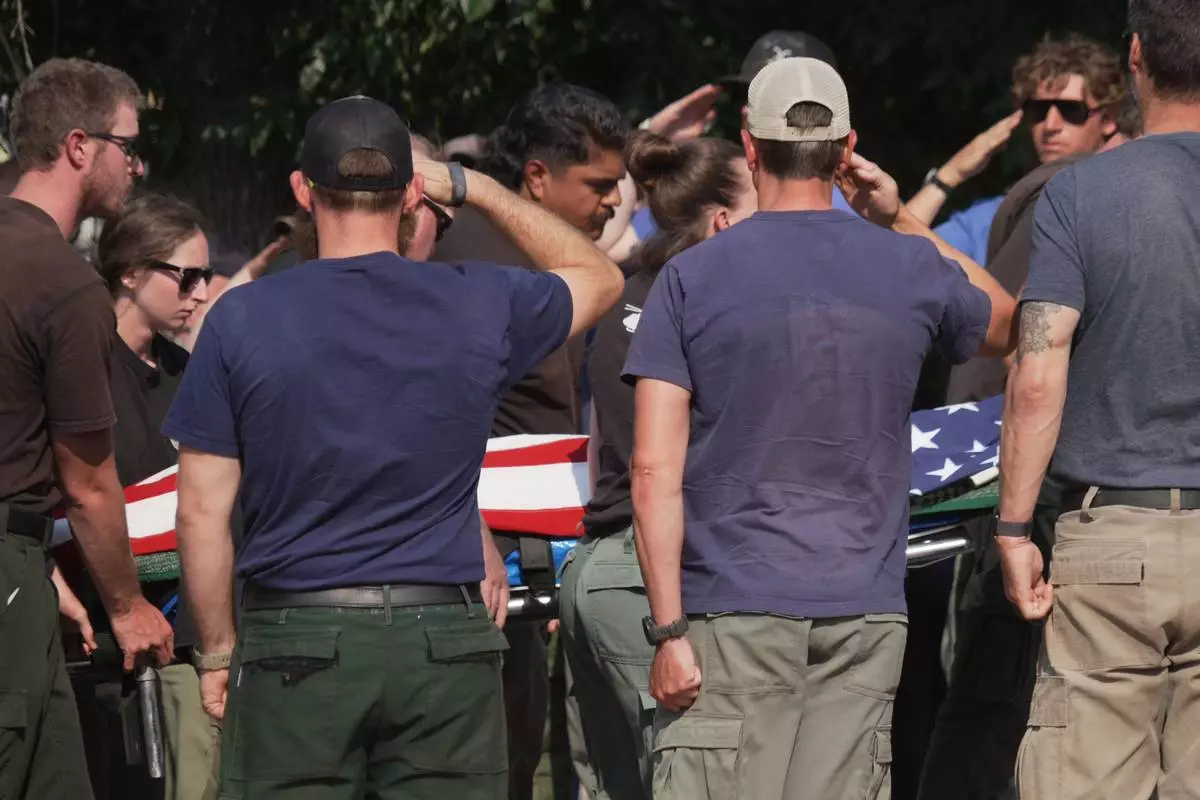
The body of a firefighter who died battling wildfires near the Colorado-Utah border is carried during a procession in Grand Junction, Colo., Monday, June 29, 2026. (AP Photo/Ty ONeil)
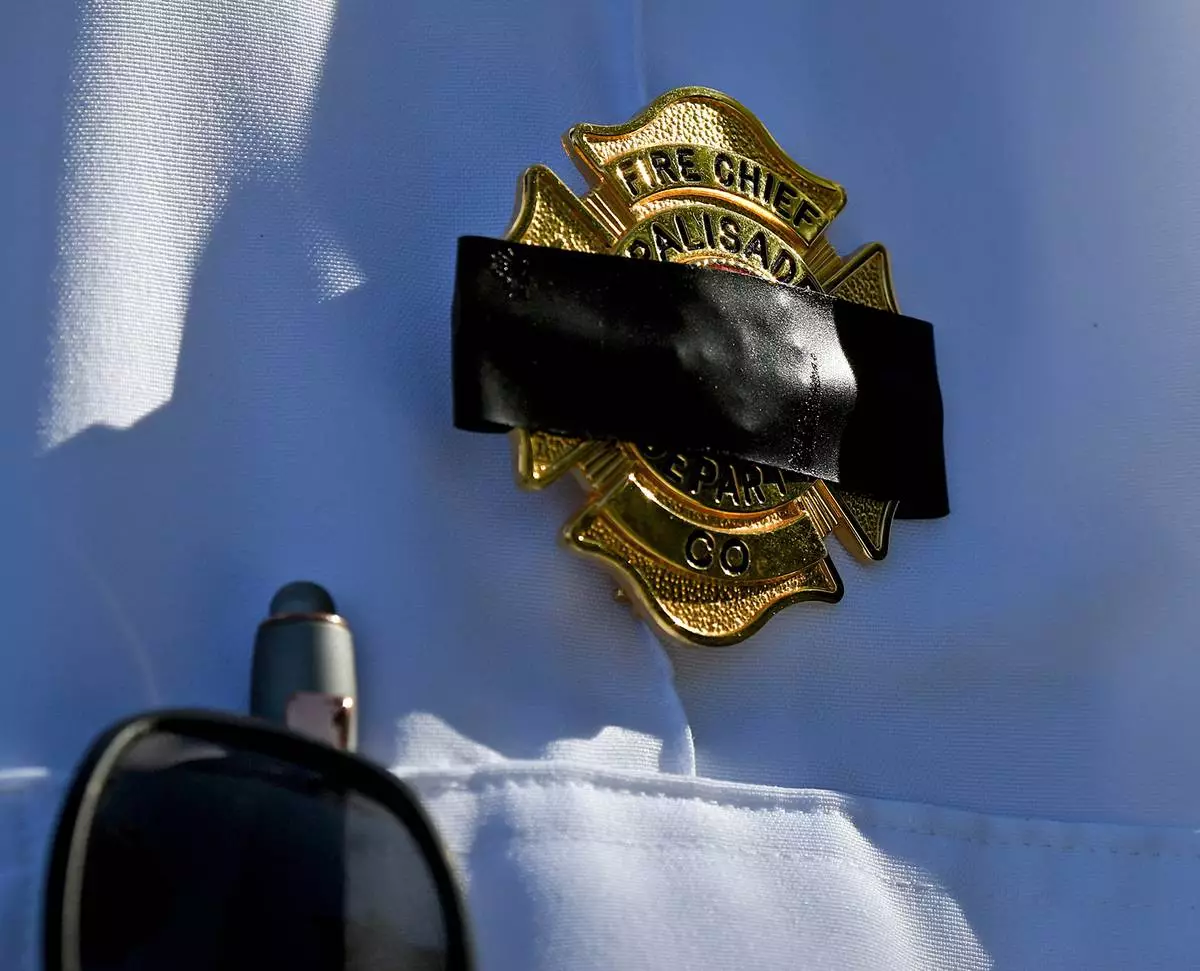
Charles Balke, of the Palisade Fire Department, wears a black band across his badge to honor three firefighters killed while fighting the Snyder Fire in Grand Junction, Colo. Sunday, June 28, 2026. (Gretel Daugherty via AP)
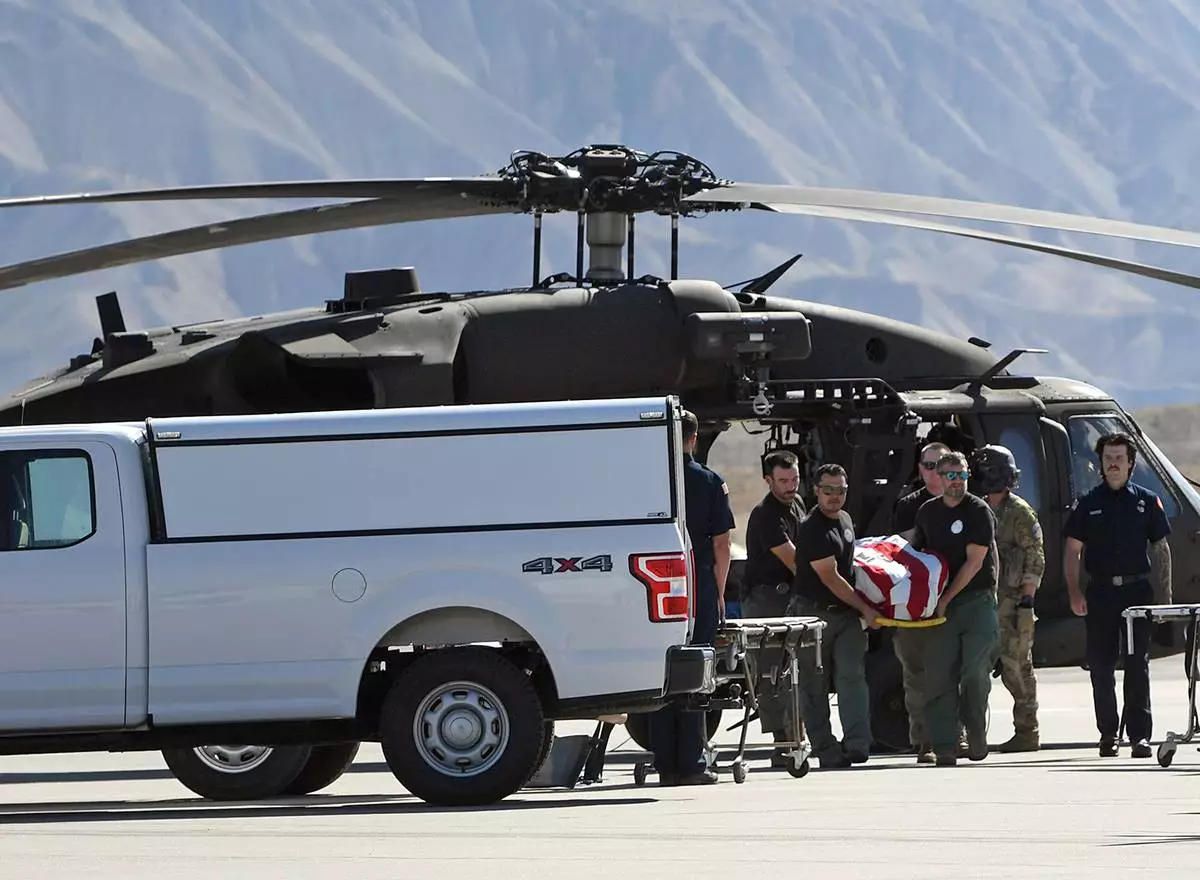
Firefighters carry the flag-draped body of one of the three firefighters killed while fighting the Snyder Fire in Grand Junction, Colo. Sunday, June 28, 2026. (Gretel Daugherty via AP)
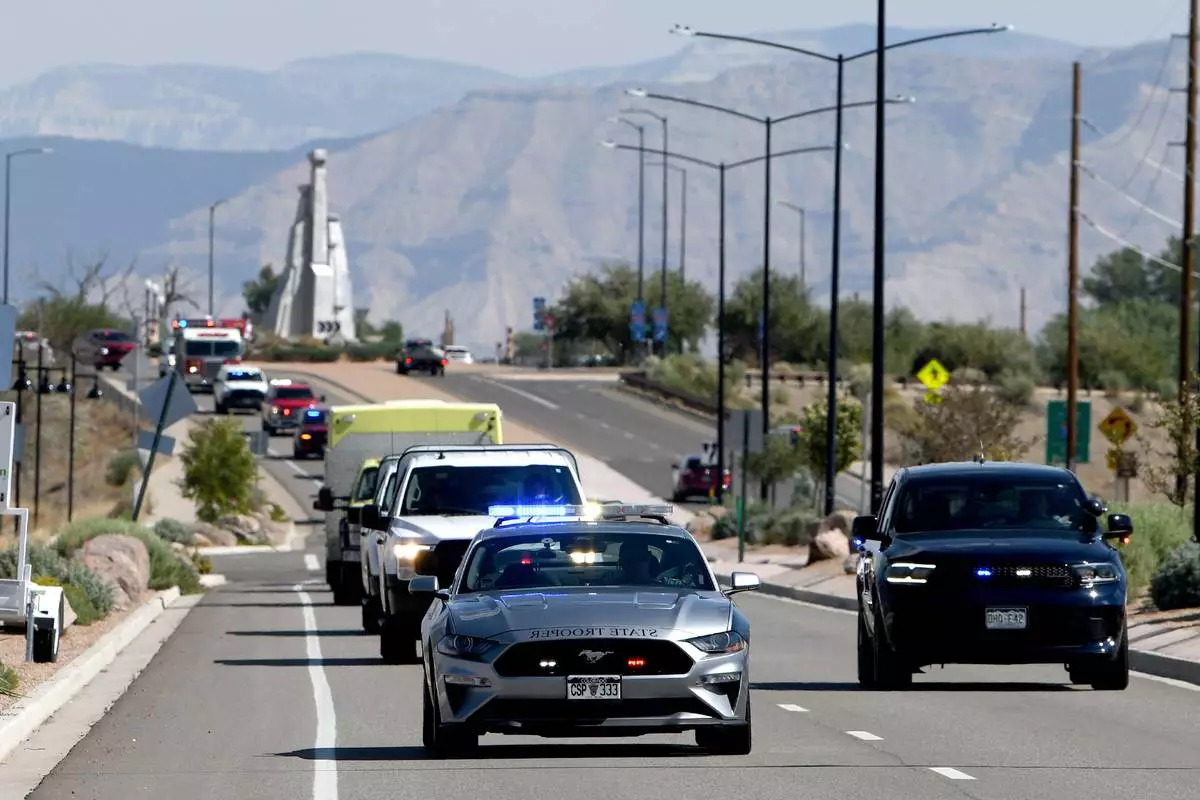
A Colorado State Patrol car leads a procession carrying the bodies of three firefighters killed while fighting the Snyder Fire in Grand Junction, Colo. Sunday, June 28, 2026. (Gretel Daugherty via AP)
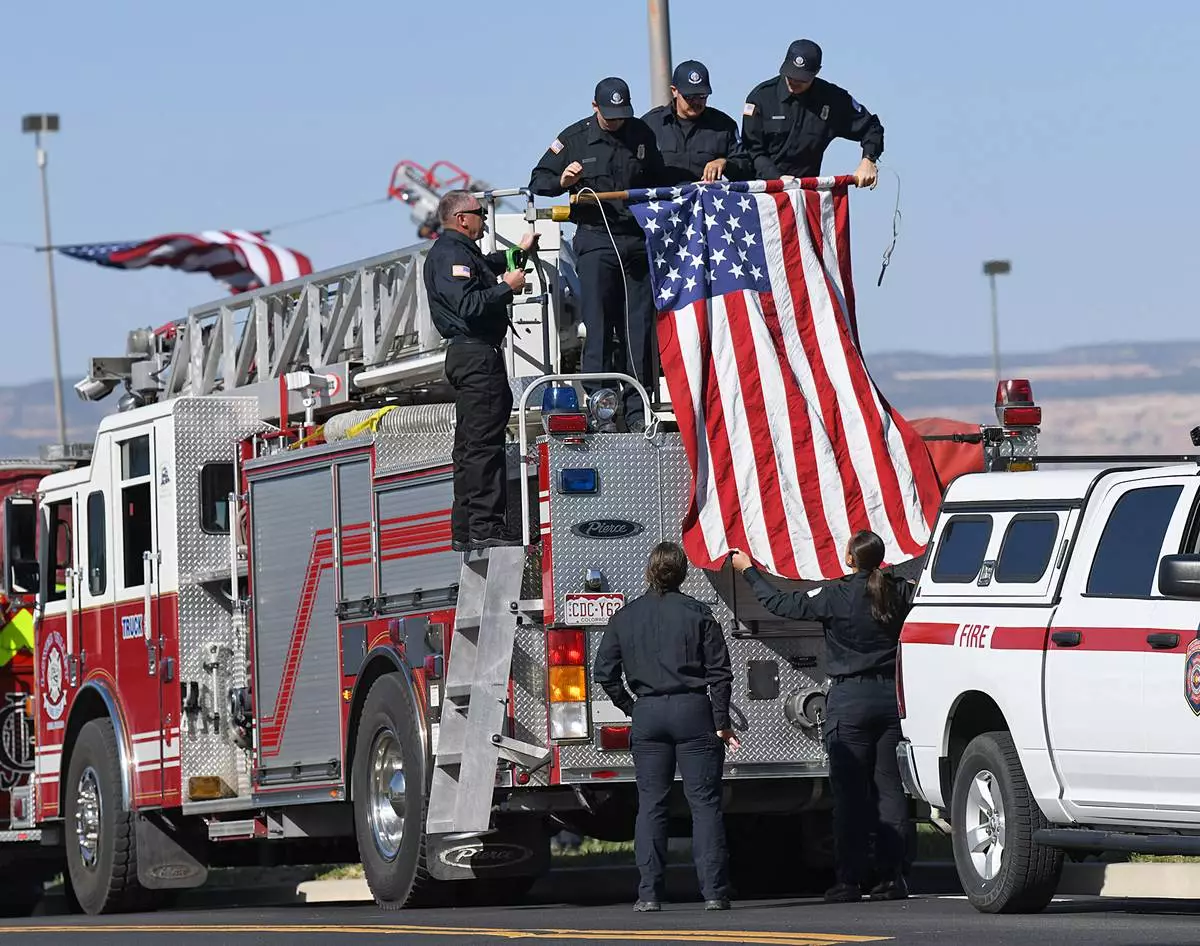
Firefighters with the Lower Valley Fire Protection District hang an American flag along a procession route in honor of three firefighters killed while fighting the Snyder Fire in Grand Junction, Colo. Sunday, June 28, 2026. (Gretel Daugherty via AP)
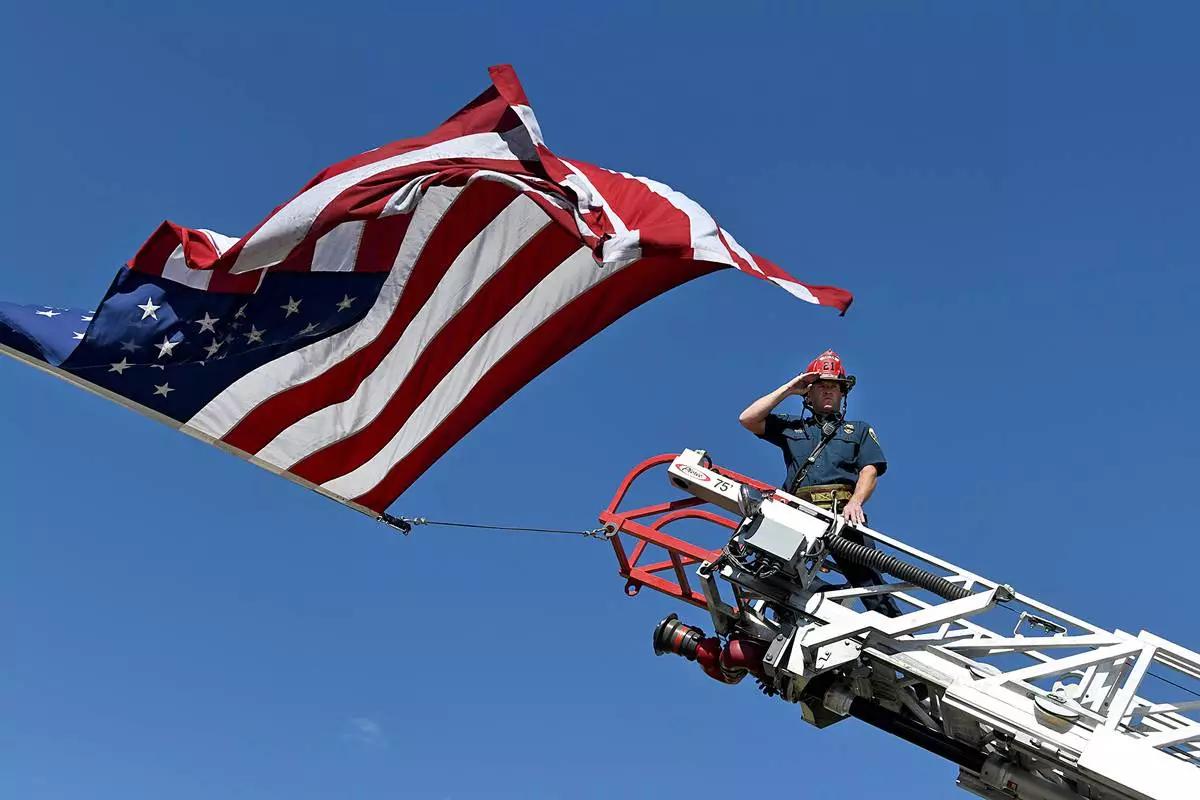
A captain with the Clifton Fire Protection District salutes the passing procession carrying the bodies of three firefighters killed while fighting the Snyder Fire in Grand Junction, Colo. Sunday, June 28, 2026. (Gretel Daugherty via AP)
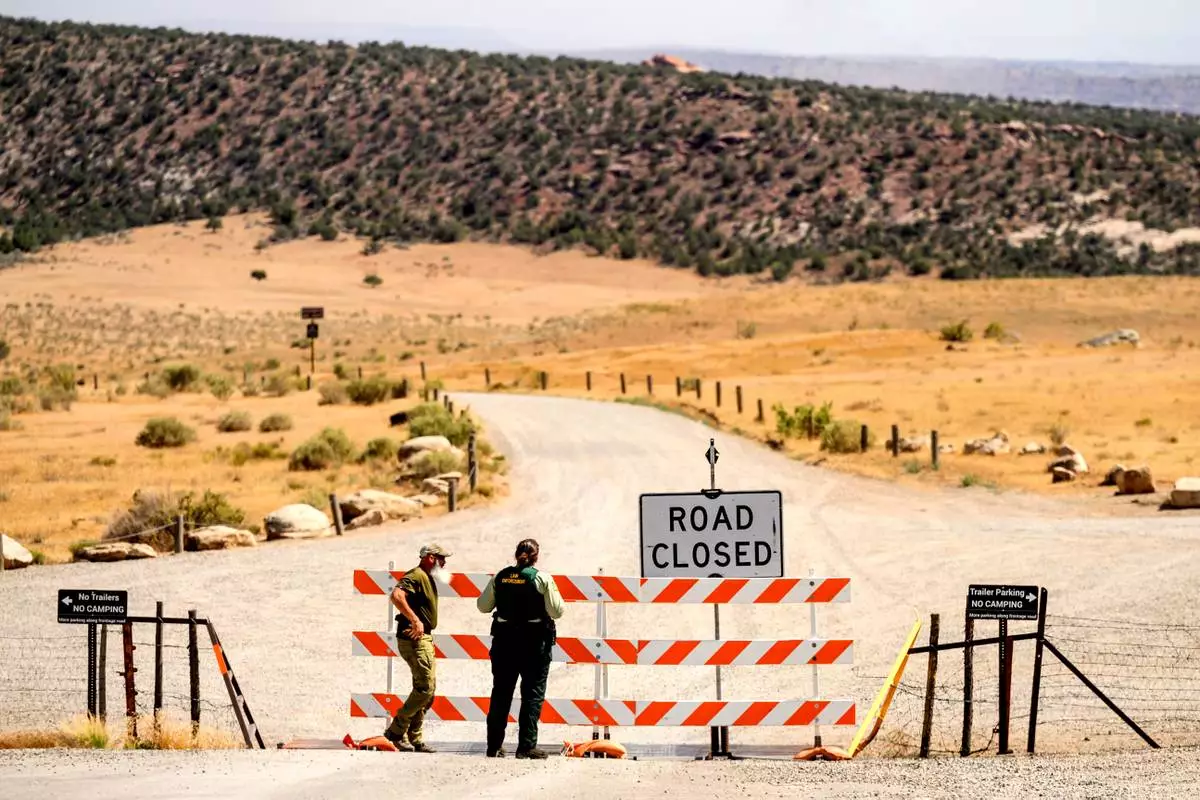
Law enforcement officers staff a roadblock as the Snyder Fire burns near Mack, Colo., on Sunday, June 28, 2026. (AP Photo/Noah Berger)
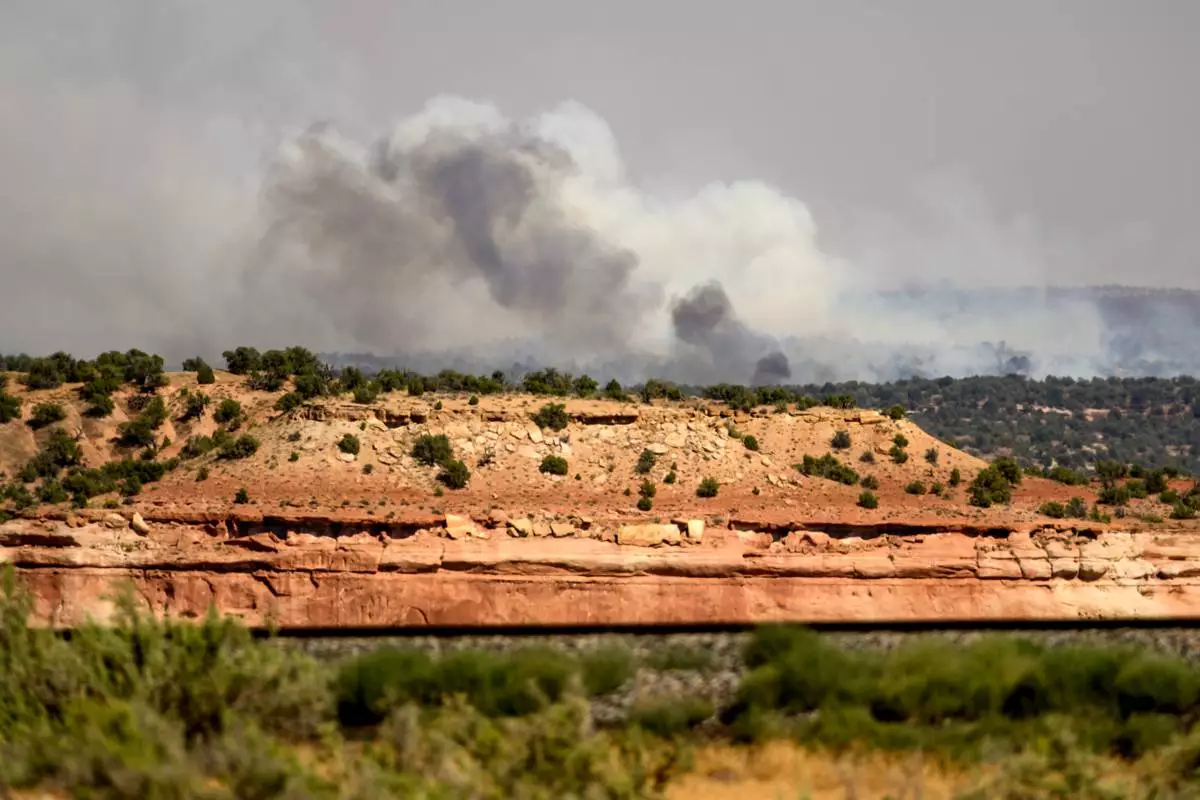
The Snyder Fire burns near Thompson Springs, Utah, on Sunday, June 28, 2026. (AP Photo/Noah Berger)
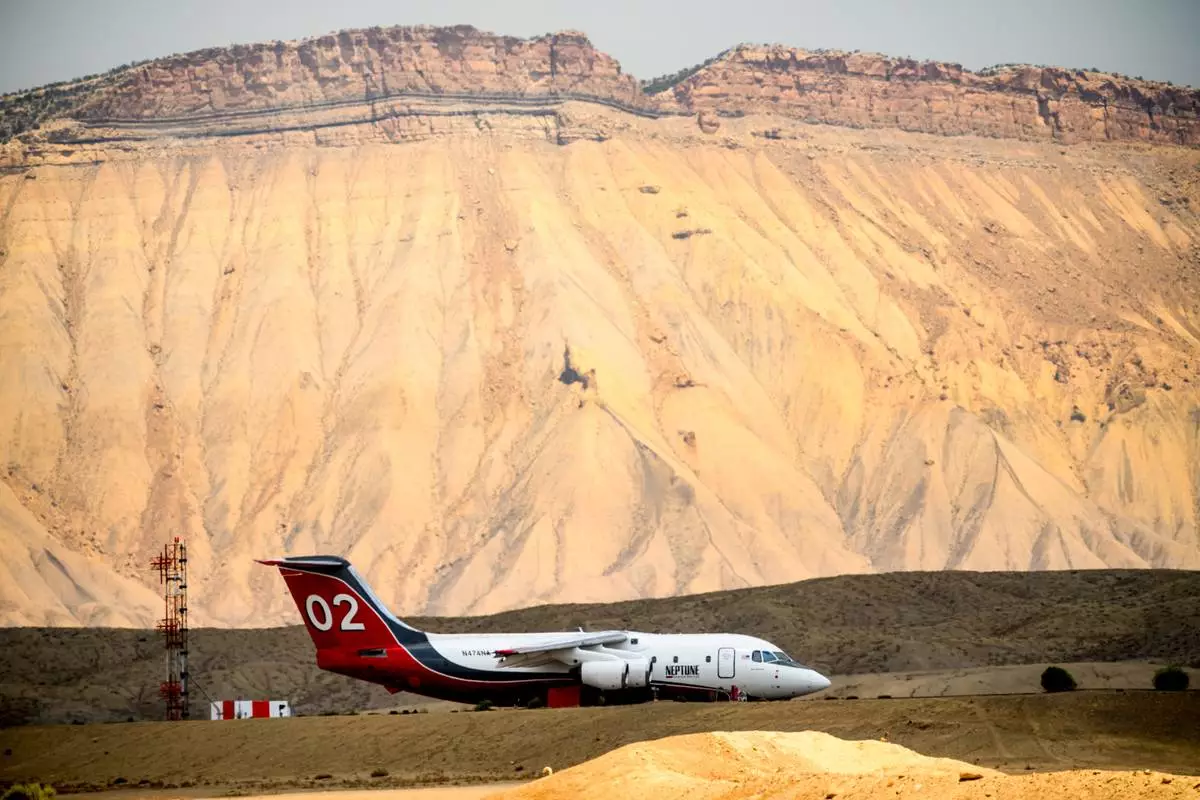
A firefighting aircraft rests on the tarmac at Grand Junction Regional Airport in Grand Junction, Colo., as the Snyder Fire burns nearby on Sunday, June 28, 2026. (AP Photo/Noah Berger)
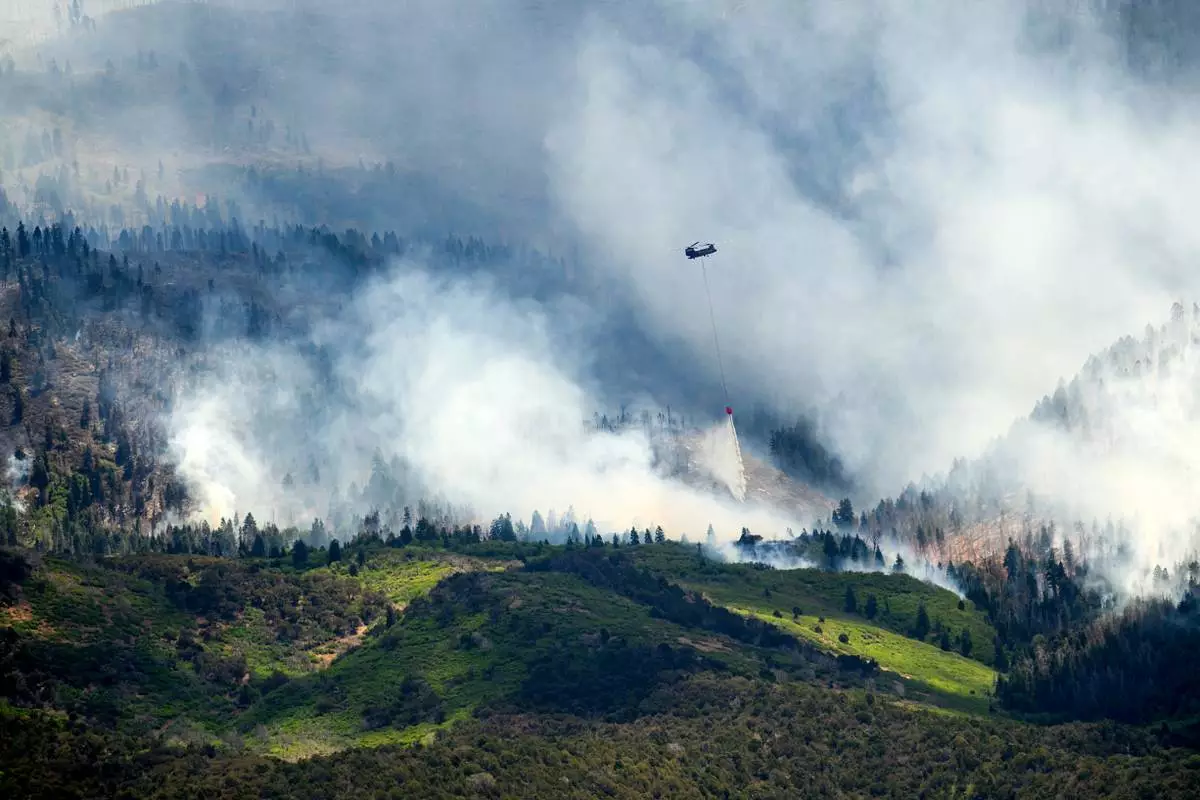
A helicopter drops water on the Cottonwood Fire burning near Beaver, Utah, on Saturday, June 27, 2026. (AP Photo/Noah Berger)
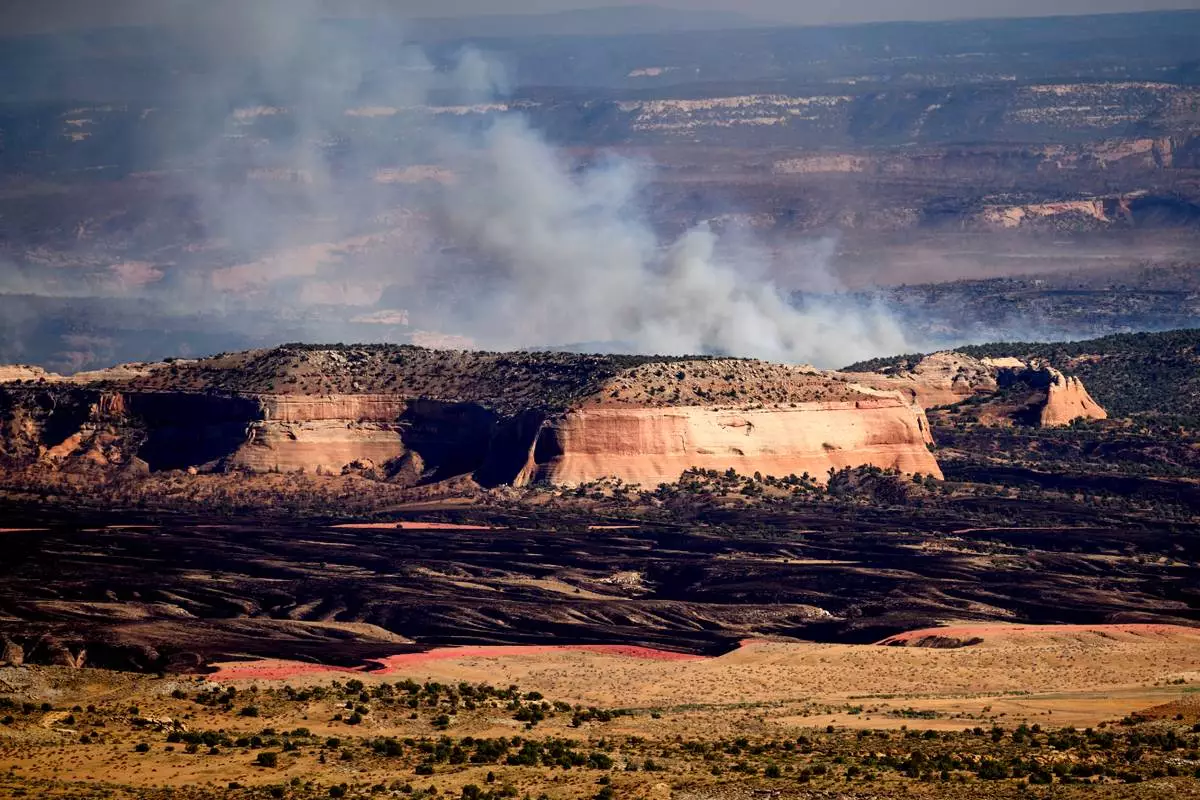
The Snyder Fire burns near Thompson Springs, Utah, on Sunday, June 28, 2026. (AP Photo/Noah Berger)