Skip to Content Facebook Feature Image

Colorado Democrats choose between insurgent progressives and veteran incumbents

News

Colorado Democrats choose between insurgent progressives and veteran incumbents
News

News

Colorado Democrats choose between insurgent progressives and veteran incumbents

2026-07-01 06:29 Last Updated At:06:41

Colorado’s Democratic primaries on Tuesday will help answer a question the party has increasingly faced nationally: Are voters gravitating toward a younger, more progressive generation of leaders or sticking with established veterans?

That choice is starkly reflected in the fight to represent the state's 1st Congressional District, where incumbent Rep. Diana DeGette has been in office for as long as her challenger, a 29-year-old democratic socialist named Melat Kiros, has been alive. Likewise in the U.S. Senate race, Sen. John Hickenlooper has spent nearly three times as many years in public office as his challenger, state Sen. Julie Gonzales, who fashions herself as an “insurgent progressive.”

And a similar, if smaller, divide separates the two Democrats competing for the U.S. House in the state's lone swing district, a seat that will be one of the keys to controlling the chamber in President Donald Trump's final two years in office.

In the Democratic primary for governor, however, the opposite is the case: Colorado Attorney General Phil Weiser and U.S. Sen. Michael Bennet have struggled to meaningfully distinguish their agendas. Instead, the two Democrats have accused each other of pulling punches against Trump.

DeGette has comfortably controlled her House seat in Denver for nearly 30 years, then came Melat Kiros.

In a March Democratic assembly, a process to decide which candidates get on the primary ballot, DeGette barely qualified as Kiros, a first-time candidate, blew past her with more than double the votes.

While the assembly process is far from determinative of who will win Tuesday, it was a jolt for the Democratic establishment and DeGette, who's been a progressive lawmaker herself.

Then, in New York last week, two democratic socialists and a progressive beat out establishment-backed candidates — two of whom were incumbents — in Democratic primaries for U.S. House, energizing a movement that's just finding some political purchase.

Similar to the New York races, Kiros has the endorsement of Sen. Bernie Sanders, while DeGette is backed by Colorado’s established Democratic House delegation.

A victory by Kiros in Colorado, while far from guaranteed, would work toward cementing the nascent but clear uprising of democratic socialist candidates, which has filled some Democratic leaders with anxiety.

DeGette argues that experience in Congress is needed right now to combat Trump, while Kiros, a former attorney, accuses DeGette of ineffectiveness. Also running is University of Colorado Regent Wanda James, who may split the anti-DeGette vote.

Gonzales, the state senator and self-fashioned “insurgent progressive," is trying to kick Hickenlooper, the more centrist former governor of Colorado, out of his U.S. Senate seat.

She's leaning into the same arguments that others used in challenging establishment incumbents, including that Hickenlooper is an “incrementalist."

Gonzales has said she previously joined the Democratic Socialists of America in 2018, but that her membership has lapsed.

Hickenlooper is favored in the statewide race.

Colorado's 8th Congressional District is a relatively new district that stretches from the northern suburbs of Denver up through farming country.

Since its creation in 2021, it's swung from Democratic to GOP control and is held now by Republican Rep. Gabe Evans. With Democrats aiming to take back control of the House and obstruct Trump's agenda, the race is closely watched.

Party leaders thought a moderate like state Rep. Shannon Bird was best equipped to challenge Evans, but the district is also heavily Hispanic and poorer than much of the rest of the state.

That's where Bird's Democratic primary opponent state Rep. Manny Rutinel, who is Latino, has planted a flag, arguing his personal story and more aggressive economic agenda will be more potent against Evans.

Weiser and Bennet are slugging that question out in the governor's race after struggling to show major differences in their political agendas.

Weiser attacked Bennet for voting for Trump nominees and Bennet lambasted Weiser for not joining state lawsuits against first Trump administration.

“The attorney general says he’s really tough but was completely missing in action in Donald Trump’s first term," Bennet said in a recent debate.

Weiser accused Bennet of a weak response to the president. But he also says Bennet should remain in the Senate instead of running for governor.

“You’ve made some mistakes; you didn’t stand up the way you should. I know you can shape up, use your seniority," Weiser told Bennet during a debate. “With all that experience, to throw it away, would be such a waste for Colorado.”

With Colorado a blue state, Tuesday's Democratic winner will be seen as the favorite to defeat the winner of the GOP primary and take over from term-limited Gov. Jared Polis.

The three main candidates seeking the Republican nomination include state Rep. Scott Bottoms, a farther right state lawmaker. State Sen. Barbara Kirkmeyer is considered the more conventional Republican, while Victor Marx is something of a wild card candidate with an eclectic past.

Peters was the Mesa County clerk who was convinced by Trump's debunked claims of mass fraud in the 2020 election and eventually convicted in a scheme to make a copy of the county's election computer system.

Candidate Abby Silzell is vying for Peters' old job and repeating similar claims as she challenges incumbent Bobbie Gross.

Both are Republicans, and Silzell told CPR News that she believes Peter's conviction was a “miscarriage of justice" and that in the 2020 election there was enough fraud to “affect the outcome.”
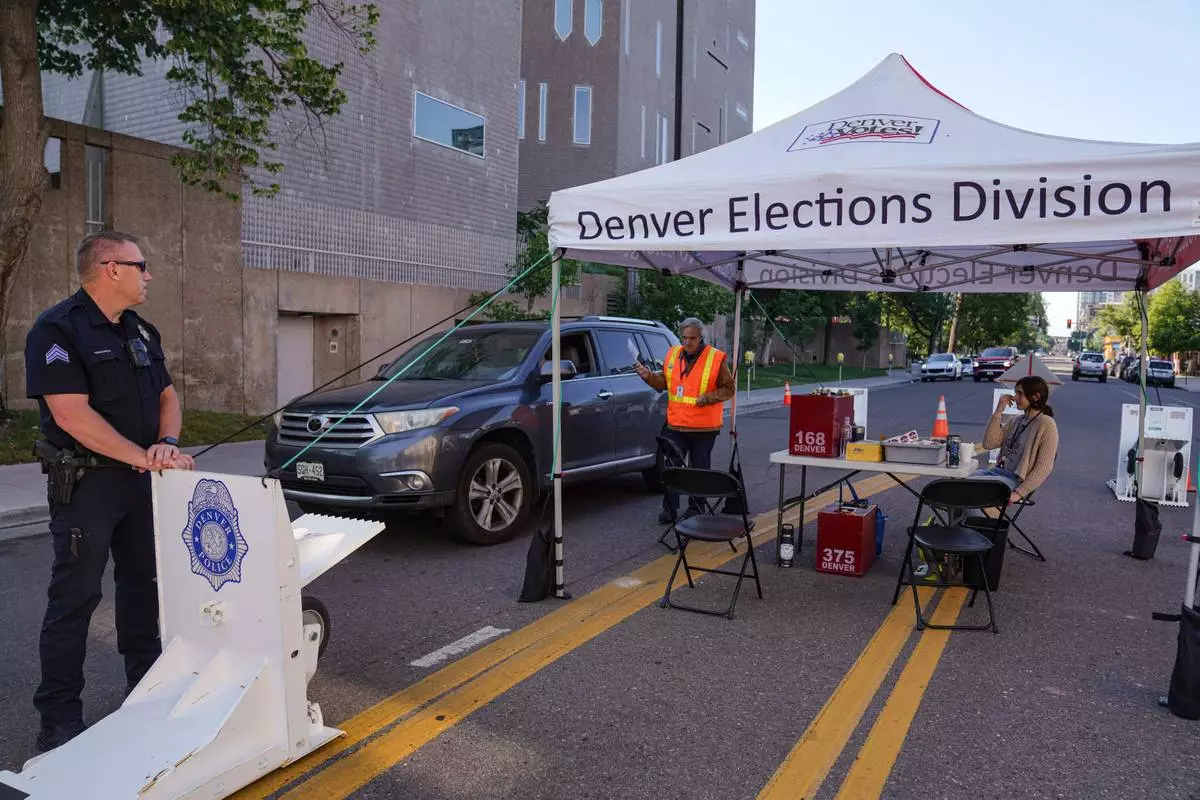
Adam Ballinger walks a voters ballot to the box in the Democratic primaries at a drop off location near the Denver Museum of Art, Tuesday, June 30, 2026, in Denver. (AP Photo/Rebecca Slezak)
Adam Ballinger walks a voters ballot to the box in the Democratic primaries at a drop off location near the Denver Museum of Art, Tuesday, June 30, 2026, in Denver. (AP Photo/Rebecca Slezak)

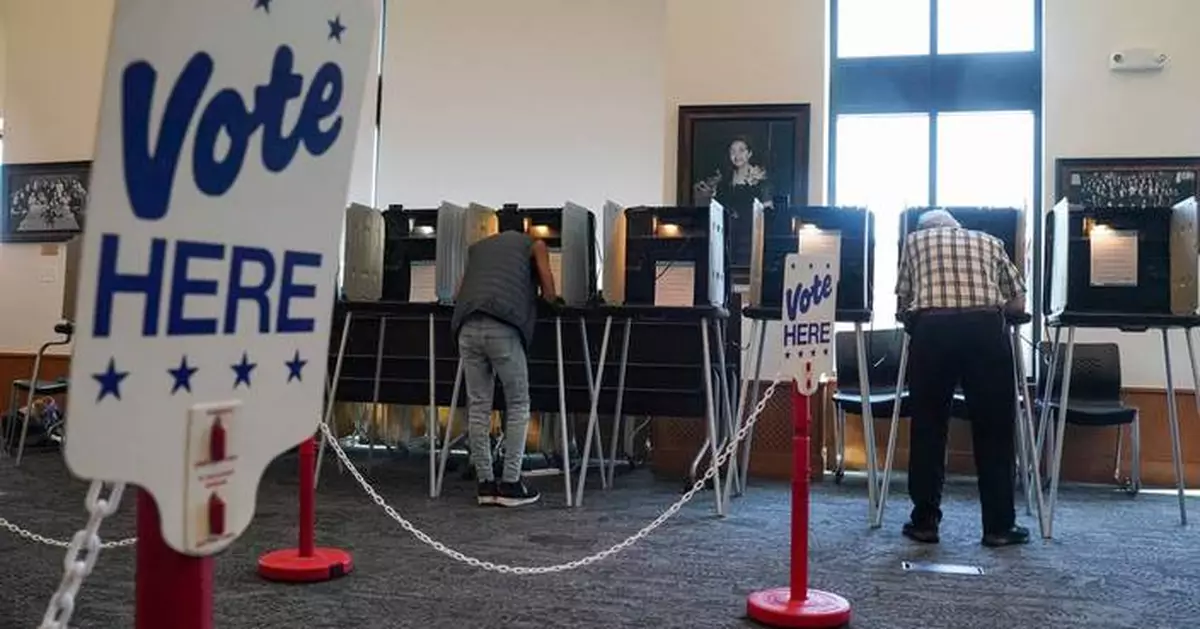
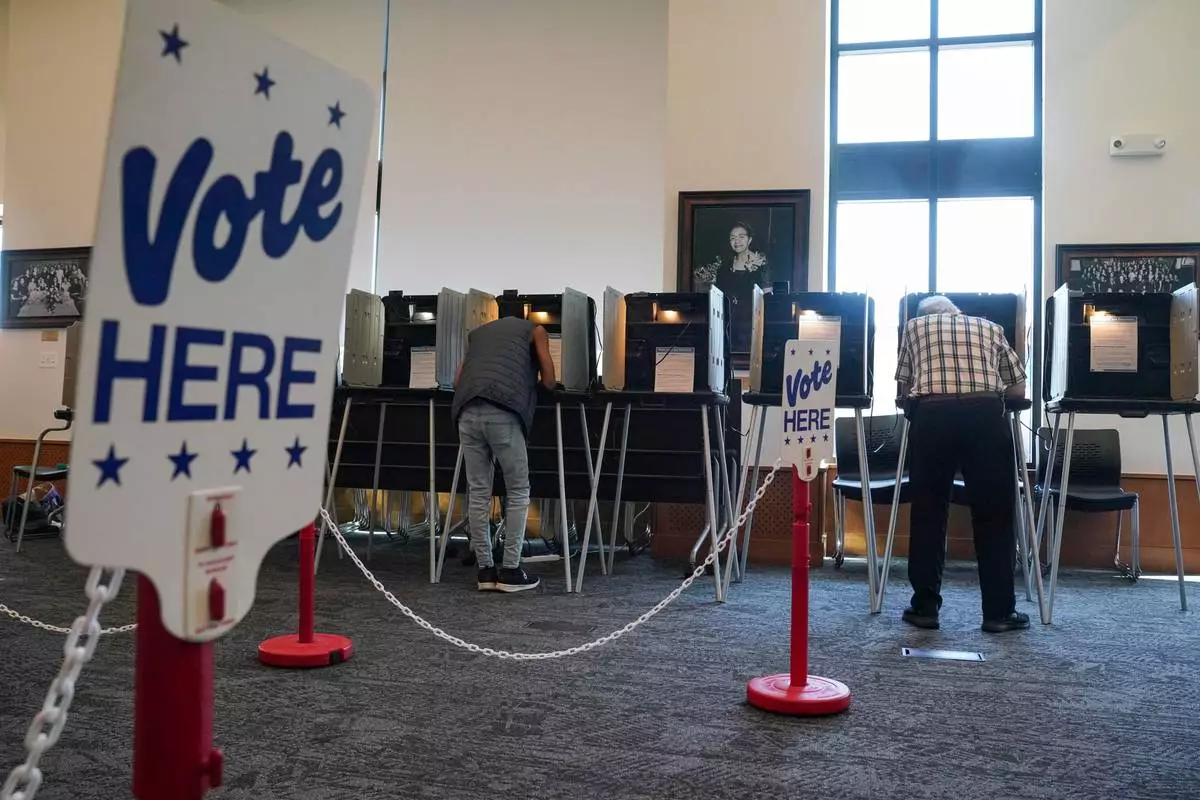
People vote in the Democratic primaries at Blair-Caldwell Library, Tuesday, June 30, 2026, in Denver. (AP Photo/Rebecca Slezak)


People vote in the Democratic primaries at Blair-Caldwell Library, Tuesday, June 30, 2026, in Denver. (AP Photo/Rebecca Slezak)

NEW YORK (AP) — The U.S. Justice Department and 17 states reached settlement agreements with three major egg producers this week to resolve allegations that the companies illegally colluded for years to raise prices, including when the cost soared to record highs last year.

The states and federal government accused Cal-Maine Foods, Versova and Hickman’s Egg Ranch of a behind-the-scenes arrangement to “artificially inflate the daily price quotations for eggs" between June 2022 and March 2025. In particular, their investigation found that the companies coordinated on what bids they would submit to Urner Barry Publications, a company that runs an index key to determining how much grocery stores, restaurants and others pay for billions of eggs each year.

In turn, that meant “higher prices for eggs sold to consumers,” alleged the complaint, which was filed in Iowa on Monday, the day the settlement terms were announced.

“When powerful corporations collude behind the scenes to raise prices, working families suffer the costs,” New York Attorney General Letitia James, who helped lead the investigation, said in a statement. “These egg producers manipulated the market to squeeze even more profit out of consumers and businesses."

None of the companies admitted wrongdoing under the settlements. But to settle the states' claims, Cal-Maine, Versova and Hickman's will collectively be on the hook for $3.3 million and 53 million eggs, James and others said. Those eggs would be donated by the companies and make their ways to food banks and nonprofits. The money will be distributed to the states.

The Justice Department and the states also outlined actions the companies will need to take, including adopting antitrust compliance programs and banning communicating with competitors on pricing and bidding strategies.

The settlements would still need court approval. The Justice Department's Omeed A. Assefi said Tuesday that the proposed settlements “resolve years of conduct that dragged on Americans’ finances and their everyday lives.”

Average U.S. egg prices soared to a record high of about $6.23 per dozen in March 2025, amid a bird flu epidemic that forced farmers to slaughter millions of egg-laying chickens. Egg producers blamed price spike on the outbreak, but critics accused big companies of taking advantage of their market dominance and the government began its investigation.

Monday’s complaint notes that price quotations “dropped significantly” after Cal-Maine, Versova and Hickman’s learned of the Justice Department’s investigation and were instructed to preserve documents in March 2025. Consumer egg prices also later tumbled — to under $2.20 per dozen as of May 2026 — as replenished flocks caught up despite the ongoing outbreak.

Cal-Maine maintained Monday that allegations of price manipulation were “baseless” and that it believes its conduct has been legal. It also noted that while it was part of a cooperative with the other egg producers, it left the group in May 2024.

Still, Cal-Maine CEO Sherman Miller said the company's settlement agreement “enables us to move forward so we can devote our full attention to what matters most: delivering affordable, high-quality eggs and egg-based prepared foods to consumers nationwide.”

Miller added the period the Justice Department reviewed “was a particularly challenging time” — noting that, beyond avian flu, the COVID-19 pandemic, weather and other market conditions have contributed to temporary supply shocks and high prices in recent years. He said Cal-Maine “took numerous steps to protect and grow its hen flock” in that time.

Versova echoed a similar sentiment, particularly pointing to the toll the bird flu has had on its farmers, who it noted “don’t set the wholesale price of eggs.” Instead, Versova said the price of most of its eggs depends on cost fluctuations of grain used in hen feeds.

Meanwhile, Hickman's owner Mantiqueira USA, which acquired the egg producer in November, said the “conduct referenced in the complaint predates our acquisition," noting that it is committed to complying with the law.

Some advocacy groups say the proposed settlements aren't enough.

“Consumers paid record prices while dominant egg producers reported extraordinary profits, yet the result is another settlement that corporations can treat as the cost of doing business rather than meaningful accountability,” said Angela Huffman, president of Farm Action.

Cal-Maine — the only of the three companies that is public and reports quarterly financials — reported a profit of $1.22 billion for the 2025 fiscal year. Under its settlement agreement with the states, the company would pay $1.5 million and donate 30 million eggs.

Meanwhile, per court documents, Versova would provide 20 million eggs and $800,000, and Hickman's would be on the hook for 3.25 million eggs and $1 million.

In addition to New York, these states were party to the settlement agreements: Arizona, California, Colorado, Connecticut, Florida, Hawaii, Iowa, Maryland, Minnesota, North Carolina, Ohio, Pennsylvania, Texas, Utah, Vermont, and Wisconsin.

FILE - Eggs are for sale at a grocery store Tuesday, Feb. 10, 2026, in Chicago. (AP Photo/Erin Hooley,File)

FILE - Eggs are for sale at a grocery store Tuesday, Feb. 10, 2026, in Chicago. (AP Photo/Erin Hooley,File)

Recommended Articles