Skip to Content Facebook Feature Image

Takeaways from AP/'FRONTLINE' investigation into how US tech is abused for global scams

TECH

Takeaways from AP/'FRONTLINE' investigation into how US tech is abused for global scams
TECH

TECH

Takeaways from AP/'FRONTLINE' investigation into how US tech is abused for global scams

2026-06-30 22:18 Last Updated At:22:20

American technology and American companies are being used to power a revolution in the cyberscam industry, playing key roles in the industrialization and globalization of fraud in ways that have not been clear until now, an AP/"FRONTLINE" investigation has found.

Most public scrutiny of the technology that fuels scams has focused on the social media platforms victims see, but the infrastructure exploited to commit fraud begins much farther upstream, the investigation showed.

Watchdogs say satellite internet, AI and internet infrastructure companies along the digital supply chains that fraudsters abuse have the technical capacity to do more to protect consumers but lack the legal, regulatory and business incentives to crack down on a crime the Federal Trade Commission estimates cost Americans nearly $200 billion in 2024.

The AP found no evidence to suggest these companies were doing anything illegal. However, the patterns of abuse AP identified raise questions about how vigorously they are enforcing their own terms of service, which prohibit illegal activity.

Here are key findings:

The AP identified two suites of software used by scammers at compounds in Southeast Asia. OpenAI’s ChatGPT played the most prominent role in these tools, along with Google’s Gemini, though the software incorporated other AI models as well, according to an analysis with security nonprofit C4ADS.

The software, which has legitimate and illegitimate uses, allows scammers to work across dozens of languages, generate automated replies, develop credible characters, and track employee performance. Scammers who purchased these tools took in tens of millions of dollars, according to blockchain analysis by TRM Labs at the request of AP/"FRONTLINE."

OpenAI and Google both said they have robust programs in place to proactively disrupt scammers from abusing their tools. OpenAI said that based on the information AP shared, it banned three accounts that had been using its models to support online scams.

One in five signals from devices at four scam compounds linked to sanctioned entities in Myanmar was carried by a U.S.-registered company, according to an AP analysis of more than 200,000 device connections provided by International Justice Mission, an anti-trafficking non-profit. No other non-regional country came close.

Among them were Cogent Communications, Oracle, AT&T and DigitalOcean. Companies outside the U.S. — including UpCloud, in Finland, and GlobalTeleHost, in Canada — also had servers in the U.S. that hosted high-risk traffic from scam centers.

These companies all emphasized they can’t see the content their networks carry or what end users are doing online — privacy by design that constrains their ability to monitor for abuse. All said they respond to valid abuse reports and cooperate with law enforcement.

Oracle said it was “diligently working with law enforcement” on the material shared by AP. UpCloud said AP’s query had prompted an internal review and refinement of its risk assessment processes.

Elon Musk’s satellite internet service, Starlink, is still the number one internet service provider in Myanmar, including to scam centers, according to device data, public records and interviews -- despite Congressional scrutiny and a widely publicized crackdown last fall, when the company said it cut off 2,500 kits near scam compounds.

But scammers are still using Starlink, including from a proliferation of new sites that have grown inside Myanmar since then, satellite imagery and device data International Justice Mission shared with AP show. At least 25 new sites have been constructed, and at least 13 of them have used Starlink to get online, device data shows. That data covers only a sample and may not capture all Starlink activity at these locations.

Starlink declined to respond to detailed questions, but has publicly said they cooperate with law enforcement – including a crackdown in May with the Department of Justice’s Scam Center Strike Force and other companies - and are committed to ensuring the service remains “a force for good.”

Tech companies have access to a trove of data that could be used to minimize illicit activity, but doing so requires significant investment, cybersecurity analysts say.

“If there’s no disincentive to continuing this, if there’s no cost to actually facilitating scamming, then why would I spend a dollar to prevent scamming?” said Sascha Meinrath, the Palmer chair in telecommunications at Penn State University. “This is the problem. It’s identifiable, it’s addressable — at least somewhat — but it costs something. And right now the cost of facilitating scamming is zero.”

Outside the United States, that cost is starting to rise. The United Kingdom, the European Union, Australia and Singapore have introduced regulations that require companies to do more to prevent scams — or face financial penalties.

Meanwhile, in Washington, lawmakers and government officials have been asking American tech companies to cooperate to cut scammers off from U.S. infrastructure, but on a voluntary basis.

“The amazing part of this tragedy is that the criminals use our own infrastructure to commit the crime,” U.S. Attorney Jeanine Pirro, who leads a new Scam Center Strike Force that has sought to forge partnerships with industry, said at a recent conference. “When fraud is detected, industry must be ready, willing and able to stop it.”

—-

This story is part of an ongoing collaboration between The Associated Press and “FRONTLINE” (PBS) that includes an upcoming documentary.

—-

Kinetz reported from Rome, Washington, London and Lisbon, Portugal. AP journalists Juliet Linderman in Washington and Raynham, Mass, Ope Adetayo in Lagos, Nigeria, Larry Fenn in New York, Huizhong Wu in Bangkok and Michael Reo in Washington contributed to this story. Freelance reporter Rejimon Kuttappan in Thiruvananthapuram, India, and Anthony DeLorenzo, Martha Mendoza and Peter Klein from “FRONTLINE” (PBS) also contributed.

—-

The Associated Press receives financial support from multiple private foundations. AP is solely responsible for all content. Find AP’s standards for working with philanthropies, a list of supporters and funded coverage areas at AP.org.

—-

Contact AP’s global investigative team at Investigative@ap.org or https://www.ap.org/tips/
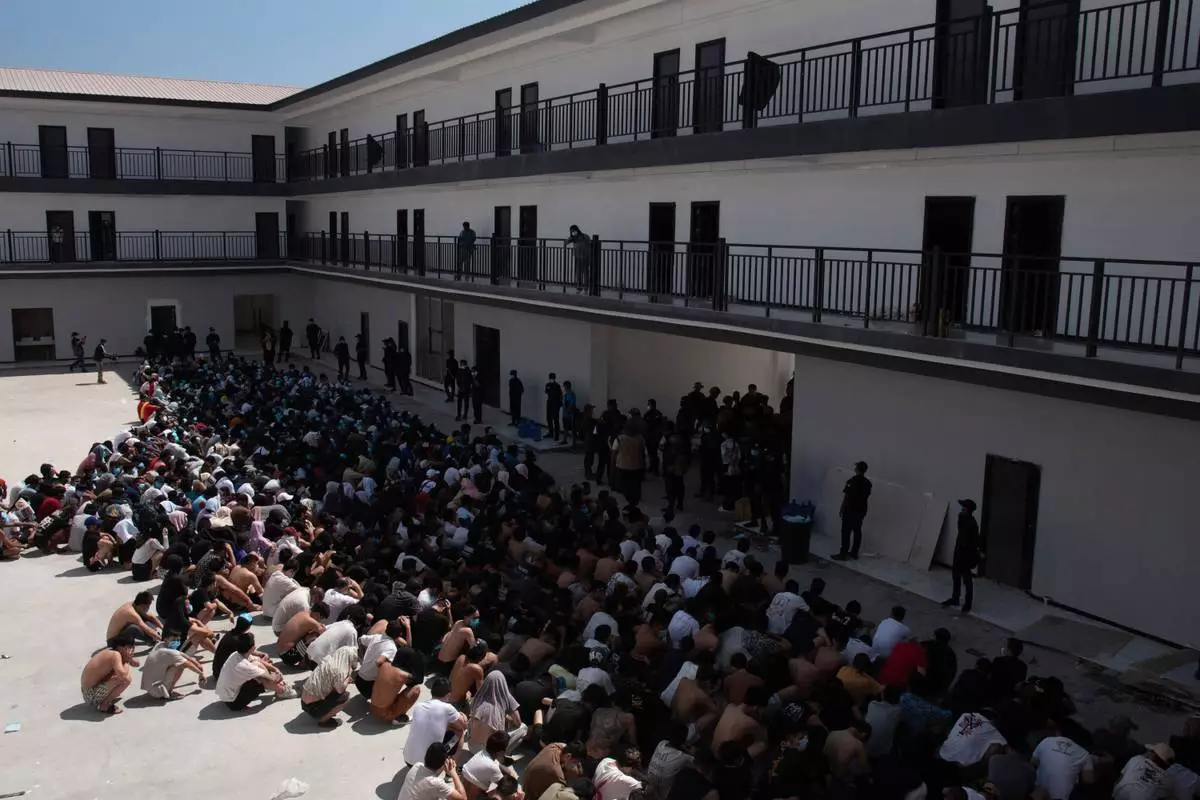
FILE - People from China, Vietnam and Ethiopia, believed to have been trafficked and forced to work in scam centers, sit with their faces masked while in detention after being released from the centers in Myawaddy district in eastern Myanmar, Feb. 26, 2025. (AP Photo/Thanaphon Wuttison, File)
FILE - People from China, Vietnam and Ethiopia, believed to have been trafficked and forced to work in scam centers, sit with their faces masked while in detention after being released from the centers in Myawaddy district in eastern Myanmar, Feb. 26, 2025. (AP Photo/Thanaphon Wuttison, File)

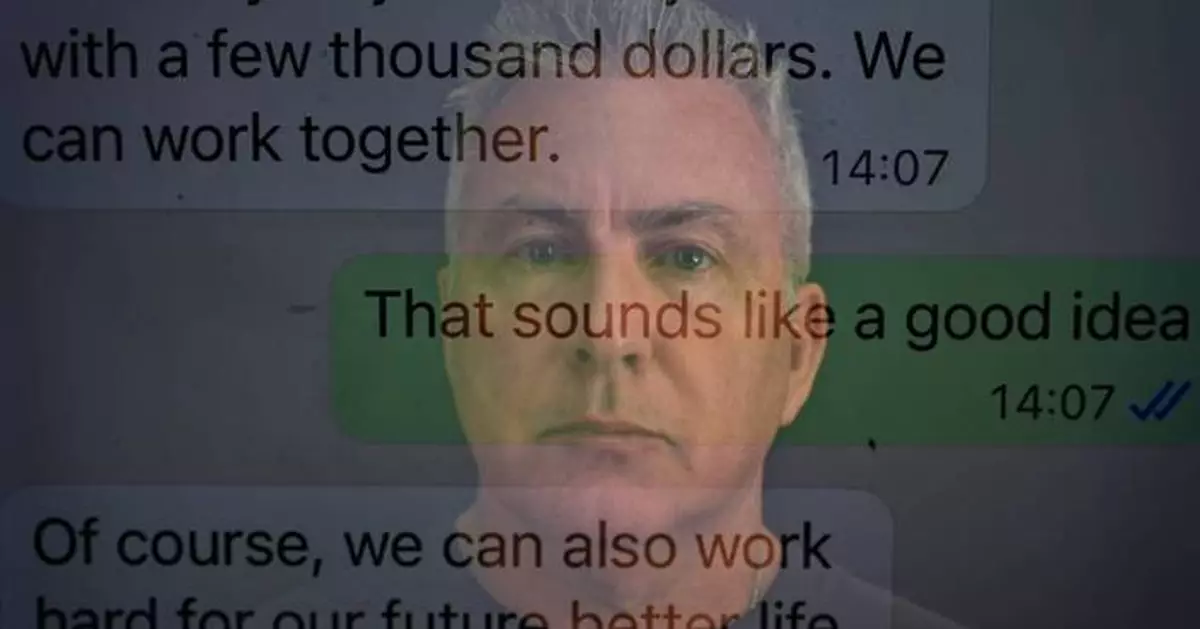
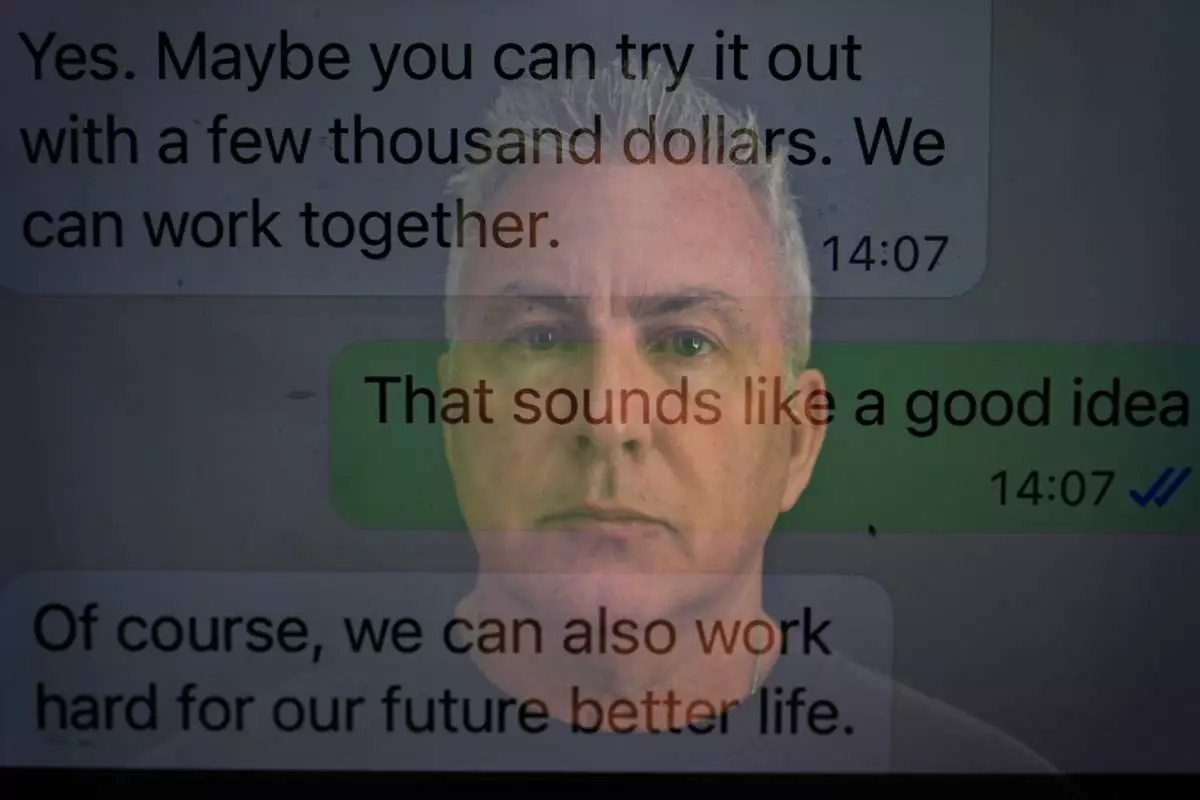
Chris Colocousis sits for a portrait, layered with a screenshot of a text message exchange with a woman he was communicating with who turned out to be a scammer, in this long exposure photograph at his home in Raynham, Mass., Tuesday, March 10, 2026. (AP Photo/David Goldman)

Chris Colocousis sits for a portrait, layered with a screenshot of a text message exchange with a woman he was communicating with who turned out to be a scammer, in this long exposure photograph at his home in Raynham, Mass., Tuesday, March 10, 2026. (AP Photo/David Goldman)
LONDON (AP) — Self-flying fighter jets, uncrewed submarines and drones will be at the center of Britain’s future military under a defense plan announced Tuesday that reflects a world of conflicts transformed by technology.

Like other NATO countries, the U.K. is under pressure to increase defense spending to counter a more aggressive Russia and less reliable United States. But its Defense Investment Plan has been repeatedly delayed as military leaders and Treasury officials wrangled over the cost, and critics said the its pledge of a 15 billion pound ($20 billion) boost to defense spending won't be enough.

Prime Minister Keir Starmer said the plan will keep Britain safe in “a more dangerous and volatile world than at any time for decades."

“When the world is arming and aggression is rising, the best way to avoid war is to prepare for it," he said.

But the blueprint does not commit to spending 3% of U.K. GDP on defense by 2030, one of the factors that spurred John Healey to resign as U.K. defense secretary on June 11. Healey accused the government of underspending on the military at a time of “rising threats," citing a British intelligence assessment that Russia could attack a NATO member country by 2030.

In the House of Commons on Tuesday, Healey said that “with European security at stake,” Britain needs "to develop a clear, credible funding plan that will hit 3% and that will meet our NATO commitment of 3.5% by 2035."

Starmer said Healey’s successor, Defense Secretary Dan Jarvis, had worked to “sharpen and strengthen" the plan. Its 15 billion pounds in new spending is more than the 13.5 billion pounds ($18 billion) Healey was offered by the Treasury, but far less than the 28 billion pounds ($37 billion) that defense officials had called for.

Under the plan, defense spending will hit 2.7% of GDP by 2029. Starmer said the 3% target will be reached “in the next Parliament,” a period that could extend to 2034. The U.K. remains committed to hitting NATO’s 3.5% target by 2035, though it's unclear how it will get there.

The government said the new funding will boost spending on defense to almost 300 billion pounds ($400 billion) over the next four years. Big-ticket items include 5 billion pounds ($6.6 billion) for drone technology, 8 billion pounds ($10.6 billion) to build new stealth fighter jets alongside Japan and Italy, and 11 billion pounds ($14.5 billion) to increase weapons stockpiles. The U.K. will also spend 64 billion pounds ($85 billion) modernizing its nuclear weapons.

Starmer said some road and energy projects would be scrapped to help pay for the military.

The U.K. military is seeking to reverse years of decline in the face of an increasingly assertive Russia, which invaded its neighbor Ukraine in 2022 and increasingly tests the defenses of European nations with overt and covert activity.

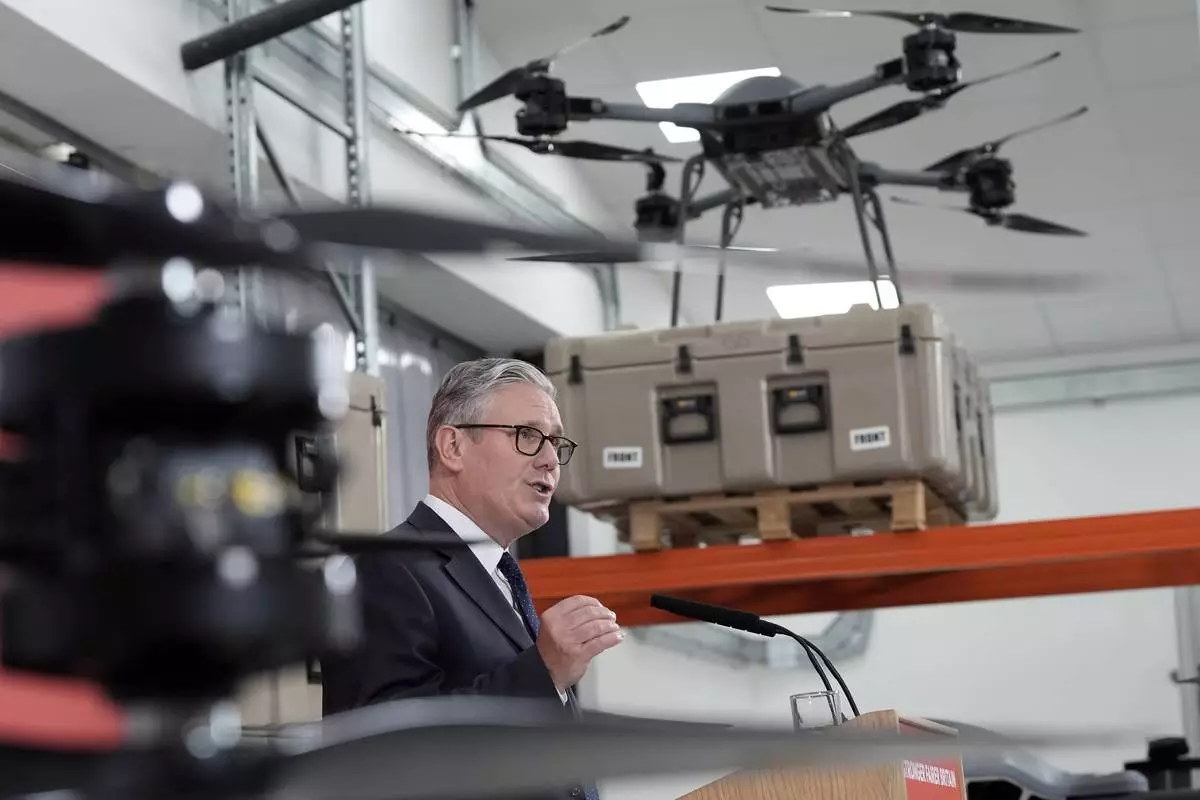
The U.K. has watched how drones have transformed war in Ukraine, which uses 200,000 of them a month to defend against Russian forces. Britain plans to invest billions in drone systems across all branches of the military. Instead of a planned fleet of new destroyers, the Royal Navy will get hybrid vessels that will act as command hubs for drones.

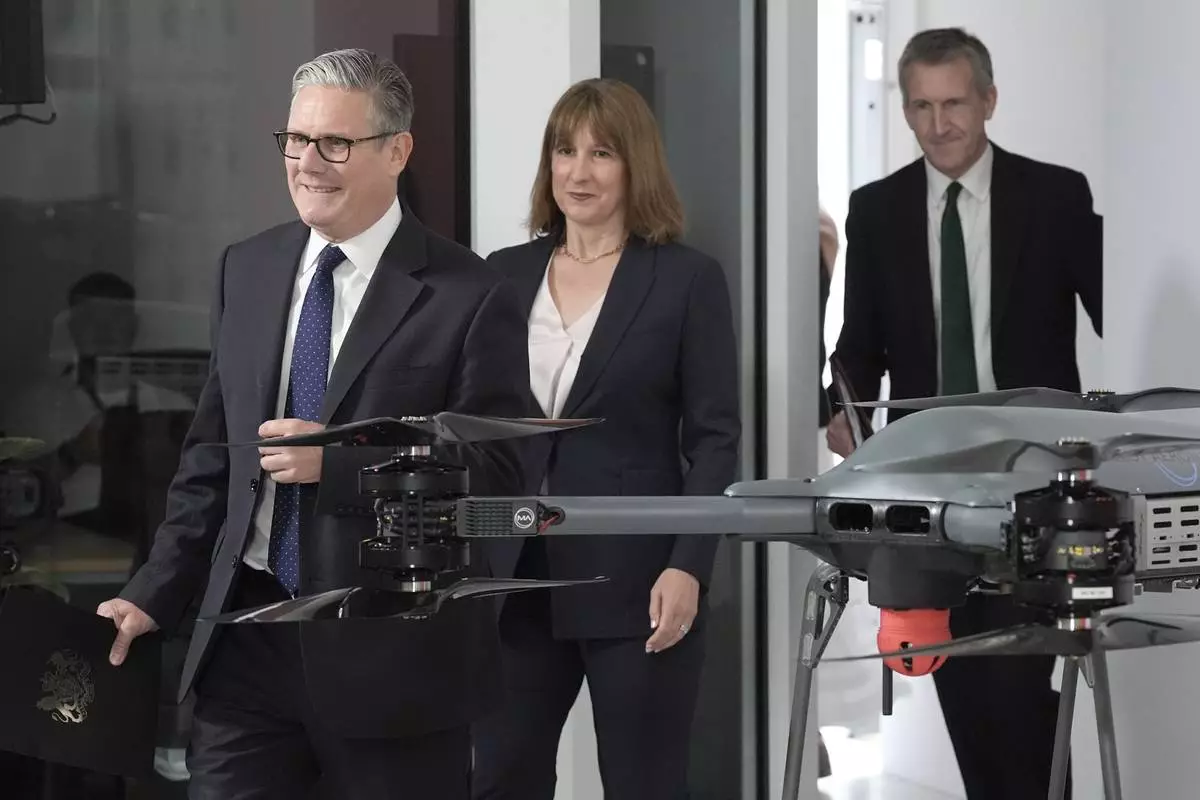
“The very nature of conflict is changing before our eyes,” Starmer said during a speech at a drone manufacturer near London. He said that, armed with cutting-edge technology, Ukrainian forces have destroyed Russia’s Black Sea fleet, “struck deep into Russian territory and stopped the advance of one of the biggest armies in the world.”

Britain and other NATO member nations have faced pressure from U.S. President Donald Trump to increase military spending. Trump has long questioned the value of the military alliance and complained that the United States provides security to European countries that don’t pull their weight.

The resignations of Healey and junior Defense Minister Al Carns were among a series of blows that prompted Starmer to announce last week that he will resign. A NATO summit in Turkey on July 7 and 8 may be his final overseas trip as prime minister.

His replacement, likely the former Greater Manchester Mayor Andy Burnham, will be under pressure to stick to the commitments in the defense plan.

“It is a platform on which I know my successor will build," Starmer said.

Opposition Conservative Party defense spokesperson James Cartlidge said the plan was “too little, too late.”

And retired Gen. Richard Barrons, who helped lead a defense review in preparation for the investment plan, said “we have to find more money for defense sooner.”

“We’re not keeping up with our allies, we’re certainly not keeping up with our enemies, and we know that the U.S. is no longer going to come and save European security in the face of a Russian threat,” he told the BBC.

British Prime Minister Keir Starmer, left, hugs Chancellor of the Exchequer Rachel Reeves on the occasion of the announcement of a defense plan, in Berkshire, England, Tuesday, June 30, 2026. (Stefan Rousseau/Pool Photo via AP)

British Prime Minister Keir Starmer, left, hugs Chancellor of the Exchequer Rachel Reeves on the occasion of the announcement of a defense plan, in Berkshire, England, Tuesday, June 30, 2026. (Stefan Rousseau/Pool Photo via AP)

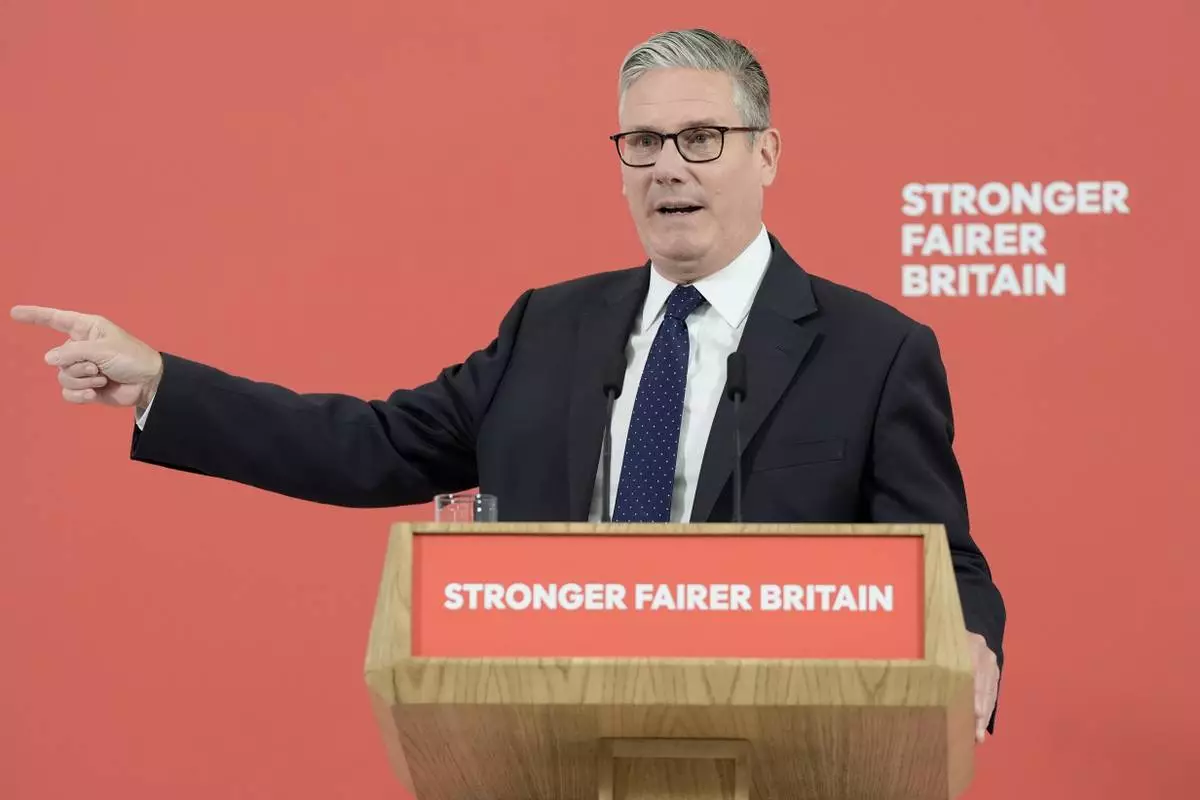
British Prime Minister Keir Starmer speaks on the occasion of the announcement of a defense plan, in Berkshire, England, Tuesday, June 30, 2026. (Stefan Rousseau/Pool Photo via AP)

British Prime Minister Keir Starmer speaks on the occasion of the announcement of a defense plan, in Berkshire, England, Tuesday, June 30, 2026. (Stefan Rousseau/Pool Photo via AP)

British Prime Minister Keir Starmer announces a defense plan, in Berkshire, England, Tuesday, June 30, 2026. (Stefan Rousseau/Pool Photo via AP)

British Prime Minister Keir Starmer announces a defense plan, in Berkshire, England, Tuesday, June 30, 2026. (Stefan Rousseau/Pool Photo via AP)

British Prime Minister Keir Starmer, left, followed by Chancellor of the Exchequer Rachel Reeves and Defense Secretary Dan Jarvis arrive for the announcement of a defense plan, in Berkshire, England, Tuesday, June 30, 2026. (Stefan Rousseau/Pool Photo via AP)

British Prime Minister Keir Starmer, left, followed by Chancellor of the Exchequer Rachel Reeves and Defense Secretary Dan Jarvis arrive for the announcement of a defense plan, in Berkshire, England, Tuesday, June 30, 2026. (Stefan Rousseau/Pool Photo via AP)

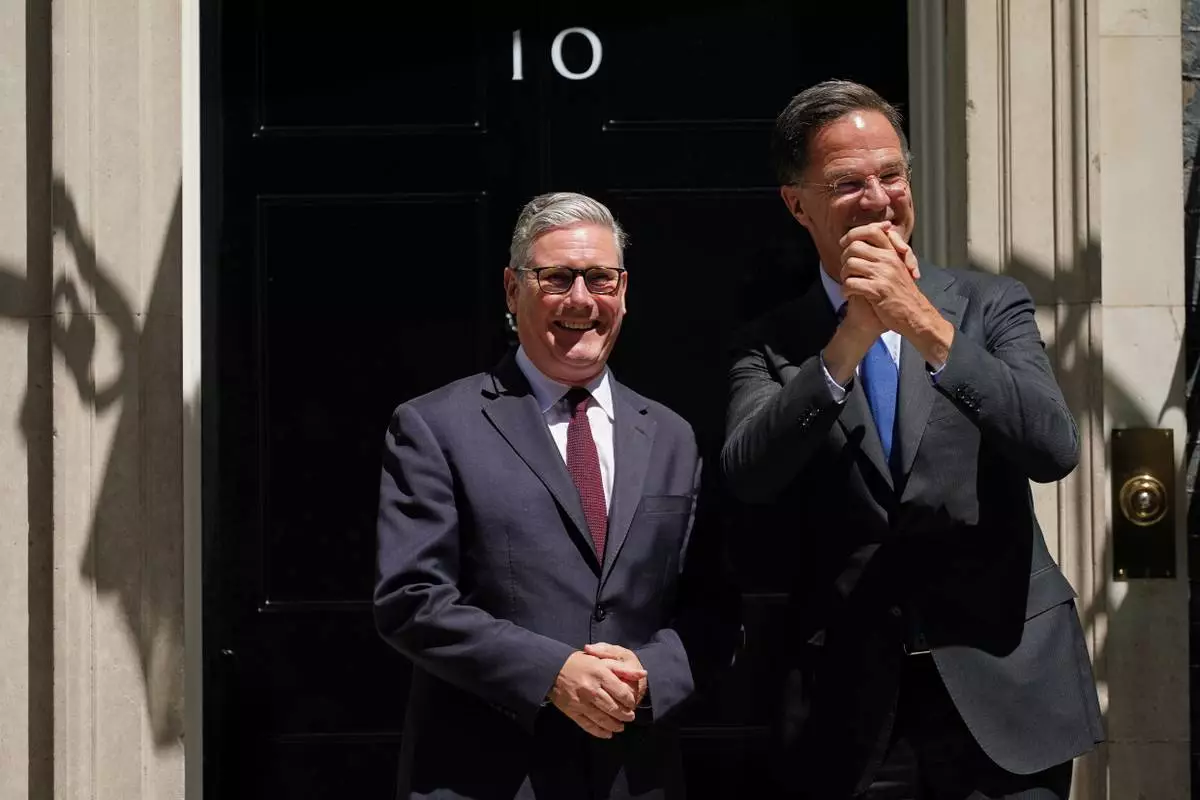
Britain's Prime Minister Keir Starmer welcomes NATO Secretary General Mark Rutte to 10 Downing Street in London, Monday, June 29, 2026.(AP Photo/Alberto Pezzali, Pool)

Britain's Prime Minister Keir Starmer welcomes NATO Secretary General Mark Rutte to 10 Downing Street in London, Monday, June 29, 2026.(AP Photo/Alberto Pezzali, Pool)

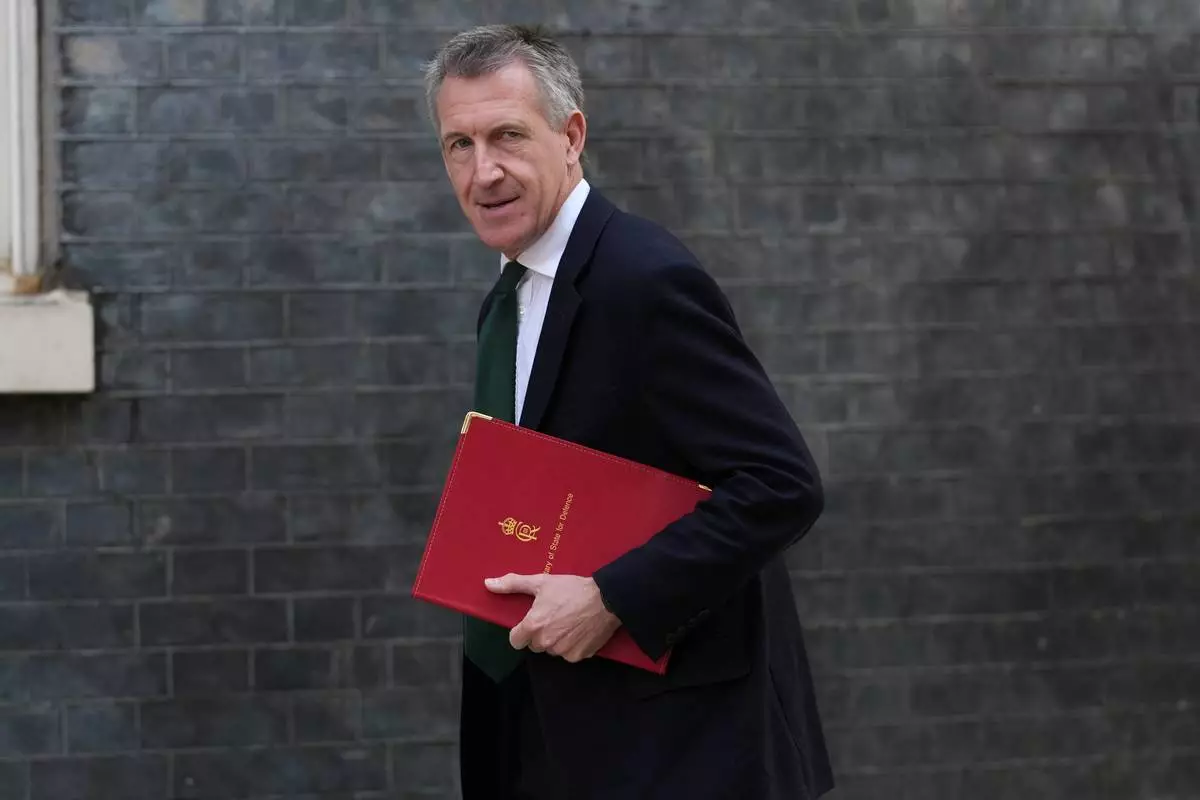
Britain's Secretary of State for Defence Dan Jarvis arrives for a cabinet meeting hosted by Britain's Prime Minister Keir Starmer at Downing Street in London, Tuesday, June 23, 2026.(AP Photo/Alastair Grant)

Britain's Secretary of State for Defence Dan Jarvis arrives for a cabinet meeting hosted by Britain's Prime Minister Keir Starmer at Downing Street in London, Tuesday, June 23, 2026.(AP Photo/Alastair Grant)

Recommended Articles