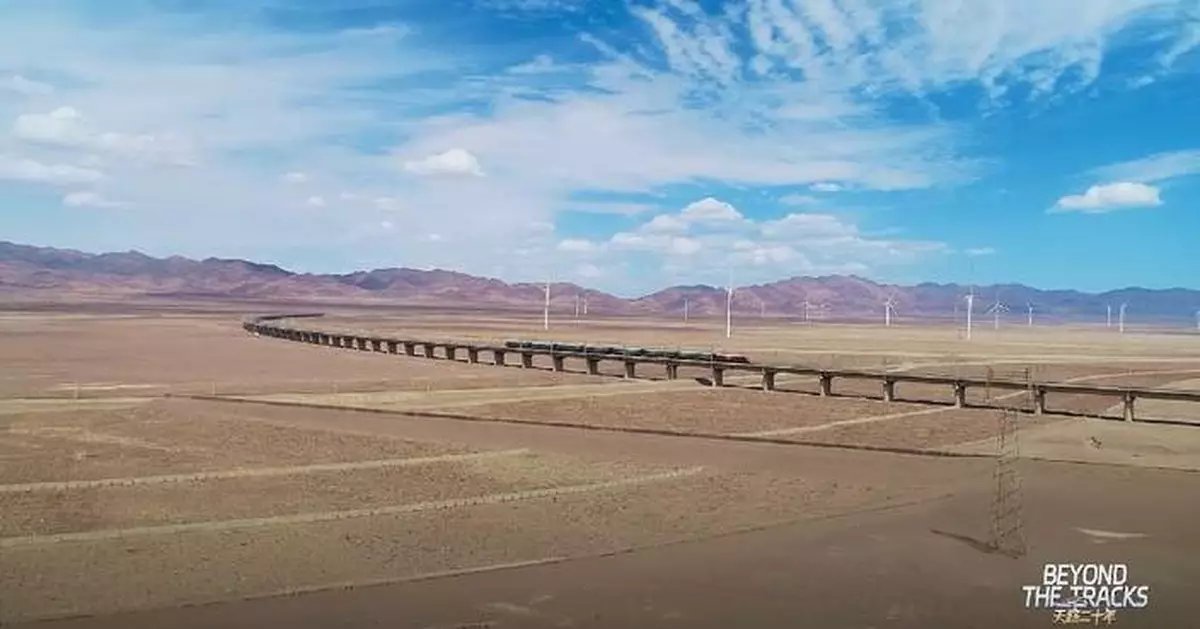
The Qinghai-Xizang Railway in western China -- the world's highest railway -- has been serving as a bridge connecting other inland parts of China with Lhasa, the railway's final stop for two decades so far, carrying people to and from the remote far western region of China.
In July 2006, the Qinghai-Xizang Railway linking Lhasa, southwest China's Xizang Autonomous Region, and Xining, capital of northwest China's Qinghai Province, went operational, ending Xizang's history of no railway access.
Wang Zengcai, 51 years old, now works as a driver instructor at Lhasa West Railway Station. He had never imagined he would one day settle on the plateau.
Born in Qinghai, he first arrived in Xizang in 1996 as a truck driver.
In 2006, just two days before the Qinghai-Xizang Railway officially opened, Wang served as an assistant driver and helped bring the first shunting locomotive from Golmud in Qinghai into Lhasa West Station, which made him excited.
"Of course I was excited. It was the first shunting locomotive at Lhasa West Station. That trip took about 32 hours. It was much faster than driving a truck," Wang said.
Later, he met a woman in Xizang. He married her and decided to settle in Lhasa.
"I decided to stay in 2008, when I met my wife. I thought I might put down roots in Lhasa," he said.
Over the years, Wang's bond with the railway deepened, and with it, his attachment to both his birthplace and his new home.
"Xining in Qinghai, and Lhasa in Xizang, in my heart, both places are my homes," Wang said.
A 28-year-old train coupler Tuoche comes from a small village in Amdo County in northern Xizang.
In 2006, when Wang Zengcai brought the shunting locomotive into Xizang, it was also the first time for Tuoche to see a train with his own eyes.
"It looked like a dragon. It felt magical. I got curious," Tuoche said.
That curiosity went on to shape Tuoche's connection with the railway.
As he grew older, he took the Qinghai-Xizang Railway to pursue his studies in inland China. At the time, he was the only student from Xizang in his class, which made other students curious.
"They were curious. They asked, 'How did you get here? Did you ride a horse?' I told them that trains run in Xizang now, and transportation is convenient," he said.
The railway carries more than students and workers alone. Travelers from around the world also journey to Xizang by rail to experience its breathtaking landscapes.
Train Y831 from Xining to Lhasa serves as a tourist train packed with visitors from across the world.
"It's a slow train, which makes it good for sightseeing. At Cuona Lake and Tanggula Mountains, it stops for more than 30 minutes," said Zhang Changning, train head of Y831.
For many travelers, this is a once in a lifetime experience.
"I'm 65. I've always wanted to see the Potala Palace and travel this railway. It's a lifeline built by countless heroes," said Jiang, a tourist from central China's Hunan Province.
"I told myself back then that I would make this trip," said a Taiwan tourist.
"I truly admire the Chinese people. They built such a difficult railway," said Hasan, a tourist from Indonesia.
"This is the happiest road for all of us," said Ji Yongkun, a tourist from southwest China's Yunnan Province.
Since the Qinghai-Xizang Railway opened, more than 41 million passenger trips have been recorded into and out of Xizang.
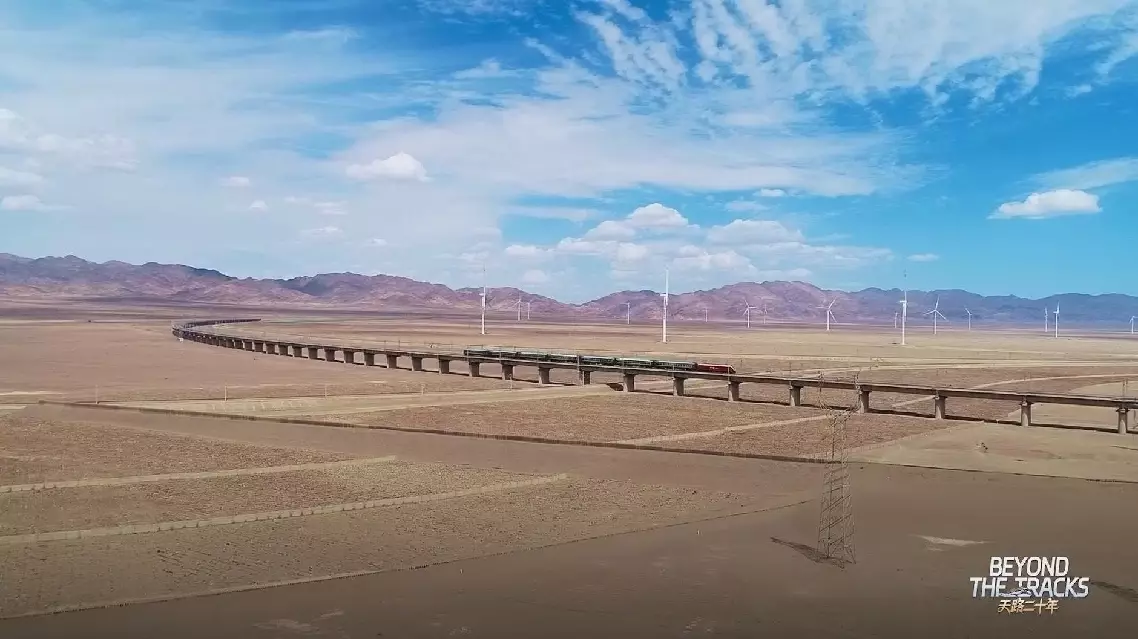
World's highest railway serves as bridge connecting far western region of China
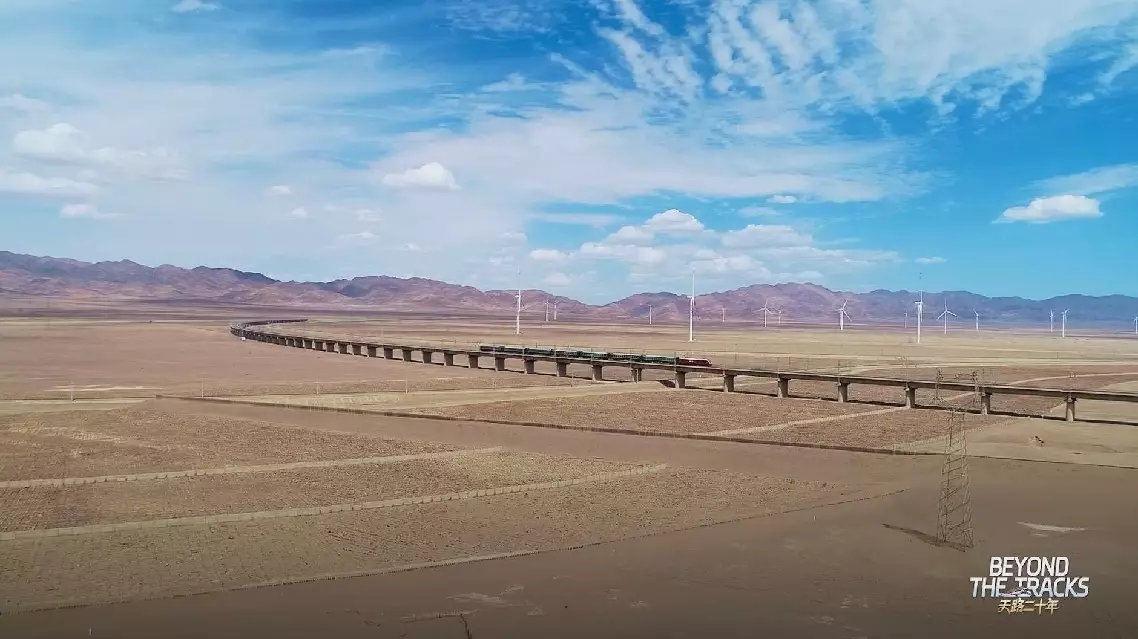
World's highest railway serves as bridge connecting far western region of China