ALEXANDRIA, La.--(BUSINESS WIRE)--Jun 30, 2026--
Union Tank Car Company (UTLX), a leading manufacturer and lessor of rail tank cars, has unveiled UTLX 1776, a custom-designed tank car commemorating the 250th anniversary of the United States. Built entirely in Alexandria, Louisiana, the railcar honors America's manufacturing heritage and the skilled workers who continue to build critical transportation infrastructure in the United States. The car made its debut during a special celebration at UTLX's manufacturing facility on June 5.
This press release features multimedia. View the full release here: https://www.businesswire.com/news/home/20260626165000/en/
"Twenty years ago, nearly every tank car operating in North America was built in the United States. Today, the majority of tank car production has moved to Mexico. Union Tank Car Company stands apart by manufacturing 100 percent of its tank cars in America, and we are proud of that distinction," said Neil Finn, President of Union Tank Car Company.
"Every railcar we produce is built at our state-of-the-art facility in Alexandria, Louisiana, by some of the most skilled and dedicated workers in American manufacturing. UTLX 1776 is a tribute to those men and women and to the 250 years of innovation, craftsmanship, and determination that have shaped this country. Maintaining the ability to build critical transportation infrastructure at scale in the United States strengthens domestic supply chains, supports high-quality American jobs, and ensures our customers have access to the equipment they depend on.”
Following its Alexandria debut, UTLX 1776 will embark on a yearlong national tour, visiting each of UTLX's eight railcar repair facilities across the United States. The tour will bring the America 250 celebration directly to the employees who maintain and support the nation's tank car fleet every day, while recognizing the craftsmanship, dedication, and teamwork that connect UTLX operations across the country.
Founded in 1891, Union Tank Car Company has played an essential role in North American freight transportation for more than 135 years. Today, every tank car manufactured by UTLX is designed, built, and assembled in the United States, supporting thousands of American jobs and helping move the chemicals, energy products, and other essential commodities that power the economy. UTLX 1776 stands as a tribute to that legacy and to the people who continue to build it every day.
About Union Tank Car Company
Union Tank Car Company (UTLX) is a leading designer, manufacturer, lessor, and maintenance provider of railroad tank cars and other specialized railcars. Together with its Canadian affiliate, Procor, UTLX manages a fleet of approximately 120,000 railcars serving customers in the chemical, petrochemical, energy, agricultural, and food industries across North America. UTLX is part of Marmon Holdings, Inc., a Berkshire Hathaway company. For more information, visit www.utlx.com.
About Marmon Rail
UTLX is part of Marmon Rail, a network of specialized industrial rail companies providing comprehensive, end-to-end rail solutions across North America. Through UTLX’s affiliation with Marmon Rail, customers have access to a network of more than 100 railcar service locations, as well as a full suite of services, including railcar repair, track construction, tank car leasing and manufacturing, railcar movers, locomotive services, in-plant switching and material handling operations. Marmon Rail is part of Marmon Holdings, a Berkshire Hathaway company. Marmon Rail is part of Marmon Holdings, a Berkshire Hathaway company. www.marmonrail.com
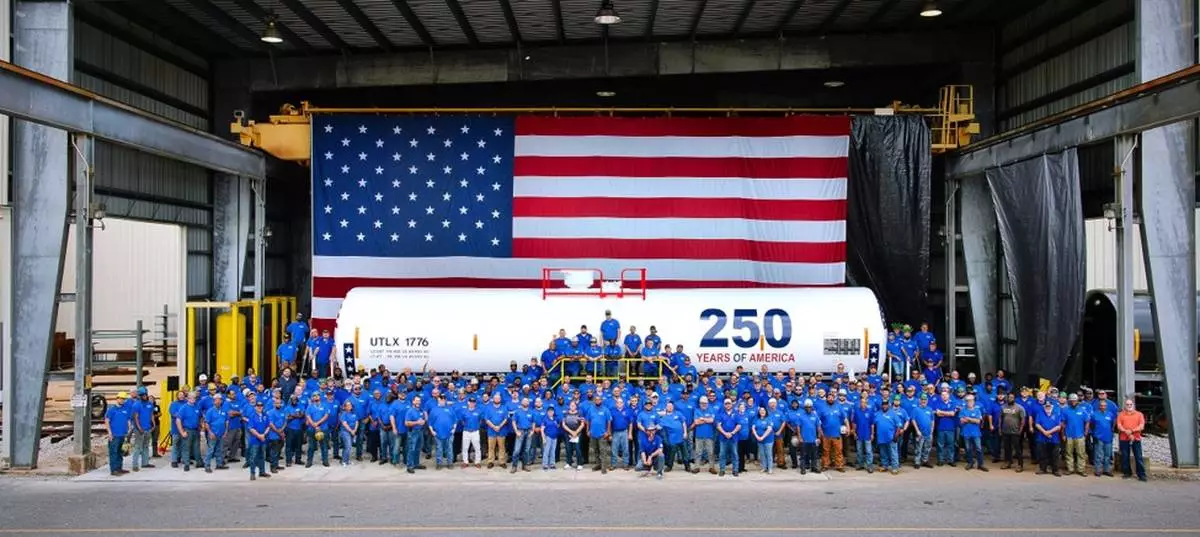
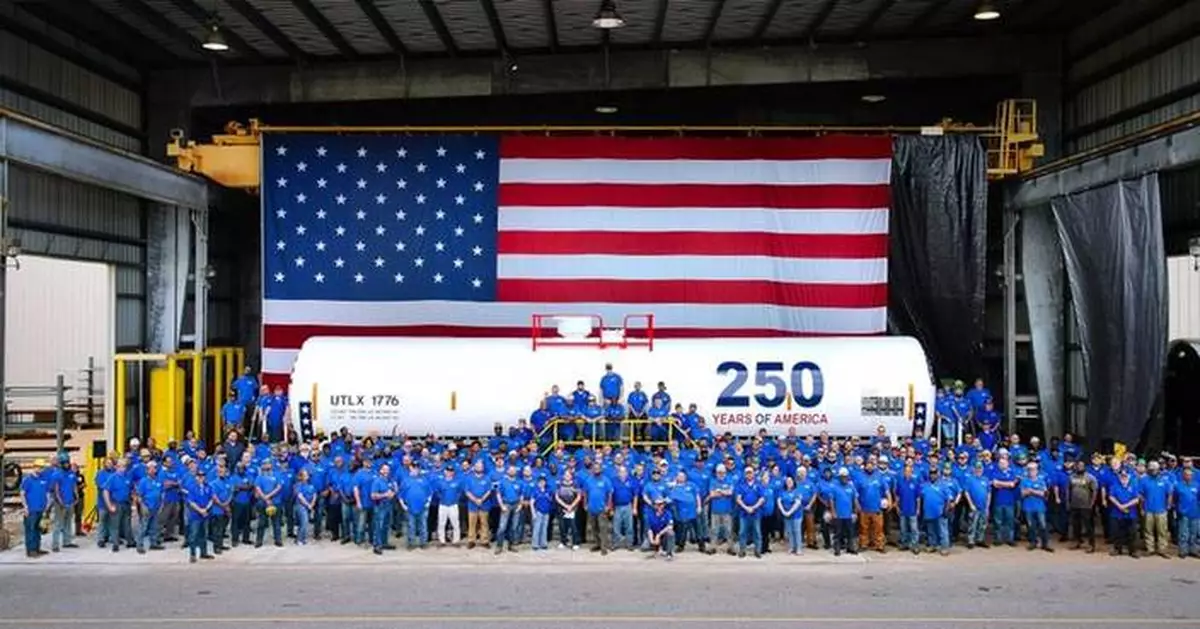
Employees at Union Tank Car Company's Alexandria, Louisiana manufacturing facility stand alongside the completed America 250 railcar, a special, commemorative car created to mark the United States' semiquincentennial.
The Supreme Court on Tuesday will rule on the constitutionality of President Donald Trump’s order on birthright citizenship declaring that children born to parents who are in the United States illegally or temporarily are not American citizens.
The decision comes on the final day of a Supreme Court term that has centered on Trump’s expansive claims of presidential power — and largely ruled in his favor.
The court on Tuesday upheld laws in roughly half the states that prohibit transgender girls and women from playing on their public school and college sports.
Here's the latest:
“Today’s news has nothing to do with safety or fairness in sports,” Trevor Project CEO Jaymes Black said in a statement. “These rulings only serve to send a message to transgender and nonbinary young people that says, ‘you don’t belong.’”
The Supreme Court on Tuesday erased limits on how much political parties can spend in coordination with candidates for Congress and president, striking down a federal election law that’s more than 50 years old.
Prodded by a Republican-led lawsuit that includes Vice President JD Vance, the court’s conservative justices were again in the majority of the latest decision that upended congressionally enacted limits on raising and spending money to influence elections. The court’s 2010 Citizens United decision opened the door to unlimited independent spending in federal elections.
The limits on party spending stem from a desire to prevent large donors from skirting caps on individual contributions to a candidate by directing unlimited sums to the party, with the understanding that the money will be spent on behalf of the candidate.
The Supreme Court had previously upheld the limits in 2001.
▶ Read more
“The Supreme Court gave cover to a campaign whose stated goal is to deny constitutional projections to trans people,” Imara Jones, CEO of TransLash Media, said in a statement. “The ultimate objective is to establish the cocktail of laws and systemic marginalization that will allow those in power to exclude larger and larger groups of Americans.”
“Sports are generally zero sum,” Kavanaugh said in the majority opinion. “Every biological male who makes the team takes a roster spot from a female athlete. Every biological male who earns playing time reduces the playing time of a female athlete. Every biological male who starts takes a starting position from a female athlete. Every biological male who wins a race takes the gold medal away from a female athlete.”
The ruling is another setback for transgender people.
The court’s conservative majority, which has repeatedly ruled against transgender Americans in the past year, ruled that state bans in Idaho and West Virginia don’t violate the Constitution or the federal law known as Title IX, which prohibits sex discrimination in education.
More than two dozen other Republican-led states have adopted bans on female transgender athletes, and the decision seems certain to extend to them as well.
Left unresolved by the outcome are lawsuits challenging state laws and regulations in Connecticut, California and elsewhere that permit transgender athletes to compete consistent with their gender identity.
▶ Read more
The justices are weighing Trump’s appeal of a lower-court ruling from New Hampshire that struck down the citizenship restrictions, one of several courts that have blocked them.
Trump signed the birthright citizenship order on the first day of his second term, but the restrictions have not taken effect anywhere in the country.
In oral arguments, Sauer, the lawyer for Trump’s administration, said that birthright citizenship encourages illegal immigration and “rewards illegal aliens who not only violate the immigration laws but also jump in front of those who follow the rules.”
The practice “demeans the priceless and profound gift of American citizenship,” he told the court.
But the American Civil Liberties Union, which is challenging Trump’s order, sees it very differently.
“It’s one of the clearest statements of who we are as a country,” the ACLU said in a statement. “No matter who your parents are, if you’re born here, you belong here.”
Most Americans say they believe in birthright citizenship, though many are conflicted about exactly who it should apply to.
An April survey by The Associated Press-NORC Center for Public Affairs Research of more than 2,500 U.S. adults found that about two-thirds say children born in the U.S. should get automatic citizenship. That number drops to 44% for Republicans.
But the poll also showed ambivalence when it came to specifics.
For example, 75% of U.S. adults support automatic citizenship for children born in the U.S. to parents in the country on work visas. Only about half, though, believe in it for children born to parents who are illegally in the country.
The 5-4 decision rejected a Republican-led attack on laws in more than half the states and the District of Columbia that permit mailed ballots to arrive and be counted some number of days after the election, provided they are postmarked by Election Day.
The outcome spares officials the headache of changing their ballot rules just a few months before the 2026 midterm congressional elections.
In just over half of those states, the more forgiving deadlines apply only to ballots cast by military and overseas voters.
During oral arguments, even many conservative justices appeared unconvinced by the government’s case.
“I can imagine it being messy in some applications,” Justice Amy Coney Barrett said, asking Solicitor General D. John Sauer about the issue of abandoned infants.
“What if you don’t know who the parents are?” she asked.
Sauer started to say that question was addressed in the U.S. code, but Barrett quickly interrupted him.
“Yeah, yeah, yeah, yeah, but what about the Constitution?” she asked.
Outside of the Americas, most countries follow the legal principle of jus sanguinis, or “right of blood,” with a child’s citizenship inherited from its parents, no matter the place of birth.
In the European Union, for example, no member states grant automatic, unconditional citizenship to children born to foreigners.
But American legal practice is descended in many ways from English common law, which had long provided for citizenship based on a child’s place of birth, the legal concept of jus soli, or “right of soil.”
The UK, though, abandoned jus soli with the British Nationality Act of 1981.
Under the new rules, people born in the UK get citizenship only if at least one parent is a British citizen or has “settled status” under the law.
The court will dive right into the remaining decisions when the justices take the bench at 10 a.m. ET.
The opinions are typically read in ascending order of seniority so that the most junior justice with an opinion goes first. Chief Justice John Roberts, who may well have the decision in the birthright citizenship case, would go last.
Other than at the Federal Reserve, with its role of setting interest rates, the court held that presidents have free rein to fire agency heads at will, despite federal laws that require a cause for such dismissals and a 91-year-old decision that had limited executive authority.
The justices allowed Fed governor Lisa Cook to stay in her job while she fights Trump’s effort to fire her over allegations of mortgage fraud, which she has denied.
With the six conservative justices in the majority, the nine-member court jettisoned its unanimous decision in Humphrey’s Executor that had limited when presidents can fire agencies’ board members — in part to try to ensure decision-making free of political influence.
“We hold that such protection from removal is contrary to the separation of powers enshrined in the Constitution,” Chief Justice John Roberts wrote for the court.
In separate cases, the court will also decide:
Whether states can prohibit transgender athletes from playing on girls’ and women’s public school and college teams.
Whether to uphold a federal law more than 50 years old limiting how much political parties can spend in coordination with candidates for Congress and the president.
Oral arguments for the case lasted more than two hours in a crowded courtroom that included Trump, the first sitting president to attend arguments at the nation’s highest court, and, in seats reserved for the justices’ guests, actor Robert De Niro.
Trump heard his administration’s top Supreme Court lawyer, Solicitor General D. John Sauer, face one skeptical question after another. Justices asked about the legal basis for the order and voiced more practical concerns.
“Is this happening in the delivery room?” Justice Ketanji Brown Jackson asked, drilling down into the logistics of how the government would actually figure out who is entitled to citizenship and who is not.
Chief Justice John Roberts suggested that Sauer was relying on quirky exceptions to citizenship to make a broad argument about people who are in the country illegally. “I’m not quite sure how you can get to that big group from such tiny and sort of idiosyncratic examples,” Roberts said.
Justice Clarence Thomas sounded the most likely among the nine justices to side with Trump.
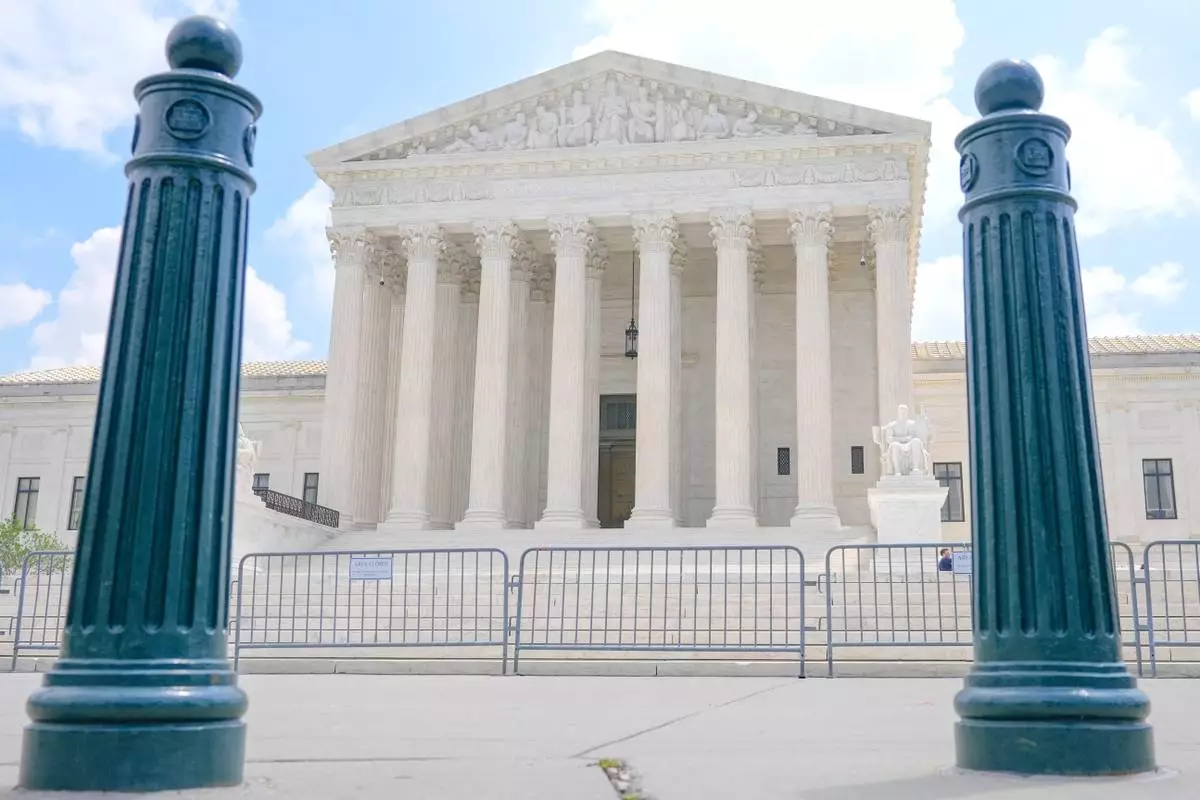
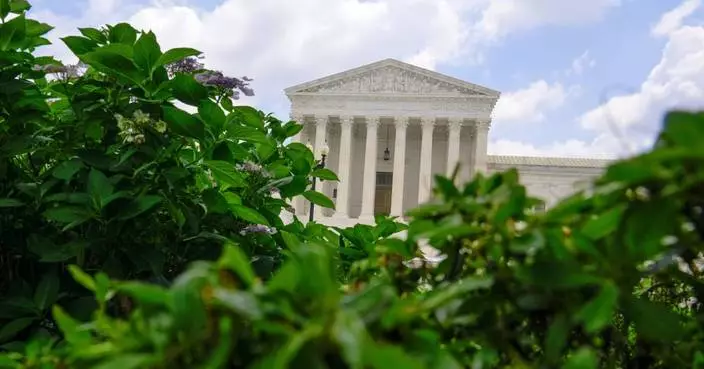
The U.S. Supreme Court is seen Monday, June 29, 2026, in Washington. (AP Photo/Mariam Zuhaib)
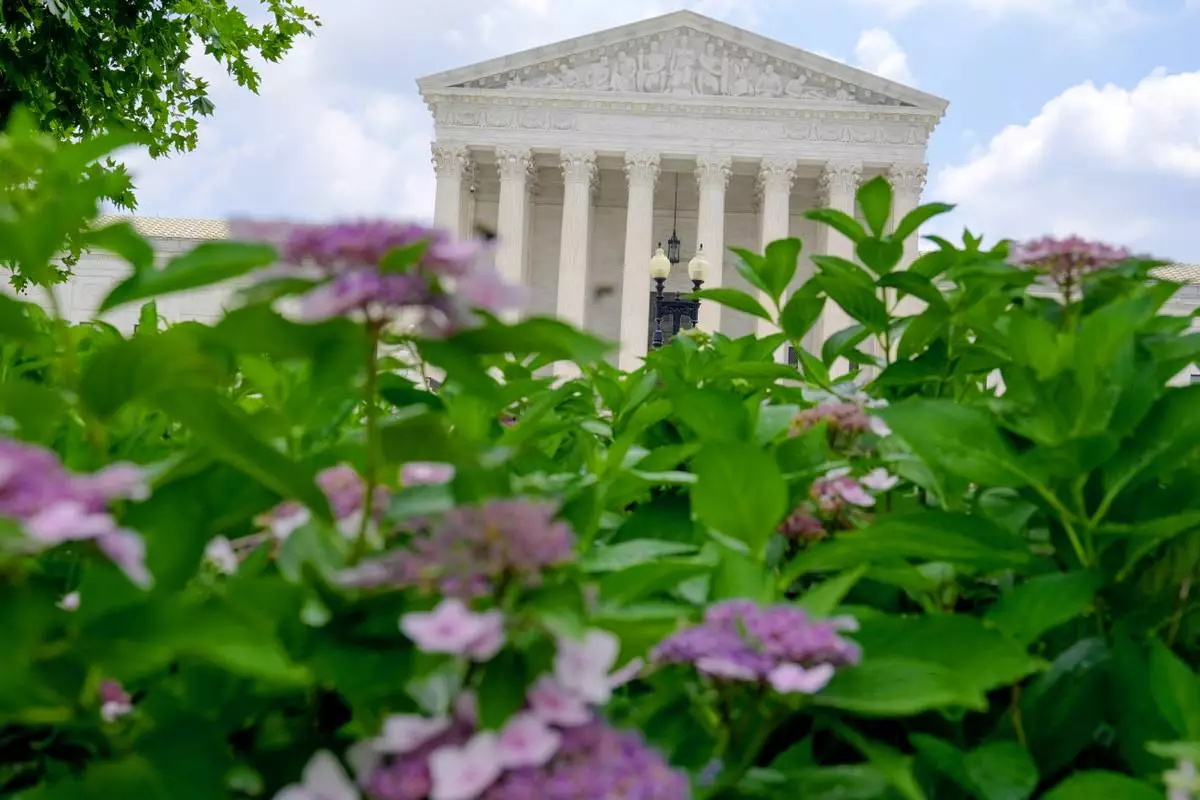
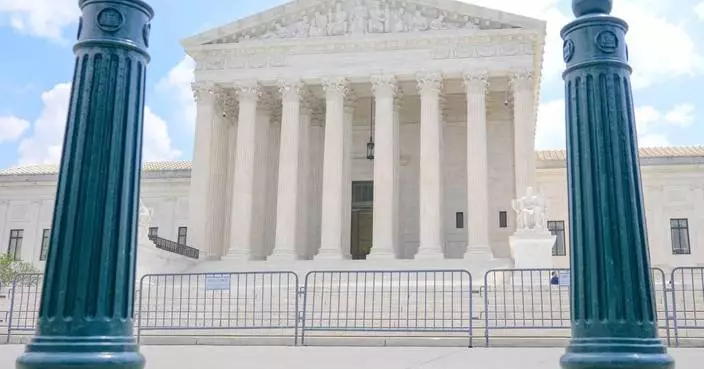
The U.S. Supreme Court is seen Monday, June 29, 2026, in Washington. (AP Photo/Mariam Zuhaib)