WASHINGTON (AP) — The Supreme Court on Tuesday erased limits on how much political parties can spend in coordination with candidates for Congress and president, striking down a federal election law that is more than 50 years old.
Prodded by a Republican-led lawsuit that includes Vice President JD Vance, the court's six conservative justices were again in the majority of the latest decision that upended congressionally enacted limits on raising and spending money to influence elections. The court’s 2010 Citizens United decision opened the door to unlimited independent spending in federal elections.
The limits on party spending stem from a desire to prevent large donors from skirting caps on individual contributions to a candidate by directing unlimited sums to the party, with the understanding that the money will be spent on behalf of the candidate.
The Supreme Court had previously upheld the limits, in 2001.
But Justice Brett Kavanaugh, writing for the court, said that decision was wrong and should be overruled. “In short, constitutional text, history and precedent establish that the political-party coordinated-expenditure limits violate the First Amendment,” Kavanaugh wrote.
Justice Elena Kagan's dissent for the three liberal justices said the court “ushers in untold harm” by enabling parties to funnel large contributions to individual candidates, far in excess of what donors can give those candidates directly.
National parties now will be able to make direct contributions to candidates’ campaigns,
The decision is likely to give Republicans at least a short-term boost because they maintain a sizable cash advantage over Democrats.
The Republican National Committee and its Senate and House campaign fundraising arms have dwarfed Democrats’ in the months before congressional elections where the GOP is defending narrow majorities in both houses.
At the end of May, the RNC reported having more than $125 million to spend, its highest-ever cash on hand total, according to its most recent Federal Election Commission filing in May. Meanwhile, the National Republican Senatorial Committee had more than $48 million on hand in its most recent report and the National Republican Congressional Committee had more than $81 million.
In the same period, the Democratic National Committee had $14.4 million on hand, while the Democratic Senatorial Campaign Committee had roughly $37 million and the Democratic Congressional Campaign Committee, roughly $73 million.
The Republican committees for House and Senate candidates filed the lawsuit in Ohio in 2022, joined by Vance, then a senator from Ohio, and then-Rep. Steve Chabot.
After President Donald Trump took office for his second term, the Federal Election Commission dropped its defense of the law and joined with Republicans in urging that it be overturned.
Democrats had called on the court to uphold the law, even though there is wide agreement that the spending limits have hurt political parties in an era of unlimited spending by other organizations.
Last year, the coordinated party spending for Senate races ranged from $127,200 in several states with small populations to nearly $4 million in California, the most populous state. For House races, the limits were $127,200 in states with only one representative and $63,600 everywhere else.
Entrenched divisions between liberal and conservative justices over campaign finance restrictions were on display when the court heard arguments in December.
“Every time we interfere with the congressional design, we make matters worse,” said Justice Sonia Sotomayor, a dissenter in Citizens United and the court’s other campaign money cases.
By contrast, Justice Samuel Alito, a member of the Citizens United majority, described the decision as “much maligned, I think unfairly maligned.” The effect of the decision was to ”level the playing field,” Alito said, by expanding the right to spend freely that had previously belonged only to media companies.
Associated Press writer Thomas Beaumont contributed to this report.
Follow the AP's coverage of the U.S. Supreme Court at https://apnews.com/hub/us-supreme-court.
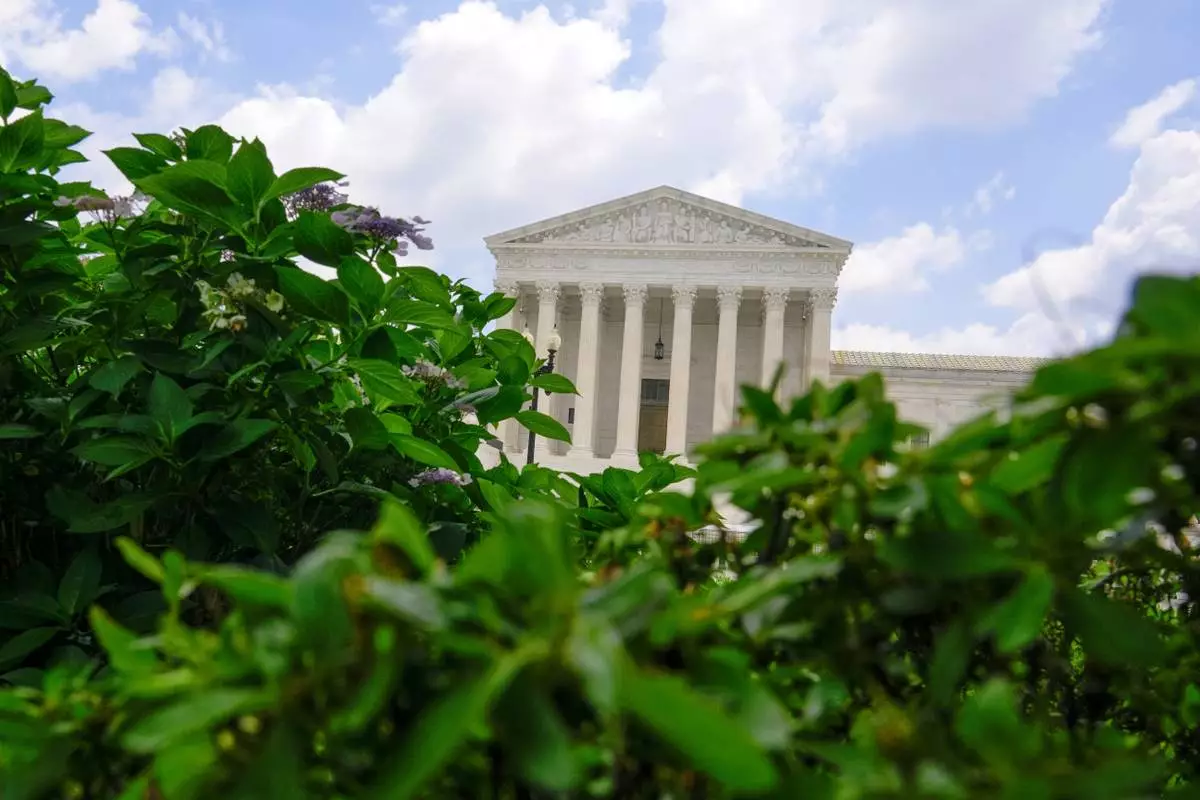
The U.S. Supreme Court is seen Monday, June 29, 2026, in Washington. (AP Photo/Mariam Zuhaib)
WASHINGTON (AP) — The United States will stop providing $4 billion in aid each year to Israel in 2027 but will sell arms to its closest ally in the Middle East, President Donald Trump said on Tuesday.
The Republican president told Fox News Channel during a phone call on Election Day for the midterms that Israeli Prime Minister Benjamin Netanyahu had approached him about the idea and that they have been talking about it for a couple of years.
Trump said Israel doesn’t need the aid and it’s a lot of money for the U.S. to spend. But Trump also said that U.S. aid to Israel has become a Democratic talking point for candidates such as Michigan U.S. Senate candidate Abdul El-Sayed, a vocal critic of Israel.
Even far-right conservatives, who have supported Trump in the past, have taken issue with U.S. support for Israel, with prominent commentators like Tucker Carlson openly questioning the value of the relationship.
“You can consider it barter. You can consider military aid or cash,” Trump said. “Look, we give them $4 billion of things and money, and they don’t need it. And I was approached by Bibi Netanyahu, and we’ve been talking about it for a couple of years because it’s a lot of money.”
But if Trump intended the announcement to make a last-ditch effort to sway midterm votes, analysts said it likely would not work.
“It's an open question if this was about politics, but it isn't going to change Republican voters, and it certainly isn't going to change Democratic voters,” said David Schenker, who served as Trump's top diplomat for the Middle East in his first term and is now with the Washington Institute for Near East Policy.
There was no comment from Netanyahu or his office as of Tuesday evening Israel time, several hours after Trump's announcement. The prime minister did post twice on social media, but he focused on unsubstantiated allegations of foreign interference in Israel’s elections, not on what Trump said.
But at least some of his political opponents were critical.
His chief rival, Gadi Eisenkot, called on the prime minister to speak to the possibly radical change in U.S.-Israeli relations.
“The fact that Israel’s defense establishment is learning of a shift in our strategic relationship through the media, at the same time as the Israeli public, shows just how dangerous Benjamin Netanyahu’s conduct is,” Eisenkot, a former military chief, said in a statement.
Yair Golan, a leader in Israel’s opposition bloc, said an end to U.S. military aid would deal a “severe blow to Israel’s security” at a time when the country is fighting wars on multiple fronts.
“The burden of funding defense needs at such a critical juncture will fall entirely upon the Israeli public,” Golan, a former deputy military chief, said in a statement.
The United States has sent tens of billions of dollars in military aid to Israel over decades.
In 2016, President Barack Obama, a Democrat, signed an unprecedented security agreement with Israel to give its military $38 billion over 10 years, amounting to $3.8 billion a year. Under the agreement, Israel’s ability to spend part of the funds on Israeli military products was to be phased out and eventually all of the money would be spent on American military industries.
Netanyahu has talked about the need to wean Israel off the aid in the past and has said that the American aid would end at some point.
He told The Economist in January that he wanted to “taper off” U.S. military aid in the next 10 years and that such a change was “in the works.”
Although Trump spoke of ending the aid by the end of 2026, such an abrupt shift would be all but impossible, and Congress will have a large say in what happens. More likely, there could be a wind-down of the current memorandum of understanding if Congress agrees, but it's unclear if that could happen as early as 2027. The current agreement is not set to expire until 2028.
Behind the scenes, there have been discussions about whether the U.S.-Israel arrangement should be restructured in the long term into one that’s more of a partnership of the two countries' defense tech and weapons manufacturing industries.
The 2027 National Defense Authorization Act includes a provision that would expand U.S.-Israeli cooperation on the development of new defense technology and identify opportunities to integrate Israeli defense technology into the U.S. military. The NDAA has not yet been approved by Congress.
But there has been some concern from the Israeli side that such a shift in the relationship could result in the Israelis giving up their intellectual property but still facing constraints imposed by the U.S., according to a person who is familiar with the diplomatic discussions but was not authorized to comment publicly and spoke on the condition of anonymity.
Meanwhile, some critics, including Rep. Ro Khanna, a California Democrat on the House Armed Services Committee, have criticized the provision in the NDAA. Khanna said such integration between the militaries would lead to the U.S. losing sovereignty.
The optics of the aid had also become an issue, according to Trump, who singled out El-Sayed for using it as a talking point.
“The left uses the $4 billion payment — that everybody knows about, it’s no secret — as a signal of unfairness,” Trump said Tuesday on Fox. “And we can’t allow that to happen. I don’t like that, because it’s too easy. It’s almost too easy a target. And Bibi and I have been talking, and we’ve agreed. He was very understanding of it.”
Phasing out direct military and economic aid to Israel has long been a subject of debate in both countries and has gained traction in the last several years. “This has been coming for a long time,” said Schenker.
There are several issues that complicate it, though, not least of which are obligations the U.S. has to Israel under the terms of the Camp David peace accords with Egypt, which require the United States to support Israel and Egypt with security assistance.
In addition, much of the assistance the U.S. provides Israel comes in the form of foreign military financing, or FMF, that gives Israel the money but requires it to spend the money on American-produced weaponry, meaning the funds are plowed back into the U.S. economy.
Unless Israel plans to spend the same amount on purchasing American materiel, U.S. defense contractors may see an impact.
In addition, even if aid were to be suddenly cut off, there would still be many years of previous purchases in the pipeline waiting to be delivered. Most purchases take years from the sale to construction and then delivery.
“The real question for me is whether weapons deliveries will be affected,” Schenker said. “Will Israel be prioritized?”
Associated Press writer Aamer Madhani contributed.
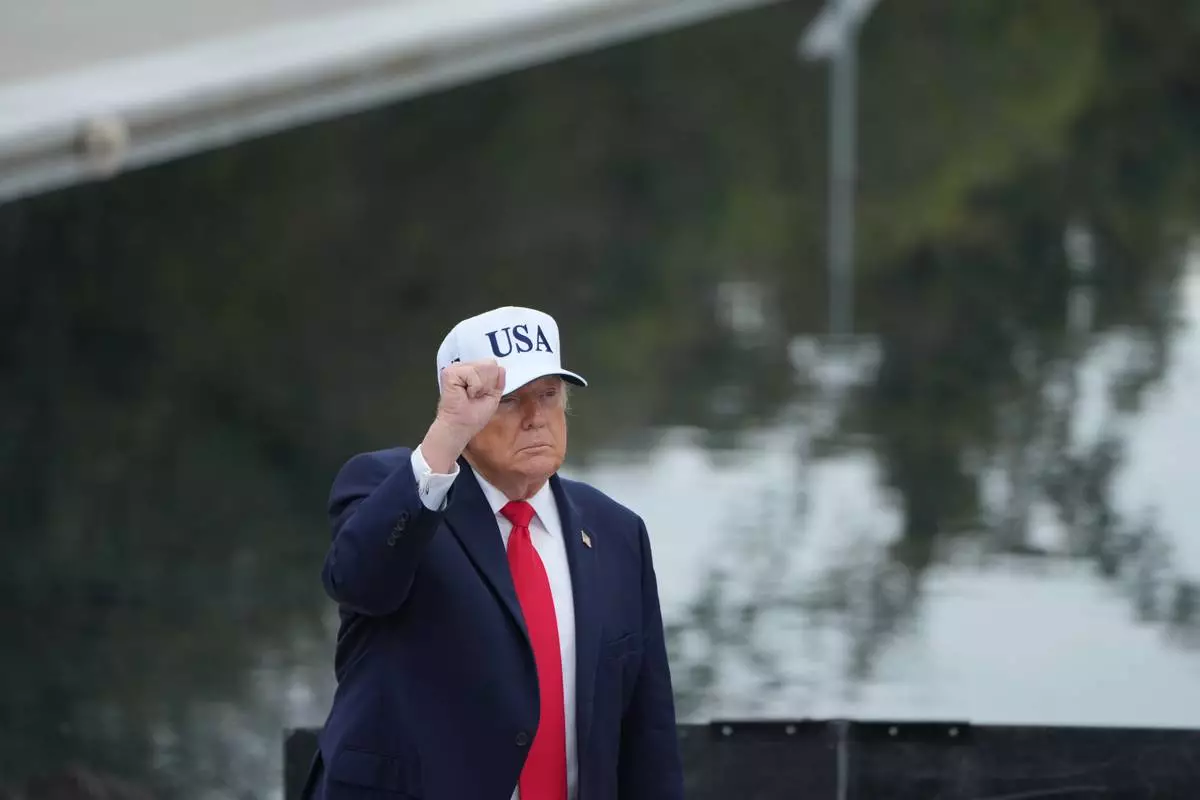
President Donald Trump after speaking in front of the Lincoln Memorial Reflecting Pool, Monday, Nov. 2, 2026, in Washington. (AP Photo/Mark Schiefelbein)