On the U.S.-Iran situation, the priority is to safeguard and implement the memorandum of understanding, maintain the momentum of negotiations, and work for an early comprehensive agreement agreed by both the United States and Iran, accepted by regional countries, and welcomed by the international community, said Chinese Foreign Minister Wang Yi on Tuesday.
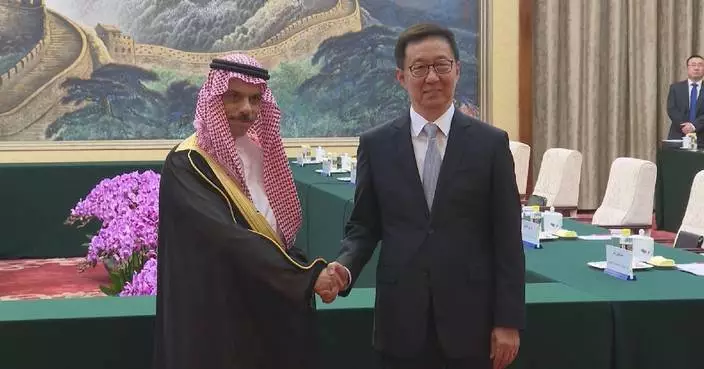
Wang made the remarks when meeting with Minister of Foreign Affairs of Saudi Arabia Prince Faisal bin Farhan Al Saud in Beijing, adding the current ceasefire remains fragile, but talking is better than fighting, and dialogue is better than confrontation.
China welcomes the launch of U.S.-Iran negotiations, said Wang, adding China stands ready to work with Saudi Arabia to contribute to easing tensions and lasting peace and stability in the region. China is also willing to support Saudi Arabia in playing a bigger role in international and regional affairs, and join hands to uphold the authority of the United Nations and build a more just and equitable global governance system.
On bilateral relations, Wang, also a member of the Political Bureau of the Communist Party of China Central Committee, said Saudi Arabia is an important member of Arab and Islamic countries, and an indispensable important force in the multipolarization of the world.
Wang said China has always regarded Saudi Arabia as a strategic partner that treats each other as equals, respects and trusts each other, and pursues win-win cooperation. The China-Saudi Arabia comprehensive strategic partnership, since its establishment a decade ago, has become a model of win-win cooperation among Global South countries, he added.
China is ready to maintain high-level exchanges with Saudi Arabia, and give full play to the strategic guiding role of the leaders of both countries in growing China-Saudi relations, said Wang, calling on both sides to make full use of the high-level joint committee, to plan in a coordinated way and advance pragmatic cooperation in all fields.
He went on to say that the two sides should leverage complementary advantages, optimize the trade structure, scale up two-way investment, promote green development, and support each other's modernization.
The Saudi foreign minister said that the Saudi side highly cherishes relations with China and firmly abides by the one-China principle. He said people-to-people and cultural exchanges with China will be strengthened, and that pragmatic cooperation in fields such as investment, finance, energy and artificial intelligence will be deepened.
Saudi Arabia supports the series of major global initiatives proposed by China, and stands ready to engage in close multilateral coordination with China and safeguard the common interests of developing countries, he said.
The Saudi side appreciates the constructive role China has played in promoting the de-escalation of the situation in the Middle East, and looks forward to working with China to bring peace and stability to the region at an early date, he said.
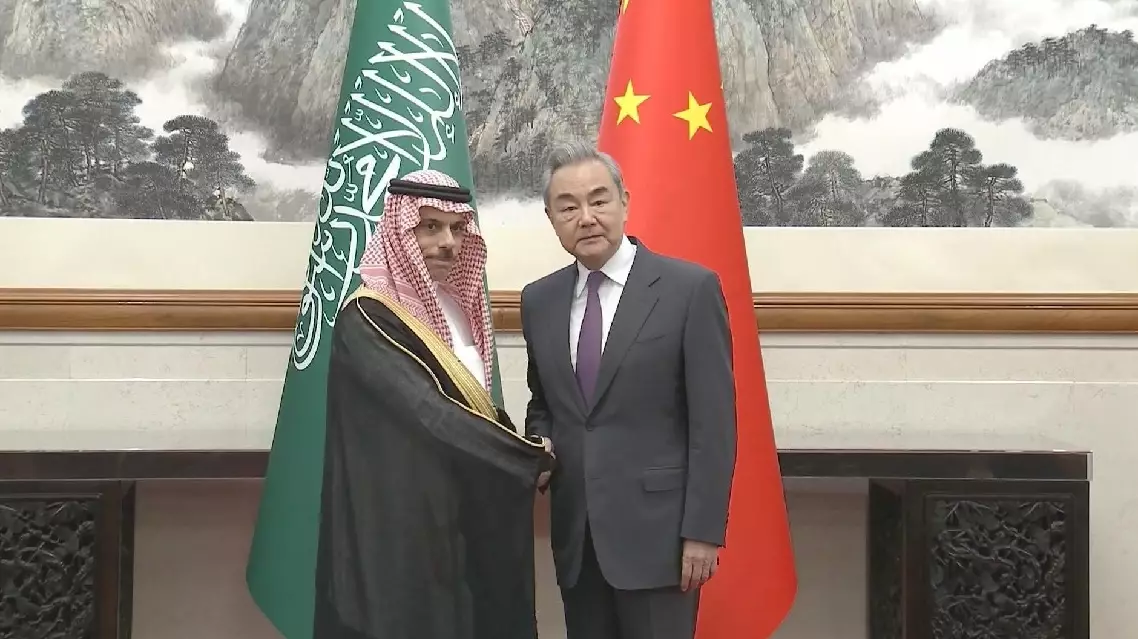
China calls for maintaining momentum of negotiations between U.S., Iran: FM
Experts from the Chinese Academy of Sciences (CAS) and the European Space Agency (ESA) are carrying out in-orbit testing on their jointly developed satellite known as the Solar wind Magnetosphere Ionosphere Link Explorer (SMILE).
SMILE was launched into orbit from the Kourou launch center in French Guiana on May 19, and is expected to usher in a new era in space weather forecasting and in China-Europe space science cooperation.
The satellite has accurately entered its designated orbit for scientific observation, and will undergo months of in-orbit testing before beginning a three-year scientific observation mission.
The SMILE mission is the first in-depth, collaborative space science exploration project between the CAS and the ESA, and hopes to reveal the mysteries of the interaction between solar wind and Earth's magnetosphere.
"SMILE carries four science payloads -- two for imaging and two for in-situ measurements. Over the next three months, we need to ensure all instruments are functioning correctly, and that their parameters are fine-tuned to optimal settings," said Wang Chi, an academician at the CAS who is director of the National Space Science Center (NSSC) at the CAS and Chinese principal investigator in the SMILE satellite program.
Of the four payloads, one is being operated by the European side and three by the Chinese side. Together, they will capture a comprehensive set of geospace parameters.
"This is very important, because you see what's happening in real time. If we would be in Europe, it would be remotely, with no discussions. The important thing is to discuss, because sometimes you have problems that you need to solve. And the best thing is to have the teams together, that can discuss and exchange. And we exchange between Chinese engineers and European engineers to solve problems that may occur,” said Philippe Escoubet, Project Scientist for the SMILE mission from the European Space Agency.
The satellite has a highly sensitive magnetometer designed to measure solar wind's and the Earth's magnetic fields.
"The satellite itself carries electrical currents that generate interfering magnetic fields. If the sensor is placed too close to the spacecraft, we can't tell whether the readings come from the satellite or from the Earth's actual magnetic field. That's why we use a boom to extend it far out away from the spacecraft body," said Wang.
"We want to know how the sun influences the Earth. Sometimes there are big eruptions on the sun that sends these big clouds of plasma towards the Earth. And this can have a problem on our daily life. For instance, GPS can be not accurate, space weather event, big event, can also affect power. So with SMILE and other missions, we want to predict this kind of event and warn people, and monitor our electricity lines and everything that this doesn't happen again,” said Escoubet.
The core scientific objective of the SMILE mission is to achieve, for the first time, global imaging observations of solar wind-magnetosphere interactions, presenting the complete chain of how solar wind energy enters, propagates through, and dissipates within Earth's space, according to Wang.
To realize this goal, the satellite employs a groundbreaking design: it carries the world's first spaceborne soft X-ray imager (SXI), which can transform the previously "invisible" magnetospheric boundary into images.
The satellite also carries an ultraviolet auroral imager (UVI), a light ion analyzer (LIA), and a magnetometer (MAG). This observation system enables simultaneous global-scale imaging to track magnetospheric evolution while also measuring in situ solar wind physical parameters, providing unprecedented observational capabilities for studying space weather processes such as magnetic storms and substorms.
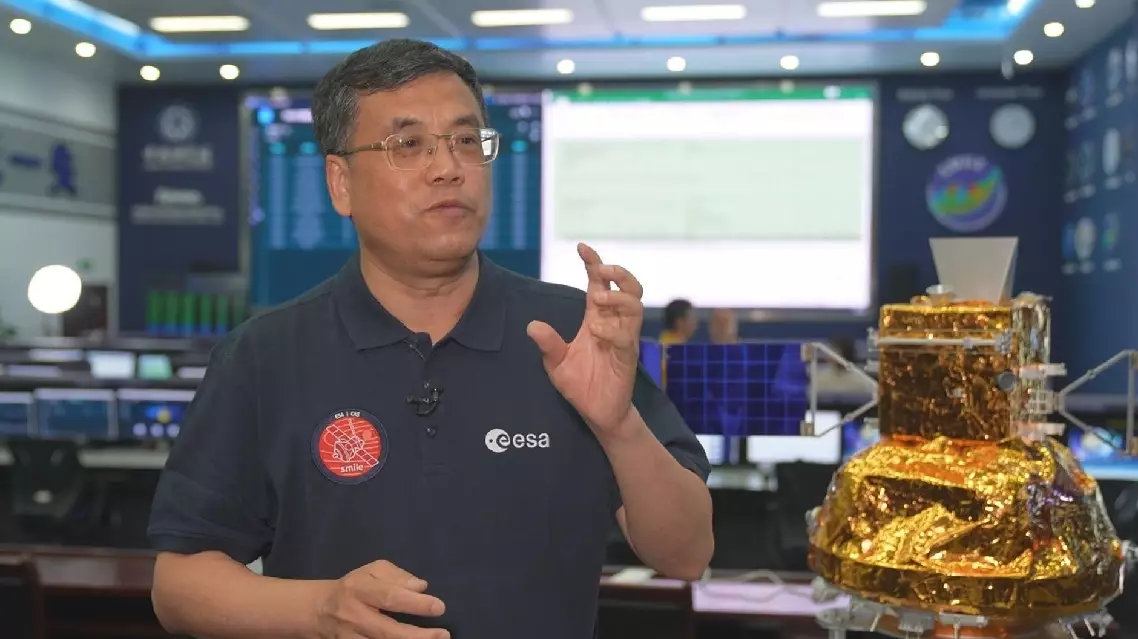
Chinese, European teams carry out in-orbit testing on SMILE satellite