RIO DE JANEIRO (AP) — Hundreds of bus drivers on strike protested in downtown Rio de Janeiro on Tuesday, demanding better conditions, increased pay and an end to the six-day working week. They are also part of a broader movement of workers pushing to guarantee Brazilians two days off a week.
“You can’t spend quality time or go out with your family, give attention to your children, visit relatives, or have a day like going to a restaurant to have lunch together," said Alexandre Garrido, 49, who has been a bus driver for 20 years.
A proposal to limit the working week to five days is currently in the hands of the Senate after approval from a lower house in May, and is backed by President Luiz Inácio Lula da Silva as part of his reelection bid in October.
Currently, many Brazilians work five eight-hour days and another four hours on a sixth day. Others have two days off but still work a total of 44 hours per week. The constitutional amendment seeks to establish a 40-hour weekly limit without reducing pay.
If approved, it would transform the lives of millions of mostly poor Brazilians and likely give a boost to Lula’s campaign. Other Latin American countries have made similar reforms, while Argentina has moved in the opposite direction.
“Those who support working six days a week are in favor of modern slavery,” said Rick Azevedo, a city councilor in Rio who attended the protest Tuesday and who founded the movement Life Beyond Work, one of the driving forces behind the measure.
In addition to the bus drivers' strike called by a local union, which emphasizes increased pay as their main demand, Azevedo's movement also organized protests across Brazil on Tuesday.
About 14 million Brazilians work six days a week, including 26-year-old Fernanda Sousa. Every day except Tuesdays, she makes her way down the sprawling Rocinha favela at around 5:30 a.m., drops off her 6-year-old son at his godmother's, and takes the metro to the wealthy neighborhood of Gavea to serve Brazilian cheese bread and other snacks in a bistro.
“Going to work on a Sunday when everyone is with their families breaks my heart,” Sousa said, as she made her way home on a recent Friday night, her son in tow. She said she also struggles to balance employment and housework — a predicament shared by many women around the world but accentuated by the longer workweek.
Different studies in Brazil show workers of lower income and in lower-skilled jobs are more often bound to the grueling 44-hour schedule.
Matheus Paulo Costa da Silva, 28, works as a home furnishings store supervisor in Rio. He recently tried to attend an evening IT course, but fatigue stopped him.
“I can’t see my family, I can’t go to the gym, I can’t study. I live to work,” said da Silva.
Lawmaker Erika Hilton, who led the way for Brazil's lower house to approve the amendment in May, said even some of her conservative adversaries now support the changes, though other opponents seek to kill the move in the Senate.
“Ending the six-day workweek allows us to care for workers who are under attack since Brazil’s slavery days,” said Hilton, in a reference to a period of almost 400 years that ended in 1888.
Workers should be able to travel, go to the beach, attend church or spend time with their friends in their spare time, she added.
Brazil's businesses, however, are sounding the alarm. The country’s National Confederation of Industry argues the annual labor costs could jump by up to 267 billion reais ($52 billion), an increase of up to 7%, if the current workweek is reduced. That alone could slow the South American nation's economy by 0.7%, the confederation says.
Experts say small businesses could be hit hardest. Sebrae, an institution that supports them, says they make up about 97% of enterprises in Brazil, providing half of the country's formal jobs.
Marcelo Pierini, the 52-year-old owner of a pie restaurant in downtown Sao Paulo, is already worried. He employs five people, closes only on Sundays, and has thin profit margins.
“This change could mean one of two things: closing on Mondays and losing some profit or sharing my bill with the customers,” Pierini said. “It is hard. I want some rest too, but I can't afford it.”
Savarese reported from Sao Paulo.
Follow AP’s coverage of Latin America and the Caribbean at https://apnews.com/hub/latin-america

Thainara Goncalves waits for a bus to go to work at the Sao Conrado neighborhood, in Rio de Janeiro, Thursday, June 11, 2026. (AP Photo/Bruna Prado)

Matheus Paulo da Costa Silva listens to music while taking a bus to work in Rio de Janeiro, Friday, May 29, 2026. (AP Photo/Bruna Prado)

Matheus Paulo da Costa Silva leaves home for work in Rio de Janeiro, Friday, May 29, 2026. (AP Photo/Bruna Prado)
NEW YORK (AP) — U.S. stocks rose Tuesday and trimmed their losses in what had been a rocky June.
The S&P 500 gained 0.8%, though it still fell to its first losing month following two fabulous ones. The Dow Jones Industrial Average added 136 points, or 0.3%, to its record, and the Nasdaq composite climbed 1.5%.
The main reason for the past month’s weakness was a fall to Earth for stocks in the artificial-intelligence industry. After soaring to tremendous heights in the frenzy around AI, such stocks came under pressure because of worries that they shot too high. That’s a big deal for all investors because AI stocks have grown into some of Wall Street’s largest and most influential, pulling indexes behind them.
AI stocks were firmer Tuesday, and Nvidia was the strongest force lifting the S&P 500 after rising 2.6% and trimming its loss for the month. That was even though the majority of stocks within the index fell Tuesday.
Microsoft, which is investing heavily in AI, rose 1.2% to cut its loss for the month to 17.2%. Oracle, though, slipped 0.8% to widen its drop for June to 35.1%. It’s another company contending with concerns that AI may not yield enough productivity and profits to make all the big spending worth it.
All told, the S&P 500 rose 58.93 points to 7,499.36. The Dow Jones Industrial Average added 136.46 to 52,319.20, and the Nasdaq composite climbed 393.58 to 26,213.72.
Outside of AI, the economy seems to be rumbling along, even though U.S. households are still feeling sour about it. A report released in the morning said that U.S. employers were advertising many more job openings at the end of May than economists expected, the latest signal that the job market remains resilient.
But a second report said that confidence among U.S. consumers improved by less than economists expected. More Americans are saying it’s hard to get a job, according to a survey by the Conference Board, even with data suggesting continued hiring.
Tuesday’s relatively quiet trading came as companies closed their books for the quarter running from April through June. Investors want to see strong growth in profits to justify the big gains stocks made early in the quarter. Despite June’s drop, the S&P 500 still recorded its best quarter since six years ago, when stocks rocketed out of the crash caused by the COVID pandemic.
Concentrix tumbled 11.2% after the technology company reported profit and revenue for the latest quarter that were just shy of analysts’ expectations.
In the oil market, prices eased after two U.S. envoys arrived in Qatar for talks with mediators about the implementation of an initial deal to end the war in Iran. The Americans will not be having direct negotiations with Iranian diplomats while in Doha.
The price for a barrel of Brent crude oil, the international standard, erased an early, modest rise and fell 1.3% to $72.95. The hope is that an end to the war will restore full access to the Strait of Hormuz, allowing oil tankers to move more crude and lower its price.
Expensive oil has already sent inflation jumping around the world, which in turn has raised worries that the Federal Reserve and other central banks may have to raise interest rates. Higher rates would keep a lid on inflation, but they would also slow economic growth and hurt prices for investments.
The yield on the 10-year Treasury rose to 4.44% from 4.38% late Monday.
In stock markets abroad, indexes rose across much of Europe and Asia.
Germany’s DAX returned 1.5%, and South Korea’s Kospi climbed 1% for two of the world’s bigger gains.
Japan’s Nikkei 225 rose 0.9% as the value of the Japanese yen dropped near its lowest level against the U.S. dollar in 40 years.
U.S. government bonds are paying much higher yields than their Japanese counterparts, and the possibility of rate hikes by the Fed is putting more pressure on the yen. Speculation is rising that Japan’s government may try to prop up the yen’s value, but Japan’s finance minister said only that the government was ready to “respond appropriately whenever necessary.”
AP Business Writers Chan Ho-him and Elaine Kurtenbach contributed to this report.
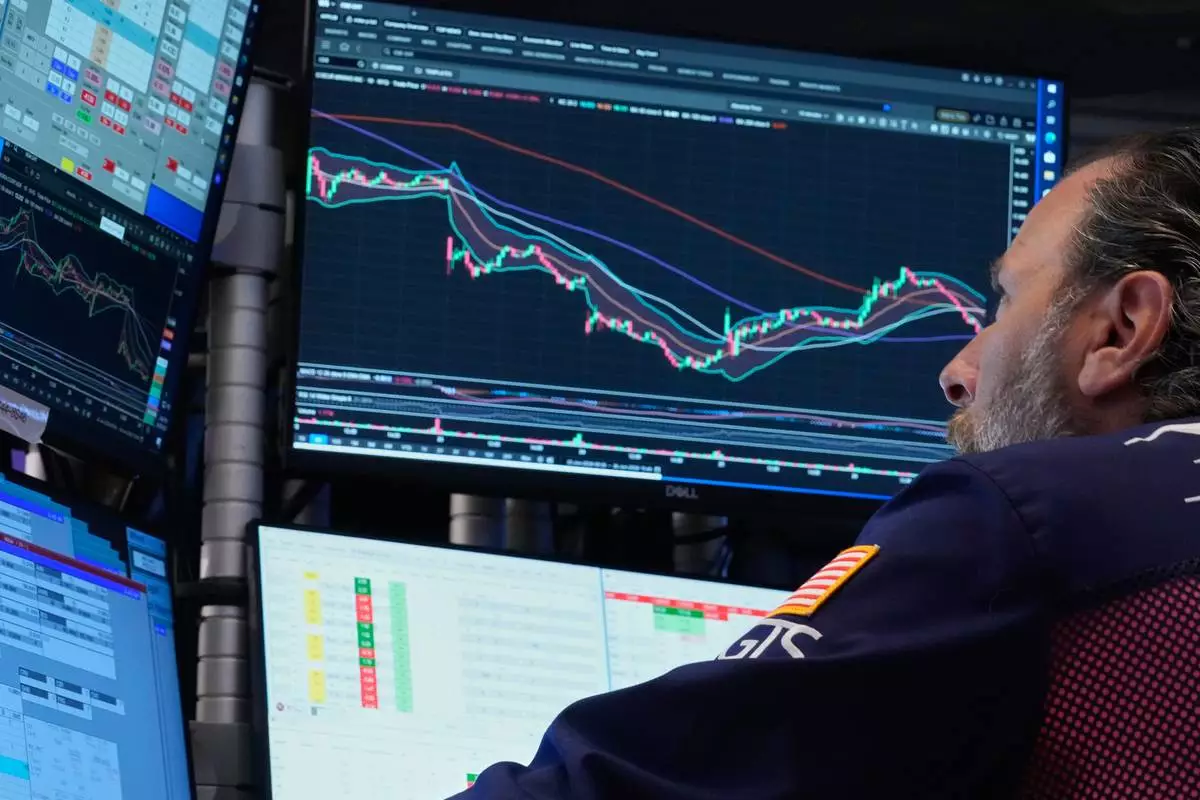
Specialist Michael Pistillo works on the floor of the New York Stock Exchange, Friday, June 26, 2026. (AP Photo/Richard Drew)
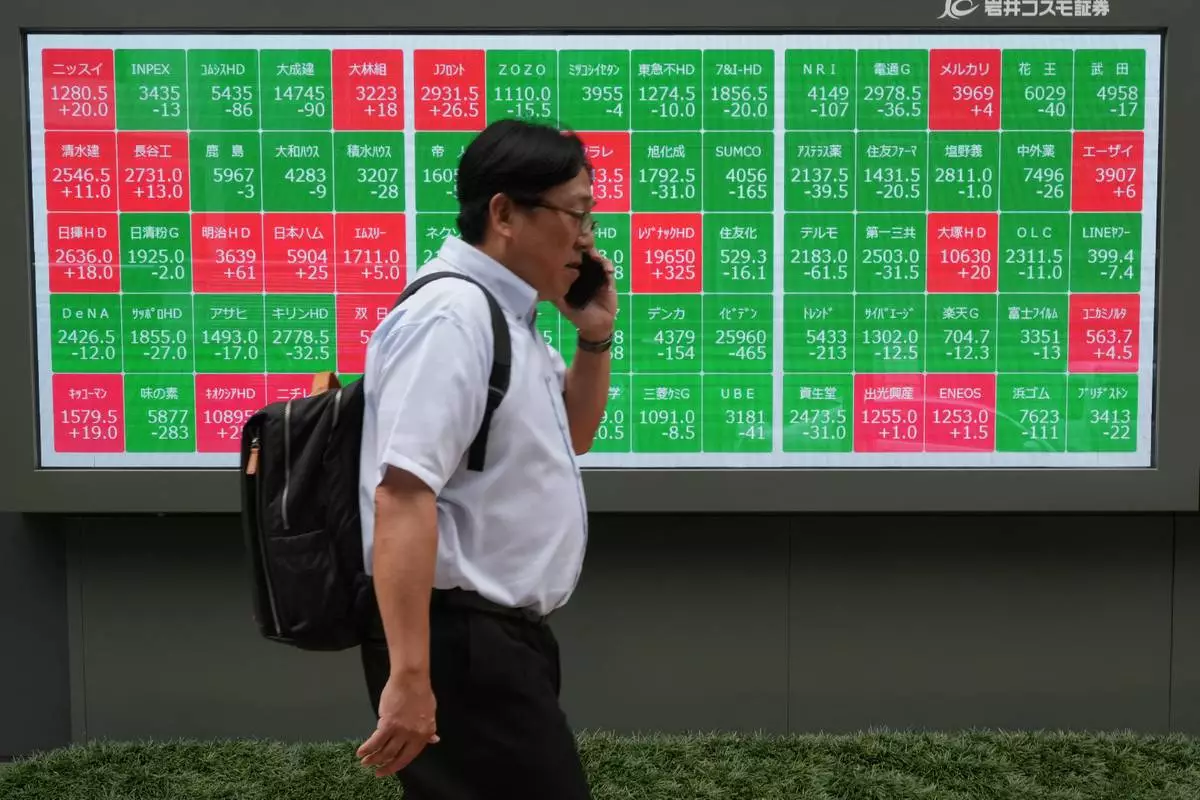
A man walks past a monitor showing stock prices of companies on the Tokyo Stock Exchange in Tokyo, Tuesday, June 23, 2026. (AP Photo/Hiro Komae)
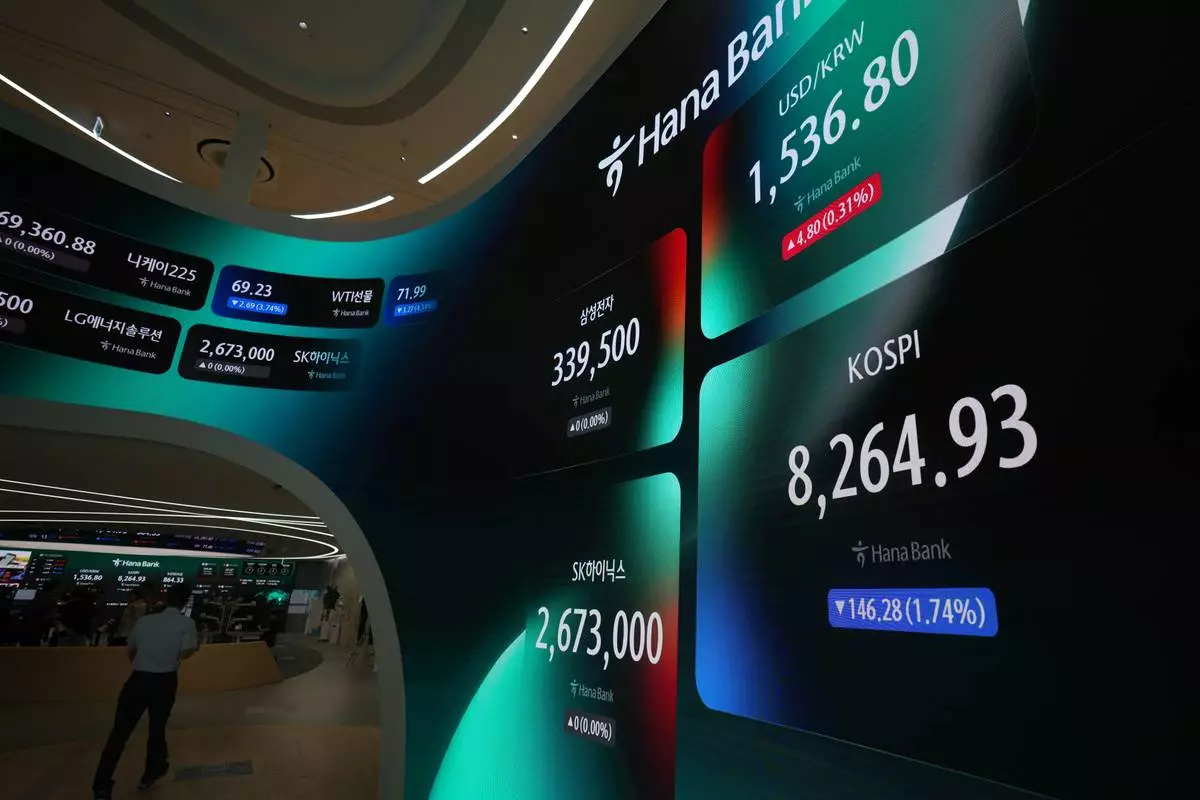
A huge screen shows the Korea Composite Stock Price Index (KOSPI) and the foreign exchange rate between U.S. dollar and South Korean won at a dealing room of Hana Bank in Seoul, South Korea, Monday, June 29, 2026. (AP Photo/Lee Jin-man)
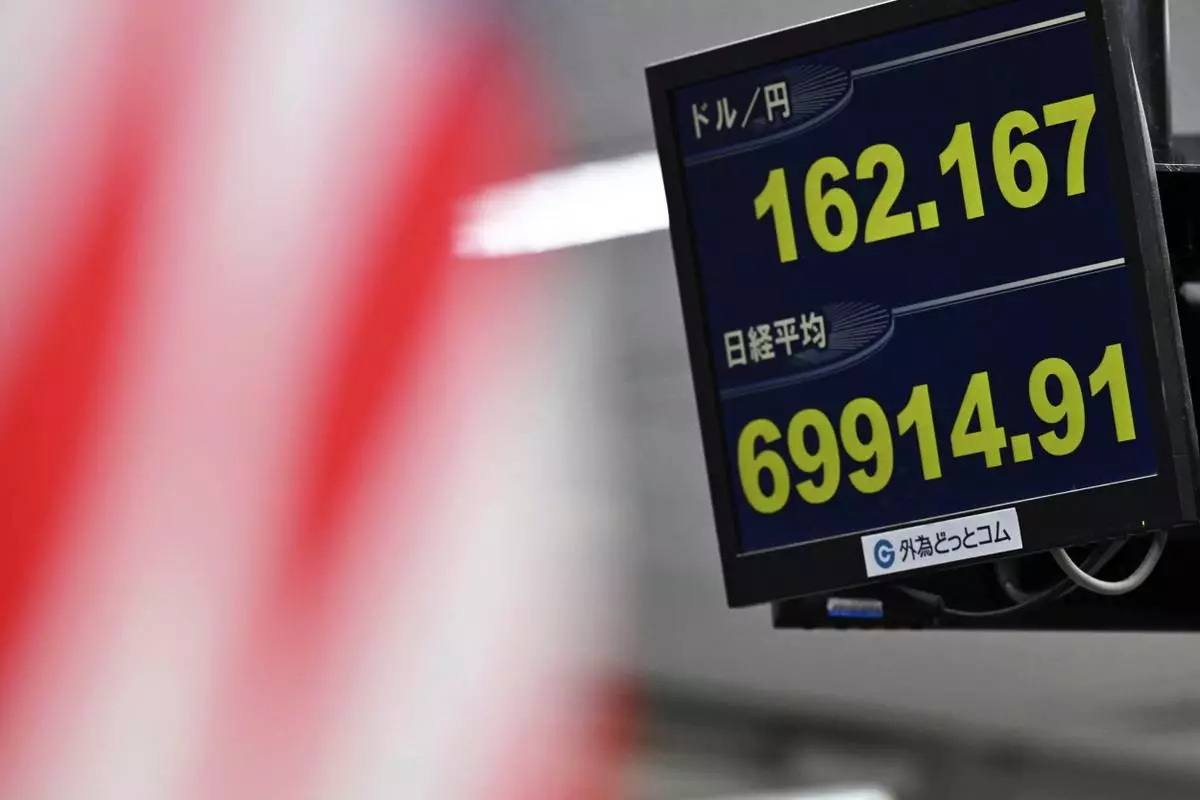
An electronic board shows Japan's benchmark Nikkei 225 index, bottom, and exchange rate of the Japanese yen against the U.S. dollar in Tokyo Tuesday, June 30, 2026. (Kenichiro Kojima/Kyodo News via AP)