TOKYO (AP) — Asian shares were trading mixed early Wednesday, as uncertainty remained about an initial deal to end the war in Iran and access to the crucial Strait of Hormuz.
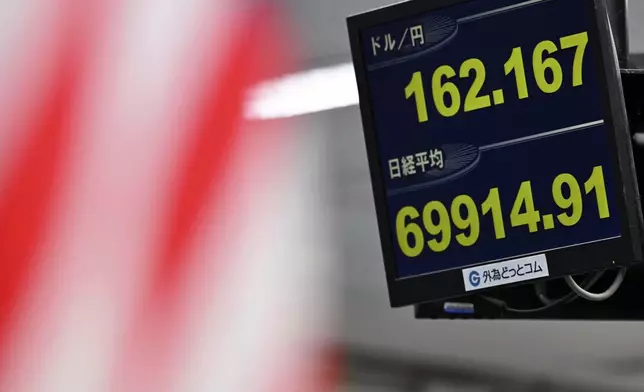
Japan's benchmark Nikkei 225 added 0.6% to 70,463.72. Australia's S&P/ASX 200 lost 0.4% to 8,744.50. South Korea's Kospi dropped 1.8% to 8,322.39. The Shanghai Composite edged up 0.1% to 4,099.41. Trading was closed in Hong Kong.
Click to Gallery
An electronic board shows Japan's benchmark Nikkei 225 index, bottom, and exchange rate of the Japanese yen against the U.S. dollar in Tokyo Tuesday, June 30, 2026. (Kenichiro Kojima/Kyodo News via AP)
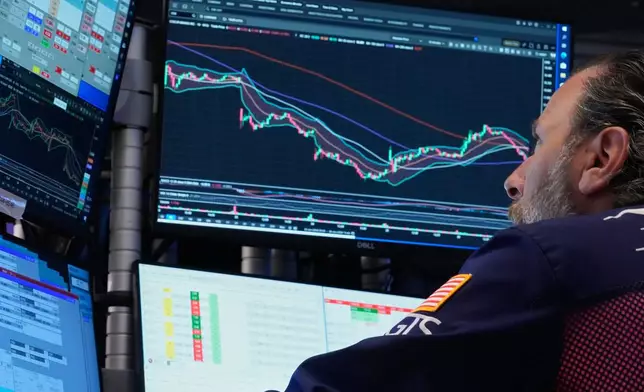
Specialist Michael Pistillo works on the floor of the New York Stock Exchange, Friday, June 26, 2026. (AP Photo/Richard Drew)
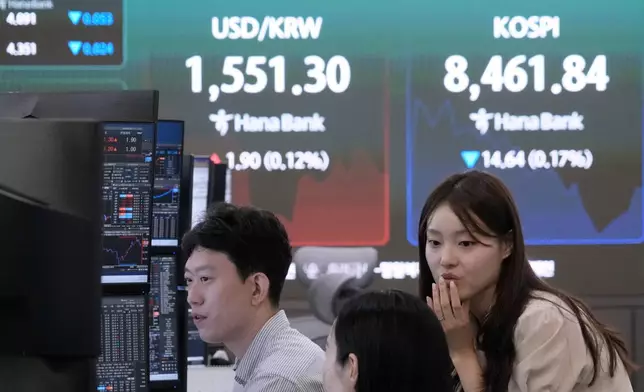
Currency traders work near a screen showing the Korea Composite Stock Price Index (KOSPI) and the foreign exchange rate between U.S. dollar and South Korean won at the foreign exchange dealing room of the Hana Bank headquarters in Seoul, South Korea, Wednesday, July 1, 2026. (AP Photo/Ahn Young-joon)
A currency trader watches monitors near a screen showing the Korea Composite Stock Price Index (KOSPI) at the foreign exchange dealing room of the Hana Bank headquarters in Seoul, South Korea, Wednesday, July 1, 2026. (AP Photo/Ahn Young-joon)
“While oil markets are currently priced for a gradual return to supply normalization, traffic through the Strait of Hormuz has yet to recover to prewar levels,” said Tim Waterer, chief market analyst at KCM Trade.
In the oil market, prices drifted as two U.S. envoys arrived in Qatar for talks with mediators about the implementation of the deal with Iran. The Americans will not be having direct negotiations with Iranian diplomats while in Doha.
In energy trading, benchmark U.S. crude added 37 cents to $69.87 a barrel. Brent crude, the international standard, rose 30 cents to $73.25 a barrel.
U.S. stocks trimmed their losses Tuesday. The S&P 500 gained 0.8%, though it still fell to its first losing month following two fabulous ones. The Dow Jones Industrial Average added 136 points, or 0.3%, to its record, and the Nasdaq composite climbed 1.5%.
The main reason for this month’s weakness has been a fall to Earth for stocks in the artificial-intelligence industry. After soaring in the frenzy around AI, such stocks have come under pressure because of worries that they shot too high.
AI stocks were stronger Tuesday, with Nvidia rising 1.6% to trim its loss for the month. It was one of the strongest forces lifting the S&P 500.
Microsoft, which is investing heavily in AI, rose 0.7% to bring its loss for the month back below 18%. Oracle, though, fell 1.6% to bring its drop for June to nearly 36%. It's another company contending with concerns that big spending on AI may not yield enough productivity and profits.
All told, the S&P 500 rose 58.93 points to 7,499.36. The Dow Jones Industrial Average added 136.46 to 52,319.20, and the Nasdaq composite climbed 393.58 to 26,213.72.
The yield on the 10-year Treasury rose to 4.40% from 4.38% late Monday.
U.S. government bonds are paying much higher yields than their Japanese counterparts, and the possibility of rate hikes by the Fed is putting more pressure on the yen. In currency trading, the U.S. dollar rose to 162.67 Japanese yen from 162.55 yen. The euro cost $1.1405, down from $1.1426.
AP Business Writer Stan Choe contributed to this report.
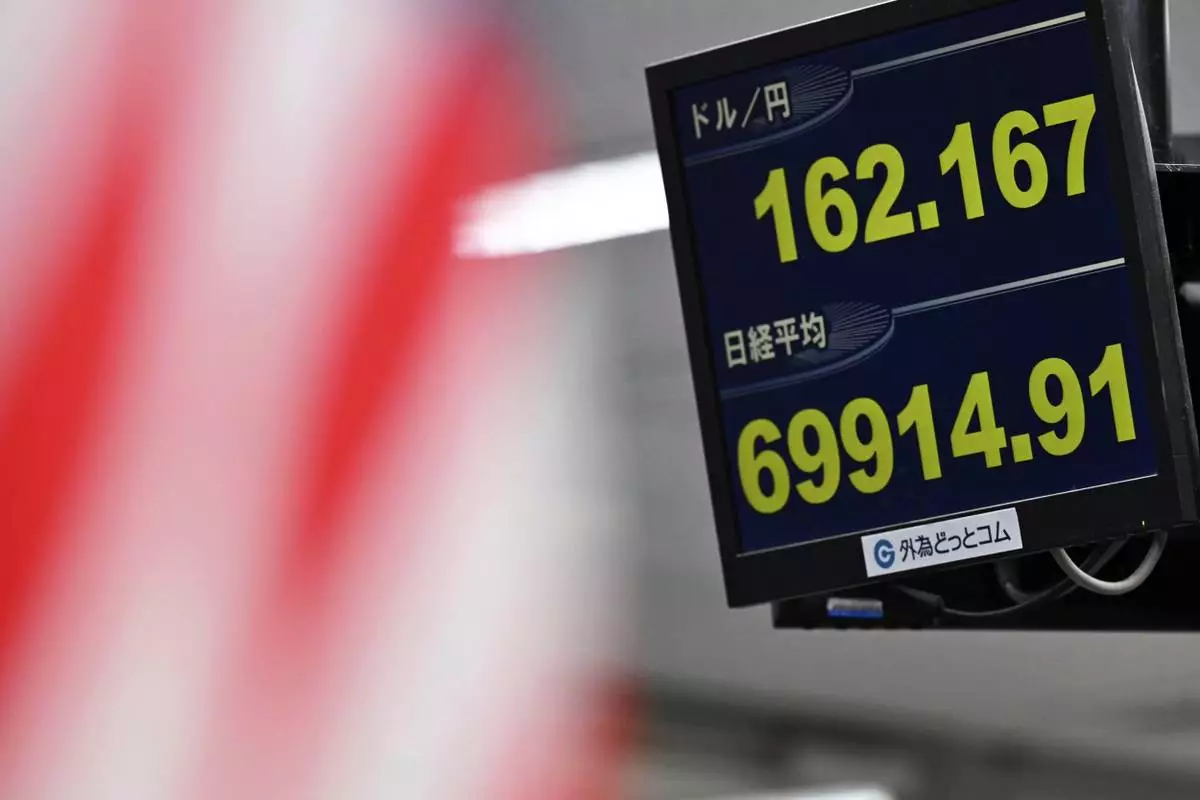
An electronic board shows Japan's benchmark Nikkei 225 index, bottom, and exchange rate of the Japanese yen against the U.S. dollar in Tokyo Tuesday, June 30, 2026. (Kenichiro Kojima/Kyodo News via AP)
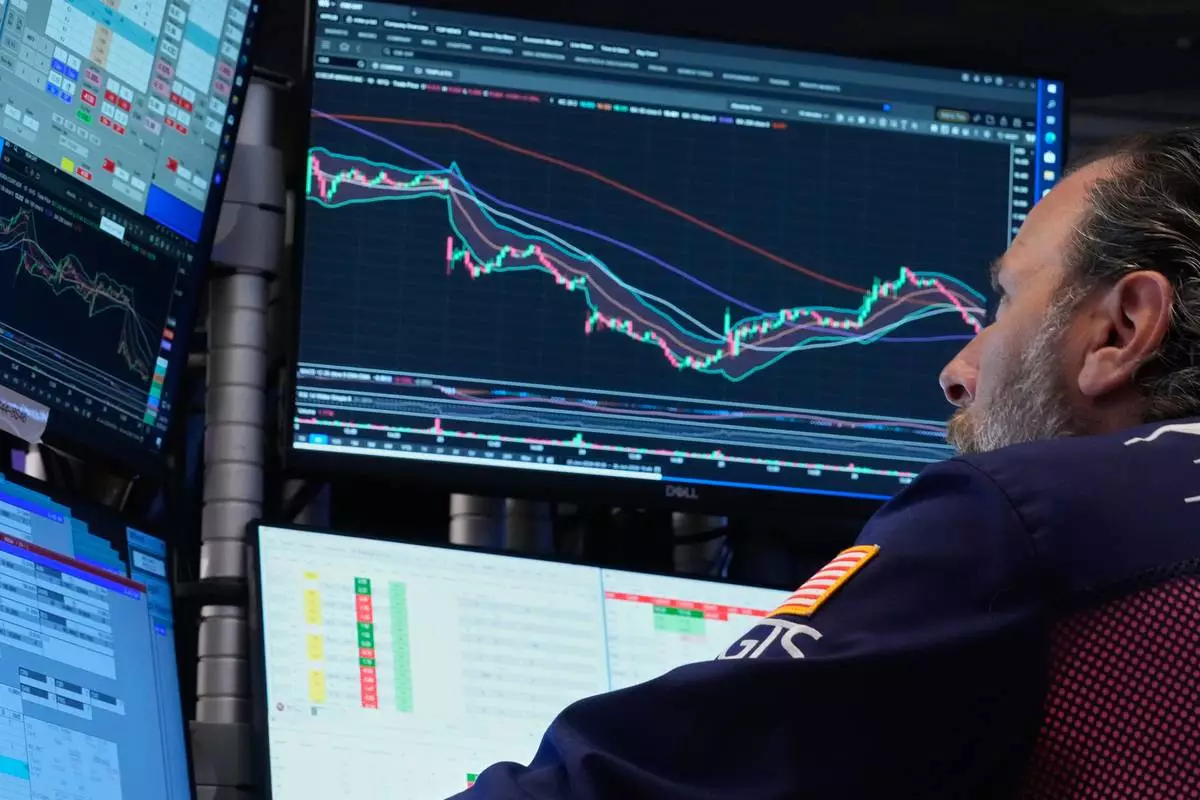
Specialist Michael Pistillo works on the floor of the New York Stock Exchange, Friday, June 26, 2026. (AP Photo/Richard Drew)
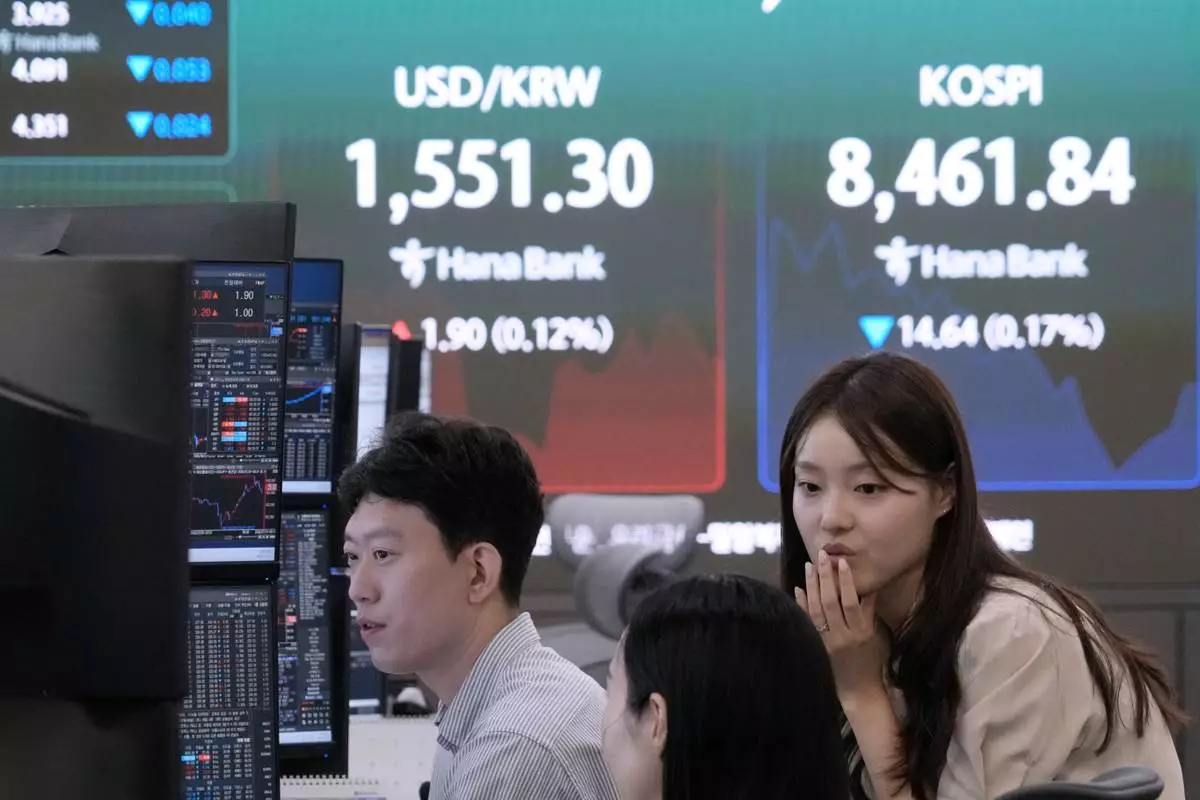
Currency traders work near a screen showing the Korea Composite Stock Price Index (KOSPI) and the foreign exchange rate between U.S. dollar and South Korean won at the foreign exchange dealing room of the Hana Bank headquarters in Seoul, South Korea, Wednesday, July 1, 2026. (AP Photo/Ahn Young-joon)

A currency trader watches monitors near a screen showing the Korea Composite Stock Price Index (KOSPI) at the foreign exchange dealing room of the Hana Bank headquarters in Seoul, South Korea, Wednesday, July 1, 2026. (AP Photo/Ahn Young-joon)
ECONE, Switzerland (AP) — A breakaway group of traditionalist Catholics on Wednesday directly defied Pope Leo XIV by celebrating an ancient Latin Mass to consecrate four bishops without his consent, dismissing the threat of schism and excommunication and justifying their actions as a “sacred duty” to defend the Catholic faith.
Bells tolled through the mountain valley of Econe, Switzerland, as the Society of St. Pius X began the solemn ceremony at its seminary. Thousands of people, faithful Catholics who prefer the traditional Latin Mass over modern liturgies, filled the field under cloudy skies as the incense-led procession of hundreds of priests approached the altar under a tent.
The orderly, solemn ceremony, accompanied by organ music and livestreamed on the society's YouTube channel, went ahead despite a last-ditch appeal by Leo to call it off. In a letter published Tuesday, the American pope warned that consecrating bishops without his approval amounts to a “sin of extreme gravity” that will actually harm their faithful.
And yet at the start of the Mass, a priest read aloud a statement justifying the consecrations as a necessary defense of the faith and criticizing how the Catholic Church today had deviated from tradition.
“Therefore before God we consider it a sacred duty towards Holy Church and towards souls to proceed with the consecration of bishops who are entirely faithful to her holy tradition and to her constant magisterium,” the priest said. “We consider every punishment and censure brought to bear against this step will have no validity.”
According to church law, the mere act of consecrating a bishop without a papal mandate incurs the harshest penalty in the Catholic Church: automatic excommunication for the four new bishops and the bishop administering the rite. It also amounts to a schismatic act, or an intentional rupture of the unity of the Catholic Church.
And yet everything about Wednesday’s ceremony had the air of a joyous celebration. The website for its consecration has had a countdown clock running for days. Video clips show seminarians joyfully unloading boxes. Participants received a baseball cap with the “Econe2026” seal on it.
The field, located under giant power lines, was awash in smiling nuns, priests posing for photos, girl scouts handing out water bottles, black-clad security guards with earpieces and orange-vested volunteer escorts keeping journalists on a short leash. Morning mist coated the nearby Rhone River that snakes through the Alpine valley as worshippers flocked in.
And in perhaps the most obvious sign of a celebration, registered participants were able to purchase a souvenir set of wine to commemorate the “historic” event. The 75 Swiss franc ($92.50) “Cuvee des Sacres” gift box features pinot noir, Syrah, Petit Arvine and Fendant, each bottle with a bishop-themed label: an image of a bishop’s pointed miter hat, his ring, cross or crozier staff.
For the society, known by its acronym SSPX, neither the threat of a declared schism nor an excommunication matters. The SSPX believes it alone is upholding church tradition and the Catholic faith.
“We don’t fear it. It pains us immensely, but we believe that the good we seek is greater than the pain that will be inflicted upon us,” said Marc-André Mabillard, media manager for the society.
In a late response to Leo's letter, the SSPX superior, the Rev. Davide Pagliarani, urged Leo to wait before declaring any penalty.
The ceremony took place 38 years to the day after the Vatican declared the last consecrations of SSPX bishops a “schismatic act” that incurred automatic excommunication for the bishops.
The French Archbishop Marcel Lefebvre had founded the ultratraditionalist SSPX in opposition to the modernizing reforms of the Second Vatican Council. Among other things, the 1960s church meetings revolutionized the Catholic Church’s relations with other Christians, Jews and people of other faiths, and allowed Mass to be celebrated in the vernacular rather than Latin.
Today, the SSPX celebrates the ancient Latin Mass and has accused the modern church of being rife with heresies and errors, including modernism, liberalism and ecumenism. The society insists that only the SSPX is upholding the true faith of Christ and has justified the consecrations, citing a “state of necessity” to minister to its faithful.
But many Catholics, including conservative and traditional ones, are opposed to the consecrations, viewing them as an act of severe disobedience to the pope that hurts the church.
“You can’t serve tradition while disobeying the church and her authority,” said the Rev. Robert Gahl, an ethics expert at the Catholic University of America.
The St. John Paul II biographer, George Weigel, has written that the SSPX-Vatican divide is about far more than just whether Mass is celebrated in Latin or English.
It’s about “a rejection of the Second Vatican Council’s teaching on the church, salvation, religious freedom, church–state relations, and the church’s relationship to other religions,” Weigel wrote recently in First Things magazine.
Weigel recalled that Lefebvre was a supporter of the “collaborationist" Vichy regime in France during World War II. One of its original SSPX bishops denied the Holocaust.
The SSPX has justified the consecrations by invoking a “state of necessity.” The group says that with only two of the original four bishops surviving, it simply needs more bishops to tend to the needs of a faith community that counts 800 places of worship in 77 countries.
The group denies that the consecration is a rejection of Leo’s authority or a challenge to his power. Rather, it says the creation of four new bishops is solely to be able to ordain new priests and preside over confirmation ceremonies according to the ancient rite.
The SSPX has identified the new bishops as Pascal Schreiber of Switzerland, Michael Goldade of the United States, Michel Poinsinet de Sivry of France and Marc Hanappier, also of France.
In response to the pope’s letter, Mabillard, media manager for the society, expressed “great sadness to not be understood by our leader,” and added: “We are changing absolutely nothing in our plans.”
Winfield contributed from Rome.
Associated Press religion coverage receives support through the AP’s collaboration with The Conversation US, with funding from Lilly Endowment Inc. The AP is solely responsible for this content.

Faithful wait for the start of a consecration ceremony for four new bishops, outside a tent set up outside the Society of St. Pius X seminary, in Econe, Switzerland, Wednesday, July 1, 2026. (AP Photo/Baz Ratner)
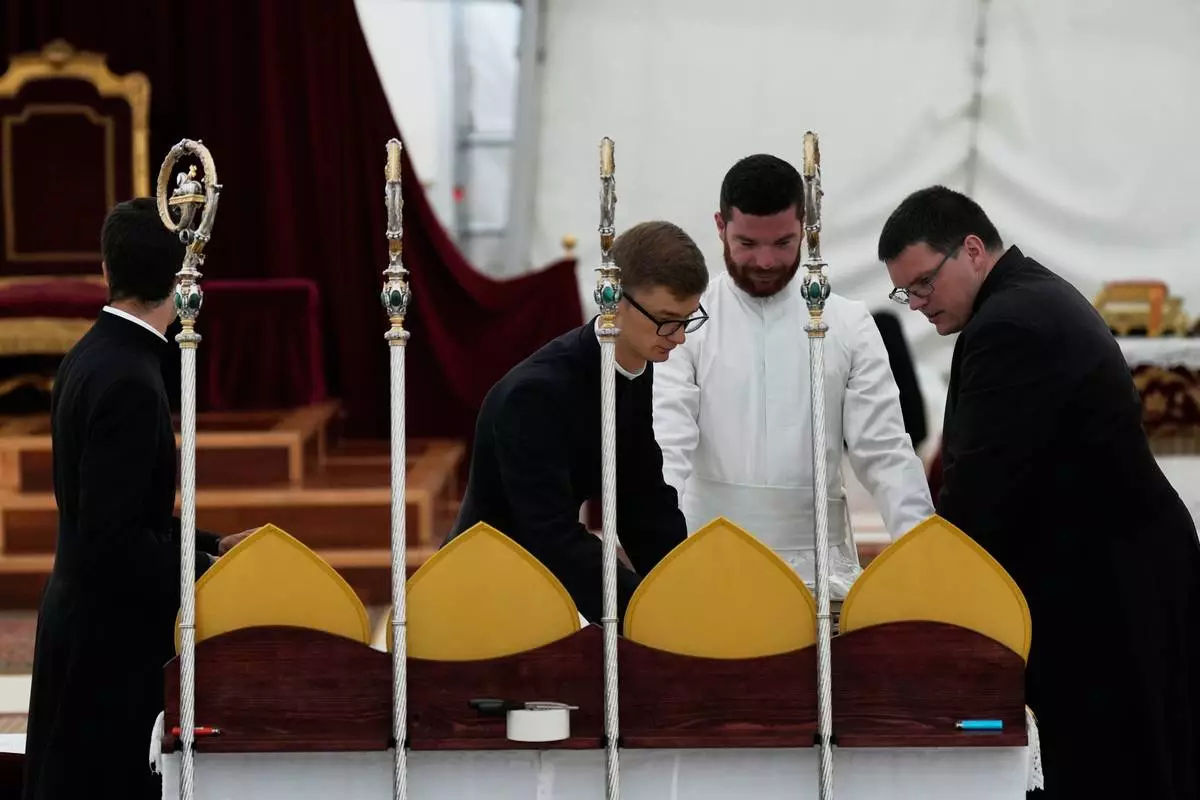
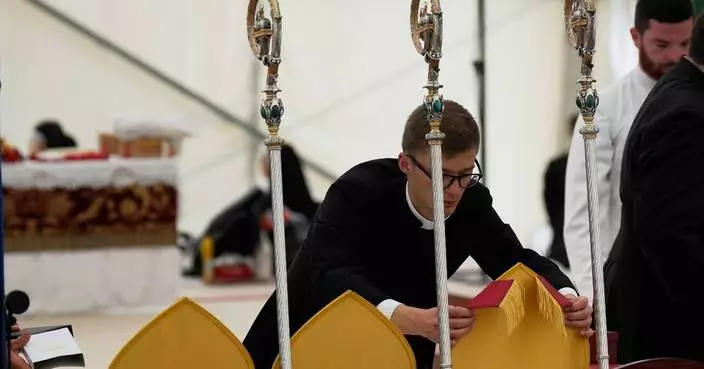
Priests prepare miters and pastoral staffs before the start of a consecration ceremony for four new bishops, in a tent set up outside the Society of St. Pius X seminary, in Econe, Switzerland, Wednesday, July 1, 2026. (AP Photo/Baz Ratner)
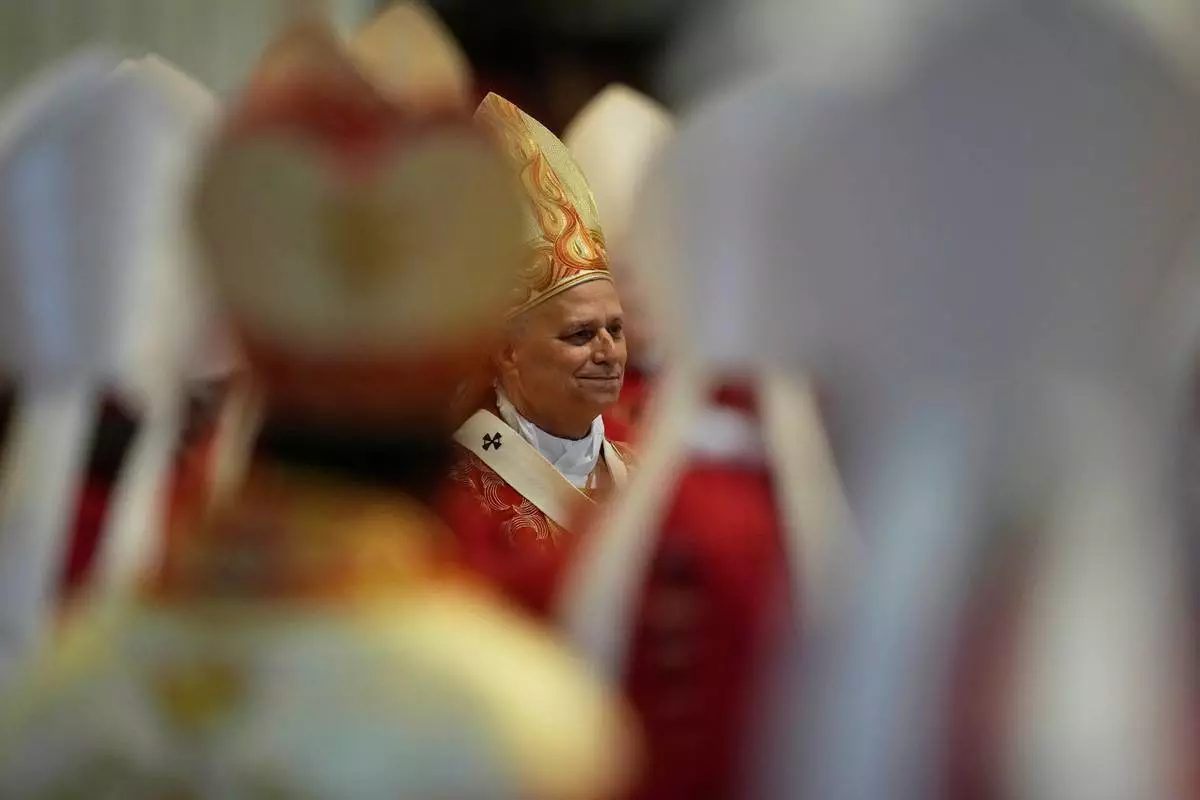
Pope Leo XIV leaves after a Mass where he conferred the pallium on newly appointed metropolitan archbishops, in St. Peter's Basilica, at the Vatican, Monday, June 29, 2026. (AP Photo/Alessandra Tarantino)
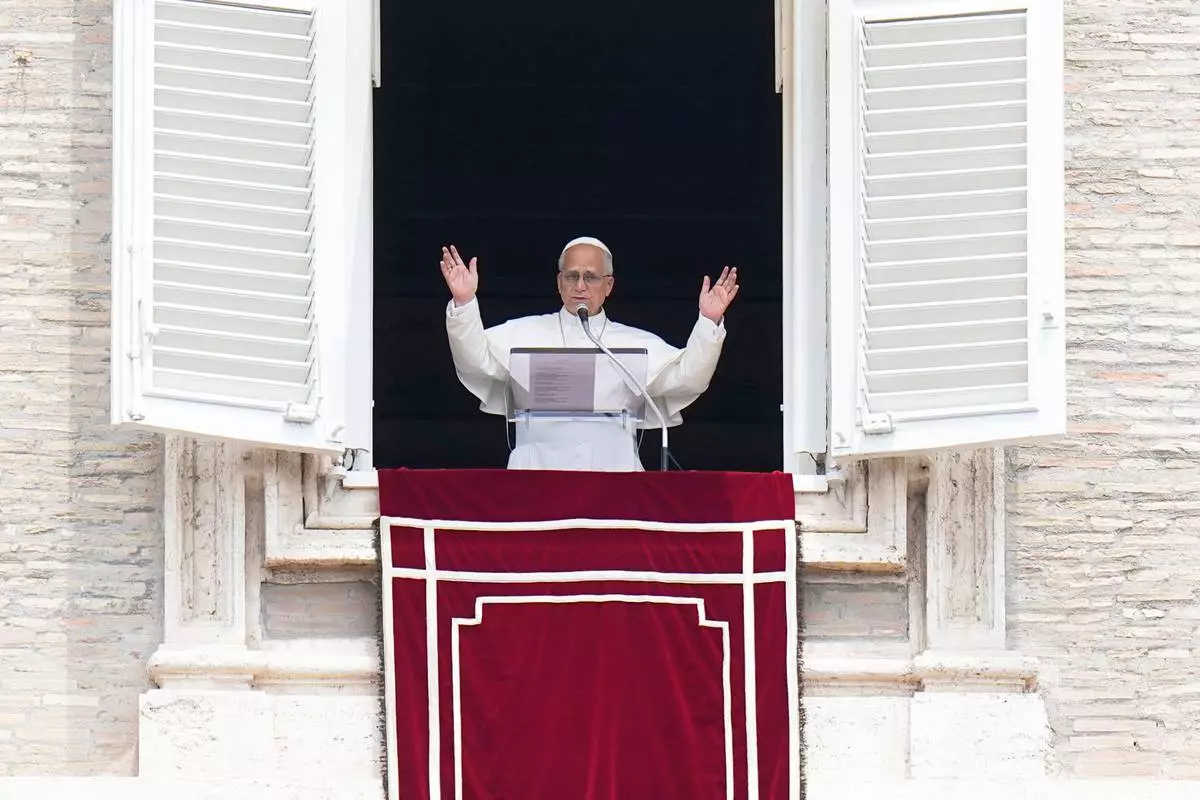
Pope Leo XIV waves during the Angelus noon prayer from the window of his studio overlooking St.Peter's Square, at the Vatican, Monday, June 29, 2026. (AP Photo/Alessandra Tarantino)
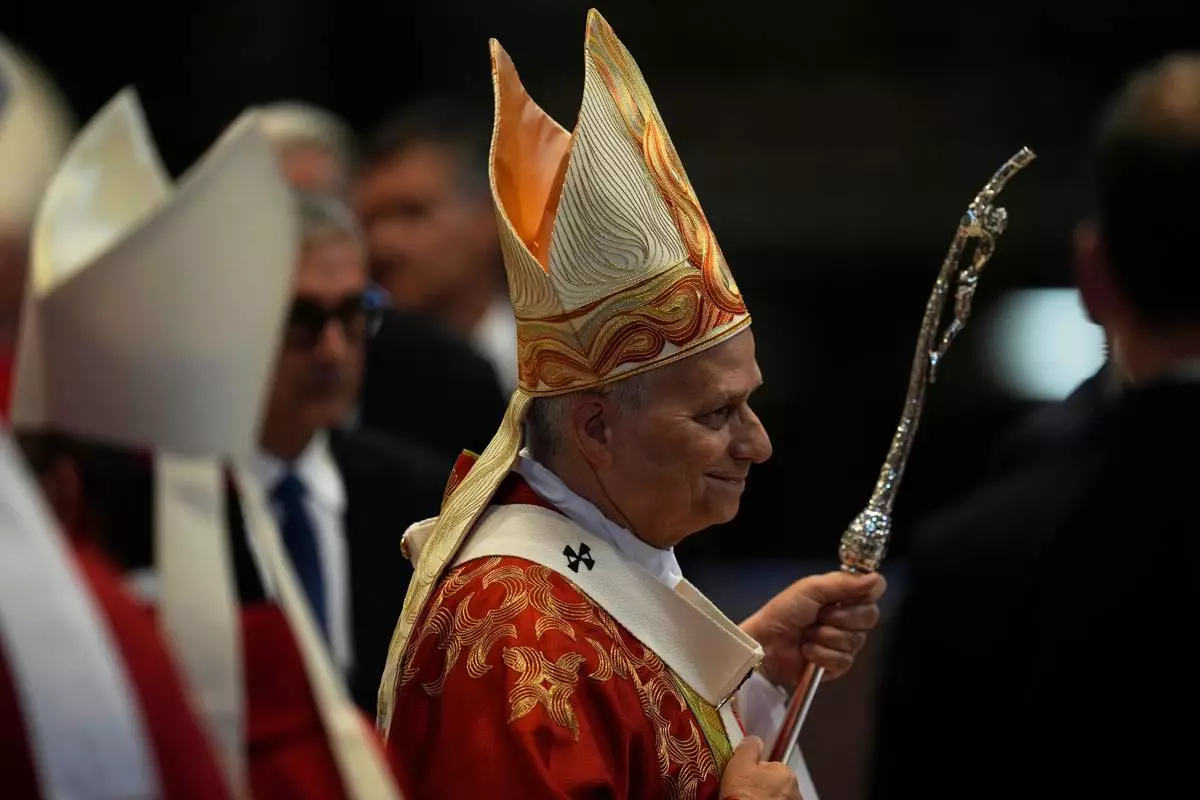
Pope Leo XIV leaves after a Mass where he conferred the pallium on newly appointed metropolitan archbishops, in St. Peter's Basilica, at the Vatican, Monday, June 29, 2026. (AP Photo/Alessandra Tarantino)