WASHINGTON (AP) — Tourists from Chattanooga check into beach resorts in Cancun. Canadian auto parts feed factories in the American Midwest — and vice versa. Happy hour revelers raise glasses of Mexican tequila and mezcal at bars in Seattle.
It adds up. The United States trades $1.9 trillion a year — $5 billion a day — worth of goods and services with its neighbors, Canada and Mexico. They have supplanted China as America's top two trading partners.
Click to Gallery
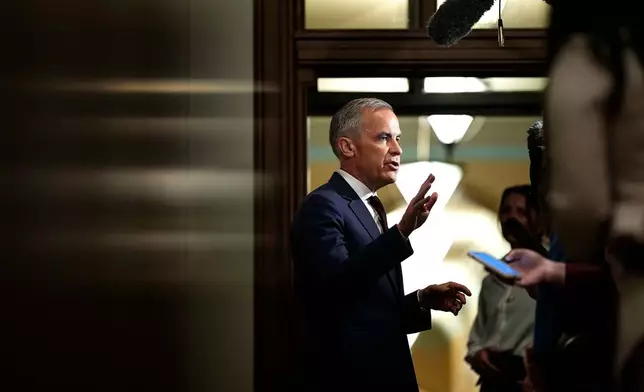
FILE - Prime Minister Mark Carney takes questions from journalists as he arrives on Parliament Hill in Ottawa before a meeting of the federal cabinet, June 2, 2026. (Justin Tang/The Canadian Press via AP, File)
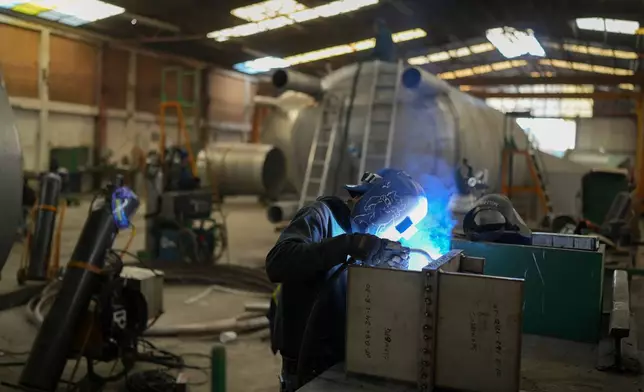
FILE - An employee welds metal at a steel tank factory in Mexico City, Feb. 11, 2025. (AP Photo/Eduardo Verdugo, File)
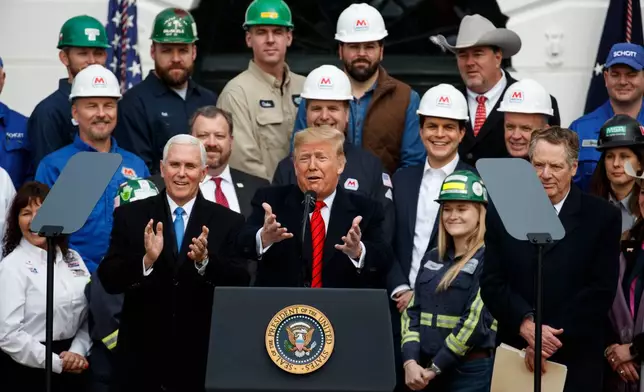
FILE - President Donald Trump speaks during an event at the White House to sign a new North American trade agreement with Canada and Mexico, Jan. 29, 2020, in Washington. (AP Photo/Alex Brandon, File)
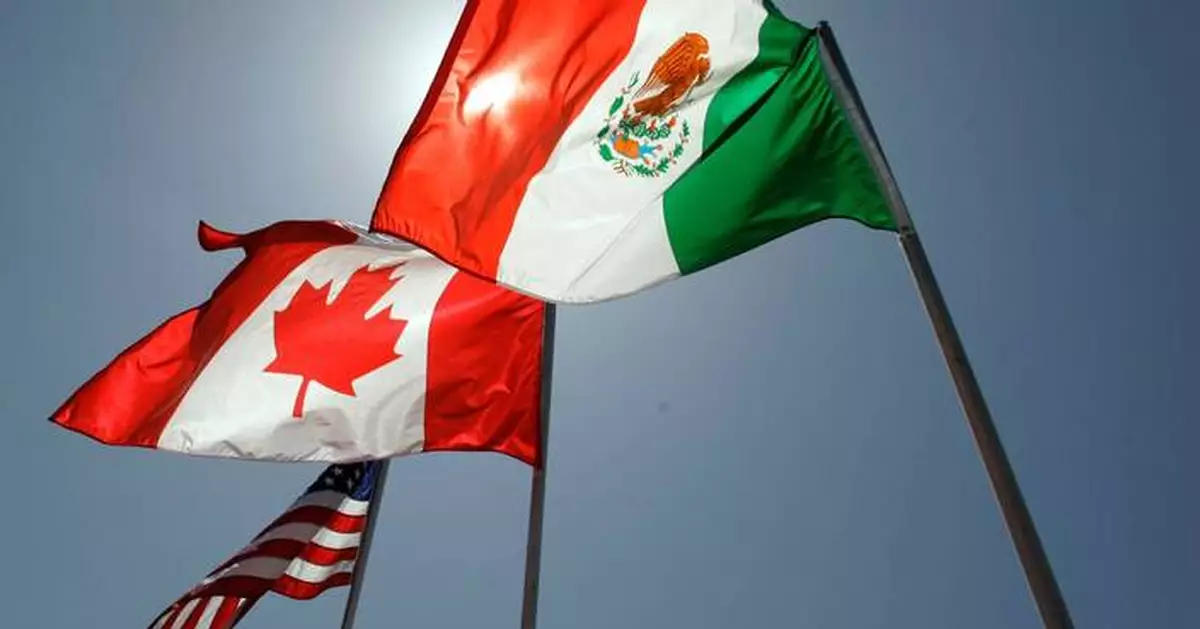
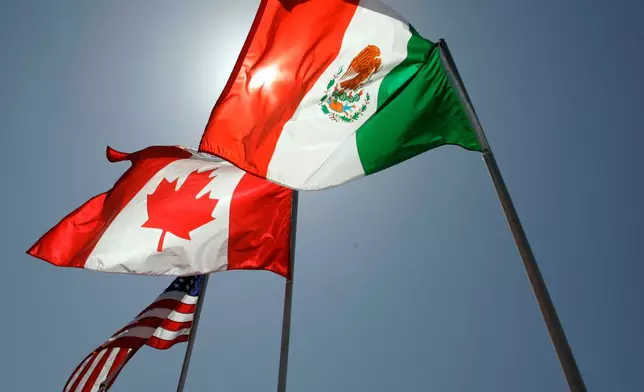
FILE - National flags representing the United States, Canada, and Mexico fly in the breeze in New Orleans where leaders of the North American Free Trade Agreement met on April 21, 2008. (AP Photo/Judi Bottoni, File)
So the stakes are high when it comes to fiddling with the rules that govern trade between the three countries. And after a year of President Donald Trump’s chaotic tariff policies, many U.S., Canadian and Mexican businesses would welcome the return of stability across North America.
They are not likely to get it.
The regional trade pact — the U.S.-Mexico-Canada Agreement or USMCA — that Trump negotiated and boasted about in his first term comes up for renewal Wednesday, a process that is likely to last months, maybe longer.
And the path forward is lined with landmines.
“There’s going to be a lot of drama this summer," Diego Marroquín Bitar, a fellow in the America’s program at the Center for Strategic and International Studies, said last week at a USMCA forum sponsored by the Cato Institute.
The U.S. is making demands that could effectively force Canada and Mexico to surrender some automaking production to the United States. That might bring more auto factory jobs to the United States. But it would also upend established supply chains and would push up U.S. prices for new cars that now average nearly $50,000 at a time when American consumers are already furious about the high cost of living.
Trump, characteristically, has added to the tension by threatening to pull out of his own agreement altogether.
In 2020, the USMCA replaced the 1994 North American Free Trade Agreement, which tore down most trade barriers between the three North American countries.
Trump and other critics had called NAFTA a job killer because it encouraged U.S. companies to move factories south of the border to take advantage of low-wage Mexican labor, then ship goods back to the United States duty free.
His USMCA ended up being similar to NAFTA — though it pressured factories to pay higher wages and make sure that more of what they made originated in North America in an effort to prevent Chinese products from slipping across regional borders duty free.
The USMCA included a novel provision requiring the pact to be renewed every six years. That deadline is Wednesday, but “nothing is going to happen July 1,” said Oscar Ocampo, director of economic development at the Mexican Institute for Competitiveness.
Negotiators could agree Wednesday to renew USMCA as it is for another 16 years — until 2042. But that is considered highly unlikely. Instead, they are expected to keep working on ways to improve it; they have until the current term ends in 2036 to reach an agreement. Otherwise, the pact expires.
Meantime, any USMCA country can pull out of the pact provided it gives its two partners six months’ notice — a red buzzer that Canada and Mexico, dependent on trade with the United States, fear Trump just might push.
Trump, after all, said in June that he was “not looking to renew" the trade pact with Canada and Mexico. "We don’t need anything that they have,” he said.
Ocampo suspects that Trump doesn't really want to drop the treaty; he just wants to use the uncertainty to keep pressure on Mexico over security and immigration issues.
The United States and Mexico have held talks on renewing the trade agreement. But Canada has so far been stuck on the sidelines.
Patrick Childress, a partner at the Holland & Knight law firm and a former U.S. trade negotiator, said: “The danger for Canada is this: that the U.S. government and the Mexican government reach agreement on changes to core provisions of the treaty and then show up in Ottawa and say: ‘Here’s what we’ve agreed to. You can take it or leave it."’
Canadian Prime Minister Mark Carney said that the three trading partners plan to meet virtually on Wednesday, adding: “I’m not looking for my pen.”
Carney later said in French his priority is to update the USMCA.
The U.S. wants a refreshed trade pact to do more to make sure that Chinese goods don’t get in through the back door.
But the most contentious issue is that the U.S. is also seeking a brand-new requirement: that 50% of cars be made in the United States, Carney confirmed in early June. Currently, none of the USMCA countries gets a guaranteed share of production. “It’s a red line for both Mexico and Canada, and it goes against the spirit and the letter of regional integration,” Ocampo said.
Marcos Carias, economist at the credit insurer Coface, said only 1 in 5 Mexican and Canadian cars imported into the United States would currently meet the 50% standard.
Vehicle models likely to be hit with higher costs under the plan, he said, include Ford’s Maverick compact pickup truck, Chevrolet’s mid-size Equinox SUV and some Nissan sedans — all made in Mexico. Carias’ “back of the envelope" calculations suggest that prices could increase 5% to 7% on the most-affected models.
AP Writers Maria Verza in Mexico City and Rob Gilles in Toronto contributed to this story.
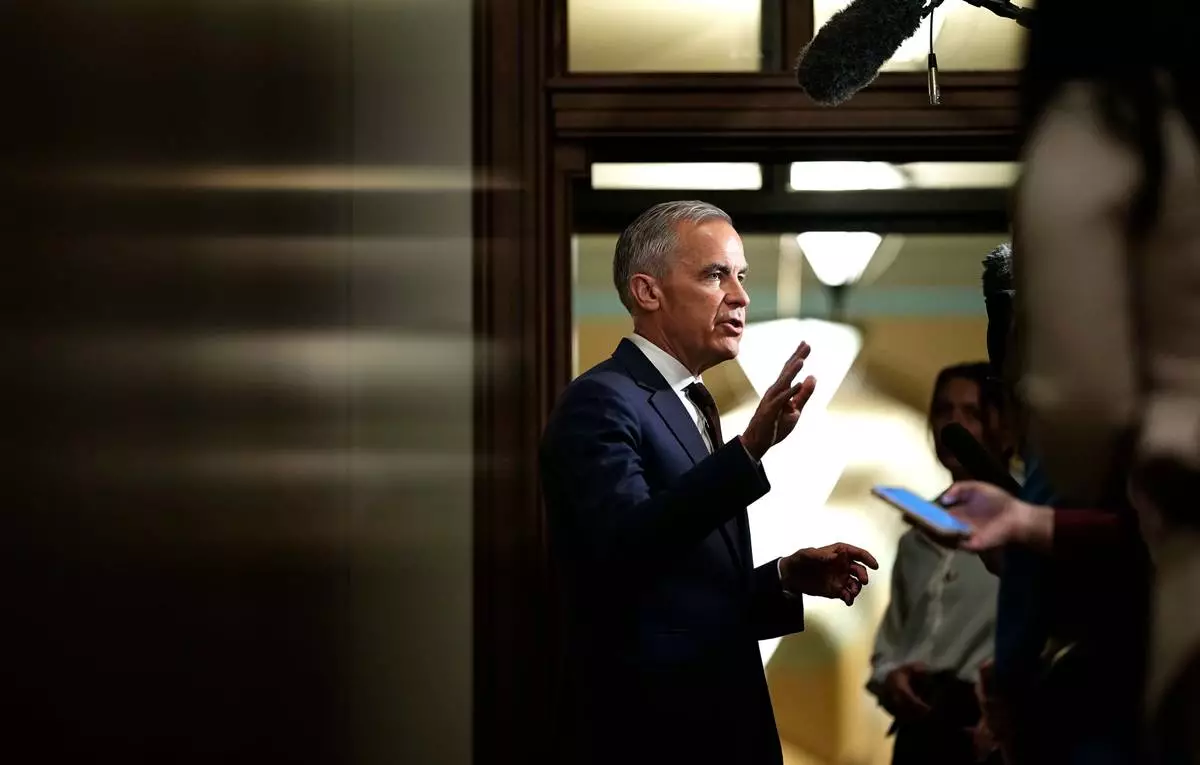
FILE - Prime Minister Mark Carney takes questions from journalists as he arrives on Parliament Hill in Ottawa before a meeting of the federal cabinet, June 2, 2026. (Justin Tang/The Canadian Press via AP, File)
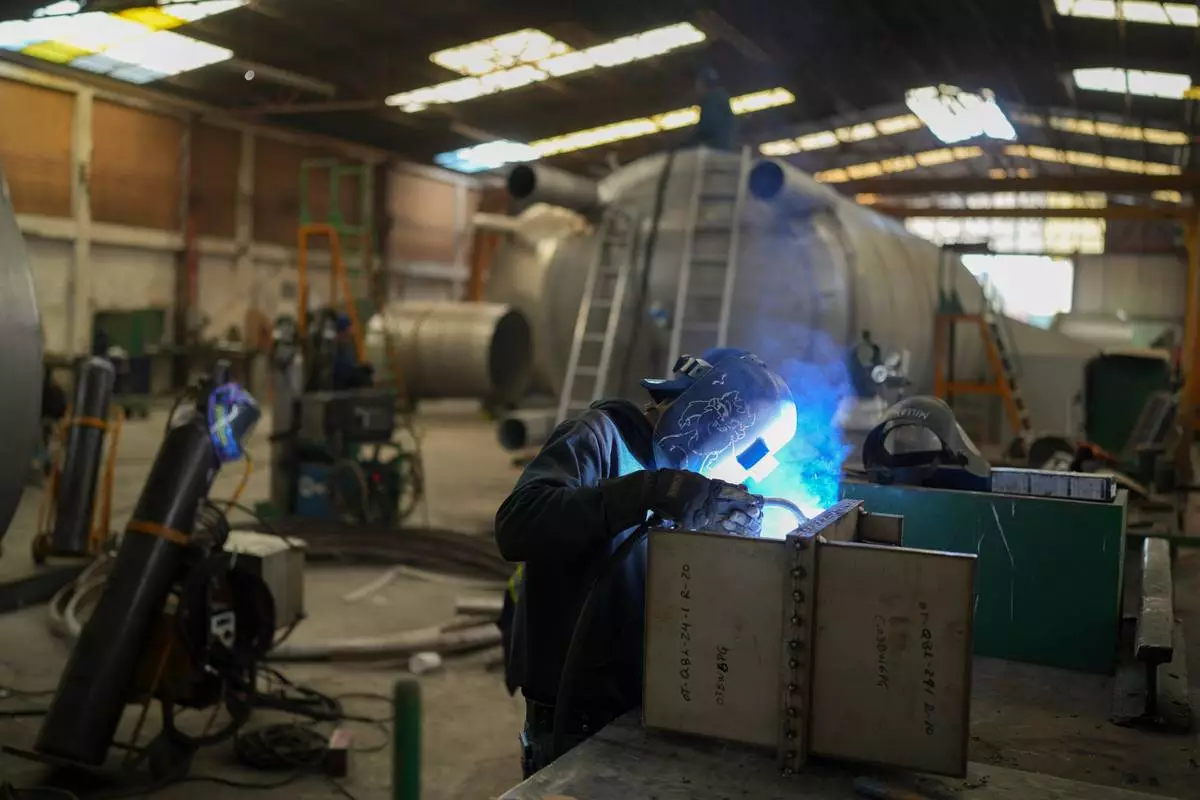
FILE - An employee welds metal at a steel tank factory in Mexico City, Feb. 11, 2025. (AP Photo/Eduardo Verdugo, File)
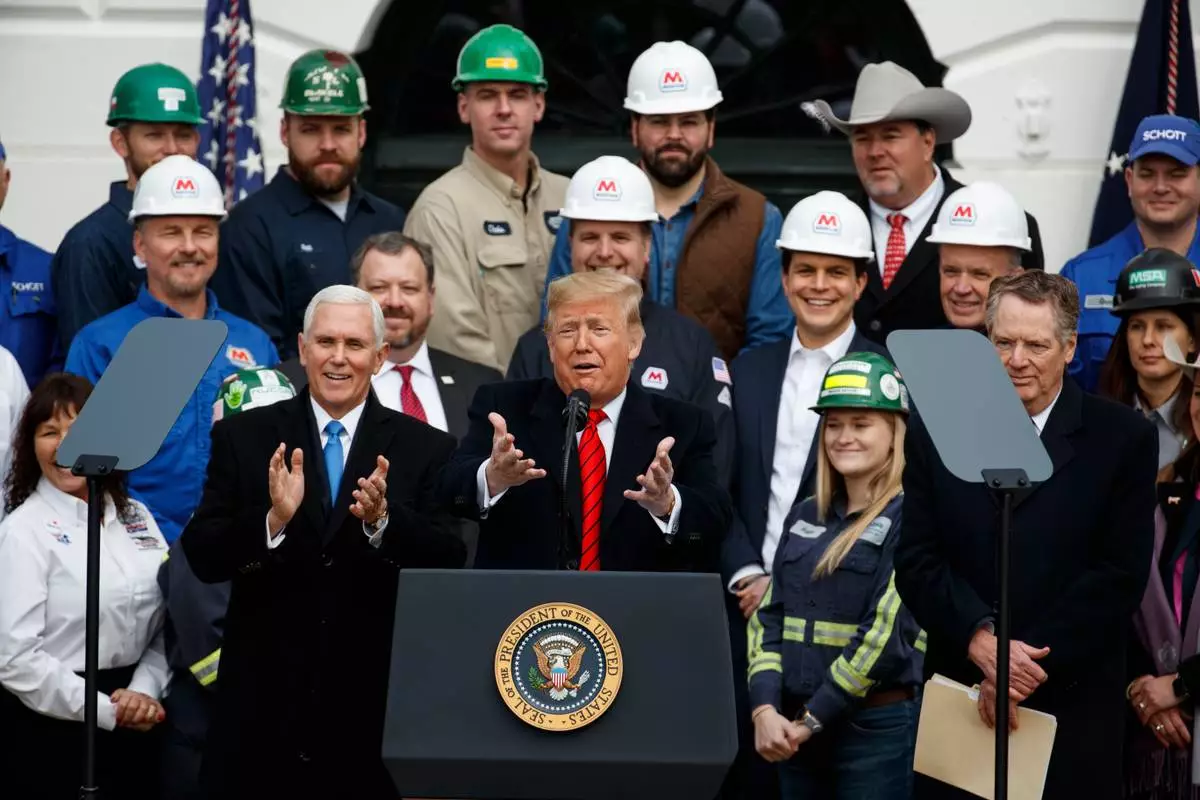
FILE - President Donald Trump speaks during an event at the White House to sign a new North American trade agreement with Canada and Mexico, Jan. 29, 2020, in Washington. (AP Photo/Alex Brandon, File)
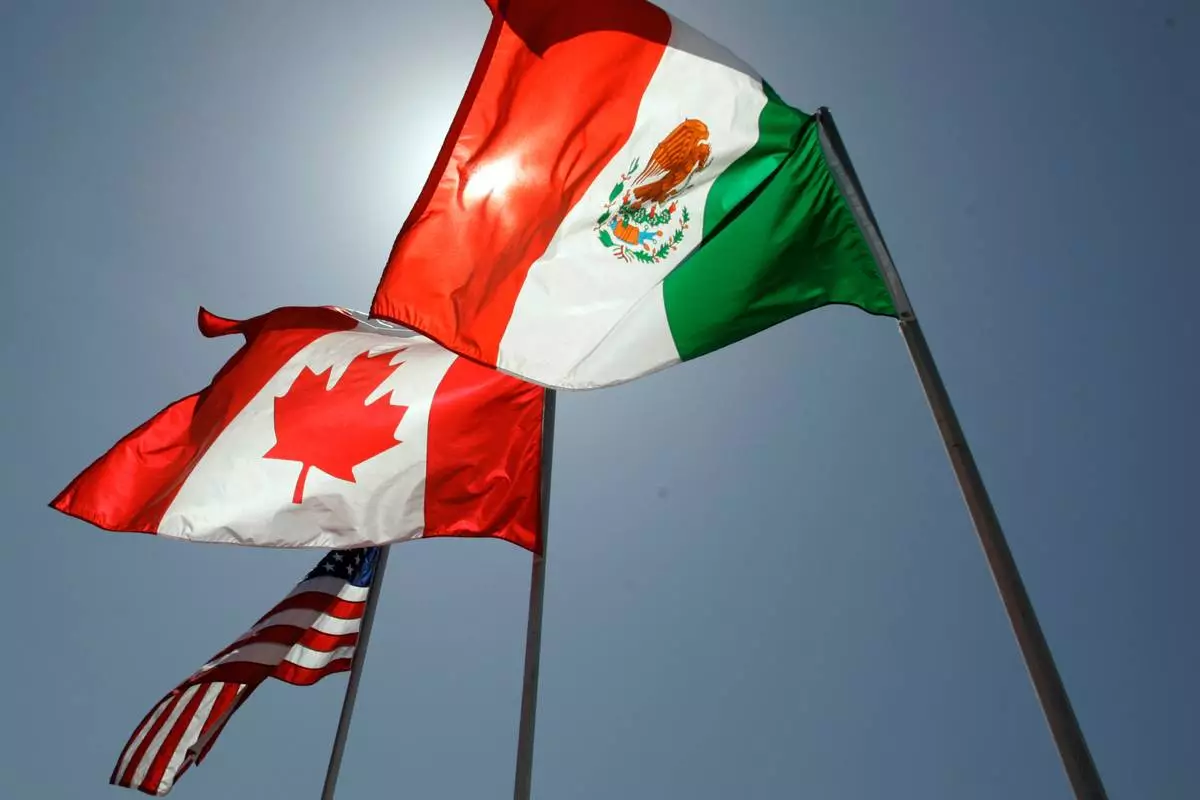
FILE - National flags representing the United States, Canada, and Mexico fly in the breeze in New Orleans where leaders of the North American Free Trade Agreement met on April 21, 2008. (AP Photo/Judi Bottoni, File)
ECONE, Switzerland (AP) — A group of traditionalist Catholics directly defied Pope Leo XIV on Wednesday by consecrating four bishops without his consent, dismissing the resulting excommunications and saying the break with the church was necessary to defend the Catholic faith.
The Society of St. Pius X, which opposes modernizing reforms in the Catholic Church, went ahead with the five-hour ceremony at its seminary in Econe, Switzerland, despite a last-ditch appeal by Leo to call it off. The American pope warned in a letter Tuesday that consecrating bishops without his approval amounted to a “sin of extreme gravity” that will actually harm their faithful.
The consecrations amounted to a crisis for Leo, who has prioritized church unity and healing tensions with traditionalists that worsened during the Pope Francis pontificate.
The SSPX, as the society is known, is a threat to the Holy See because it represents a parallel, ultra-Catholic faith. It now has six bishops, 751 priests, 264 seminarians training in five seminaries, 145 religious brothers, 88 oblates and 250 religious sisters representing 50 nationalities, according to SSPX statistics.
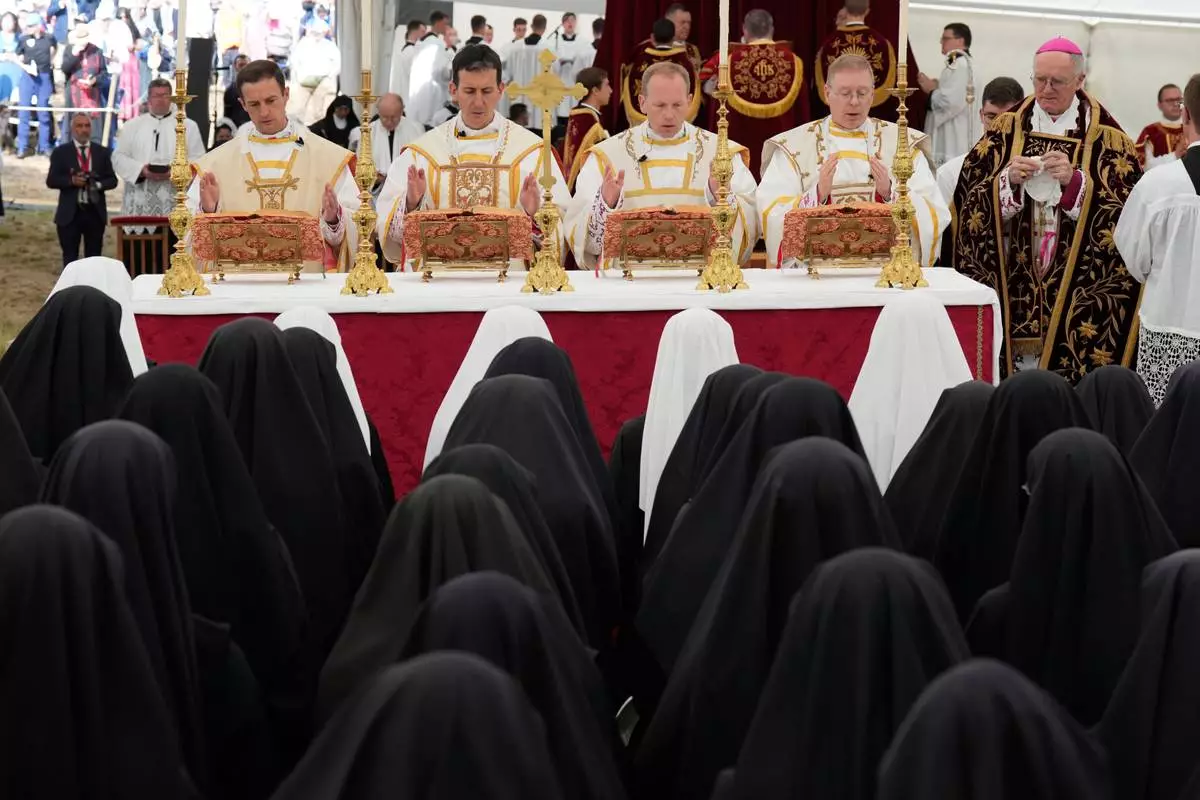
Bells tolled through the misty Alpine mountain valley as hundreds of priests walked two-by-two to the altar under a tent to start the service and then again at the end. An estimated 16,500 faithful who prefer the traditional Latin Mass over modern liturgies attended, sitting in a field through a downpour alongside their children who were too numerous for organizers to count.
The Mass, rich in velvet and gold-trimmed vestments, chanting and incense, was livestreamed on the society's YouTube channel, with simultaneous explanations in several languages. The highly organized religious extravaganza underscored the society's international reach, despite its schismatic outsider status, and appeal to conservative, traditionalist Catholics wary of the modern, secular world.
At the start of the Mass, a priest read aloud a statement justifying the consecrations as a necessary “sacred duty” and dismissing the resulting penalties. “We consider every punishment and censure brought to bear against this step will have no validity,” he said.
Bishop Alfonso de Galarreta, who himself was excommunicated after being consecrated without papal consent in 1988, placed his hands on the head of each of the four new bishops. The ritual confers the Holy Spirit from one bishop to another and recalls Christ’s gesture to his apostles. After they received their miter hats, gloves and pastoral staffs, the four made a procession through the crowd, blessing the faithful as bishops.
According to church law, consecrating a bishop without a papal mandate incurs the harshest penalty in the Catholic Church: automatic excommunication for the four new bishops and the bishop administering the rite. It also amounts to a schismatic act, an intentional rupture of church unity.
French Archbishop Marcel Lefebvre founded the SSPX in opposition to the modernizing reforms of the Second Vatican Council. Among other things, the 1960s meetings known as Vatican II revolutionized the church’s relations with other Christians, Jews and people of other faiths, and allowed Mass to be celebrated in the vernacular rather than Latin.
In 1988, Lefebvre consecrated four bishops without papal consent. The Vatican promptly excommunicated Lefebvre and the four bishops and declared the consecrations a “schismatic act.” Pope Benedict XVI in 2009 lifted the excommunications, but the SSPX today has no legal standing in the church.
The SSPX has accused the church of being rife with heresies and errors, and that only it is upholding the true faith of Christ. It has justified the consecrations, citing a “state of necessity” to minister to its faithful.
It identified the new bishops as Pascal Schreiber of Switzerland, Michael Goldade of the United States, Michel Poinsinet de Sivry of France and Marc Hanappier, also of France.
The Rev. Davide Pagliarani, the SSPX superior, said in his homily that the consecrations were necessary for the salvation of souls, but he also insisted they served Leo and the church.
“We are accused of not respecting the pope," he said. "But it is precisely because we love the pope as the vicar of Christ, as the head of the church, that we don't want to see the pope humiliated anymore, on the side of false shepherds representing false religions.”
The Vatican didn't immediately comment and it wasn't immediately clear how it would communicate the excommunications or any other penalties.
And yet everything about Wednesday’s ceremony had the air of a joyous celebration. The SSPX website has had a countdown clock running for days ahead of the consecration. Participants received a baseball cap with the “Econe2026” seal on it.
And in perhaps the most obvious sign of a celebration, registered participants could buy a souvenir set of wine to commemorate the “historic” event for 75 Swiss francs ($92.50). The “Cuvee des Sacres” gift box featured pinot noir, syrah, Petit Arvine and Fendant, each bottle with a label depicting a bishop’s miter, his ring, a cross or crozier staff.
The field, located under giant power lines, was awash in smiling nuns, priests posing for photos, youths handing out bottled water, black-clad security guards with earpieces and orange-vested volunteers who occasionally cut short journalists' interviews with the faithful. During the downpour, priests administered Communion under yellow and white umbrellas, the colors of the Holy See.
Arlina Onglao, a 71-year-old travel agent from the Philippines, said she wanted to be on hand for the “historic event” and didn't care about the prospect of excommunications. She said the Vatican had “lost credibility.”
“I don’t think it’s going to scare any of us. Me, I’m not scared,” she said. “I feel like I’m on a safer road to heaven.”
Medical researcher Wulfran Lindzondzo, 42, a native of Gabon who lives in France, said he wanted to “rediscover tradition” through the society, noting its presence in the African country.
“The Holy Father doesn’t really agree with it, but I hand over –- I will pray to the Good Lord that the authorities in Rome can one day accept coming back to the church’s traditions,” he said before the Mass.
Eduardo Limón of Ciudad Juarez, Mexico, lamented that Leo had asked the SSPX to halt the consecrations at the last minute. He prayed that "God illuminate him so he sees that the fraternity is an institution that has defended the faith,” he said.
“I’m both sad and content at the same time," he added. "Sad because again Rome closes itself in accepting that the tradition is the only hope for faith. And happy because the father superior (Pagliarani) has said courageously we are going to go ahead with the consecrations.”
But many Catholics not in Econe, including conservative and traditional ones, opposed the consecrations as an act of severe disobedience to the pope that hurts the church.
“You can’t serve tradition while disobeying the church and her authority,” said the Rev. Robert Gahl, an ethics expert at the Catholic University of America.
Winfield contributed from Rome.
Associated Press religion coverage receives support through the AP’s collaboration with The Conversation US, with funding from Lilly Endowment Inc. The AP is solely responsible for this content.
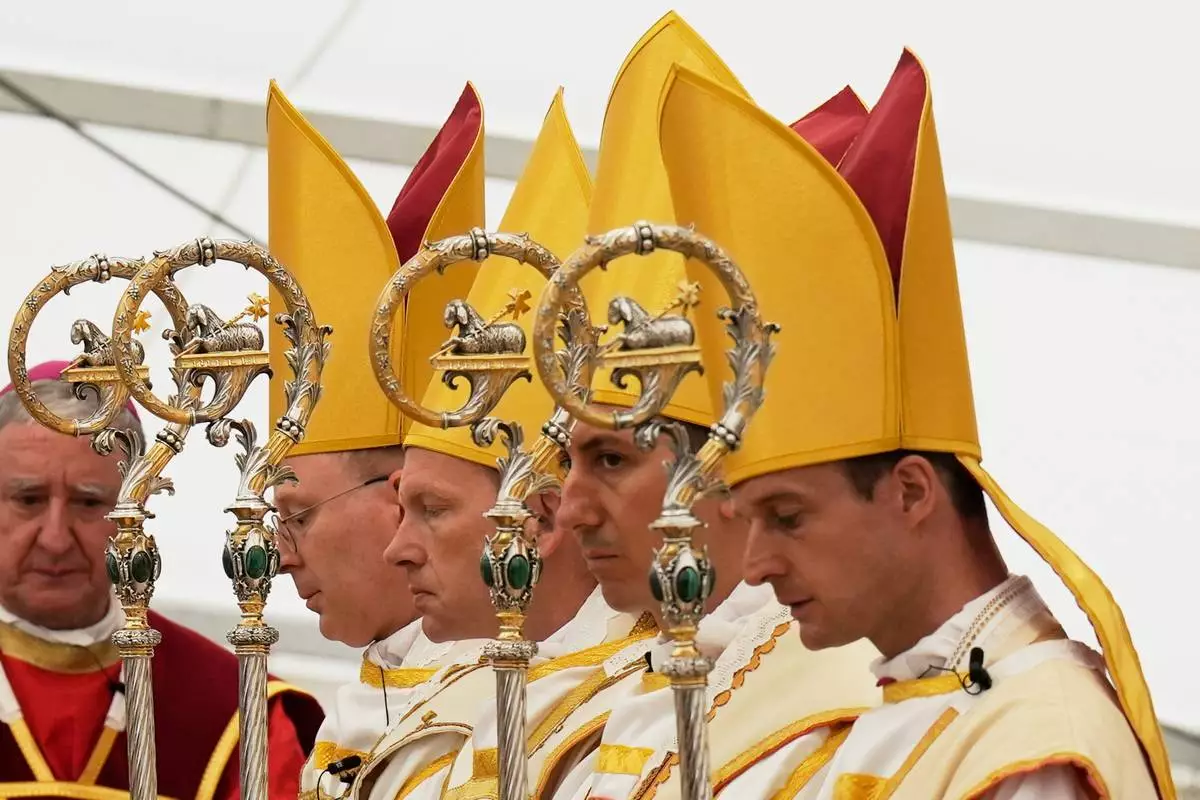
Newly consecrated Bishops, from left, Pascal Schreiber, Michael Goldade, Michel Poinsinet de Sivry and Marc Hanappier, wearing their miters and holding their pastoral staffs, pray at the end of their consecration ceremony in a tent set up outside the Society of St. Pius X seminary in Econe, Switzerland, Wednesday, July 1, 2026. (AP Photo/Baz Ratner)
From left Marc Hanappier, Michel Poinsinet de Sivry, Michael Goldade and Pascal Schreiber pray during their consecration ceremony as bishops in a tent set up outside the Society of St. Pius X seminary, in Econe, Switzerland, Wednesday, July 1, 2026. (AP Photo/Baz Ratner)
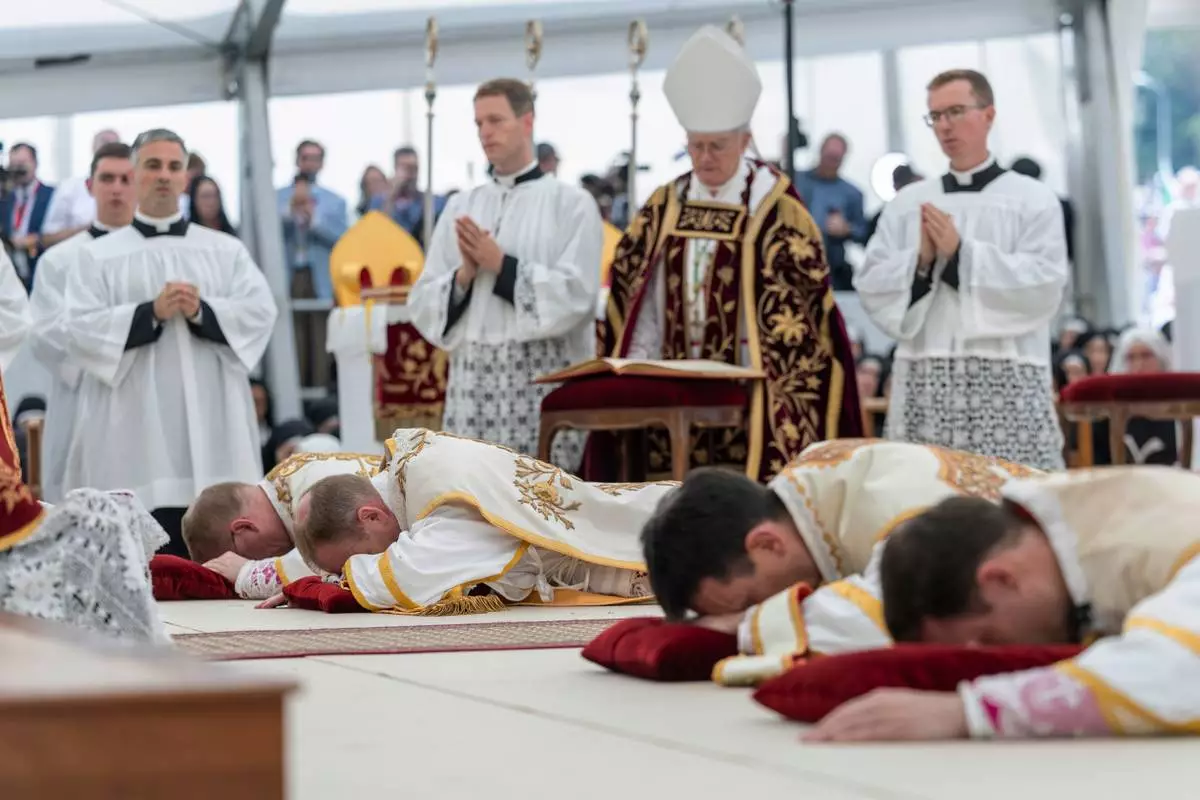
Four bishops lie on the floor as they are given episcopal consecration during a Mass in a tent set up outside the Society of St. Pius X seminary, in Econe, Switzerland, Wednesday, July 1, 2026. (Cyril Zingaro/Keystone via AP)
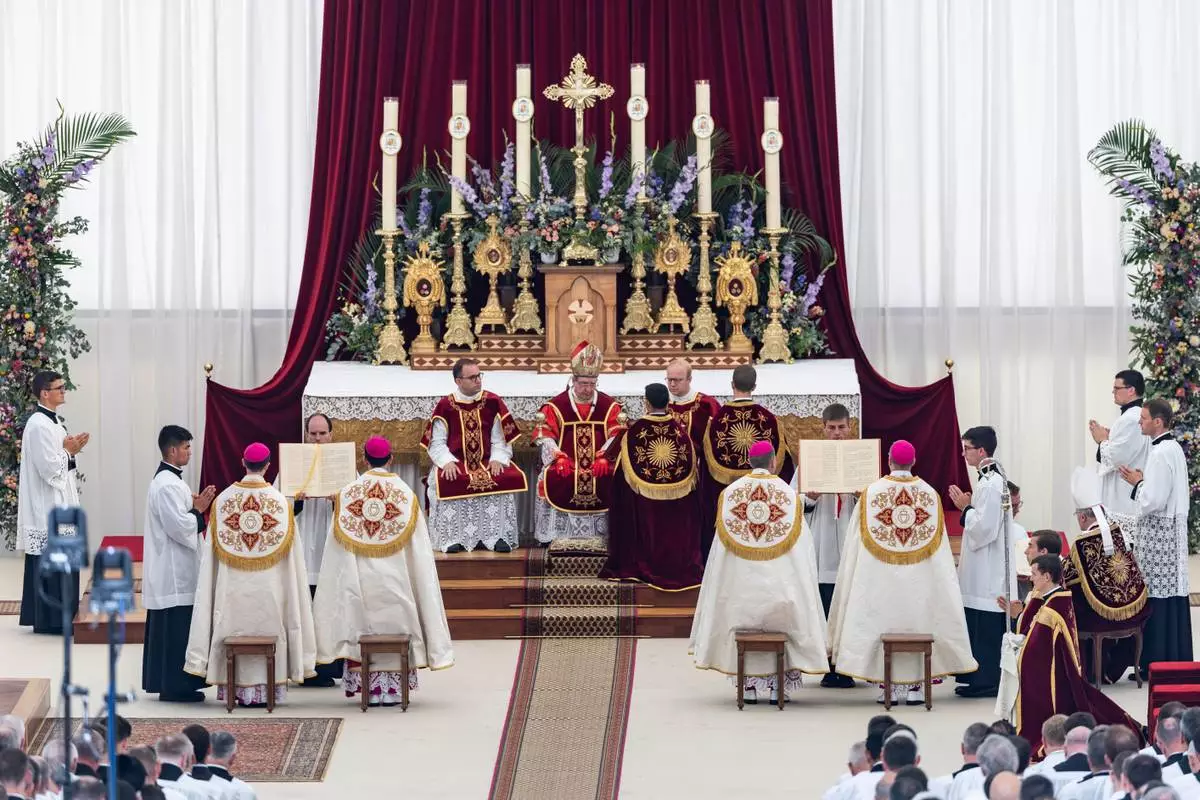
Alfonso de Galarreta from Spain, Bishop of the Society of Saint Pius X, center, gives episcopal consecration four new bishops, back to camera, during a Mass in a tent set up outside the Society of St. Pius X seminary, in Econe, Switzerland, Wednesday, July 1, 2026. (Cyril Zingaro/Keystone via AP)
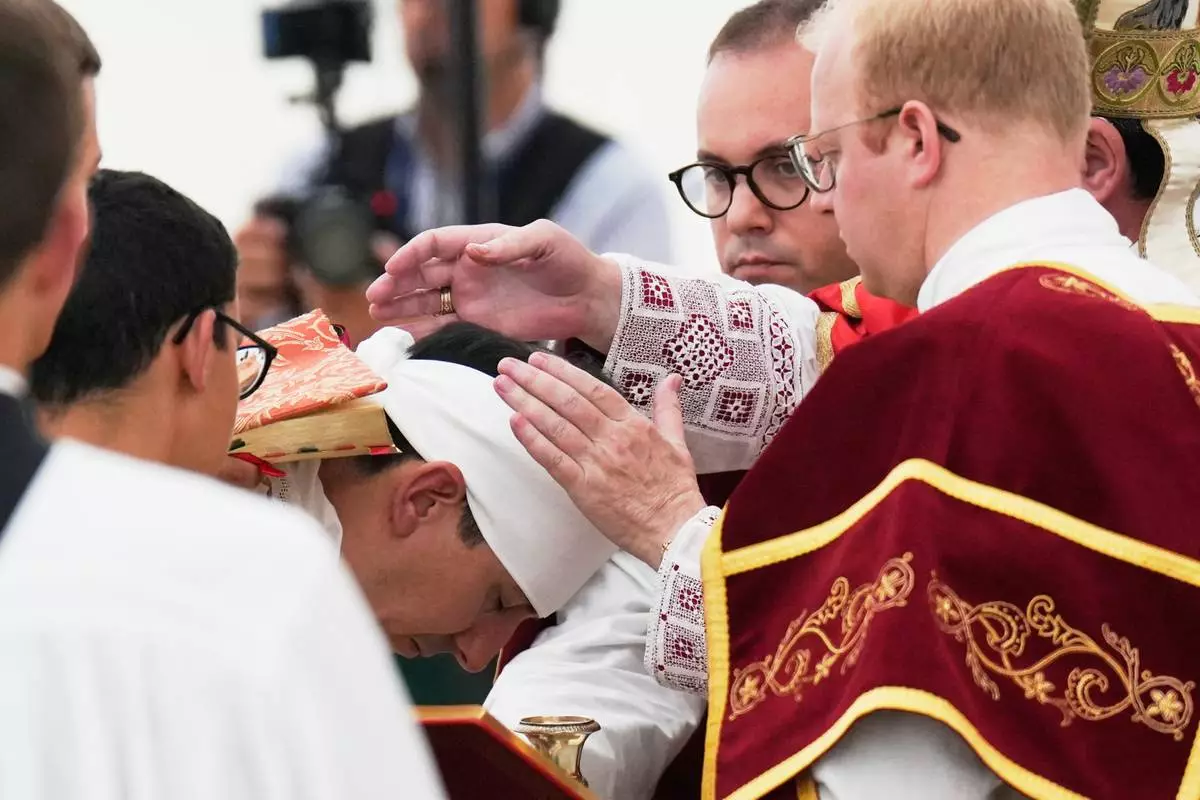
Michel Poinsinet de Sivry is consecrated as bishop during a ceremony in a tent set up outside the Society of St. Pius X seminary in Econe, Switzerland, Wednesday, July 1, 2026. (AP Photo/Baz Ratner)
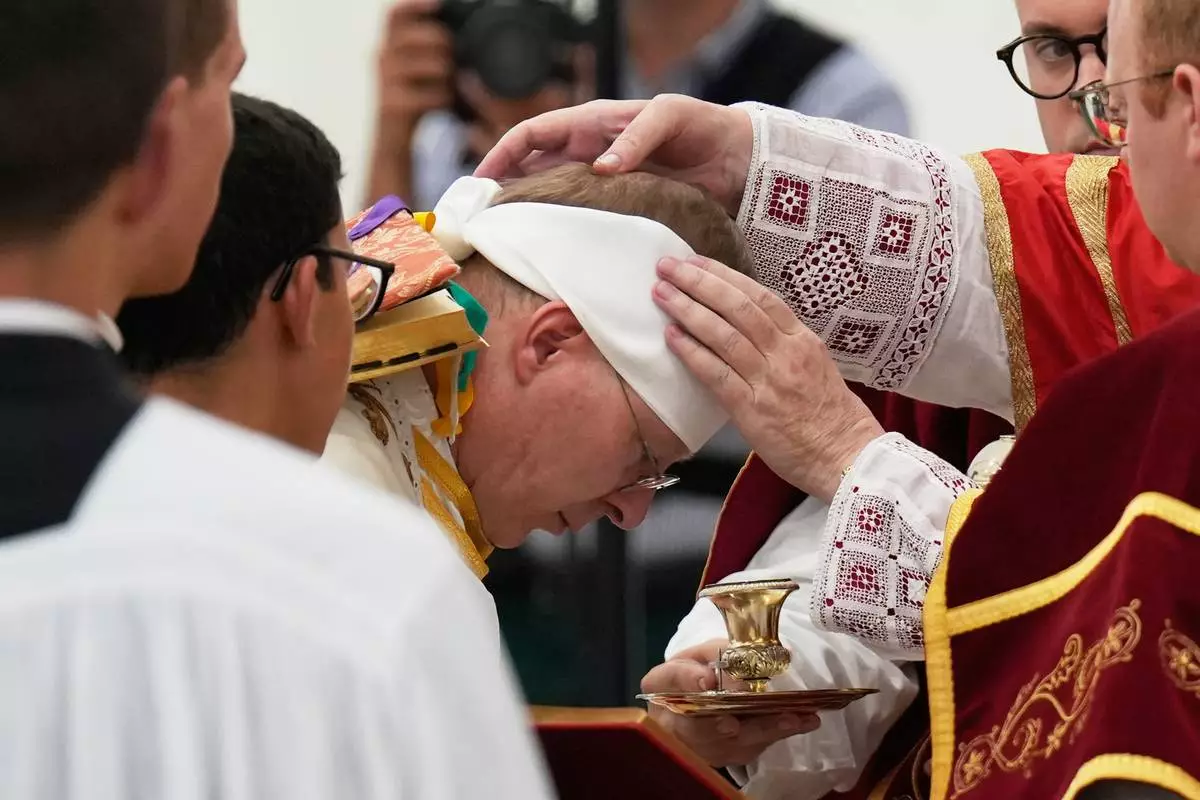
Father Pascal Schreiber is consecrated as bishop during a ceremony in a tent set up outside the Society of St. Pius X seminary in Econe, Switzerland, Wednesday, July 1, 2026. (AP Photo/Baz Ratner)
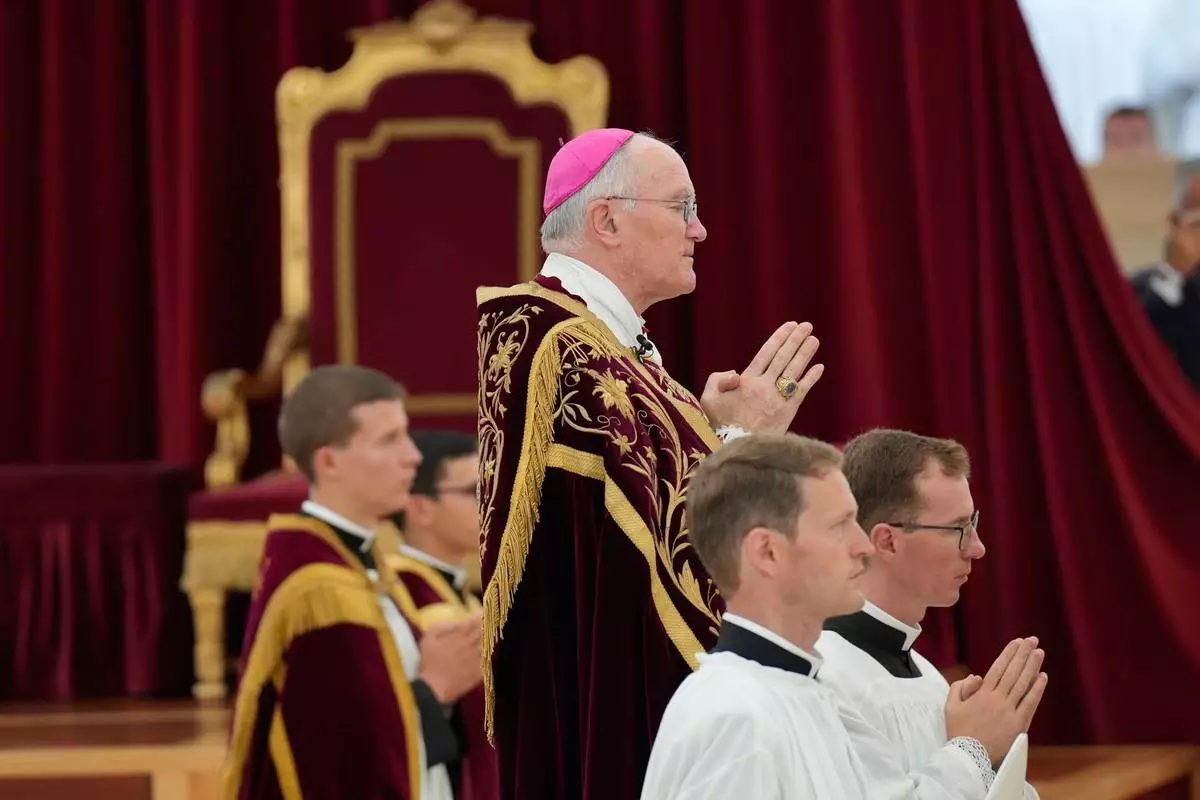
Bishop Bernard Fellay prays during the consecration ceremony for four new bishops in a tent set up outside the Society of St. Pius X seminary, in Econe, Switzerland, Wednesday, July 1, 2026. (AP Photo/Baz Ratner)
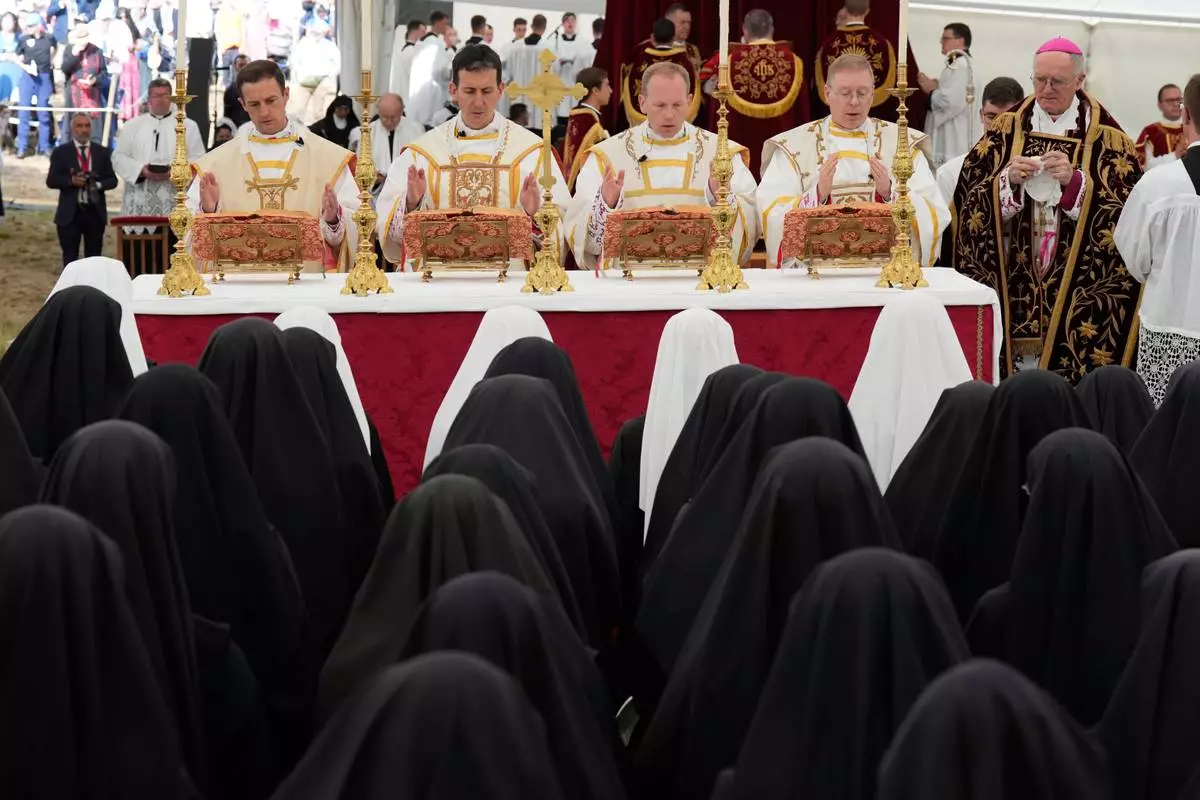
From left Marc Hanappier, Michel Poinsinet de Sivry, Michael Goldade and Pascal Schreiber pray during their consecration ceremony as bishops in a tent set up outside the Society of St. Pius X seminary, in Econe, Switzerland, Wednesday, July 1, 2026. (AP Photo/Baz Ratner)
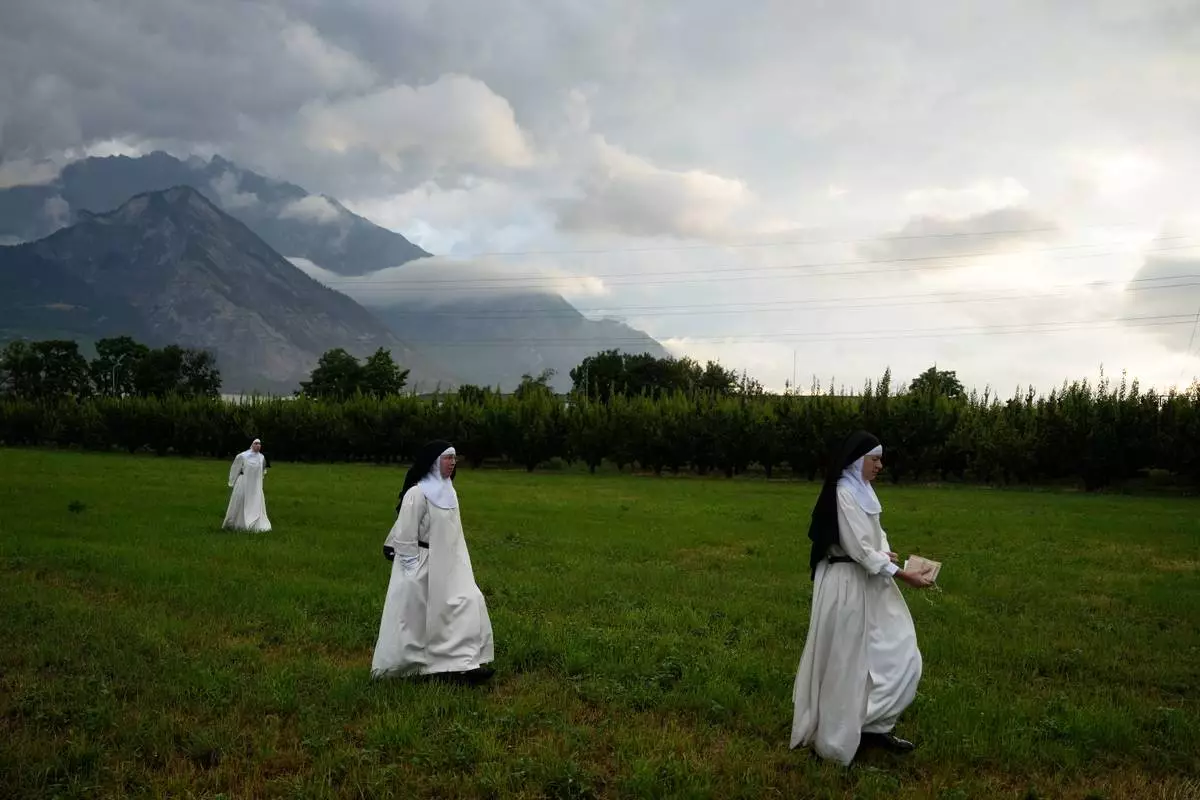
Nuns make their way to a tent set up outside the Society of St. Pius X seminary to attend a consecration ceremony for four new bishops in Econe, Switzerland, Wednesday, July 1, 2026. (AP Photo/Baz Ratner)
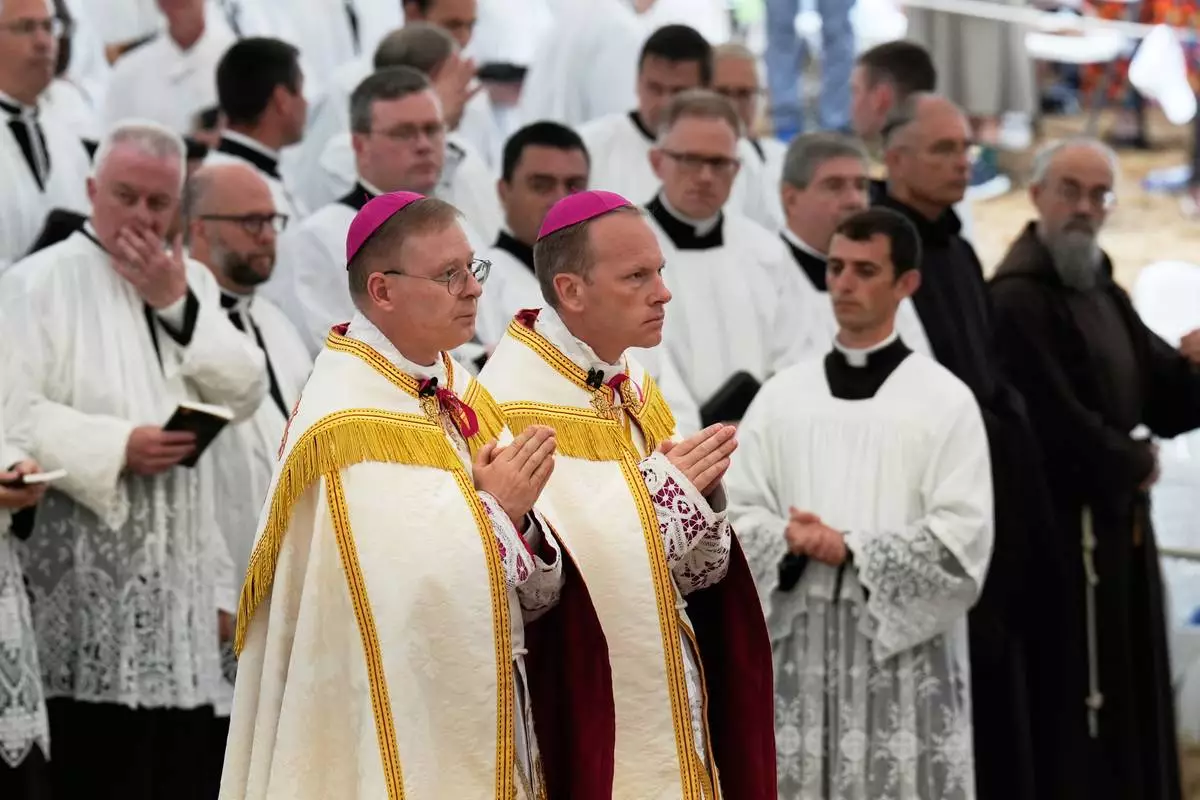
Father Pascal Schreiber, left, and father Michael Goldade arrive for their consecration ceremony as bishops in a tent set up outside the Society of St. Pius X seminary, in Econe, Switzerland, Wednesday, July 1, 2026. (AP Photo/Baz Ratner)

Faithful wait for the start of a consecration ceremony for four new bishops, outside a tent set up outside the Society of St. Pius X seminary, in Econe, Switzerland, Wednesday, July 1, 2026. (AP Photo/Baz Ratner)
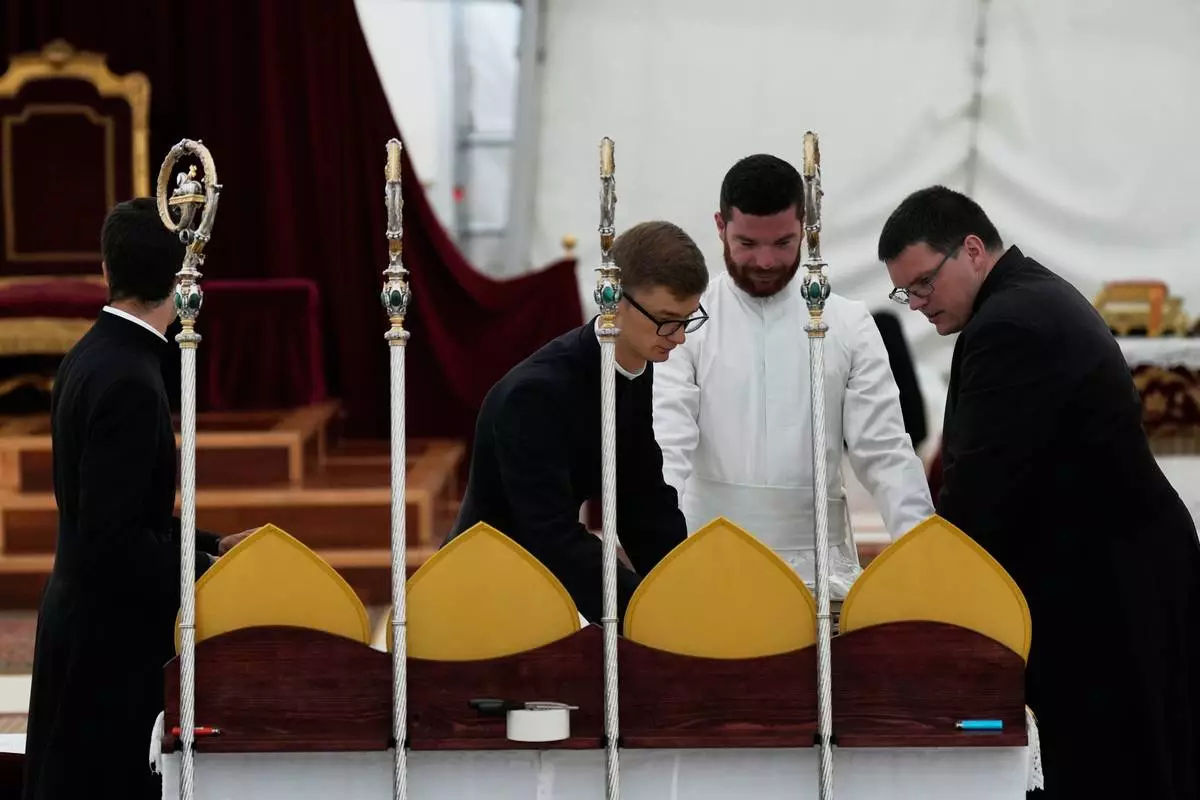
Priests prepare miters and pastoral staffs before the start of a consecration ceremony for four new bishops, in a tent set up outside the Society of St. Pius X seminary, in Econe, Switzerland, Wednesday, July 1, 2026. (AP Photo/Baz Ratner)
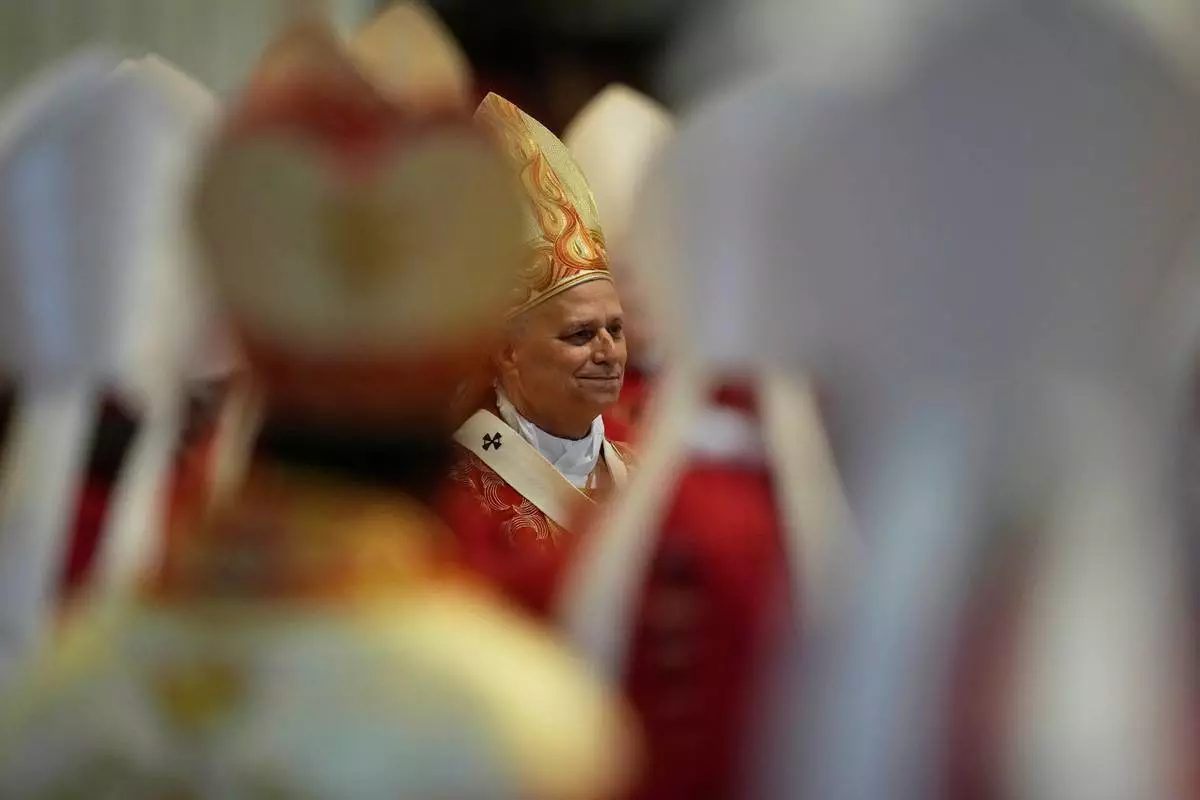
Pope Leo XIV leaves after a Mass where he conferred the pallium on newly appointed metropolitan archbishops, in St. Peter's Basilica, at the Vatican, Monday, June 29, 2026. (AP Photo/Alessandra Tarantino)
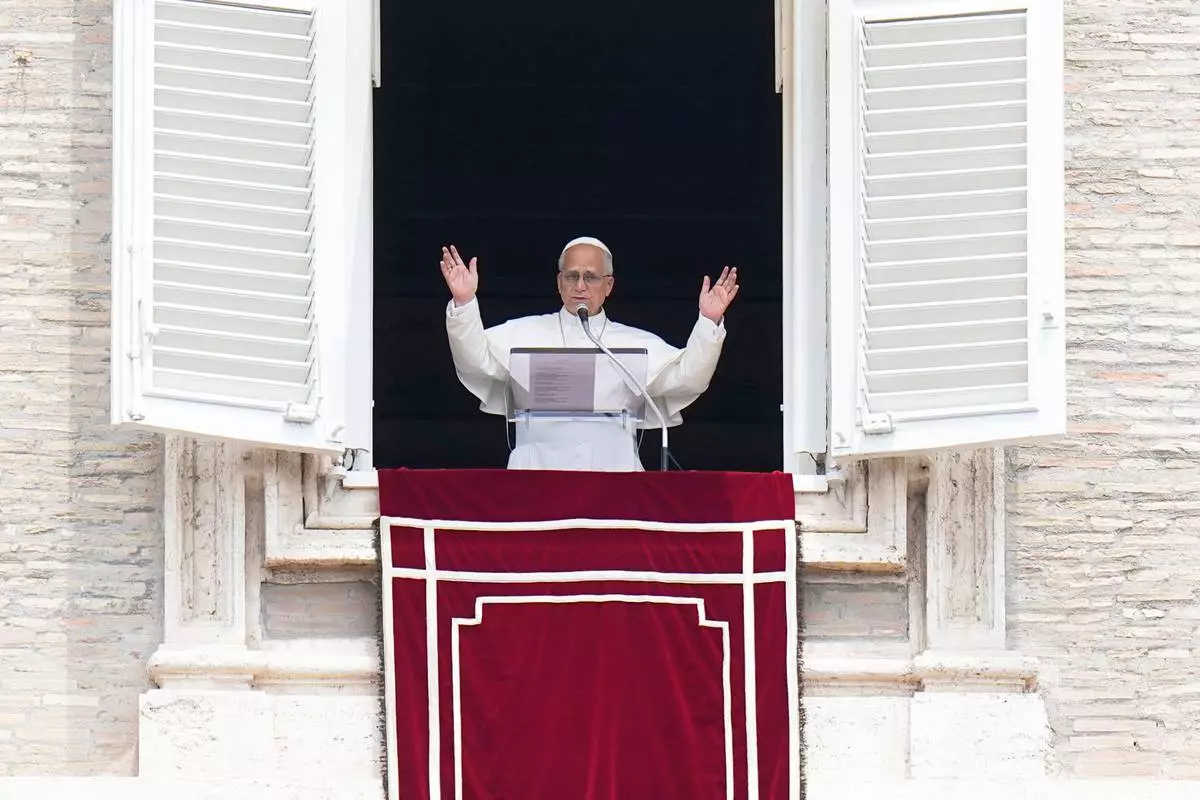
Pope Leo XIV waves during the Angelus noon prayer from the window of his studio overlooking St.Peter's Square, at the Vatican, Monday, June 29, 2026. (AP Photo/Alessandra Tarantino)
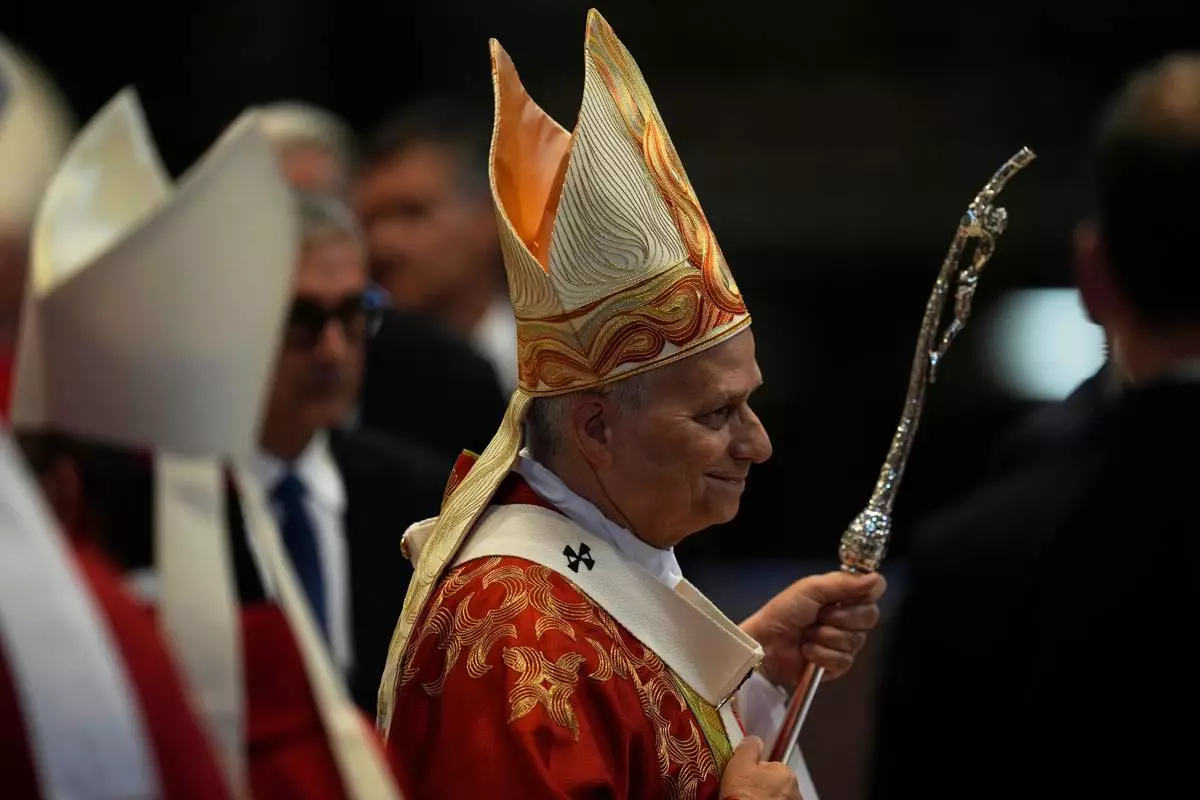
Pope Leo XIV leaves after a Mass where he conferred the pallium on newly appointed metropolitan archbishops, in St. Peter's Basilica, at the Vatican, Monday, June 29, 2026. (AP Photo/Alessandra Tarantino)