WASHINGTON (AP) — Tourists from Chattanooga check into beach resorts in Cancun. Canadian auto parts feed factories in the American Midwest – and vice versa. Happy hour revelers raise glasses of Mexican tequila and mezcal at bars in Seattle.
It adds up. The United States trades $1.9 trillion a year — $5 billion a day — worth of goods and services with its neighbors, Canada and Mexico. They have supplanted China to become America's top two trading partners.
Click to Gallery
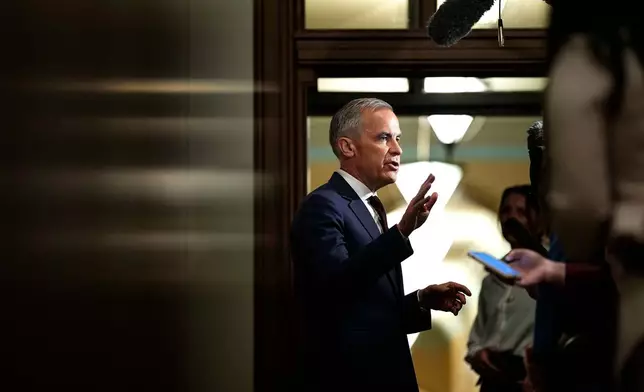
FILE - Prime Minister Mark Carney takes questions from journalists as he arrives on Parliament Hill in Ottawa before a meeting of the federal cabinet, June 2, 2026. (Justin Tang/The Canadian Press via AP, File)
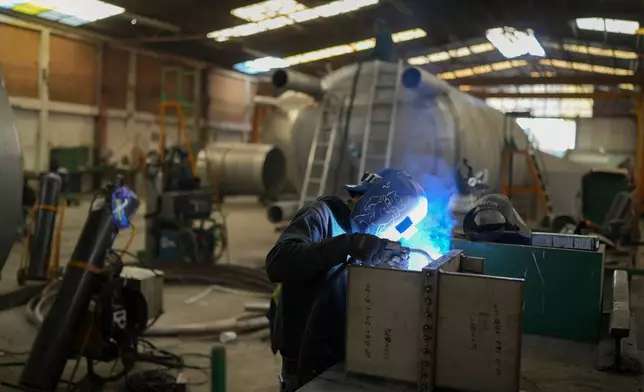
FILE - An employee welds metal at a steel tank factory in Mexico City, Feb. 11, 2025. (AP Photo/Eduardo Verdugo, File)
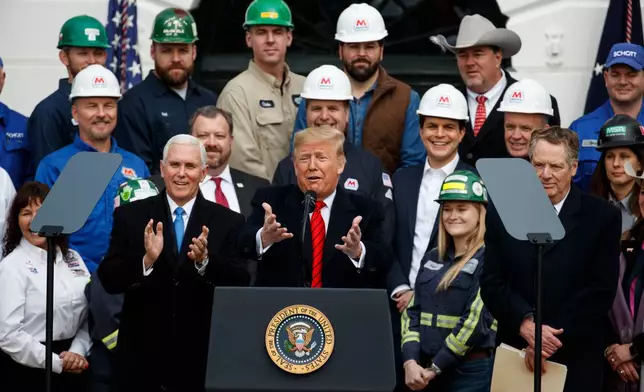
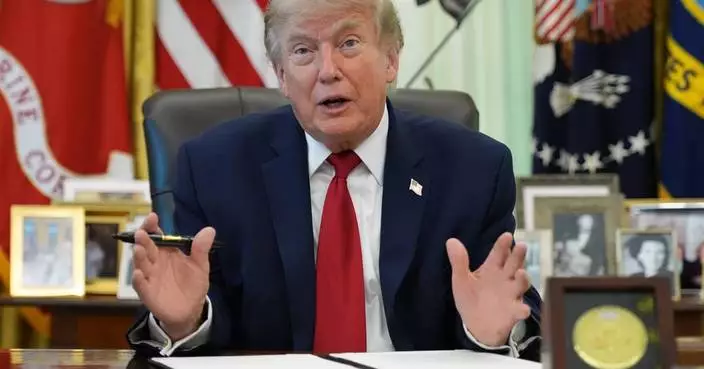
FILE - President Donald Trump speaks during an event at the White House to sign a new North American trade agreement with Canada and Mexico, Jan. 29, 2020, in Washington. (AP Photo/Alex Brandon, File)
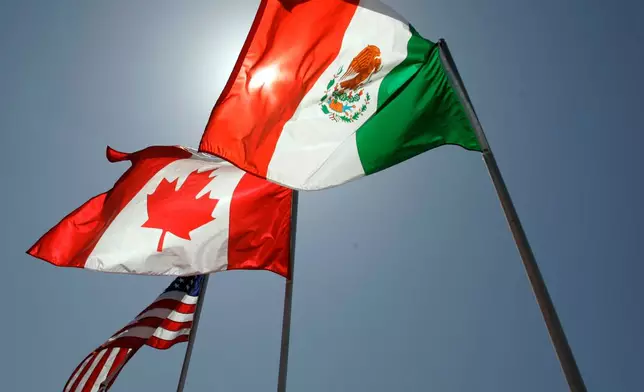
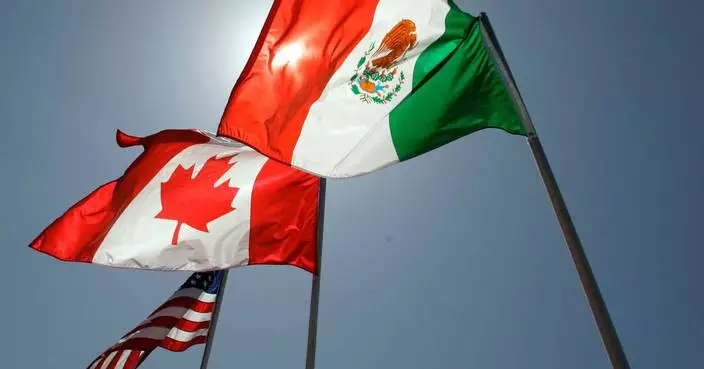
FILE - National flags representing the United States, Canada, and Mexico fly in the breeze in New Orleans where leaders of the North American Free Trade Agreement met on April 21, 2008. (AP Photo/Judi Bottoni, File)
So the stakes are high when it comes to fiddling with the rules that govern trade between the three countries. And after a year of President Donald Trump’s chaotic tariff policies, many U.S., Canadian and Mexican businesses would welcome the return of stability across North America.
They are not likely to get it.
The regional trade pact — the U.S.-Mexico-Canada Agreement or USMCA — that Trump negotiated and boasted about in his first term comes up for renewal Wednesday, a process that is likely to last months, maybe longer.
And the path forward is lined with landmines.
"There’s going to be a lot of drama this summer," Diego Marroquín Bitar, a fellow in the America’s program at the Center for Strategic and International Studies, said last week at a USMCA forum sponsored by the Cato Institute.
The U.S. is making demands that could effectively force Canada and Mexico to surrender some automaking production to the United States. That might bring more auto factory jobs to the United States. But it would also upend established supply chains and would push up U.S. prices for new cars that now average nearly $50,000 at a time when American consumers are already frustrated about the high cost of living.
Trump, characteristically, has added to the tension by threatening to pull out of his own agreement altogether.
In 2020, the USMCA replaced the 1994 North American Free Trade Agreement, which tore down most trade barriers between the three North American countries.
Trump and other critics had called NAFTA a job killer because it encouraged U.S. companies to move factories south of the border to take advantage of low-wage Mexican labor, then ship goods back to the United States duty free.
His USMCA ended up being similar to NAFTA — though it pressured factories to pay higher wages and make sure that more of what they made originated in North America in an effort to prevent Chinese products from slipping across regional borders duty free.
The USMCA included a novel provision requiring the pact to be renewed every six years. That deadline is Wednesday, but “nothing is going to happen July 1,” said Oscar Ocampo, director of economic development at the Mexican Institute for Competitiveness.
Negotiators could agree Wednesday to renew the USMCA as it is for another 16 years — until 2042. But that is considered highly unlikely. Instead, they are expected to keep working on ways to improve it; they have until the current term ends in 2036 to reach an agreement. Otherwise, the pact expires.
Meantime, any USMCA country can pull out of the pact provided it gives its two partners six months’ notice — a red buzzer that Canada and Mexico, dependent on trade with the United States, fear Trump just might push.
Trump, after all, said in June that he was “not looking to renew’’ the trade pact with Canada and Mexico. "We don’t need anything that they have,” he said.
Ocampo suspects that Trump doesn't really want to drop the treaty; he just wants to use the uncertainty to keep pressure on Mexico over security and immigration issues.
The United States and Mexico have held talks on renewing the trade agreement. But Canada has so far been stuck on the sidelines.
Patrick Childress, a partner at the Holland & Knight law firm and a former U.S. trade negotiator, said: "The danger for Canada is this: that the U.S. government and the Mexican government reach agreement on changes to core provisions of the treaty and then show up in Ottawa and say: ‘Here’s what we’ve agreed to. You can take it or leave it.’’’
Canadian Prime Minister Mark Carney said that the three trading partners plan to meet virtually on Wednesday, adding: “I’m not looking for my pen.”
Carney later said in French his priority is to update the USMCA and that it is impossible for the U.S. to have a new agreement without the approval of Congress.
The U.S. wants a refreshed trade pact to do more to make sure that Chinese goods don’t get in through the back door. But the most contentious issue is a U.S. push to require that more products are made in North America — and specifically the United States.
The USMCA included a requirement that automotive products must be 75% made in North America — up from 62.5% under NAFTA — to qualify for duty-free treatment.
The U.S. wants to push the 75% threshold even higher but it won’t be easy. Automakers already "have been fine-tuning their supply chains for years to be able to hit that 75% mark," Childress said. They would need time to meet the higher standard.
The U.S. is also seeking a brand-new requirement: that 50% of cars be made in the United States, Carney confirmed in early June. Currently, none of the USMCA countries gets a guaranteed share of production. "It’s a red line for both Mexico and Canada, and it goes against the spirit and the letter of regional integration," Ocampo said.
Marcos Carias, an economist at the credit insurer Coface, said only 1 in 5 Mexican and Canadian cars imported into the United States would currently meet the 50% standard.
Vehicle models likely to be hit with higher costs under the plan, he said, include Ford’s Maverick compact pickup truck, Chevrolet’s mid-size Equinox SUV and some Nissan sedans — all made in Mexico. Carias’ "back of the envelope" calculations suggest that prices could increase 5% to 7% on the most-affected models.
A lot of companies just want relief from Trump’s ever-changing tariffs. “My interest in this USMCA renewal is just consistency, right?" said Shawn Miller, co-founder of PKGD Group, which imports agave spirits (tequila, mezcal and raicilla) from family producers in Mexico. “If the rules change, the rules change. But we’d really like to know (what they're going to be) and we’d like them to stay that way for a while."
Business is booming for PKGD. Sales at the Holland, Michigan-based firm are up 62% so far this year after surging 100% in 2025 and 300% in 2024.
But last year was chaotic.
Trump hit Mexican and Canadian goods with a 25% import tax in February only to turn around a month later and exempt products that were eligible for preferential USMCA treatment. The USMCA allows the Mexican spirits into the United States duty free.
Amid the tumult, three truckloads of Mexican spirits imported by PKGD crossed the border into the United States and got hit with the 25% tariff. The cost came to $105,000. "For us, it was one unfortunate day!'' Miller said.
Not knowing what tariffs Trump might conjure up next, PKGD huddled with its Mexican producers to figure out how to respond. “What can we absorb? What can they absorb?" Miller said. “How can we mitigate this?"
Miller said he and his Mexican suppliers “are not large multinational corporations with dedicated trade departments, teams of lawyers, or lobbyists focused on trade policy."
Kerry Mellin can sympathize.
In 2014, the veteran Hollywood costume designer started a business in Ventura County, California, selling silicone grips that enable people with disabilities (such as cerebral palsy and Parkinson’s) to hold things — spoons, cups, pens, toothbrushes.
But sales floundered when she introduced her EazyHold grips in Canada, where she has dual citizenship. She thinks it’s because the silicone she imports from Asia kept her grips from having enough North American content to qualify for USMCA’s duty-free treatment when they crossed the border from the United States.
Mellin suspects EazyHold could meet the USMCA standards, “but the rules are complex and unpredictable enough that I genuinely can’t be sure without hiring a trade attorney."
Mellin believes the USMCA’s rules of origin should be loosened, not tightened, to help small businesses that can’t afford costlier raw materials from North America.
“I do understand why the rule exists -- to stop companies from routing Chinese goods through Mexico," she said. “I just wish it could tell the difference between that and a small family business in California making grip aids for people who can’t hold a fork. I’m not the problem they were trying to solve."
AP Writers Maria Verza in Mexico City and Rob Gilles in Toronto contributed to this story.
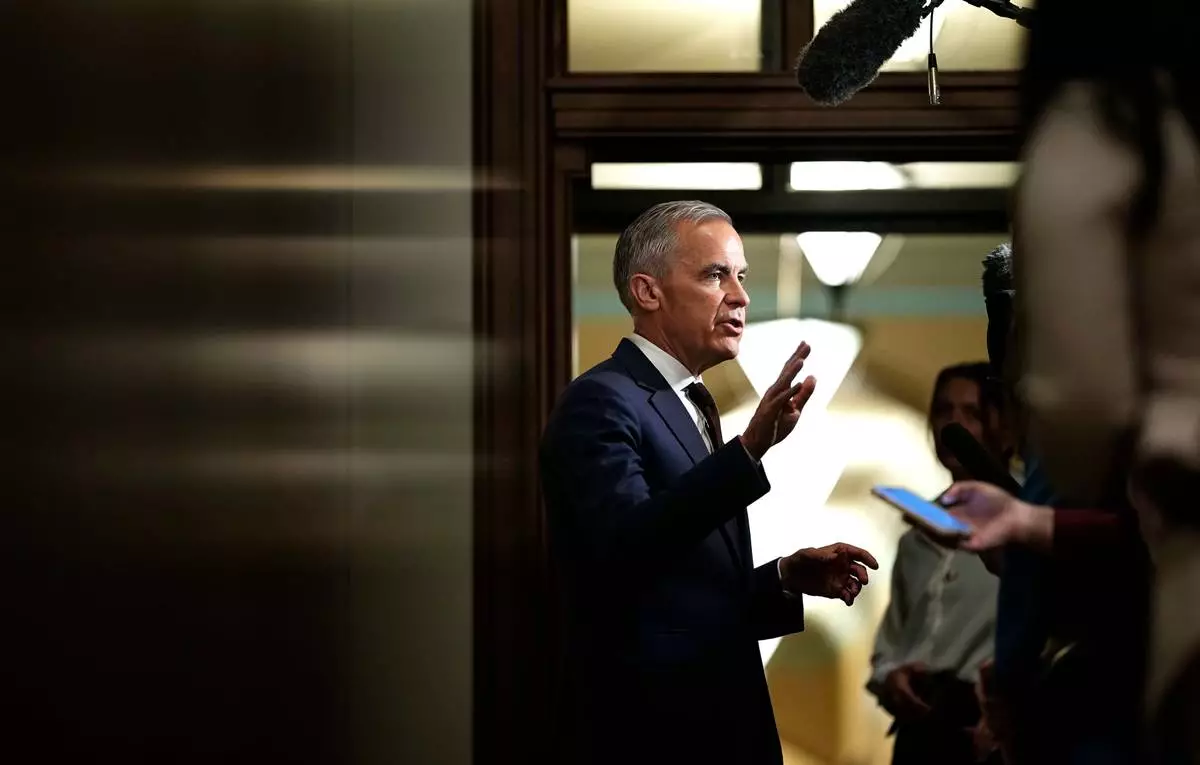
FILE - Prime Minister Mark Carney takes questions from journalists as he arrives on Parliament Hill in Ottawa before a meeting of the federal cabinet, June 2, 2026. (Justin Tang/The Canadian Press via AP, File)
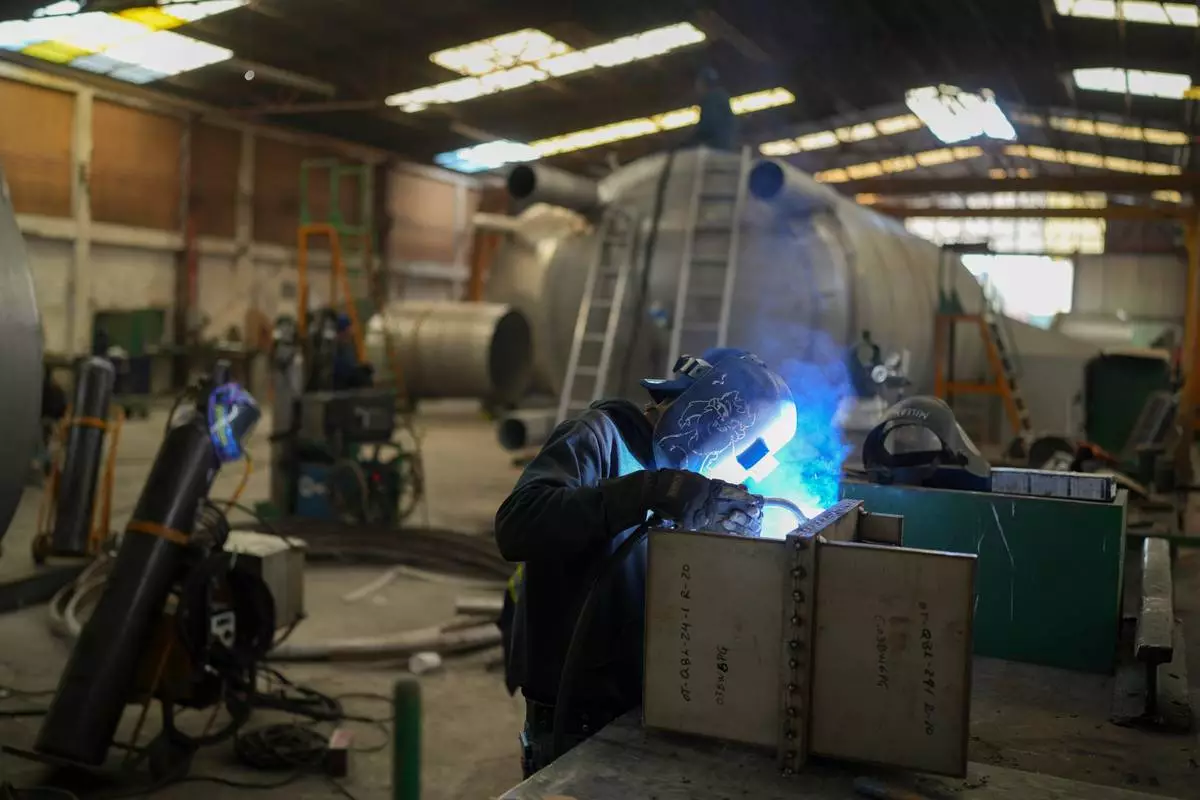
FILE - An employee welds metal at a steel tank factory in Mexico City, Feb. 11, 2025. (AP Photo/Eduardo Verdugo, File)
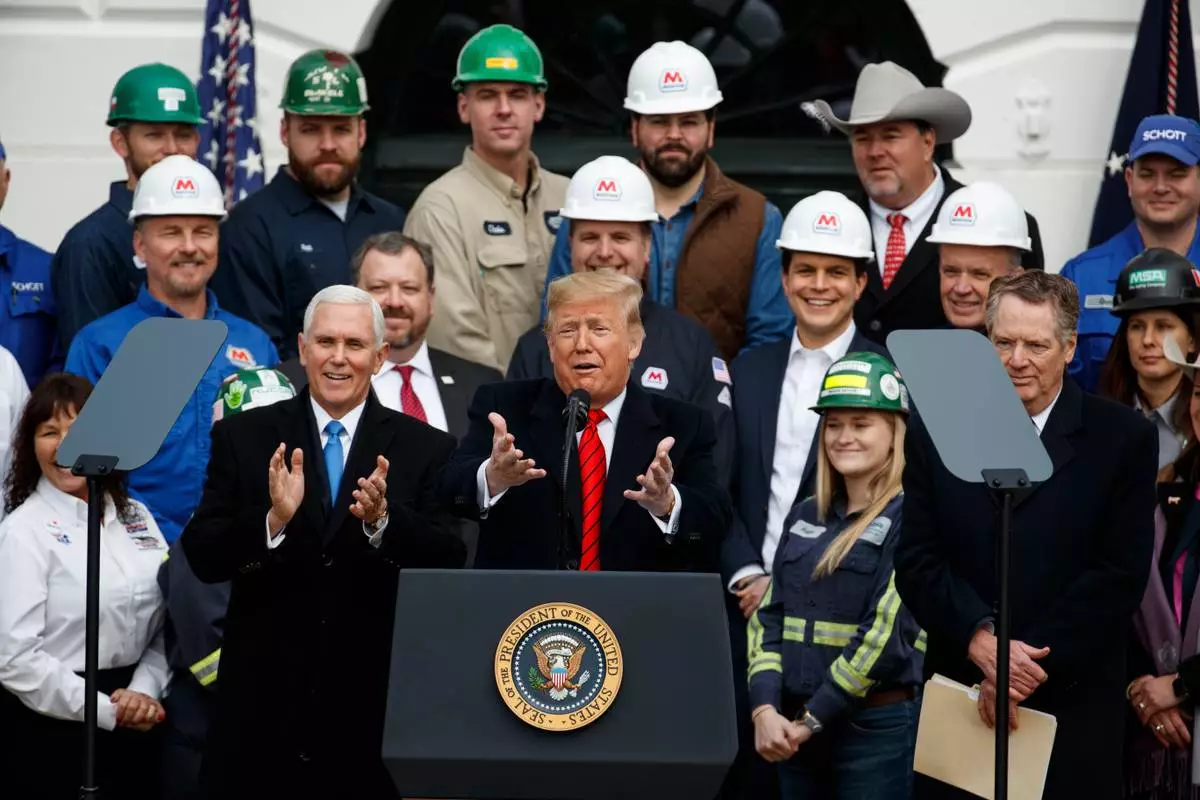
FILE - President Donald Trump speaks during an event at the White House to sign a new North American trade agreement with Canada and Mexico, Jan. 29, 2020, in Washington. (AP Photo/Alex Brandon, File)
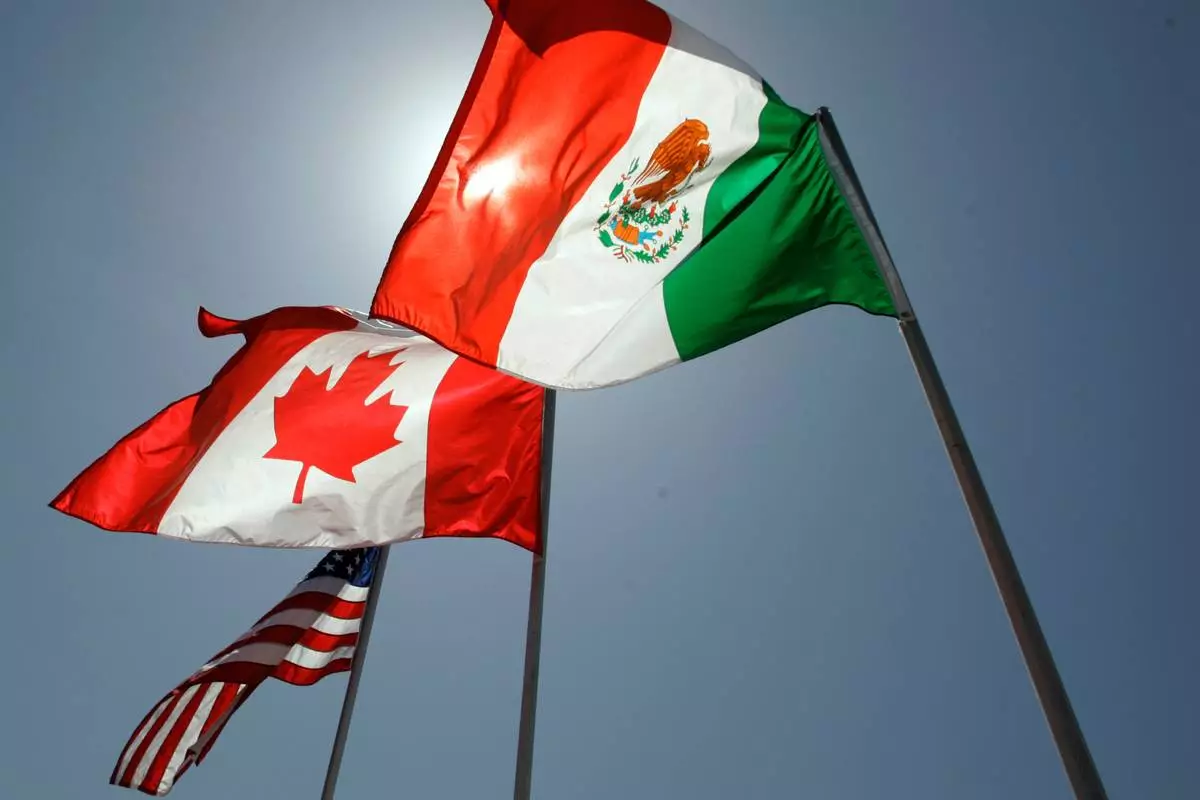
FILE - National flags representing the United States, Canada, and Mexico fly in the breeze in New Orleans where leaders of the North American Free Trade Agreement met on April 21, 2008. (AP Photo/Judi Bottoni, File)