DAMASCUS, Syria (AP) — The first Parliament in Syria’s post-Assad era took shape Wednesday with the release of a list of 70 legislators picked up by interim President Ahmad al-Sharaa.
The inauguration of the new Parliament shows the country is moving ahead with drafting laws as the nation works on recovering from decades of iron-fist rule under the Assad family and a deadly war that has killed about half a million people.
The head of Syria’s electoral committee, Mohammed Taha al-Ahmad, told reporters that the new 210-member legislature will hold its first meeting Monday. Members will be sworn in and the Parliament’s presidential council will be elected.
The list of 70 legislators picked by al-Sharaa included 15 women, which raised the number of female members in the legislature to 22.
Syria held the first phase of its parliamentary elections in October while excluding the southern province of Sweida, which is controlled by Druze gunmen opposed to the central government. The vote at the time also excluded northeast Syria, which was under Kurdish control.
A vote in northeast Syria was held in May after government forces took control of the area during deadly clashes early this year. No date has been set yet for a vote in Sweida, but two representatives for the predominantly Druze region were among the names released by al-Sharaa on Wednesday.
The Parliament will have a 30-month term and work on a new elections law while preparing the ground for a popular vote in the next elections, according to al-Ahmad.
Syria had been without a Parliament since the December 2024 offensive by insurgents, led by al-Sharaa’s now defunct Hayat Tahrir al-Sham group, that ended the Assad family's five-decade dynasty.
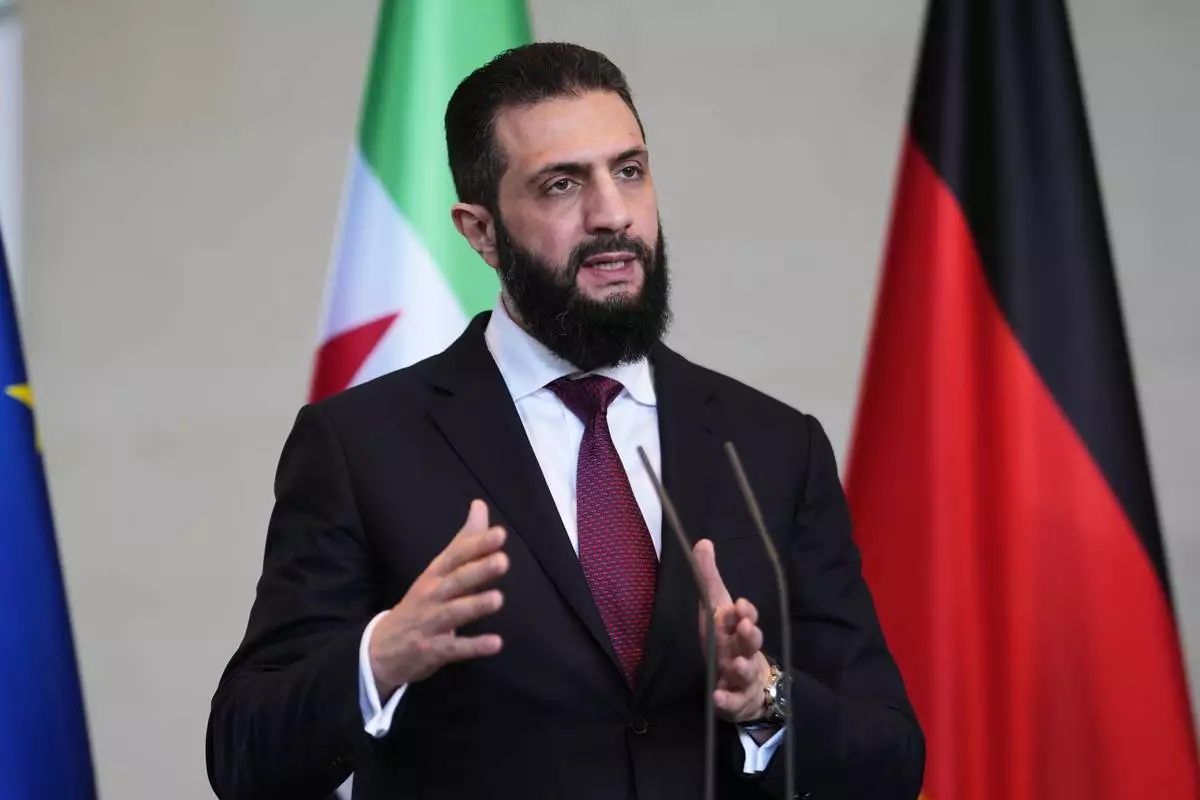
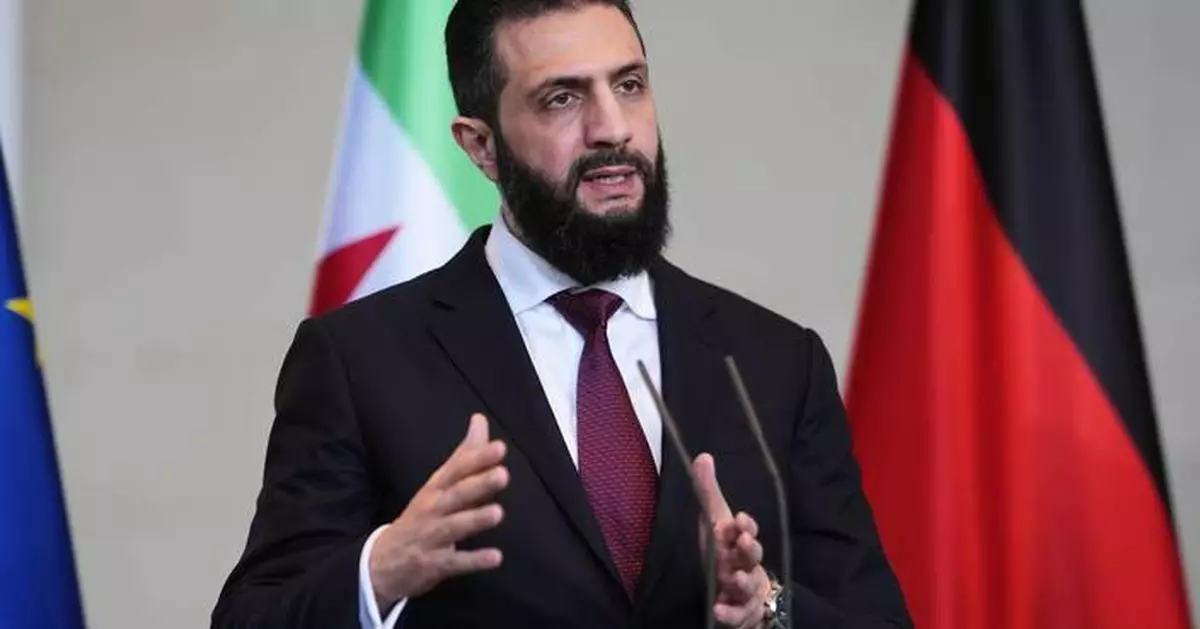
FILE - Syrian President Ahmad al-Sharaa attends a press conference after meeting with German Chancellor Friedrich Merz in Berlin, Germany, on March 30, 2026. (AP Photo/Markus Schreiber, File)
ANKARA, Turkey (AP) — Turkey is rolling out sweeping security measures for the upcoming NATO summit, deploying tens of thousands of police and placing air defenses on high alert, while banning public gatherings and imposing controversial restrictions on freedom of expression and assembly.
That's meant to safeguard the summit, but also to display strength and underscore Turkey’s commitment to the military alliance, even as it is often portrayed as an outlier within it.
On July 7–8, leaders from all 32 member states are expected convene in the Turkish capital, including U.S. President Donald Trump, whose threats to withdraw from NATO and reduce U.S. troop levels have cast uncertainty over the alliance’s future.
Turkey has also unveiled a new VIP airport, converted from a former military airfield, specifically to host NATO leaders.
At the Ankara summit, NATO members are expected to address questions over defense spending and the U.S.’s evolving role in the alliance.
The main agenda will center on unity after Trump has criticized allies for failing to support the U.S.-led war on Iran and efforts to reopen the Strait of Hormuz.
“The important aspect of the meeting is to what extent the rift between the United States and Europe can be healed or narrowed during the summit,” said Fatih Ceylan, a former Turkish ambassador to NATO and security analyst at the Ankara Policy Center. “We should not expect miracles, but nonetheless if there is a convergence of ideas emphasizing the importance of NATO, that should be seen as a success.”
Turkey's role as host seems to have helped win an appearance by Trump, who has a close rapport with Turkish President Recep Tayyip Erdogan.
“Well, except for the fact that it was being held in Turkey by President Erdogan, I don’t think I would have gone to it,” he told reporters following a meeting with NATO Secretary General Mark Rutte at the White House.
In the run-up to the summit, Erdogan described Turkey as a reliable ally that consistently shoulders responsibility on NATO’s southeastern flank and will continue to play a leading role in the alliance. He said his country was working to ensure that the Ankara Summit “will stand as a reference point in NATO’s history.”
A NATO member since 1952, Turkey has the alliance’s second-largest army after the United States, a fast-growing defense industry and a strategic location at the crossroads of Europe, the Middle East, the Black Sea and the Caucasus.
Yet it has often acted independently, frustrating allies by refusing to participate in sanctions on Russia, engaging in disputes with Greece, and purchasing Russian missile defense systems — a move that led to its expulsion from the U.S.-led F-35 program in 2019.
Turkey also delayed Finland and Sweden’s NATO membership until it secured concessions on counter-terrorism cooperation and the lifting of arms export restrictions, and blocked the appointments of NATO chiefs Anders Fogh Rassmussen in 2009 and Mark Rutte in 2024 until other demands were met.
But Turkey's independent streak has also enabled it to play a mediating role, from brokering a deal to ship grain across the Black Sea between Ukraine and Russia in 2022 to supporting recent initiatives aimed at ending the war in Iran.
Ankara, too, has at times been frustrated with its NATO allies, particularly over what it saw as the alliance’s lack of solidarity during a failed coup attempt in 2016, and the arms sales restrictions imposed on Turkey after its intervention in Syria.
Murat Aslan, an analyst at the Ankara-based SETA think tank, said Turkey learned to “play it alone” due to its turbulent relations with the United States and Europe, adding that Europe is now also talking about “strategic autonomy” from the U.S.
Turkey can help NATO navigate U.S.–Europe tensions by showing how to “balance” independence with alliance commitments, he said.
More recently, however, Turkey has leaned closer to NATO, whose importance was underscored during the Iran war when alliance missile defenses intercepted four missiles fired from Iran into Turkish territory. Weeks before the summit, Italy and Germany deployed air defense systems to help Turkey respond to heightened threats.
“Turkey wishes to distinguish itself as a foreign policy actor that is independent of NATO and the West,” wrote Hamish Kinnear, principal Middle East and North Africa analyst at risk intelligence company Verisk Maplecroft, in a note. “While Turkey is not abandoning its balancing approach, it is tilting closer to the West, primarily because of NATO.”
In Ankara, strict access restrictions will be imposed on several of the city's main arteries, around airports, the presidential complex where the summit will be held, and around hotels hosting the delegations, severely disrupting life in the city of nearly 6 million.
As the country prepares for the summit, Erdogan unveiled a new airport which was transformed from a former military airfield into a modern facility with expanded runways. The new Ankara Airport is expected to remain a VIP airport after the summit and is not expected to serve the general public, officials have said.
Facades of houses along the route from the new airport have been painted over as part of city beautification efforts, the newspaper Cumhuriyet reported.
With a history of terrorist attacks, Turkey's capital is no stranger to tight security, but the measures being taken in connection with NATO appear to go beyond the usual.
Authorities have also banned demonstrations, concerts, and graduation ceremonies during the summit, while nonessential state employees have been placed on leave to ease congestion.
Security units have detained more than 200 people suspected of links to extremist groups, including the Islamic State group, authorities said. Media reports said that several activists, lawyers and an academic were caught up in the sweep.
A Turkish court, meanwhile, blocked access to websites critical of NATO and the summit on security and public order grounds, according to Engelli Web, a website that tracks websites banned in Turkey. Several journalists from Turkish opposition-leaning media organizations were denied accreditation to cover the summit, sparking outrage from media rights groups.
“In the history of the organization, we have never witnessed security measures as stringent and suffocating in a host city for a summit as we are seeing this time in Ankara,” wrote Namik Tan, a former Turkish ambassador and legislator from Turkey's main opposition party.
Personal trainer Selin Karakoc said she breathed a sigh of relief after she was told that her wedding on July 5 falls just before the start of the restrictions.
“Ours could be one of the last weddings in Ankara that week,” she joked.
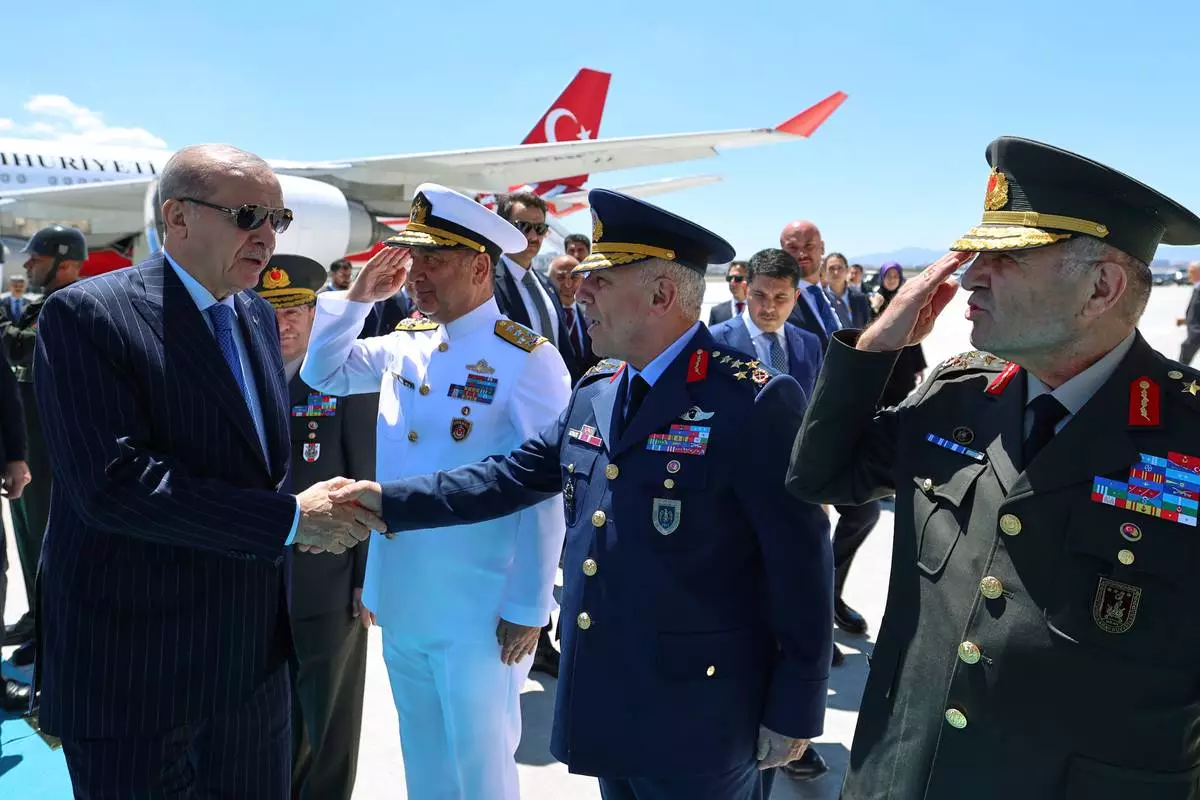
In this handout photo released by Turkish Presidency, Turkish President Recep Tayyip Erdogan, left, greets Turkey's army top commanders during the official opening ceremony of a converted military airport, in Ankara, Monday, June 15, 2025. (Turkish Presidency via AP)
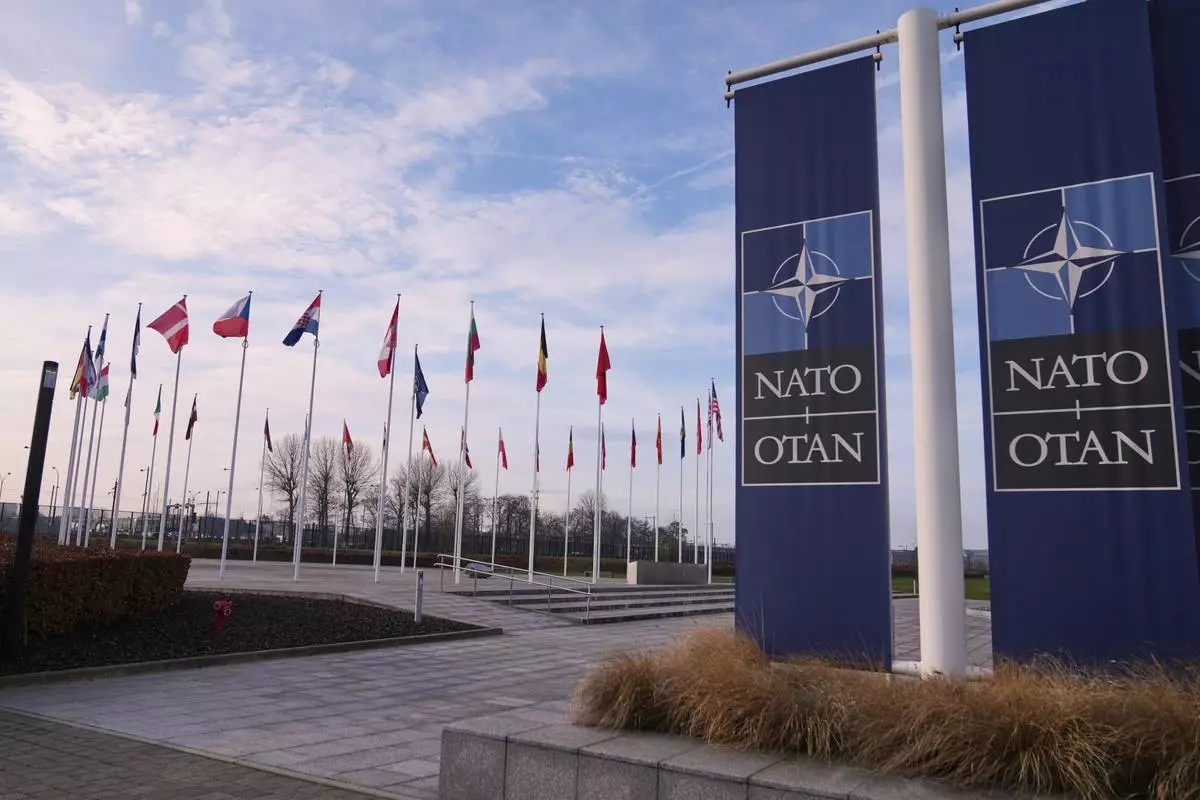
FILE - Flags flap in the wind outside NATO headquarters in Brussels, Jan. 19, 2026. (AP Photo/Virginia Mayo, File)
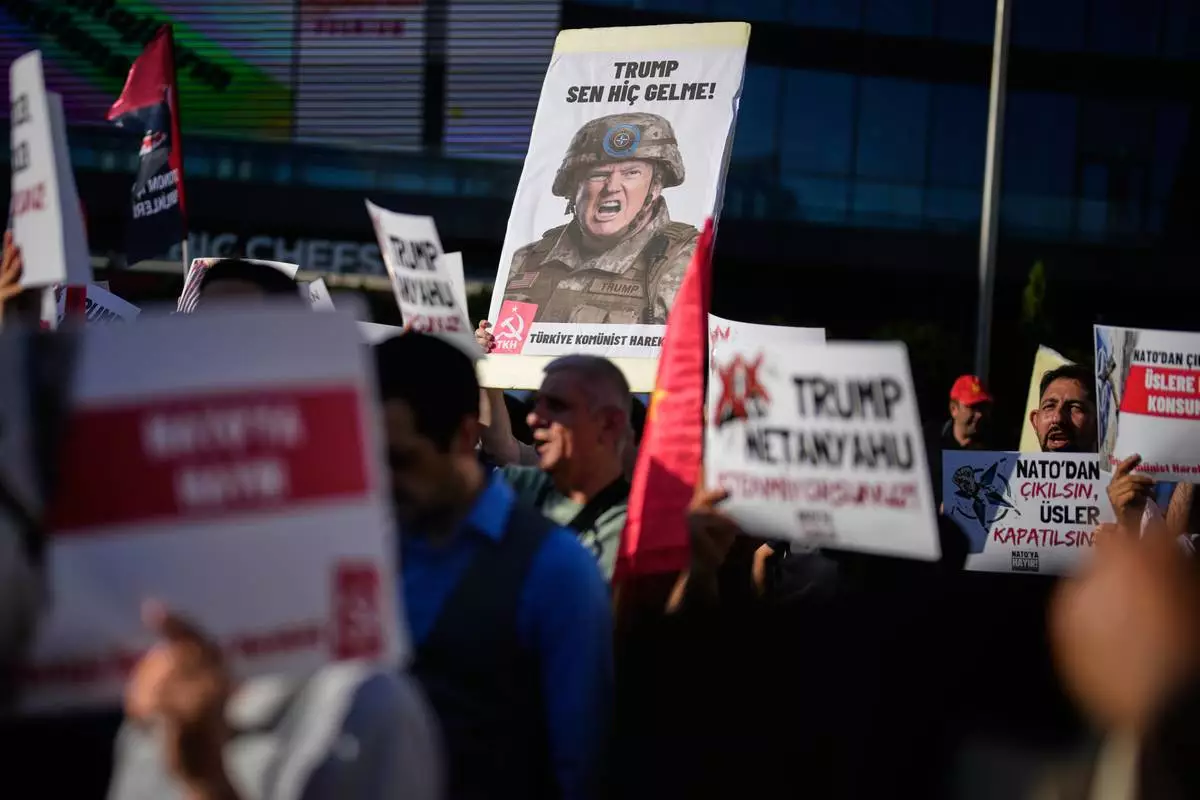
Demonstrators chant slogans and raise placards, including a sign depicting U.S. President Donald Trump, during an anti-NATO protest in Istanbul, Turkey, Saturday, June 27, 2026, days ahead of the NATO summit scheduled to be held in Ankara on July 7-8.(AP Photo/Khalil Hamra)
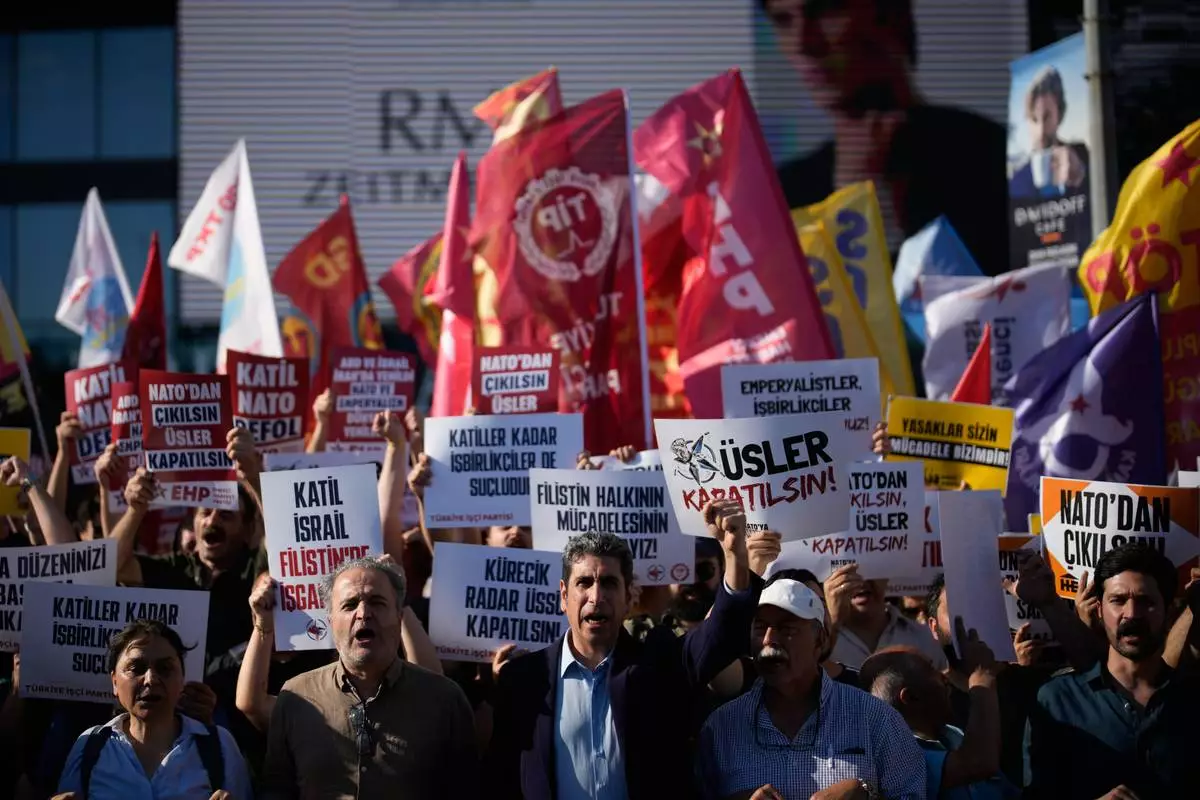
Demonstrators chant slogans and raise placards, during an anti-NATO protest in Istanbul, Turkey, Saturday, June 27, 2026, days ahead of the NATO summit scheduled to be held in Ankara on July 7-8.(AP Photo/Khalil Hamra)