RIO DE JANEIRO (AP) — Sightings of humpback whales off Rio de Janeiro’s coast are surging as they recover from decimation due to commercial whaling, prompting an acceleration in the demand for whale-watching excursions to spot the huge marine creatures during their annual migration.
The species' population has jumped from around 2,000 to around 35,000 in approximately 40 years, close to their population before whaling, said Enrico Marcovaldi, co-founder of the Humpback Whale Project. That means they are increasingly being spotted in Rio’s postcard Guanabara Bay.
Click to Gallery
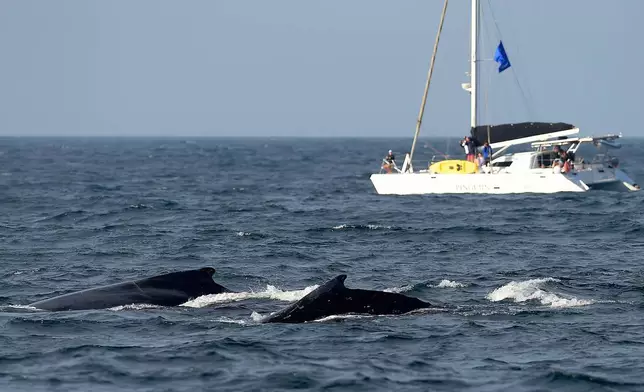
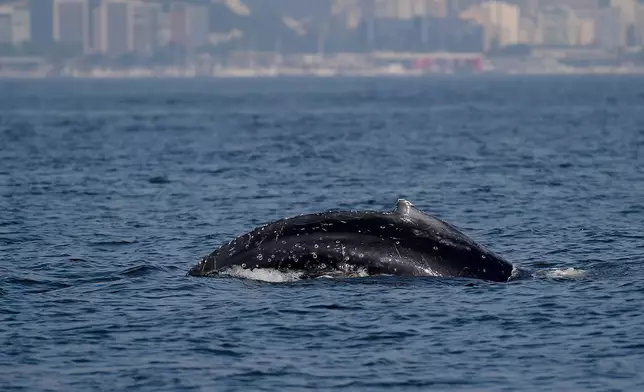
Humpback whales surface near a Humpback Whale Project boat during monitoring off the coast of Rio de Janeiro, Brazil, Tuesday, June 30, 2026. (AP Photo/Dhavid Normando)
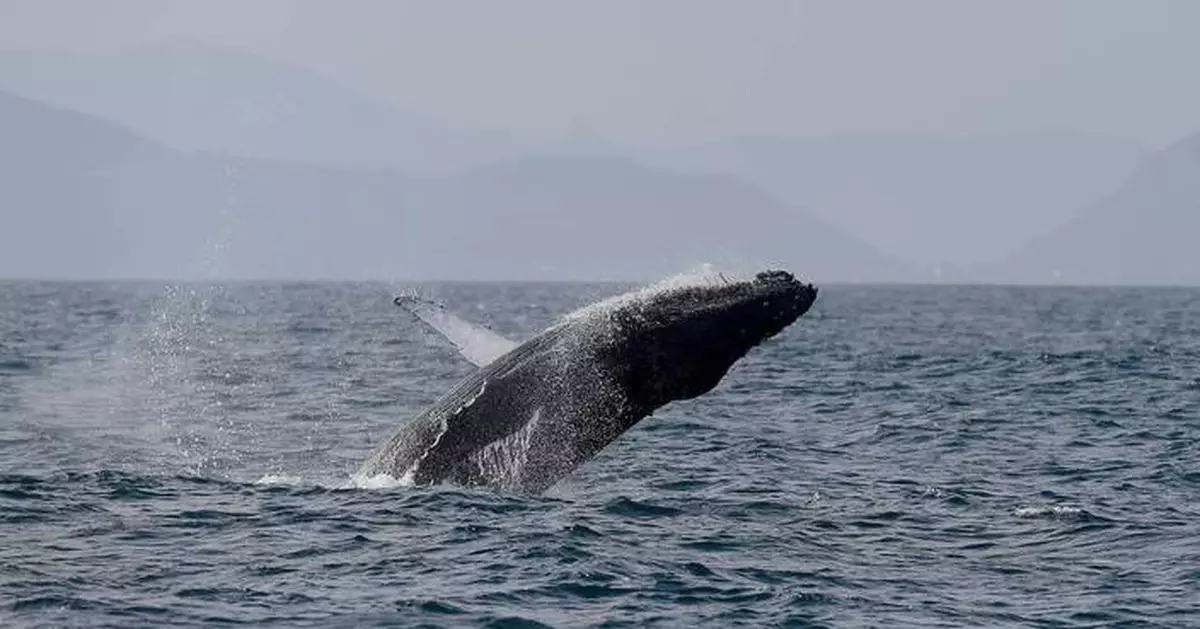
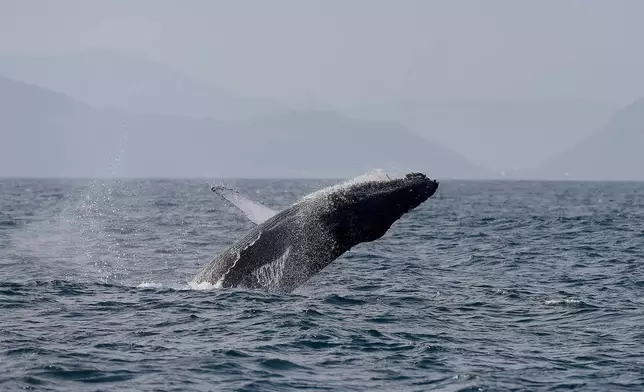
A humpback whale breaches off the coast of Rio de Janeiro, Brazil, Tuesday, June 30, 2026. (AP Photo/Dhavid Normando)
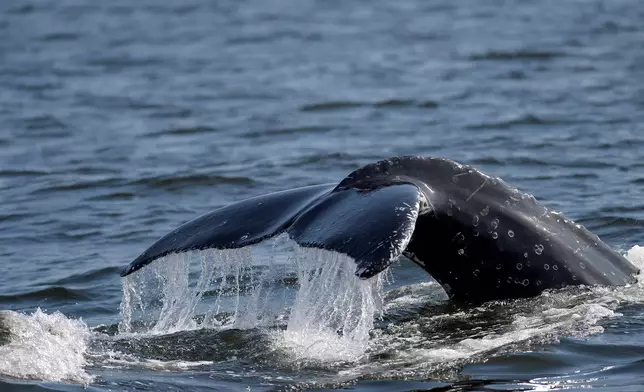
A humpback whale dives off the coast of Rio de Janeiro, Brazil, Tuesday, June 30, 2026. (AP Photo/Dhavid Normando)
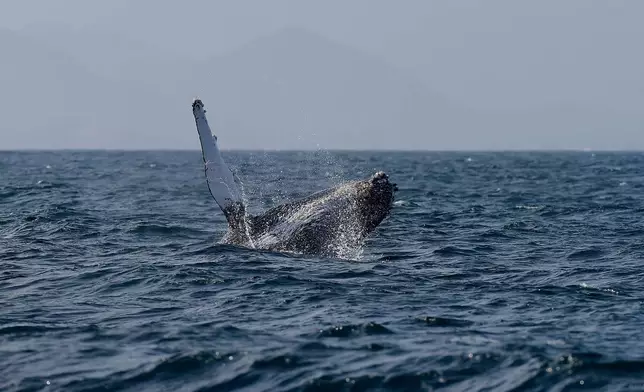
A humpback whale surfaces off the coast of Rio de Janeiro, Brazil, Tuesday, June 30, 2026. (AP Photo/Dhavid Normando)
A humpback whale breaches off the coast of Rio de Janeiro, Brazil, Tuesday, June 30, 2026. (AP Photo/Dhavid Normando)
“It’s wonderful. It shows that the whales are making a recovery, are healthy and thriving, and hopefully they’ll continue to do so,” said Marcovaldi.
In 1982, the International Whaling Commission decided that there should be a pause in commercial whaling on all whale species and populations from the 1985/1986 season onward.
Louise Raulais, who runs the Rio Ocean Club with her partner Theo Andrade, is among those who see the tourism opportunities in the whales' resurgence.
This year, the company began offering sailboat trips for between five and 10 people to observe the whales. Raulais said they always have a biologist onboard to share information, which can stimulate a desire to protect the whales and the ocean.
“These animals are so iconic and charismatic that they have the power to transform people, to change the way they see the world,” said Raulais.
Humpback whales are known for roaming long distances across major oceans in predictable patterns, typically following migration routes learned from their mothers. They feed on krill and small fish in the warmer months and breed in tropical waters over winter.
Between June and November, thousands of humpback whales migrate through Brazilian waters, traveling roughly 2,500 miles (4,000 kilometers) from their feeding grounds in the Southern Ocean to breeding and calving grounds off northeastern Brazil.
Most gather around the Abrolhos Bank, a coral reef region spanning the coasts of Bahia and Espirito Santo that is one of the South Atlantic’s most biodiverse marine environments.
The Humpback Whale Project set up a scientific expedition, scheduled to run from June 26 to July 9, to study the humpback whales’ behavior, size and health, as well as identify their travel route, key gathering areas, and to measure how far offshore the whales pass.
“They’re exploring this area," said Pedro Fróes, a biologist for the Humpback Whale Project who is part of the expedition. "They want to find out whether, in the future, it could become a place for them to rest, to mate, or to give birth to a calf,” Fróes said.
Follow AP’s coverage of Latin America and the Caribbean at https://apnews.com/hub/latin-america
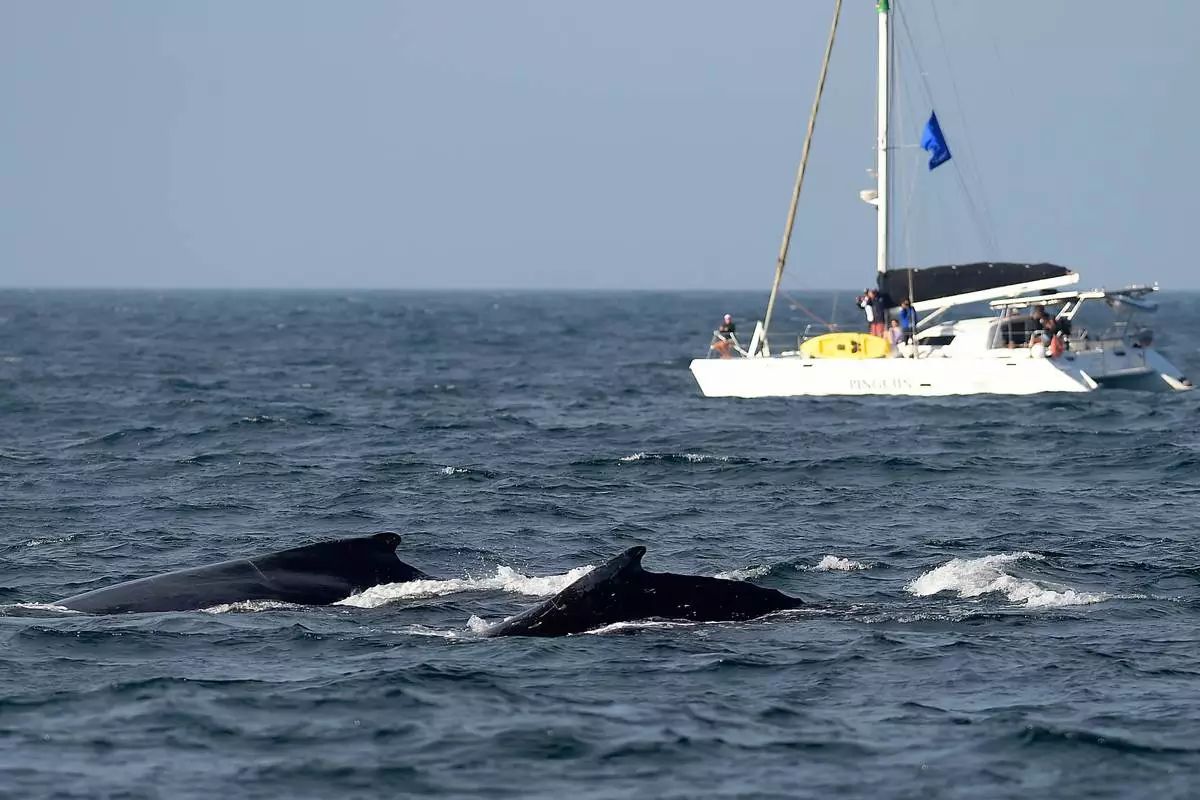
Humpback whales surface near a Humpback Whale Project boat during monitoring off the coast of Rio de Janeiro, Brazil, Tuesday, June 30, 2026. (AP Photo/Dhavid Normando)
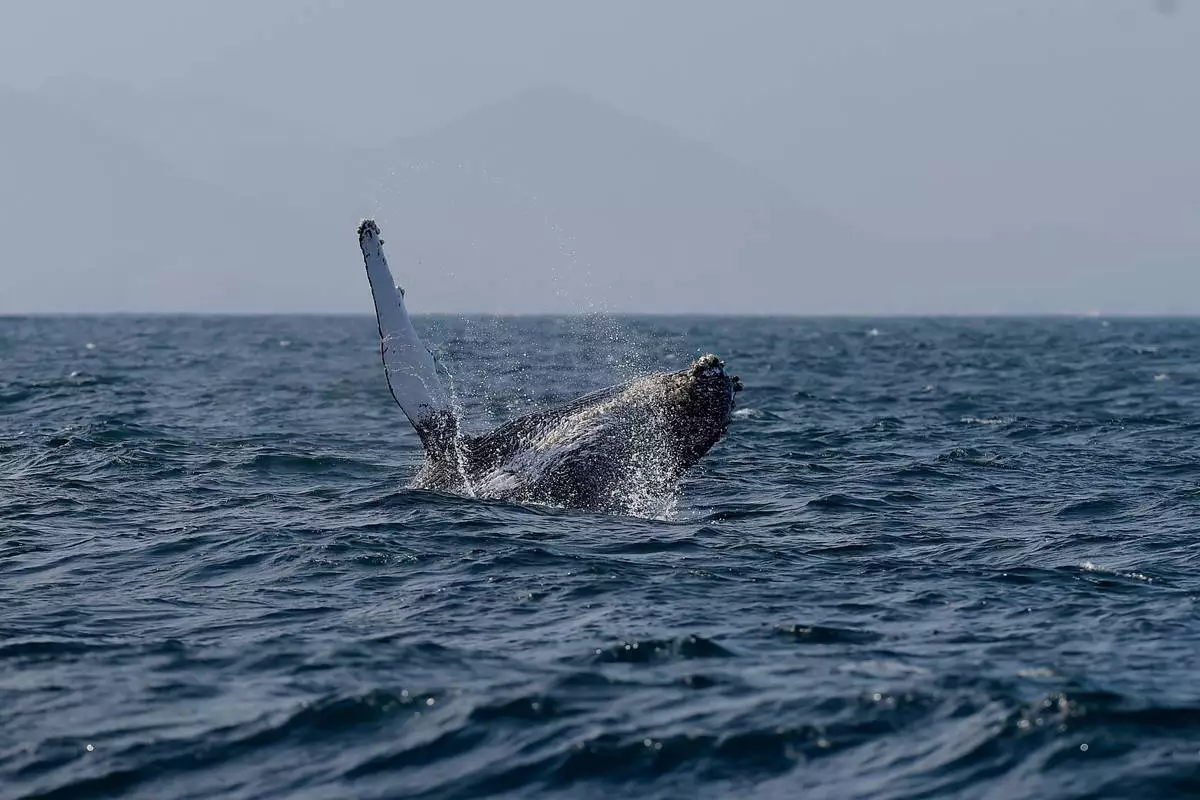
A humpback whale breaches off the coast of Rio de Janeiro, Brazil, Tuesday, June 30, 2026. (AP Photo/Dhavid Normando)
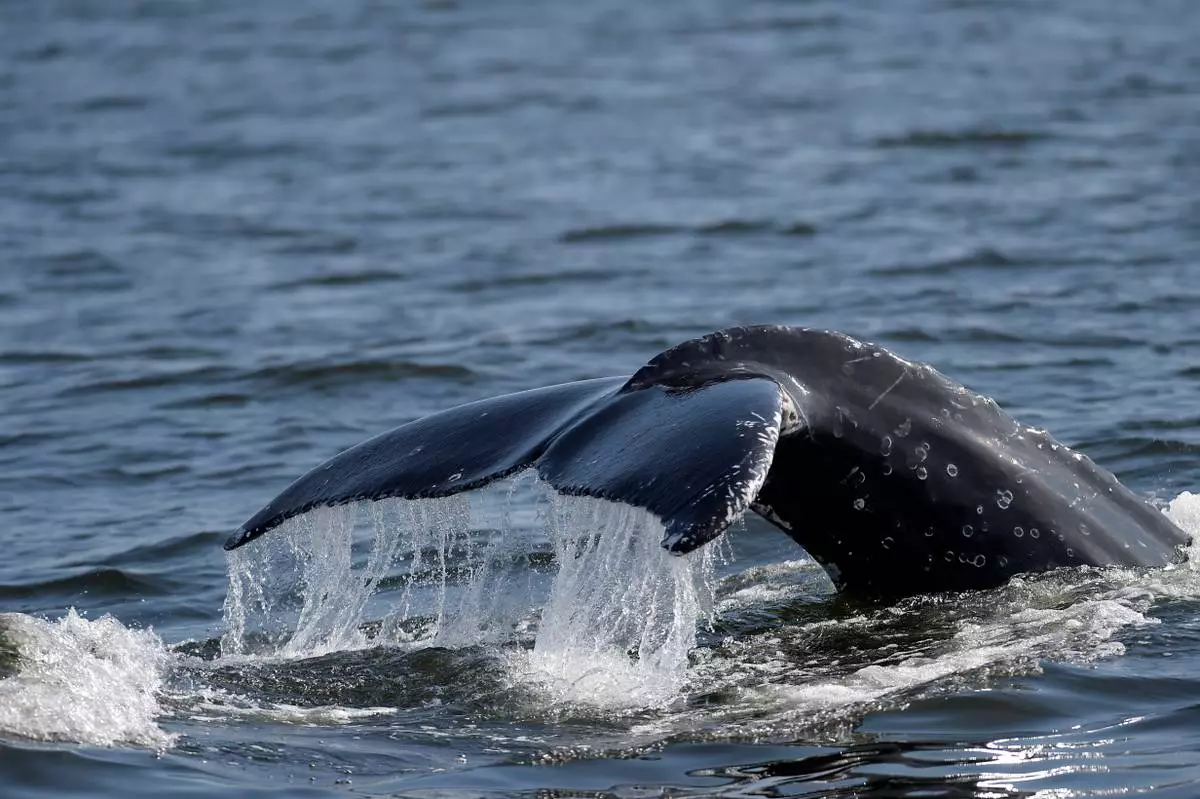
A humpback whale dives off the coast of Rio de Janeiro, Brazil, Tuesday, June 30, 2026. (AP Photo/Dhavid Normando)
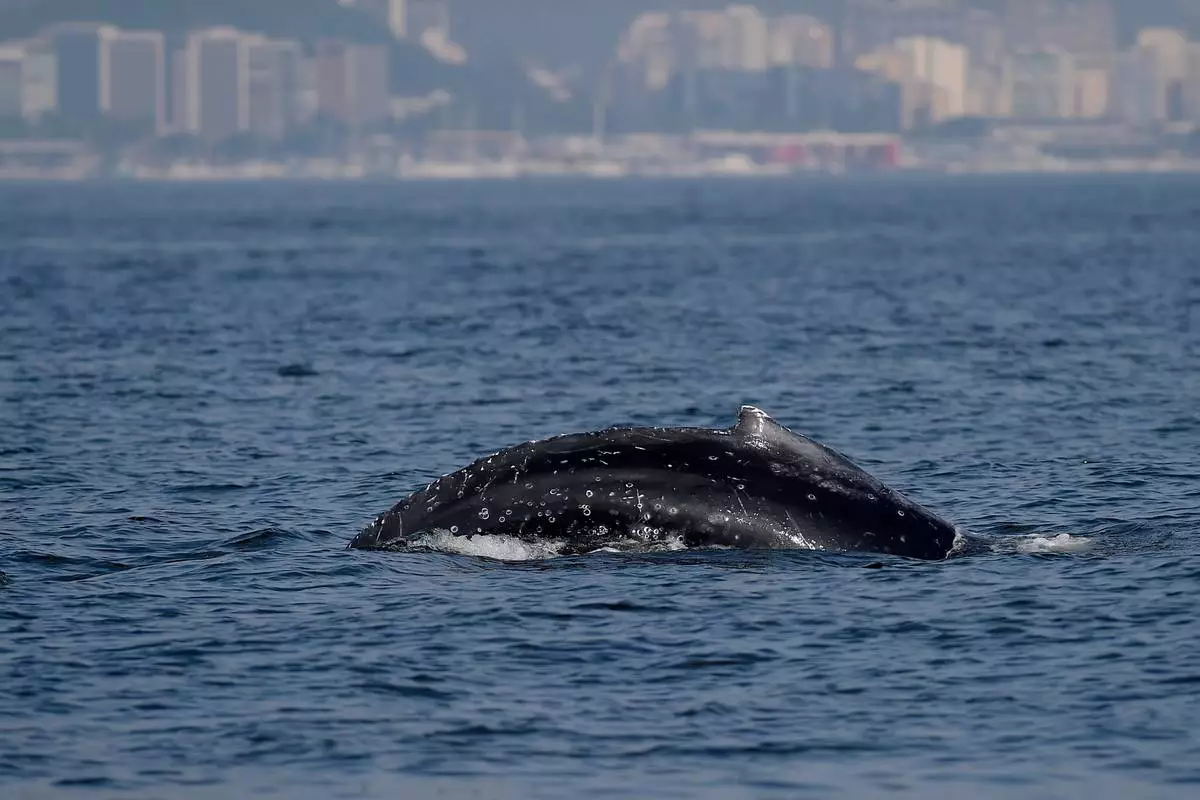
A humpback whale surfaces off the coast of Rio de Janeiro, Brazil, Tuesday, June 30, 2026. (AP Photo/Dhavid Normando)
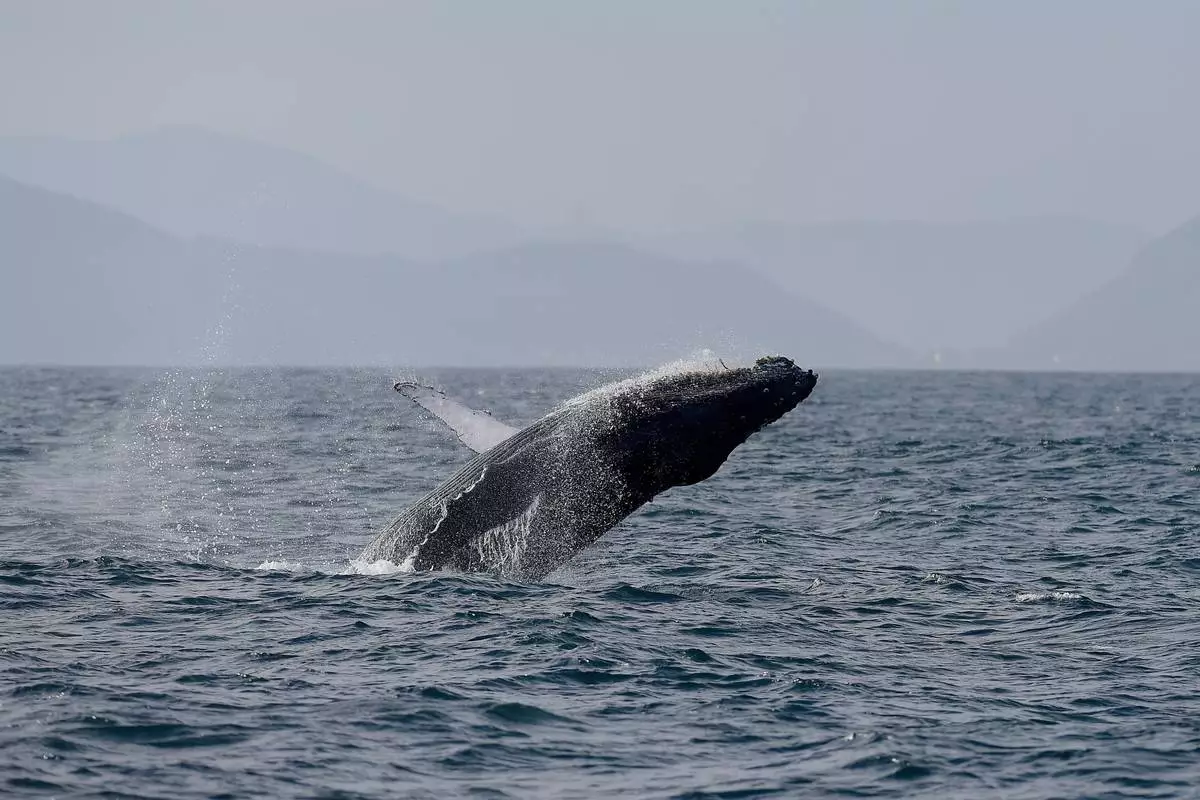
A humpback whale breaches off the coast of Rio de Janeiro, Brazil, Tuesday, June 30, 2026. (AP Photo/Dhavid Normando)
NEW YORK (AP) — Baseball players proposed optional assignments to the minors be cut from a maximum of five per season to three and asked for more pay and major league service time for those sent down, a plan aimed at reducing roster churn that teams use to reinforce bullpens in an era when relief pitchers throw an increased portion of games.
During a bargaining session Wednesday with Major League Baseball, the union proposed that a pitcher optioned after an outing of at least nine outs or 50 pitches during the seven days before the All-Star break be given major league pay and service time up until his team's fourth game after the break.
In addition, a pitcher who is optioned at any time after a game or the next day after an outing of nine outs or 50 pitches would get major league pay and service time for the four days following the appearance.
There often is a wide disparity in pay for players with so-called split contracts. While the major league minimum is $780,000 this year, the minimum in the minors for those with split contracts is primarily $127,100 — and $63,600 for those signing a first big league deal.
Teams have averaged 4.2 to 4.3 pitchers per game in each season since 2022, according to the Elias Sports Bureau. The last season under 4 was 2014 at 3.98.
Another proposal would grant major league pay to those optioned from Sept. 1 through the end of the season, a group that currently gets big league service time but minor league pay.
Players also asked that active rosters be increased to 28 from 26 during the first 15 days of each season, including a maximum of 14 pitchers that would be up from the current 13. The trade deadline would be moved up slightly to the July 21-27 range from its current July 28 to Aug. 3, and some players assigned outright to the minors after the deadline still could be dealt.
Players also proposed the 60-day injured list open at the time of the November tender deadline rather than the first day players can report to spring training. The change would allow teams to protect more players from the Rule 5 draft during the winter meetings because players on the 60-day IL do not count against the 40-man roster limit.
The union asked that MLB agree to accelerate eligibility for the Rule 5 draft, restoring the ages in place through 2005. A player 18 or younger on the June 5 preceding his signing would be eligible for the fourth succeeding Rule 5 draft rather than fifth, and a player 19 or older would be eligible for the third rather than the fourth.
Players also want to ensure the Rule 5 draft will be held this year on Nov. 24, moving it ahead of an expected management lockout after the current five-year labor contract expires Dec. 1. The union would move the draft from the winter meetings to November, just after the tender deadline, in future seasons.
In addition, the union proposed a new 1-to-2 day religious accommodations list in which a player could be inactive “based on a bona-fide religious observance.”
All players in an organization as of noon on Sept. 1 would be eligible for the postseason; under current rules, those not on 40-man rosters can be eligible as injury replacements.
Free agents with no options who sign within 10 days of a team's opener could give consent to an additional option as part of a contract with no split pay. A player acquired in a trade who is then designated for assignment would receive major league pay and service until the end of the assignment window.
Another proposal would increase the sort of players eligible for up to three 10-day extensions of minor league injury rehabilitation assignments. In addition to those coming off Tommy John surgery, the union would add those rehabbing from shoulder surgery for capsule and labral tears and thoracic outlet syndrome.
Players also want a guarantee of access to team performance and video data that is not proprietary.
Owners have proposed a salary cap for the first time since the 1994-95 strike that led to the first cancellation of the World Series in 90 years.
While a lockout next winter is expected, talks are not likely to intensify until late February or early March 2027, when the possibilities of losing regular-season games and revenue near. If regular-season games are lost, negotiations may become a standoff over which side can tolerate the most economic loss.
AP MLB: https://apnews.com/hub/mlb
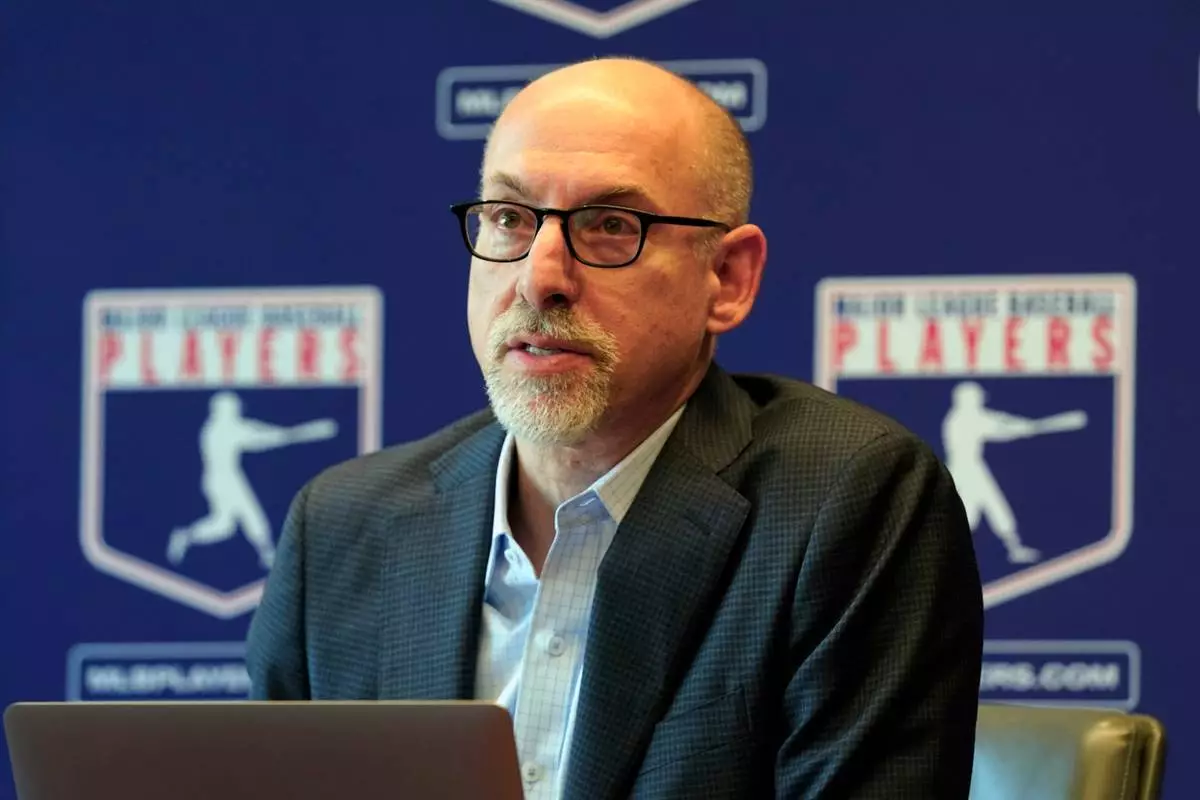
FILE - Attorney Bruce Meyer, the current interim executive director of the Major League Baseball Players Association, speaks at a news conference in New York on March 11, 2022. (AP Photo/Richard Drew, File)
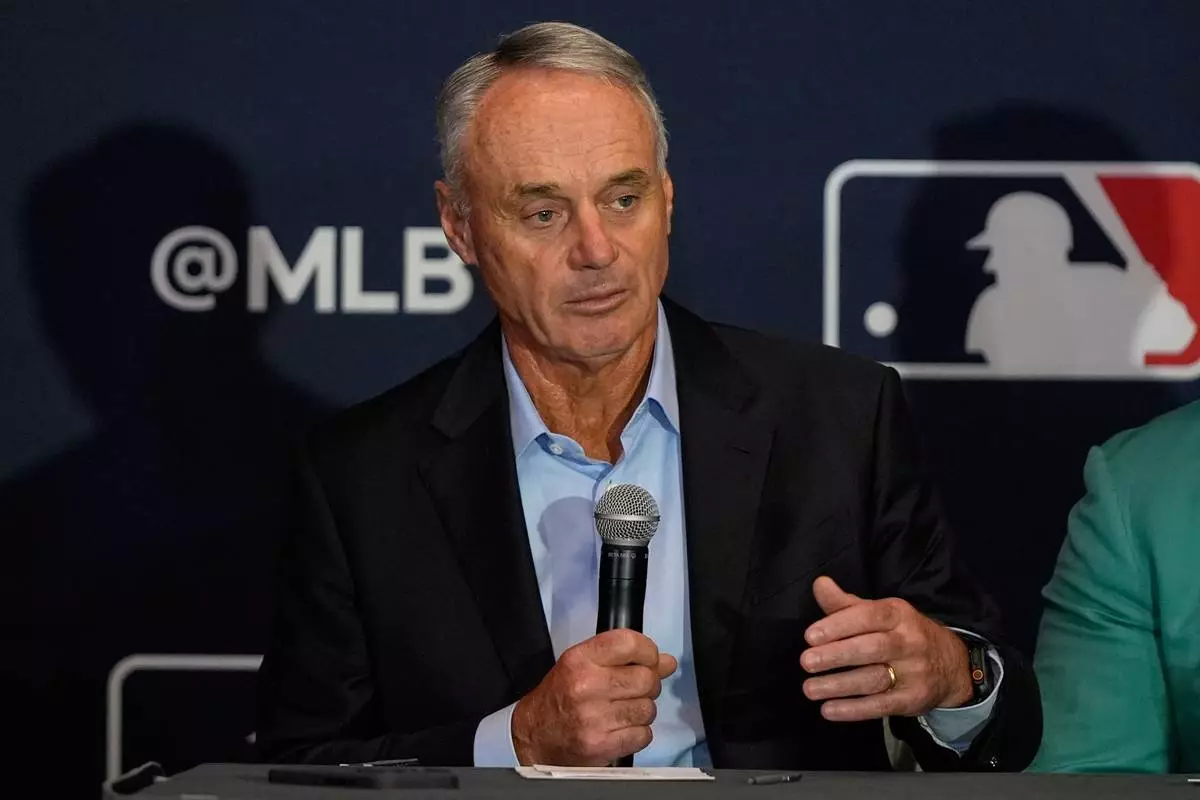
FILE - Commissioner of Major League Baseball Rob Manfred answers questions during a news conference at the MLB winter meetings, Dec. 8, 2025, in Orlando, Fla. (AP Photo/John Raoux, file)